New technique makes movies of molecular machines at work
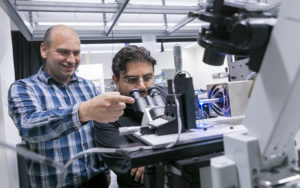
Researchers, including four at UWM, have developed a method of making three-dimensional “molecular movies,” using an imaging technique called single-particle cryo-electron microscopy.
News from the University of Wisconsin-Milwaukee
Researchers, including four at UWM, have developed a method of making three-dimensional “molecular movies,” using an imaging technique called single-particle cryo-electron microscopy.
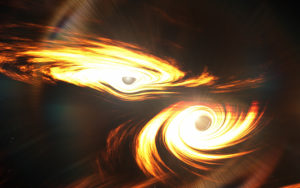
Researchers have detected a signal from what may be the most massive black hole merger yet observed in gravitational waves, an event that created a behemoth 142 times that of the sun.
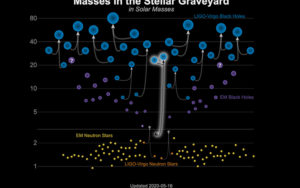
The LIGO-Virgo Collaboration recently discovered an object denser than neutron stars and less dense than black holes. So what does that mean? One of the UWM researchers explains.
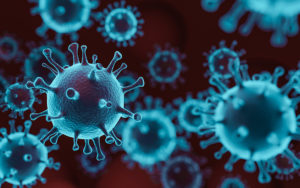
Researchers in UWM’s Department of Physics have recently been awarded special funding that will allow them to probe different aspects of SARS-coV-2, the virus that causes COVID-19, using molecular imaging techniques.
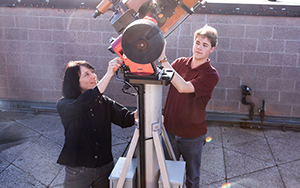
The Office of Undergraduate Research named Dawn Erb, associate professor of physics, the 2020 Research Mentor of the Year.
UWM researchers Ionel Popa and Luai Khoury have developed a technique that may advance the field of soft robotics, which involves robots made of pliable materials like those found in living organisms.
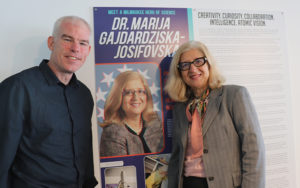
An exhibit featuring Graduate School dean and physics professor Marija Gajdardziska-Josifovska will be on display through the end of the year.
A research university runs on federal grant funding. UWM had $58 million in research expenditures in fiscal year 2018, with more than half coming from federal agencies.
National Science Foundation’s Science and Technology Center includes researchers from nine institutions, including UWM. NSF has just renewed $22.5 million funding forBioXFEL so members will continue work they began in 2013.
Dawn Erb, an associate professor of physics at UWM, led a team whose study could shed light on how galaxies form stars and grow.