Award winning undergraduate researchers get a head start on future
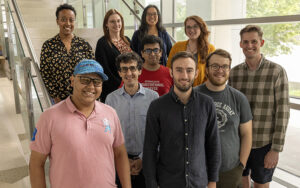
Eight UWM students won awards recognizing their excellence in research into health, space and other important issues.
News from the University of Wisconsin-Milwaukee
Eight UWM students won awards recognizing their excellence in research into health, space and other important issues.
UWM researchers played an important role as part of an international team that made a scientific breakthrough that could tell us more than ever before about how the very early universe formed.
The work of Daniel Agterberg and others could lead to improvements in the electrical grid and produce next-generation computers that can store far more information.
On this episode of Curious Campus, UWM’s new podcast about science, discovery and culture, we talk about gravitational waves with Sarah Vigeland, an assistant professor of physics at UW-Milwaukee, and Xavier Siemens, an associate professor of physics at Oregon State University.
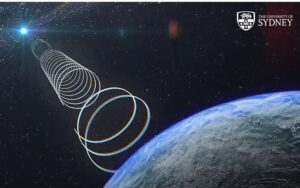
An international team of astronomers that includes one from UWM has discovered unusual radio signals that fit no currently understood variable radio source and could suggest a new class of stellar object.
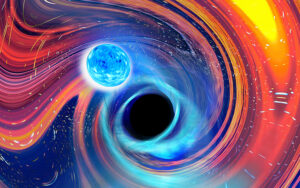
For the first time, researchers have confirmed the detection of a collision between a black hole and a neutron star. In fact, the scientists detected not one but two such events occurring just 10 days apart in January 2020.
An international team of astronomers, including several from UWM, have renewed funding from the National Science Foundation for their work in detecting and characterizing low-frequency gravitational waves, a transformational challenge in astrophysics.
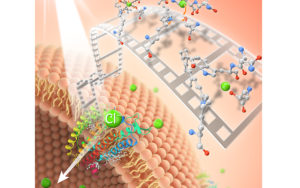
Many organisms use sunlight to fuel cellular functions. But exactly how does this conversion of solar energy into chemical energy unfold?
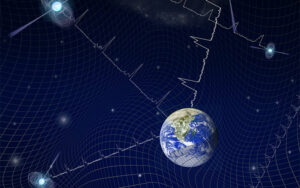
A group of UWM researchers is part of the collaboration of scientists that used 13 years of data to find what could be the first direct detection of low-frequency gravitational waves.
If you wanted to look for life on planets around stars other than our sun, known as exoplanets, you would first locate the ones in the “Goldilocks zone.” That’s the area – not too close, not too far – at just the right distance from a star where a planet might have liquid water.