
American Sign Language / English Interpreting BS
Interpreting is an exciting and in-demand career. (Employment is projected to grow 20% by 2031, much faster than average.) And UWM’s ASL interpreter program will give you the edge you need to succeed.
UWM’s four-year bachelor’s program for interpreting is the only one of its kind in Wisconsin. Our American Sign Language/English Interpreting program goes beyond language, culture and how to facilitate conversations. We work to develop well-rounded interpreters who value and consider others’ perspectives. Who are culturally sensitive and empathetic practitioners. And who continuously work to better themselves and the interpreting profession.
Program Type
Major
Program Format
On Campus
Why Choose Our Program?
- Strong Academics: Our philosophy, “Deaf Heart Starts Here,” takes hold the moment you begin. Due to the foundational coursework, you can be confident that you’ll be competent in ASL, knowledgeable about Deaf culture and connected to the local Deaf community.
- Community: The UWM American Sign Language/English Interpreting program has a strong connection to Wisconsin’s Deaf and interpreting community. Community members regularly visit the interpreting classrooms. This strengthens the trust between the program and the people the interpreting students will work with post-graduation.
- Diversity: We understand that the interpreting profession is unrepresentative of the diversity within the Deaf community. We strive to create a diverse community of interpreters fluent in language and culture, and engaged in critical thinking and service learning. We actively seek input, counsel and involvement from communities and stakeholders who are underrepresented in our field.
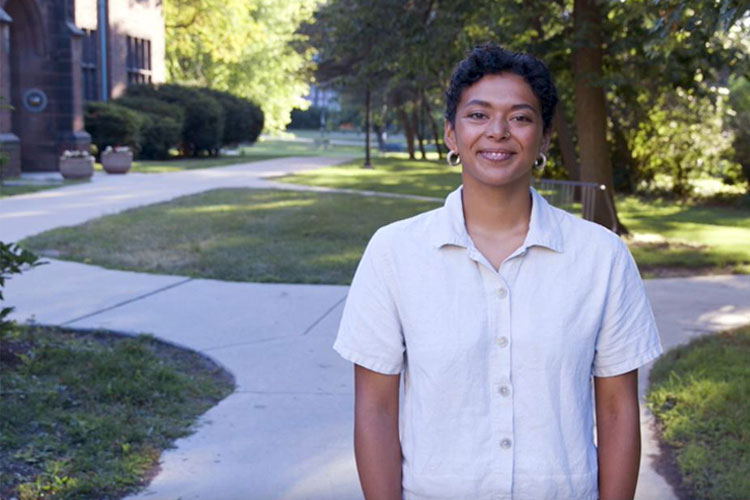
Employment of interpreters and translators is projected to grow 20% by 2031, much faster than the average, according to the U.S. Bureau of Labor Statistics. Roughly 9,200 openings for interpreters and translators are projected each year, on average, over the decade.
Program Highlights
- UWM offers Wisconsin’s only four-year bachelor’s program for American Sign Language / English interpreting. (A bachelor’s degree is required to be eligible for national certification testing.) Our program aligns with both state licenses, giving students more employment opportunities at graduation.
- Our ASL interpreter program is proud to be one of a few in the country to have the Sorenson Synergy Program available to students. Interpreting students can visit the Sorenson Call Center in West Allis and observe video relay interpreters at work!
- Connect with our highly qualified instructors. All ASL instructors are deaf and experienced with providing a safe, immersion-like environment. Within the program professional course sequence, you’ll learn from nationally certified interpreters. They bring their expertise in the field, as well as relevant work experience, to the learning environment.
- Access a unique community of mentors. This includes: your advisor, program coordinator, instructional staff, peer mentors and professional interpreters from the community.
- We work hard to ensure that graduates reach their career goals. We also pride ourselves on the success our former students have achieved through their work in our community. In a recent survey of the past five graduating classes, 80% of our graduates were working as interpreters. 76% reported finding work within three months of graduation.
- The ASL interpreter program curriculum aspires to align with the Commission on Collegiate Interpreter Education (CCIE) Accreditation Standards.
Program Experiences
For admitted students, the two-year course sequence begins once per year in fall. The cohort of interpreting students take courses together in an outlined sequence. In general, students experience:
- Students will have interpreting skills courses
- Skills courses are designed to build off the prior semester. This ensures that students are advancing their skills and preparing to work in the community.
- Within the skills courses, students will have specialized areas of study regarding various interpreting settings, including:
- Interpreting in K-12 educational settings
- Interpreting in post-secondary settings
- Medical interpreting
- Mental health interpreting
- Video relay interpreting
- Students build an ethical decision-making framework through the seminars that are attached to the field experience courses.
- Students develop a website that showcases their skillset and professional qualifications at the end of the program, as preparation for the transition to a job search.
ASL Enrichment Center
The ASL Enrichment Center offers language coaching and tutoring for students who are in ASL 5 or higher. Students come to the lab during open hours to do homework, socialize, or register for tutoring and language coaching. Other students may receive special permission from the ASL Studies coordinators or Interpreting Program coordinator to access the lab based on specific circumstances.
Living Learning Community (LLC)
The purpose of the American Sign Language LLC is to establish a residence hall community for Deaf students and students who know or are learning ASL. This program enhances students’ knowledge of American Sign Language outside of the classroom as they build solid relationships with one another and the extended Deaf community. Students living in the ASL LLC gain confidence in the social and cultural diversity of the signing community.
Related Programs
Program Requirements
Overall, the ASL interpreter program requires a total of 121 credits. The general education requirements (GER) are specific as a means to enhance the skill development of the interpreting student. In terms of a four-year plan, the first two years are GER, language courses and interpreting foundation coursework. The final two years are in the American Sign Language/English Interpreting major.
Students are strongly encouraged to consider the Cultures and Communities Certificate as a way to round out their education and prepare themselves to work with diverse groups of people.
This program uses a cohort model. Students who apply during the spring admission period and are admitted to the program. The cohort then begins the two-year sequence in the subsequent fall semester. This cohort model is designed to encourage students to develop a network of interpreting colleagues and, more importantly, becomes a support network during the program.
Year 1
| Fall I | Cr | Spring I | Cr | Summer I | Cr |
|---|---|---|---|---|---|
| ASL301: ASL I | 3 | ASL302: ASL II | 3 | ASL303: ASL III | 3 |
| ASL330: Deaf History | 3 | ASL348: Intro to Interpreting | 3 | ASL320: English-to-ASL | 3 |
| Natural Science elective* (GERN) | 3 | ASL352: American Deaf Culture | 3 | ||
| Math Course (based on testing) | 3 | OWCB – Eng 201 recommended | 3 | ||
| OWCA (Eng 102)** | 3 | Theater 111: Theater Games (GERA) | 3 | ||
| 15 | 15 | 6 |
Year 2
| Fall II | Cr | Spring II (Apply to AEIP) | Cr | Summer II | Cr |
|---|---|---|---|---|---|
| ASL304: ASL IV | 3 | ASL305: ASL V | 3 | ASL306: ASL VI | 3 |
| ASL328: Depiction | 1 | ASL325: ASL V Lab | 1 | ASL326: ASL VI Lab | 1 |
| COMMUN 103: Public Speaking (GERH) | 3 | ASL510: Classifiers | 3 | ASL321: ASL-to English | 3 |
| QLB** course | 3 | ASL327: Classifiers Lab (w/ 510) | 1 | ||
| LINGUIS 100 or 210 (GERH) | 3 | ASL520: ASL Literature | 3 | ||
| ASL500: Fingerspelling & Numbers | 3 | Natural Science Lab (GERL) | 3 | ||
| 16 | 14 | 7 |
Year 3
| Fall III | Cr | Spring III | Cr |
|---|---|---|---|
| ASL335: Educational Interpreting I | 3 | ASL336: Postsecondary Interpreting I | 3 |
| ASL345: Fnd of Eng to ASL Interp. | 3 | ASL337: Video Relay Svc Interp. I | 3 |
| ASL347: Fnd of ASL to Eng Interp. | 3 | ASL338: Intro to Healthcare Interp | 3 |
| ASL349: Interacting in the Deaf Community I (100 hours fieldwork) | 3 | ASL354: Interacting in the Deaf Community II (100 hours fieldwork) | 3 |
| ASL358: ASL/English Linguistics I | 3 | ASL363: ASL/English Linguistics II | 3 |
| ASL371- NIC Knowledge Prep | 3 | ||
| 15 | 16 |
Year 4
| Fall IV | Cr | Spring IV | Cr |
|---|---|---|---|
| ASL359: Interacting in the Deaf Community III (100 hours fieldwork) | 3 | ASL364: Interacting with the Deaf Community IV (two internships) | 12 |
| ASL365: Educational Interpreting II | 3 | ||
| ASL366: Postsecondary Interpreting II | 3 | ||
| ASL367: Video Relay Svc Interp II | 3 | ||
| EXEDUC 368 Medical & Mental Healthcare Interpreting | 3 | ||
| 15 | 12 |
Total Credits
| Total Credits | 131 |
Note: ASL Studies double major will be earned upon completion of this program.
Students with previous experience in American Sign Language can take a proficiency interview to determine appropriate placement level.
*At least one science must include a lab
**OWCA and QLB requirements based on student placement testing, if exempt degree credits lower minimum required for graduation is 120 credits.
Second Degree Program Pathway
If you do not currently have a degree, you can complete your undergraduate coursework in the American Sign Language/English Interpreting program to obtain your bachelor’s degree. If you already have a bachelor’s degree, you can complete your education as a second degree. In either case, before you are admitted to the professional cohort, you must successfully complete six semesters of American Sign Language and other course prerequisites.
The amount of time required may seem overwhelming to some, but the fact is that interpreter education takes time. To become a competent interpreter, you must have language proficiency in both ASL and English. Learning to become an ASL/English interpreter requires commitment; a commitment to the time and energy required for language acquisition, as well as the commitment to a culture and a community of people.
Students may choose to complete the program as a full-time or part-time student. For students who would like to explore a part-time option, please consult with the advisor.
Year 1
| Fall I | Cr | Spring I | Cr | Summer I | Cr |
|---|---|---|---|---|---|
| ASL 301: ASL I | 3 | ASL 302: ASL II | 3 | ASL 303: ASL III | 3 |
| ASL 330: Deaf History | 3 | ASL 348: Intro to Interpreting | 3 | ASL 320: English-to-ASL | 3 |
| ASL 352- American Deaf Culture | 3 | ||||
| 6 | 9 | 6 |
Year 2
| Fall II | Cr | Spring II (Apply to AEIP) | Cr | Summer II | Cr |
|---|---|---|---|---|---|
| ASL 304: ASL IV | 3 | ASL 305: ASL V | 3 | ASL 306: ASL VI | 3 |
| ASL 328: Depiction | 1 | ASL 325: ASL V Lab | 1 | ASL 326: ASL VI Lab | 1 |
| ASL 500: Fingerspelling & Numbers | 3 | ASL 510: Classifiers | 3 | ASL 321: ASL-to English | 3 |
| ASL 327: Classifiers Lab (w/ 510) | 1 | ||||
| ASL 520: ASL Literature | 3 | ||||
| 7 | 11 | 7 |
Year 3
| Fall III | Cr | Spring III | Cr |
|---|---|---|---|
| ASL335: Educational Interpreting I | 3 | ASL336: Postsecondary Interpreting I | 3 |
| ASL345: Fnd of Eng to ASL Interp. | 3 | ASL337: Video Relay Svc Interp. I | 3 |
| ASL347: Fnd of ASL to Eng Interp. | 3 | ASL338: Intro to Healthcare Interp | 3 |
| ASL349: Interacting in the Deaf Community I (100 hours fieldwork) | 3 | ASL354: Interacting in the Deaf Community II (100 hours fieldwork) | 3 |
| ASL358: ASL/English Linguistics I | 3 | ASL363: ASL/English Linguistics II | 3 |
| ASL371- NIC Knowledge Prep | 3 | ||
| 15 | 16 |
Year 4
| Fall IV | Cr | Spring IV | Cr |
|---|---|---|---|
| ASL359: Interacting in the Deaf Community III (100 hours fieldwork) | 3 | ASL364: Interacting with the Deaf Community IV (two internships) | 12 |
| ASL365: Educational Interpreting II | 3 | ||
| ASL366: Postsecondary Interpreting II | 3 | ||
| ASL367: Video Relay Svc Interp II | 3 | ||
| EXEDUC 368 Medical & Mental Healthcare Interpreting | 3 | ||
| 15 | 12 |
Notes:
ASL Studies double major will be earned upon completion of this program.
Students with previous experience in American Sign Language can take a proficiency interview to determine appropriate placement level.
Students interested in the 2nd degree option must have a bachelor’s degree. Course waivers will be granted if content above was completed in bachelor’s degree program.
It is strongly recommended that 2nd degree students complete the following: Theater 111, Linguistics 100 or 210, Eng 201, and Commun 103
Field Experience
Students are required to complete field experience hours throughout the ASL interpreter program (final four semesters after program admission). In the first three semesters (Fall I, Spring I and Fall II):
Students have a fieldwork courses.
- Students are required to complete a minimum of 100 hours of fieldwork outside the class (opportunities are provided from the program coordinator)
- Students will experience a variety of settings and types of learning experiences
- In the seminar attached to the fieldwork, students discuss their experiences, any ethical issues and the role of the interpreter
In the final semester of the program, students have two internship experiences. One in a K-12 interpreting setting and the other in a community interpreting setting.
- Students work with an interpreting mentor at each site
- All placements are coordinated by the interpreting program coordinator
- Students complete 150 hours in the K-12 interpreting internship
- Students complete approximately 240 hours in the community interpreting internship
Program Completion and Graduation Requirements
Students who meet the major and testing requirements will graduate with an endorsement from the American Sign Language/English Interpreting program. Students who do not meet testing requirements may choose to graduate without endorsement, but will be ineligible to work in the state of Wisconsin. Requirements are as follows:
- Completion of all American Sign Language/English Interpreting program major professional courses with a B- or better and GPA of 2.75; B- or better in designated skills courses
- Successful completion of two interpreting internships (K-12 educational interpreting and community interpreting internships)
- Completion of Wisconsin DPI course requirement with a C or better:
- COMMUN 103
Exit Requirements:
- Pass Written Knowledge Exam: CASLI Knowledge Exam
Fundamentals of Interpreting and the Ethical Decision Making and Cultural Responsiveness Exam - Pass One of the Following Performance Exams:
- Educational Interpreter Proficiency Assessment (EIPA) with a 3.3 or higher.
AND/OR - The Registry of Interpreters for the Deaf-National Certification (NIC)
AND/OR - Board for Evaluation of Interpreters (BEI)-Requires two tests-First pass the Test of English Proficiency (TEP), and then pass the BEI Basic Performance Exam
- Educational Interpreter Proficiency Assessment (EIPA) with a 3.3 or higher.
UWM Admission
| Undergraduate Admission | To be considered for admission to UWM, you must meet all UWM admissions requirements and complete the Universities of Wisconsin Application. |
School of Education: Advancement to Professional Sequence Process (Advance to Major)
All applicants to the American Sign Language / English Interpreting program must meet the following requirements to advance to the professional program sequence.
While students are working on the specific general education requirements, they are simultaneously working on the language and interpreting course prerequisites for advancement to the professional sequence of the major. Students must meet the following requirements to be eligible for the ASL interpreter program admission screening:
- Oral Written Communication Part A & B complete
- Quantitative Literacy Part A & B complete
- Interpreting coursework:
- EXCEDUC 348: Introduction to the Profession of Interpreting (students learn about the field of interpreting; the role of the interpreter; ethics of becoming an interpreter) – must earn a C or better
- EXCEDUC 320 & 321: Introduction to Interpreting Skills (English to ASL & ASL to English- students learn the cognitive process of interpreting; interpreting process theories; practical application of beginning skills – must earn a B- or better in both courses
- ASL Coursework:
- EXCEDUC 301 & 302 – must earn a C or better
- EXCEDUC 303, 304, 305 & 306 – must earn a B- or better in all
- If student has previous experience, must contact ASL Studies coordinators for information about the ASL Screening Placement. Visit the American Sign Language Studies webpage for more information.
- Complete minimum of 58 credits prior to beginning the American Sign Language/English Interpreting major
- Minimum 2.5 GPA in all courses at time of admission (includes transfer coursework)
Complete the Intent to Advance to Professional Sequence Form
Advancement to the professional program sequence is based on a review of all application materials by the program admission committee and is contingent upon availability of space.
Application Deadlines
Applications for the Fall cohort are submitted in early May.
Outcomes
Our ASL interpreter program requirements are designed to prepare graduates for Wisconsin’s interpreter licenses. Upon graduation, you may choose to apply for one or both of the following:
- Department of Public Instruction’s Educational Interpreter License, which allows an interpreter to work in K-12 educational settings.
- Department of Safety and Professional Services’ Sign Language Interpreter License, which allows an interpreter to work in community settings other than K-12 education.
For students who are considering an out-of-state move, we can provide specific advice about transferring your skills and knowledge to meet another state’s standards.
Is Interpreting Right For You?
American Sign Language interpreting is a unique career choice that may not be right for everyone who has an interest in ASL. Take a look at the list of questions below to determine if interpreting is the right career choice for you.
- Do you believe that ASL is a complex language that requires years of dedication to learning with a community of people?
- Are you proficient in speaking and writing in English?
- Do you find yourself analyzing what people are saying and finding ways to clearly communicate your ideas or others?
- Are you comfortable standing and speaking or performing in front of a group of people?
- If you are presented with a problem, can you usually figure out multiple appropriate responses to solve the problem?
- Do you connect with other people in conversation easily? Would you consider yourself a “people person”?
- Do you value the differences of others and find ways to relate to people who are different than you and are able to empathize with them?
- Are you interested and passionate about learning more about the Deaf community, American Deaf culture and other minority groups?
- Can you easily maintain your attention and recall information when you are learning or having a conversation?
- If you are given a set of guidelines and a framework to understand professional behavior, do you feel it is important and of value to conduct yourself accordingly?
If you responded “yes” to all of the above questions, interpreting seems to be the right career path for you! If you responded “no” to any of the questions above, a conversation with the advisor will help you determine if interpreting is the best option for you. In either case, we encourage you to contact the advisor with further questions about the interpreting profession.
Faculty
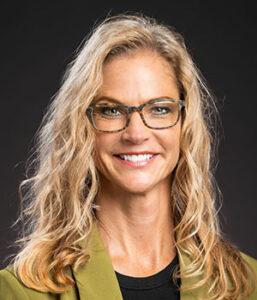
- Clinical Professor, Teaching and Learning
- Program Director, American Sign Language / English Interpreting
- psue@uwm.edu
- 414-251-5480
- Enderis Hall 275


- AEIP Teaching Faculty / ASL Interpreter, Teaching & Learning
- ledden@uwm.edu
- 847-826-7466
- Enderis Hall 267


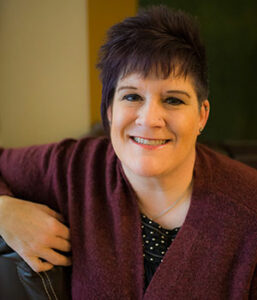
- AEIP Program Instructor, American Sign Language English Interpreter Program (AEIP)
Catherine Ledden
AEIP Teaching Faculty / ASL Interpreter
ledden@uwm.edu
For course specific questions or support:
Pamela Sue Conine
Clinical Professor and Program Director
psue@uwm.edu
To discuss your academic plan and coursework, contact an academic advisor:
Student Advising & Support Services
ccep-advising@uwm.edu
(414) 229-4721
Student Interpreter & Volunteer Requests
If you have an interpreting or volunteer request for AEIP students, please contact:
Pamela Sue Conine at psue@uwm.edu