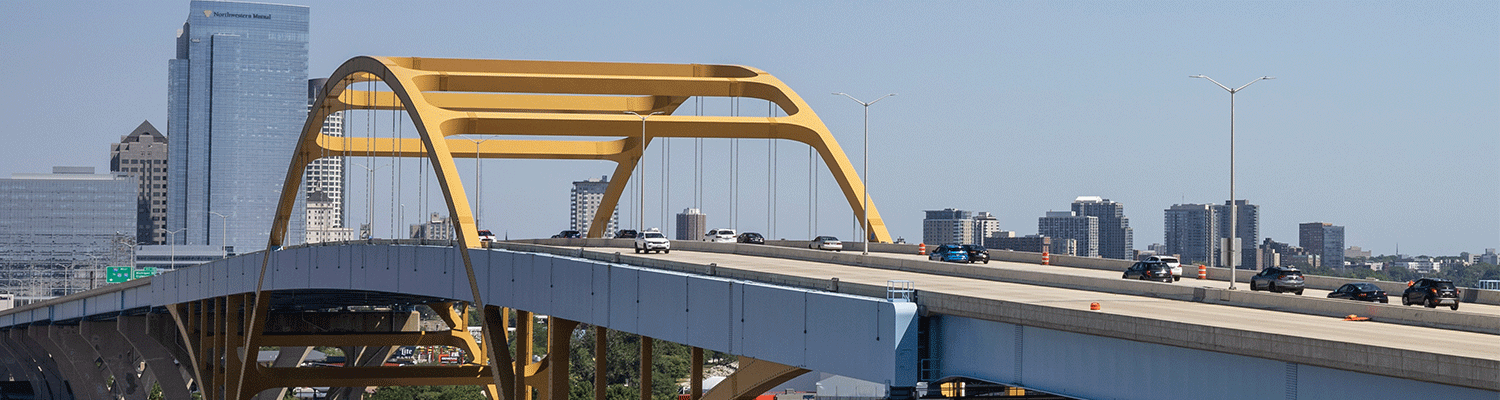
Structural Engineering Minor
Students who minor in structural engineering will learn all about the framework of structures, and how to design those structures to withstand the stresses and pressures of their environment, and how to keep them safe, stable and secure throughout their use.
The minor in structural engineering is designed for students in: Architecture, Mechanical Engineering, Industrial and Manufacturing Engineering, Materials, Geology, and Physics.
This minor is not available to civil engineering majors.
Program Type
Minor
Program Format
On Campus
Alumni Story
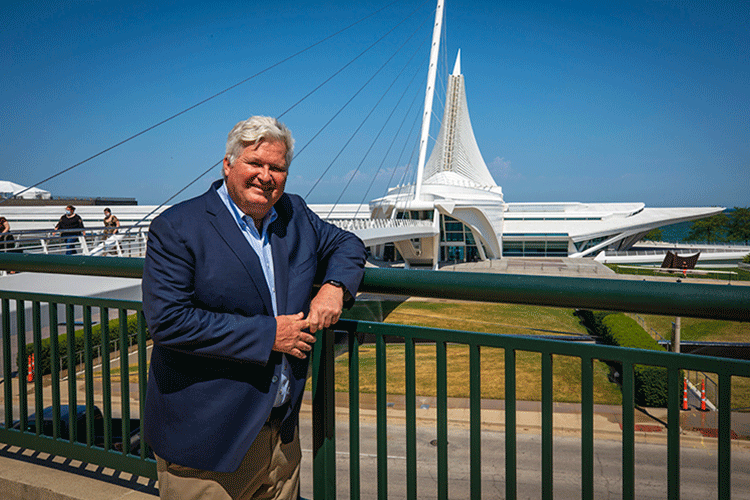
John Kissinger, ’79 BSE Structural Engineering and CEO of GRAEF, is one of only 20 people who know the secret of how the brise soleil at the Milwaukee Art Museum works. He’s also helped to build iconic Midwestern structures including the Wisconsin Center, the Quadracci Pavilion at the Milwaukee Art Museum, Chicago’s McCormick Place West addition and the renovation of Lambeau Field. Read more here.
What to expect when you’re a structural engineering minor:
The minor in structural engineering will provide you with a broad technical background in the framework of structures.
Requirements:
- 18-credit minor requires Civ Eng 335, 360, and 372, and one of the following two courses: Civ Eng 571 or 572.
- Two additional courses from the following: Civ Eng 401, 431, 456, 463, 502, 560, 566, 571, 572, 573, 574, 578, 579; and Arch 301, 510, and 516.
Honors:
Students at UWM have many opportunities to earn honors recognition. Click here for more detail.

Get experience in structural engineering outside the classroom
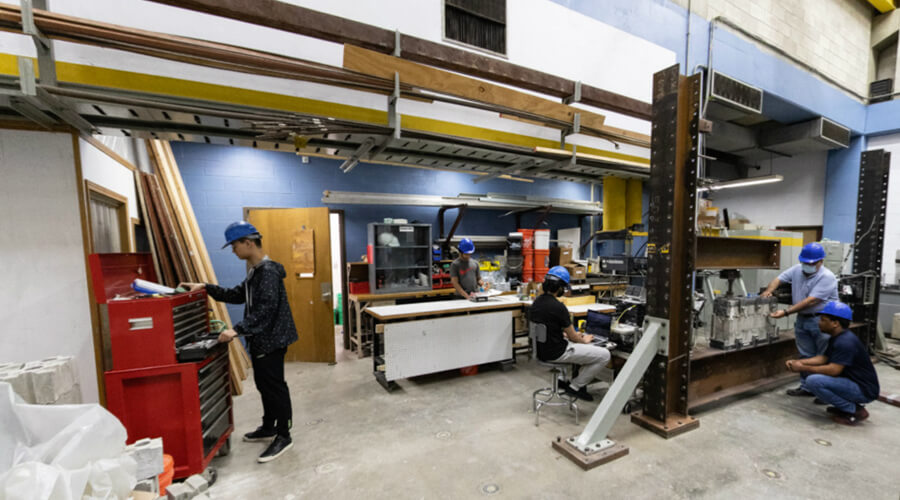
UWM’s College of Engineering & Applied Science program provides many opportunities to pair classroom learning with hands-on experiences outside the classroom. The college’s location in Wisconsin’s largest city, with a broad network of industry partnerships, gives you easy access to well-paid internships and co-ops, as well as other important opportunities to enhance your resume.
We’re here to help
Our dedicated Center for Student Experience & Talent (SET) works with our students to prepare them for a career after graduation.
What you’ll do as a Structural Engineer
Structural engineers often work alongside civil engineers and architects as part of a construction team to create drawings and specifications, perform calculations, review the work of other engineers, write reports and evaluations, and observe construction sites.
Most practicing structural engineers design and analyze buildings, bridges, power plants, electrical towers, dams, and other large structures that are essential to life as we know it.
Advising

- Academic Advisor, Undergraduate Advising
- Students with last names A-G
- wisnowsk@uwm.edu
- 414-251-5368
- Engineering and Mathematical Sciences 386

- Senior Advisor, Undergraduate Advising
- Students with last names beginning H-O
- Prospective Transfer Student Liaison
- currentt@uwm.edu
- 414-229-2203
- Engineering & Mathematical Sciences E385B

- Senior Advisor, Undergraduate Advising
- Students with last names beginning P-Z
- Prospective Student Liaison
- klumpp@uwm.edu
- 414-229-5193
- Engineering and Mathematical Sciences E385C
Tutoring Center
- Retention Coordinator, Tutoring
- Student Support Center Coordinator
- Freshmen Orientation Instructor
- Ander675@uwm.edu
- 414-229-3882
- Engineering & Mathematical Sciences 386B
Faculty

- Assistant Professor of Engineering Education, Civil & Environmental Engineering
- blackows@uwm.edu
- Engineering & Mathematical Sciences 1107

- Scientist II, Civil & Environmental Engineering
- Lab Manager, Bicycle and Motorcycle Engineering Research Laboratory, EMS W301
- Advisor, American Society of Mechanical Engineers (ASME)
- adressel@uwm.edu
- 414-229-5357
- Engineering & Mathematical Sciences E261
- Professor, Civil and Environmental Engineering
- Department Chair, Civil and Environmental Engineering
- elhajjar@uwm.edu
- 414-229-3647
- Engineering & Mathematical Sciences 910A

- Associate Dean for Research, Engineering & Applied Science Office of the Dean
- andrewjg@uwm.edu
- 414-229-7389
- Engineering & Mathematical Sciences 580
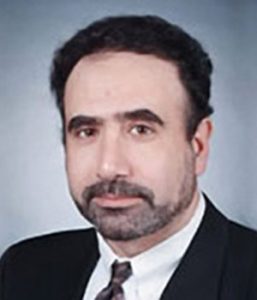
- Professor, Civil and Environmental Engineering
- helwany@uwm.edu
- 414-229-4131
- Engineering and Mathematical Sciences W236AA

- Professor, Civil and Environmental Engineering
- li@uwm.edu
- 414-229-6891
- Engineering and Mathematical Sciences E321
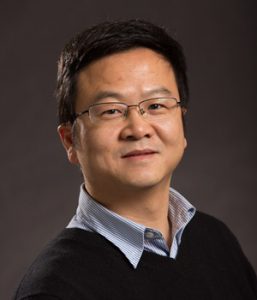
- Professor, Civil and Environmental Engineering
- liao@uwm.edu
- 414-229-4228
- Engineering and Mathematical Sciences E363
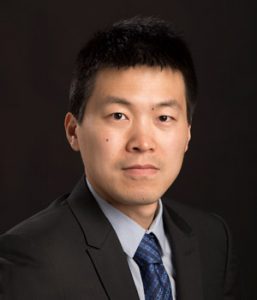
- Richard and Joanne Grigg Fellowship
- Associate Professor, Civil and Environmental Engineering
- ma26@uwm.edu
- 414-251-8777
- Engineering and Mathematical Sciences E371H
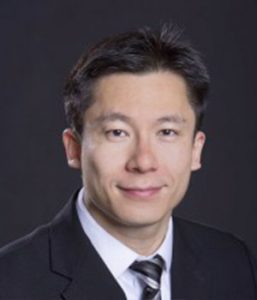
- Richard and Joanne Grigg Professorship
- Professor, Civil and Environmental Engineering
- Director, Institute for Physical Infrastructure and Transportation (IPIT)
- Founder and Director, Safe and Smart Traffic Lab
- qinx@uwm.edu
- 414-251-8866
- Northwest Quadrant 4414B
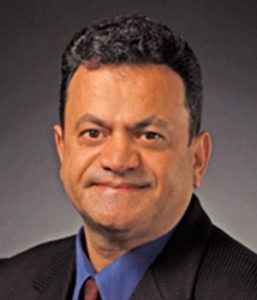
- Associate Professor, Civil and Environmental Engineering
- adeeb@uwm.edu
- 414-229-2860
- Engineering and Mathematical Sciences 315
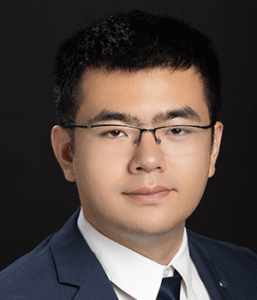
- Assistant Professor, Civil & Environmental Engineering
- Affiliate Assistant Professor, Electrical Engineering
- Founder and Director, Automated, Connected & Electric Mobility Systems Lab
- tomshi@uwm.edu
- Northwest Quadrant 4420

- Richard and Joanne Grigg Professorship
- Professor, Civil and Environmental Engineering
- sobolev@uwm.edu
- 414-229-3198
- Engineering and Mathematical Sciences 1255
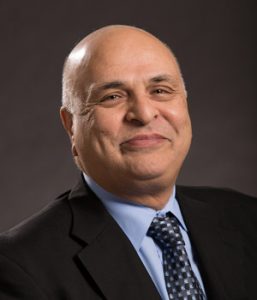
- Professor, Civil and Environmental Engineering
- Director, Structural Engineering Lab
- ht@uwm.edu
- 414-229-5166
- Engineering & Mathematical Sciences E332
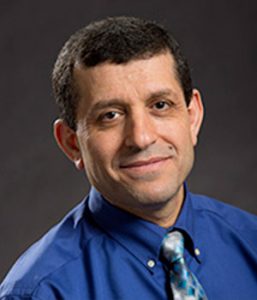
- Lawrence E. Sivak Faculty Fellowship
- Professor, Civil and Environmental Engineering
- hanititi@uwm.edu
- 414-229-6893
- Engineering & Mathematical Sciences 1139
- Richard and Joanne Grigg Fellowship
- Professor, Civil and Environmental Engineering
- wang292@uwm.edu
- 414-251-6446
- Engineering & Mathematical Sciences E371G

- Professor, Civil and Environmental Engineering
- jzhao@uwm.edu
- 414-229-2330
- Engineering & Mathematical Sciences W330A
Street Address
College of Engineering & Applied Science
3200 North Cramer Street
Milwaukee, WI 53211
Mailing Address
College of Engineering & Applied Science
P.O. Box 784
Milwaukee, WI 53201-0784