Engineering MS: Biomedical Engineering MS
Whether you intend to pursue research or seek professional advancement with higher pay and job security, now is an excellent time to pursue a biomedical engineering master’s degree.
UWM, one of Wisconsin’s two R1 research universities, is located in the heart of Wisconsin’s career capital. You will benefit from our long-standing collaborations with this vibrant community.
The Master of Science degree in Engineering with a concentration in Biomedical Engineering is a far-reaching discipline and our flexible program welcomes those whose undergraduate degrees were in biomedical engineering, other fields within engineering, or health and natural sciences.
Qualified UWM undergraduate students can apply to begin this program during their senior year by participating in the Accelerated Graduate Program.
Program Type
Master’s
Program Format
On Campus
How UW-Milwaukee Biomedical Engineers are Changing the World
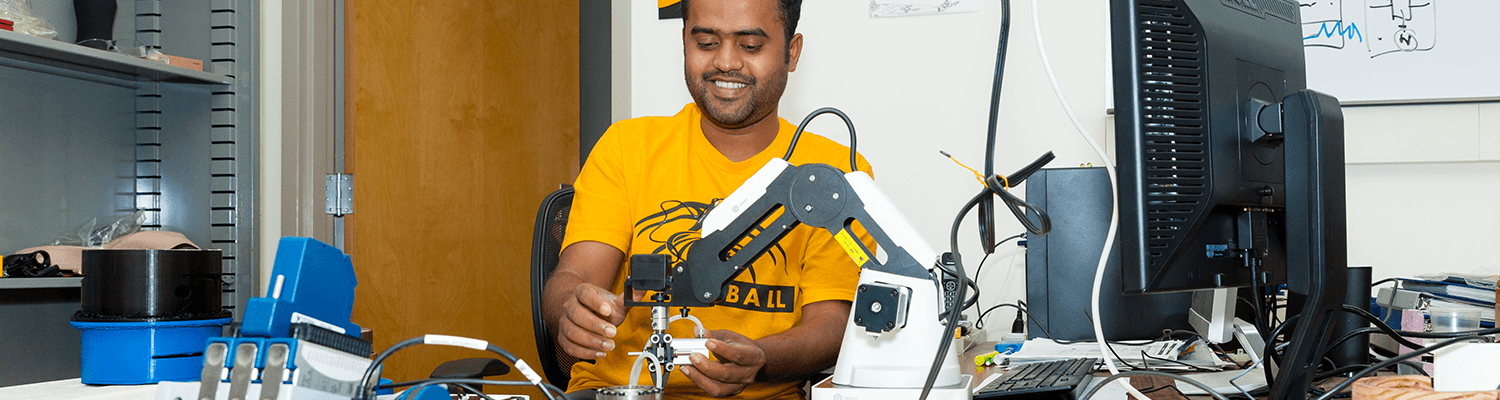
UW-Milwaukee College of Engineering & Applied Science biomedical engineering researchers are collaborating with medical, government and academic partners to make technological advances that improve healthcare and people’s lives.

What to expect
The Biomedical Engineering master’s program at UWM is designed for working professionals and aspiring researchers. Students may choose either a thesis option or a non-thesis option and must include graduate level biomedical courses. See the academic catalog for specific requirements.
The thesis option allows our biomedical engineering master’s degree students to pursue advanced coursework leading to an original research project, supervised by a faculty advisor. Naturally, we encourage students to pursue the development of a thesis.
However, if you have prior engineering or scientific work experience and are seeking an MS for professional advancement, the non-thesis option is a great alternative that requires additional coursework in lieu of a thesis.
Many students choose to incorporate Teaching Assistantships (TAs) or Research Assistantships (RAs) during their graduate study which helps to fund their education while also building leadership skills. Assistantship decisions are made by the academic departments only after an applicant has been accepted into the program.
More Information
Contact the College of Engineering & Applied Science Graduate Programs Office.
As a top tier R1 research university, our biomedical engineering master’s degree students have the opportunity to work with faculty engaged in cutting-edge research in areas such as:
- Biomechanics
- Biorobotics
- Bone Healing
- Intelligent Assistive Devices
- Medical Imaging
- Medical Instrumentation
- Rehabilitation Engineering
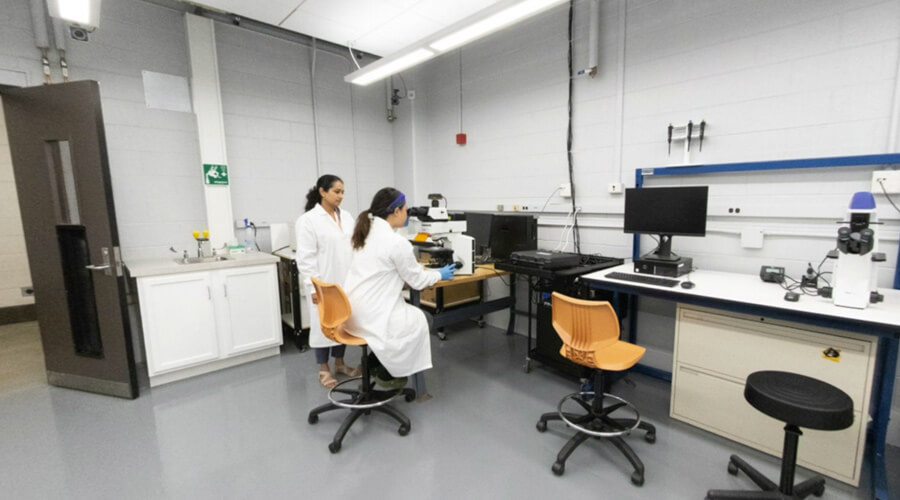
Biomedical Engineering Research Labs
- The Advanced Mobility Biomechanics Lab at UW-Milwaukee, led by Jacob Rammer, develops and applies connected health technology to study mobility of people with disabilities and outcomes of clinical rehabilitation, with particular attention to underserved communities globally.
- The Big Data Analytics and Visualization Lab, led by Zeyun Yu, is focused on developments of new computational approaches and software tools for various types of massive data processing, data mining and visualization using both knowledge-based and data-driven techniques.
- The Biorobotics Lab, led by Mohammad Habibur Rahman, focuses on the design, development, and control of wearable robots that can rehabilitate and assist physically disabled individuals whose upper and lower extremities are impaired. These wearable robots are designed for the individual to use to rehabilitate and, ultimately, be able to leave the wearable robot behind.
- The focus of the Data Science and Artificial Intelligence Laboratory (DSAIL), led by Susan McRoy, is to develop computational approaches that combine human expertise with data-analytic models to solve complex problems, such as improving health outcomes.
- In the Mechanobiology and Vascular Biomechanics Lab, led by Mahsa Dabagh, graduate and undergraduate students use biology, mathematics, mechanics, biomaterials, and fluid dynamics to answer key questions about human diseases. We develop innovative prevention and treatment plans for cancer and cardiovascular diseases, which are tightly interconnected.
- The mission of the Movement Analysis for Biomedical Innovation & Technology (Mobility) Laboratory, led by Brooke Slavens, is to advance quantitative rehabilitation research for improving health and function of persons with disabilities.
- The Bone Lab, led by Priya Premnath, is comprised of engineers, chemists, and biologists aiming to create innovative solutions in tissue engineering and regenerative medicine.
Our college has a wide range of faculty led labs that perform cutting edge research.

Biomedical Engineering Faculty
- Visiting Assistant Professor, Biomedical Engineering
- baox@uwm.edu
- 414-251-8852
- Engineering & Mathematical Sciences E309
- Richard and Joanne Grigg Professorship
- Associate Professor, Biomedical Engineering
- Affiliate Associate Professor, Computer Science
- dabaghme@uwm.edu
- 414-251-7573
- Engineering & Mathematical Sciences

- Visiting Assistant Professor, Biomedical Engineering
- narasimh@uwm.edu
- Engineering & Mathematical Sciences E350

- Assistant Professor, Biomedical Engineering
- Director, Premnath Lab
- premnath@uwm.edu
- 414-229-2634
- Engineering & Mathematical Sciences 1015
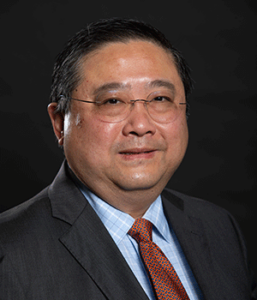
- Johnson Controls Endowed Professor in Energy Storage Research
- Department Chair, Biomedical Engineering
- UWM Distinguished Professor, Mechanical Engineering
- qud@uwm.edu
- 414-251-5817
- Engineering and Mathematical Sciences E308
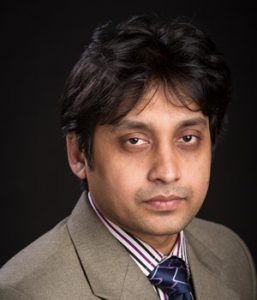
- Richard and Joanne Grigg Professorship
- Professor and Department Chair, Mechanical Engineering
- Affiliate Professor, Computer Science and Biomedical Engineering
- Switzer Research Distinguished Fellow
- rahmanmh@uwm.edu
- 414-251-8406
- University Services & Research Building (USRB) 201D

- Assistant Professor, Biomedical Engineering
- Director, Advanced Mobility Biomechanics Lab (AMBL)
- jrrammer@uwm.edu
- 414-251-6160
- University Services & Research Building (USRB) 201P
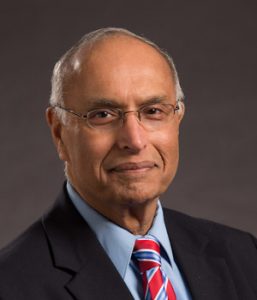
- Distinguished Professor, Materials Science and Engineering Department
- Distinguished Professor, Biomedical Engineering
- Distinguished Professor, Mechanical Engineering
- Director, Center for Advanced Manufacture of Materials
- prohatgi@uwm.edu
- Engineering and Mathematical Sciences 574

- Richard and Joanne Grigg Professor of Mechanical Engineering, EMS Office 1080
- Affiliate Faculty of Biomedical Engineering and Rehabilitation Science & Technology
- slavens@uwm.edu
- 414-229-6933
- Accelerator Building, Innovation Campus 135, Lab 140
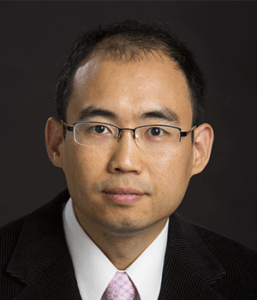
- Associate Professor, Mechanical Engineering
- Associate Professor, Biomedical Engineering
- ysung4@uwm.edu
- 414-251-8147
- Physics 333
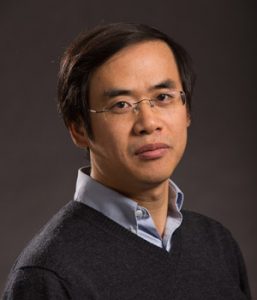
- Professor, Computer Science
- Professor, Biomedical Engineering
- Director, Big Data Analytics and Visualization Lab
- yuz@uwm.edu
- 414-229-2960
- Engineering & Mathematical Sciences 1005
Advising
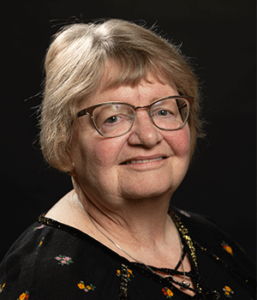
- Advisor, Graduate Programs
- Computer Science, Electrical Engineering, Biomedical Health Informatics
- crary@uwm.edu
- 414-229-7267
- Engineering & Mathematical Sciences E387C

- Advisor, Graduate Programs
- Civil/Environmental Engineering, Mechanical Engineering, Biomedical Engineering, Industrial/Manufacturing Engineering, Materials Science & Engineering
- rpackard@uwm.edu
- 414-251-8543
- Engineering & Mathematical Sciences E387B
UWM is proud to be one of only two R1 research universities in Wisconsin. We’re also a top externally funded institution with robust opportunities for teaching and research assistantships. Partners that support our research include:
- National Institute for Health
- National Academy of Sciences, Engineering & Medicine
- National Science Foundation
- Medical College of Wisconsin
Street Address
College of Engineering & Applied Science
3200 North Cramer Street
Milwaukee, WI 53211
Mailing Address
College of Engineering & Applied Science
P.O. Box 784
Milwaukee, WI 53201-0784