Biomedical and Health Informatics PhD PhD
UWM’s interdisciplinary doctoral program in Biomedical and Health Informatics is offered in collaboration between UWM and the Medical College of Wisconsin. It was the state’s first such doctoral program and remains the only one of its kind in Wisconsin.
The robust program combines medical science with information technology and prepares students to use information systems to advance patient care, public health, life sciences research and health professional education.
Nearly all applicants hold master’s degrees in related fields but a few have been admitted who hold bachelor’s degrees in computer science, business or a health field.
Program Type
Doctoral
Program Format
On Campus
What our Biomedical and Health Informatics PhD graduates are doing
- Graduates are in high demand by healthcare providers, pharmaceutical companies, medical software companies, public health organizations, insurance companies and academia.
- UWM’s graduates are pursuing careers in public policy, public health, research for healthcare providers, cancer research, data analytics and higher education.
- No matter where they’re from, many have found jobs across North America working to improve the quality of healthcare delivery, research and higher education.

What to expect as a Biomedical and Health Informatics PhD student
The Biomedical and Health Informatics PhD curriculum includes coursework in human pathophysiology, medical informatics, databases and medical ethics. You will select from one of six tracks:
- Health Information Systems
- Health Services Management and Policy
- Knowledge-Based Systems
- Medical Imaging and Instrumentation
- Public Health Informatics
- Translational Bioinformatics
No matter what track you choose, you will take courses and receive faculty mentorship from across many disciplines at UWM – combining informatics with disciplines of health care and health administration, public health, biology, and medical imaging and instrumentation.
You will be tested on your proficiency in data management, human pathophysiology and medical terminology, ethics, and the main concepts of the discipline.
Most likely, you will publish and present your biomedical and health informatics research. Since 2013, our students have collectively published more than 200 peer-reviewed articles and given more than 40 presentations.
Many Biomedical and Health Informatics doctoral students earn Teaching Assistantships (TAs), Research Assistantships (RAs) or Fellowships during their graduate study which helps to fund their education while also building leadership skills. Assistantship decisions are made by the academic departments only after an applicant has been accepted into the program.
More Information
Contact the College of Engineering & Applied Science Graduate Programs Office.
Unique Research Opportunities
This interdisciplinary Biomedical and Health Informatics PhD program is housed in the College of Engineering & Applied Science and is run collaboratively by a steering committee comprised of faculty representative from the Medical College of Wisconsin, the College of Engineering & Applied Science, the College of Health Professions and Sciences, the Lubar College of Business, the School of Information Studies and the Zilber College of Public Health.
We’re a top tier R1 research university and our students have the opportunity to work with faculty members engaged in cutting-edge research in areas such as:
- Clinical outcome prediction or comparison of effectiveness of medical treatments using data from electronic medical records
- Discovery of new side effects or secondary uses of drugs using data from social media, product reviews, clinical notes or published scholarly reports
- Automatic assessment of injury status from digital images
- User studies to assess experts’ acceptance or effectiveness in using technology for clinical decision support or research
- User studies to assess patients’ acceptance or satisfaction in using health related technology.
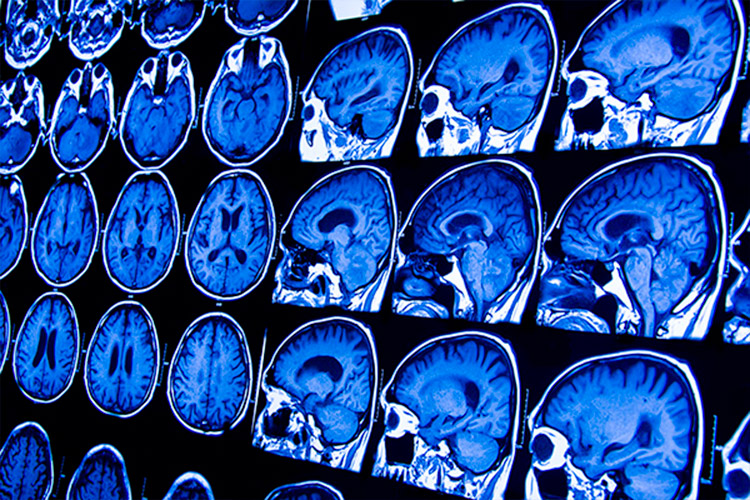
Biomedical Engineering Research Labs
- The Advanced Mobility Biomechanics Lab develops and applies connected health technology to study mobility of people with disabilities and outcomes of clinical rehabilitation, with particular attention to underserved communities globally.
- The Big Data Analytics and Visualization Lab is focused on developments of new computational approaches and software tools for various types of massive data processing, data mining and visualization using both knowledge-based and data-driven techniques.
- The Biorobotics Lab focuses on the design, development, and control of wearable robots that can rehabilitate and assist physically disabled individuals whose upper and lower extremities are impaired. These wearable robots are designed for the individual to use to rehabilitate and, ultimately, be able to leave the wearable robot behind.
- The focus of the Data Science and Artificial Intelligence Laboratory (DSAIL) is to develop computational approaches that combine human expertise with data-analytic models to solve complex problems, such as improving health outcomes.
- In the Mechanobiology and Vascular Biomechanics Lab graduate and undergraduate students use biology, mathematics, mechanics, biomaterials, and fluid dynamics to answer key questions about human diseases. We develop innovative prevention and treatment plans for cancer and cardiovascular diseases, which are tightly interconnected.
- The mission of the Movement Analysis for Biomedical Innovation & Technology (Mobility) Laboratory is to advance quantitative rehabilitation research for improving health and function of persons with disabilities.
- The Bone Lab is comprised of engineers, chemists, and biologists aiming to create innovative solutions in tissue engineering and regenerative medicine.
As an R1 research institution, research is integral to our work and to the experience of students pursuing graduate degrees. Our college has a wide range of faculty-led labs that perform cutting-edge research. View a list of all of our college’s research labs, centers, and institutes.
The program faculty for this interdisciplinary program come from the Medical College of Wisconsin and several academic units at UWM.
Advising

- Advisor, Graduate Programs
- Biomedical and Health Informatics, Computer Science, Electrical Engineering
- crary@uwm.edu
- 414-229-7267
- Engineering & Mathematical Sciences E387C

- Advisor, Graduate Programs
- Civil/Environmental Engineering, Mechanical Engineering, Biomedical Engineering, Industrial/Manufacturing Engineering, Materials Science & Engineering
- rpackard@uwm.edu
- 414-251-8543
- Engineering & Mathematical Sciences E387B