Electrical Engineering PhD PhD
A Doctor of Philosophy (PhD) is the highest academic degree, built on deep problem solving through extensive research. As an R1 research university ranked among the top 3% worldwide by the Center for World University Rankings, UWM offers an exceptional environment in which to pursue your electrical engineering PhD.
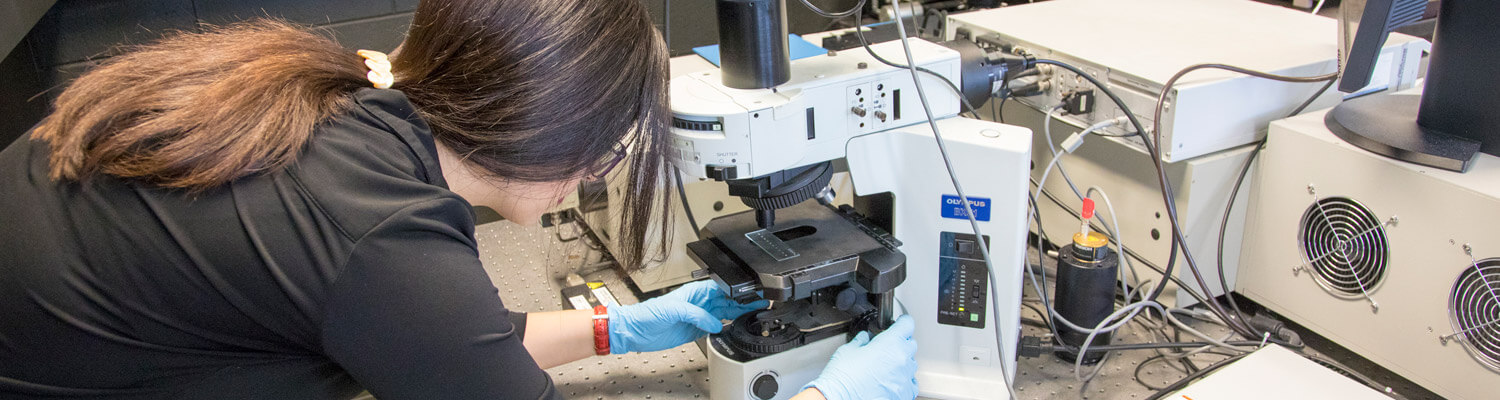
At UWM’s College of Engineering & Applied Science, you’ll work alongside leading faculty on cutting-edge research in battery energy storage, cybersecurity, data visualization, machine learning and AI, nano-electronics, photonics, power electronics, sensors, signal processing and smart grid systems. The program is intentionally flexible and unstructured, allowing you to tailor your studies to your specific goals and interests.
With access to advanced labs, strong industry partnerships and a collaborative research culture, UWM prepares you for high-impact careers in academia, national labs, and advanced R&D roles.
Program Type
Doctoral
Program Format
On Campus
Research Focus
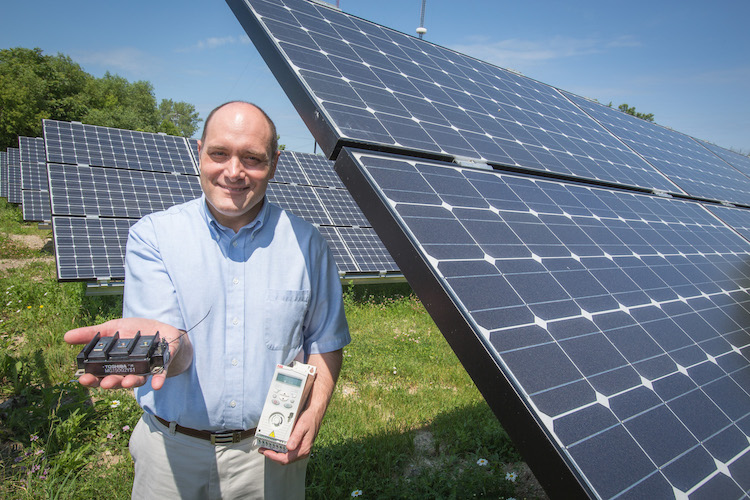
Rob Cuzner’s research focuses on improving the resiliency and efficiency of microgrids. His current and past research on integrated power and energy systems has been supported by the Office of Naval Research, U.S. Navy, U.S. Air Force, the National Science Foundation and industry partners including Eaton Corporation and Leonardo DRS.
“We are working on improving the resiliency part of energy security,” he says. “The goal is a grid that can respond predictably to events, threats and failures.”
What to expect from doctoral studies in Electrical Engineering
PhD students complete 54 graduate credits beyond the bachelor’s degree. Students choose a research area of focus and an approved minor and commit to completing a graduate seminar and doctoral thesis.
Some students at UWM pursue their PhD after completing a master’s degree, and others choose to earn a PhD instead of a master’s degree. Please see the course catalog for specific requirements.
Many students choose to incorporate Teaching Assistantships (TAs) or Research Assistantships (RAs) during their graduate study which helps to fund their education while also building leadership skills. Assistantship decisions are made by the academic departments only after an applicant has been accepted into the program.
Earning a PhD in electrical engineering can provide you with a wide range of professional or academic opportunities that may include leadership roles in academia, government service, or high-level industrial research.
More Information
Contact the College of Engineering & Applied Science Graduate Programs Office.
Focus of our Electrical Engineering Faculty:
- Artificial Intelligence
- Batteries & Electric vehicles
- Data Visualization
- Energy & Alternative Energy & Power Systems
- Grids & Grid Systems
- Nanomaterials & Nanodevices & Nanotechnology
- Sensors

As an R1 research institution, research is integral to our work at UWM and to the experience of students pursuing graduate degrees. Our college has a wide range of faculty-led labs that perform cutting edge research. Please see the Faculty tab to the right for the specific research interests and labs of each civil and environmental engineering faculty member. View a full list of our college’s research labs, centers and institutes.
Electrical Engineering Faculty

- Richard and Joanne Grigg Professorship
- Professor, Electrical Engineering and Computer Science
- Director, Center for Sustainable Electrical Energy Systems (SEES)
- Site Director, Center for GRid-Connected Power Electronic Systems (GRAPES)
- cuzner@uwm.edu
- 414-251-6147
- University Services and Research 201M


- Associate Professor, Electrical Engineering
- Department Chair, Electrical Engineering
- Associate Professor, Computer Science
- huy@uwm.edu
- 414-251-8830
- Engineering & Mathematical Sciences 1185

- Associate Professor, Electrical Engineering
- Associate Professor, Computer Science
- lawc@uwm.edu
- 414-229-6203
- Engineering and Mathematical Sciences 1219
- Professor Emerit, Biomedical Engineering
- Professor Emerit, Electrical Engineering and Computer Science
- misra@uwm.edu
- 414-229-3327
- Engineering and Mathematical Sciences E-314

- Richard and Joanne Grigg Faculty Fellowship
- Professor, Electrical Engineering
- Professor, Computer Science
- wang289@uwm.edu
- 414-251-7477
- Engineering & Mathematical Sciences 1277
- Associate Professor, Electrical Engineering
- Associate Professor, Computer Science
- wwang@uwm.edu
- 414-229-2247
- Engineering & Mathematical Sciences 1285

- Professor, Electrical Engineering
- Professor, Computer Science
- junzhang@uwm.edu
- 414-229-4246
- Engineering & Mathematical Sciences 1207
Advising
- Advisor, Graduate Programs
- Computer Science, Electrical Engineering, Biomedical Health Informatics
- crary@uwm.edu
- 414-229-7267
- Engineering & Mathematical Sciences E387C

- Advisor, Graduate Programs
- Civil/Environmental Engineering, Mechanical Engineering, Biomedical Engineering, Industrial/Manufacturing Engineering, Materials Science & Engineering
- rpackard@uwm.edu
- 414-251-8543
- Engineering & Mathematical Sciences E387B
UWM is proud to be one of only two R1 research universities in Wisconsin. We’re also a top externally funded institution with robust opportunities for teaching and research assistantships. Partners that support our important research include:
- National Academy of Sciences, Engineering & Medicine (NASEM)
- National Science Foundation (NSF)
- United States Department of Defense (USDoD)?
- United States Department of Energy (USDoE)
- Regional businesses include: Johnson Controls, Rockwell Automation, Harley-Davidson, We Energies and more.
IEEE Antennas and Propagation Society: Graduate Fellowship Program
To recognize and provide financial assistance to graduate students who show promise and interest in pursuing a graduate degree in engineering electromagnetics, with a focus on quantum techniques, up to four $5,000 awards will be granted in 2021. Learn more.
Street Address
College of Engineering & Applied Science
3200 North Cramer Street
Milwaukee, WI 53211
Mailing Address
College of Engineering & Applied Science
P.O. Box 784
Milwaukee, WI 53201-0784