Scholarship established in memory of Arlie Max Mucks

It is with deep sympathy that the faculty and staff at the UWM College of Engineering & Applied Science note the passing of Arlie Max Mucks. Arlie was a Mechanical Engineering undergraduate student when he passed away in September 2021 due to injuries sustained while a passenger in a car accident.

To honor his memory, Arlie’s parents – Jeffery Mucks and Sonja Johnson—and sister—Alexandra Mucks—have established a scholarship in his name.

The Arlie Max Mucks IV Memorial Mechanical Engineering Scholarship Fund will provide scholarships to undergraduate students enrolled in the college who are majoring in, or intend to major in, Mechanical Engineering.

Jeffery, Sonja and Alexandra hope that the scholarship will help support students who, like Arlie, might have maintained an average GPA while in high school and are working very hard to succeed in college in a demanding field.

Arlie’s many passions — working on cars, attending races at Road America, go-kart racing — pointed to a career in mechanical engineering. His other passions were snowmobiling, snowboarding and boating. Not only did he love spending time with his friends, but he also loved spending time with his sister and parents, and aunts, uncles, and cousins and their families.

Moreover, his large group of friends—including longtime friends from elementary school through their high school years, and from UWM and Milwaukee—was a testament to his character.

His friends and family said: “Arlie could make the saddest person in the room laugh, and he was always there when you needed him, even if it was to give some honest, tough love,” she said. “Nobody will ever replace the hole in our hearts he left behind. We will remember the many laughs and his notorious smirk. He truly made the world a better place just by being in it. He is immensely missed by all of us.”

Contributions to the Arlie Max Mucks IV Memorial Mechanical Engineering Scholarship Fund are ongoing and can be made online or by contacting Jean Opitz, development director for the College of Engineering & Applied Science, at opitz@uwm.edu.
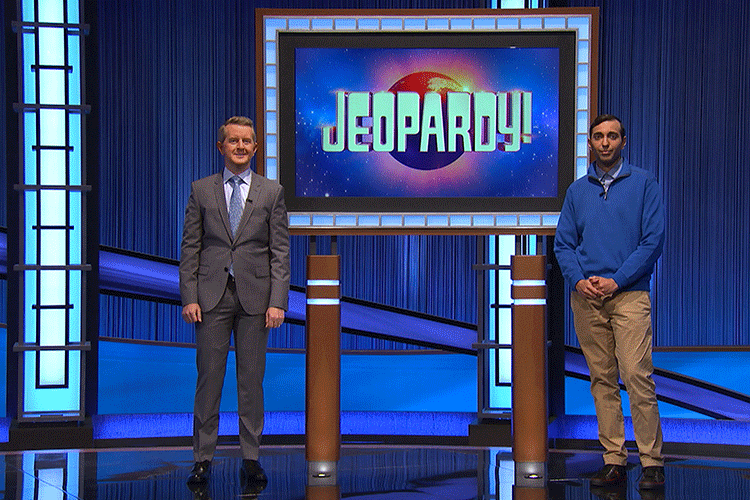
Computer Science student’s “Jeopardy!” appearance is dream come true

Avinash Rejendra on Jeopardy

Congratulations to Avinash Rajendra, a Computer Science graduate student at UWM’s College of Engineering & Applied Science, who appeared on “Jeopardy!” Jan. 21.

“I grew up with stage fright, so it’s nice I could turn around and stand on a literal stage in front of a national audience,” said Rajendra, who placed second. “It’s still a once in a lifetime experience, and it was a bucket list item for me.”

More.

UWM engineering student helps track COVID-19 in wastewater

Melissa Schussman

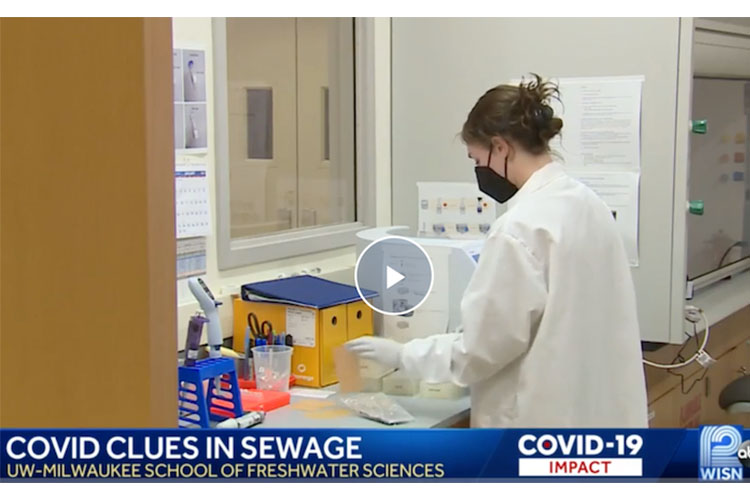
A student in UWM’s College of Engineering & Applied Science is taking part in sewage-testing research that tells the story of COVID-19 in the Milwaukee community.

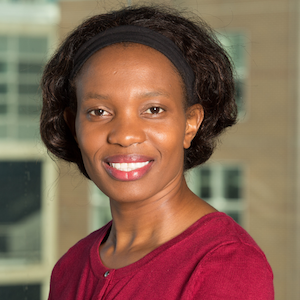
Melissa Schussman, a master’s student in Civil & Environmental Engineering, works in the laboratory of Sandra McLellan, a professor in UWM’s School of Freshwater Sciences and affiliate professor in UWM’s College of Engineering & Applied Science.

For the past two years, McLellan’s research team has tracked the spread of COVID-19 by testing wastewater samples. Because every person who contracts COVID -19 passes the virus in their bodily waste, sewage samples offer a reliable way to confirm a community’s infection rates, variants and trends.

Watch WISN coverage.

Watch WTMJ coverage.

MS in Computer Science (Professional Track) gets award for best hybrid option

Intelligent.com ranked UWM’s MS in Computer Science (Professional Track) Program as one of the nation’s most affordable online programs. In this category, the program – which is available in person, online, and through a combination of the two—received the award for Best Hybrid Option.

The program welcomes those whose undergraduate degrees were not in computer science. It is designed for working professionals in computer science and other fields. It is offered through UWM’s College of Engineering & Applied Science, In all, 14 academic programs at UWM were ranked among the best in the country by Intelligent.com, a Seattle-based resource for online/on-campus program rankings and higher education planning, in its 2022 report. More.

Mass panic buying: UWM awards Jang and Otieno $100K seed grant to develop supply-chain model to help ease impact of herd behavior

Jaejin Jang

Fueled by panic, U.S. consumers have bought uncommonly large amounts of certain products during the pandemic: toilet paper, hand sanitizers, masks and more. The key word is panic, says Jaejin Jang, associate professor, industrial & manufacturing engineering, and panic-fueled buying is not new. For example, panic drove car drivers in the 1970s—facing an oil crisis—to join long queues at gas stations the minute their tanks dipped to half full.

“Panic increases demand and increased demand leads to supply shortages, which result in more panic,” said Jang. Compounding this during the current pandemic is the actual decrease in the supply of some products.

Wilkistar Otieno

Jang is embarking on creating a mathematical model that quantifies the role panic plays in the supply chain. The UWM Research Office has gotten behind his idea and selected him to receive one of 14 Discovery and Innovation grants (DIG) in 2021. The one-year, $100,000 award will enable Jang and Wilkistar Otieno (co-PI) to create a supply planning model to assess and mitigate the impact of mass panic purchases of relief products. Researchers plan to start in early 2022 and complete their research by the end of the year. Jang will create the model, and Otieno will put it to the test—proving or disproving it using historical data. 

UWM’s DIG program supports high-quality, innovative, early-stage basic or applied research or creative projects that have the potential for later submission at three times the award value through external funding.

With this research, Jang wants to discover if a government campaign could ease panic buying in the future. 

He also hopes a successful mathematical model would be used in industry to determine the best way to re-introduce normal supply levels when they are available, so as to avoid panic buying: Incrementally or all at once?

Ideally, he says, high school students would learn about panic buying, so as to minimize future supply-chain disruptions of the current magnitude.

Jang’s research has included the control of supply chain under natural disasters. Otieno’s research has included predictive data analytics for manufacturing systems.

Cable-stayed bridge expert Tabatabai appointed to national committee reviewing collapse of Arecibo’s telescope

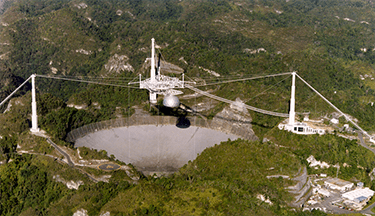
At the invitation of the National Academies of Sciences, Engineering and Medicine, Habib Tabatabai, professor, civil & environmental engineering and director of the UWM’s Structural Engineering Lab, will serve on an ad-hoc committee that will review the failure and collapse of the mammoth radio telescope at the Arecibo Observatory in Puerto Rico.

Tabatabai is an expert in bridge engineering and assessment issues, most notably the long-term durability and reliability of cable-stayed bridge structures.

Once the world’s largest single-dish radio telescope, Arecibo’s 900-ton equipment platform, suspended some 500 feet above the dish, collapsed in December 2020 after the last of its support cables failed. It had been completed in 1963 and researchers from around the world used the telescope in their studies of radio astronomy, planetary science, atmospheric science, climate science and more.

Photo courtesy of the NAIC – Arecibo Observatory, a facility of the NSF

A nationally-sought out expert, Tabatabai has conducted qualification testing on stay cables on every cable-stayed bridge built during the 1990s in the United States. In Wisconsin, he has worked with the Wisconsin Department of Transportation to develop guidelines for engineers approaching the repair of bridges that suffered corrosion and deterioration as well as those that were accidentally damaged.

On the Arecibo project, Tabatabai will be joined by committee members with expertise in areas including civil and structural engineering, geotechnical engineering, failure investigation, risk assessment, corrosion and corrosion protection, materials science, inspection and maintenance practices.

The committee will evaluate the structural engineering reports that were commissioned by the National Science Foundation pre- and post- failure. They will assess the environmental, physical, and design considerations as well as any administrative or management practices that may have been contributing factors to the failure.

The committee’s report, due in about a year, is expected to explain contributing factors and any probable causes of the failure and recommend measures to prevent similar damage in the future.

The Arecibo Observatory is a National Science Foundation facility; the NSF posted this video of the observatory’s collapse.

UWM offers new certificate in AI and machine learning

In response to the booming demand for workers skilled in artificial intelligence and machine learning, UWM’s College of Engineering & Applied Science worked with industry leaders to create a new graduate certificate.

The Artificial Intelligence and Machine Learning graduate certificate is a 15-credit curriculum geared for working professionals. It can be completed in one year and is offered in-person, online, or a combination.

“Many, if not all, sectors of the economy now need workers with relatively deep knowledge and advanced skills in artificial intelligence and machine learning,” says Susan McRoy, professor and chair of UWM’s Department of Computer Science. The global artificial intelligence market was estimated at $62.35 billion in 2020 and is expected to expand at a compound annual growth rate of 40.2% from 2021 to 2028, according to Grand View Research.

The certificate is open to those with undergraduate degrees that require academic preparation in math and programming, including science, engineering, computer science, economic and finance.  Applicants with other degrees will be considered via holistic assessment of their academic record and professional experience.

The certificate can be completed online for $14,000 or less, or can be taken in person, where regular in-state/out-of-state tuition rates apply.

More.

Anu and Satya Nadella Scholarships to increase diversity in tech education

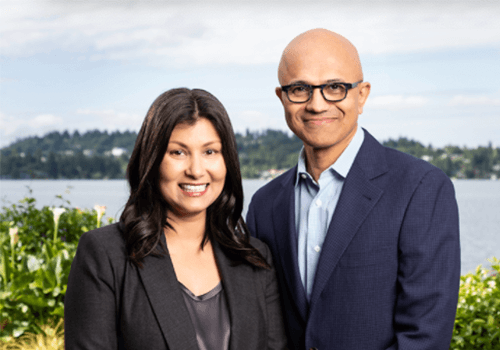
Satya and Anu Nadella

The University of Wisconsin-Milwaukee is offering multiple full-ride scholarships for incoming freshmen from Milwaukee high schools in Fall 2022. The Anu and Satya Nadella Scholarships, for students who are pursuing degrees in computer science, computer engineering, data science and information technology, are part of a $2 million gift from UWM alumnus and Microsoft Chairman and CEO Satya Nadella and Anu Nadella. The Nadellas seek to help create new opportunities for students from Milwaukee’s marginalized and underserved communities. Learn more.

Sung working with Massachusetts General Hospital on NIH award

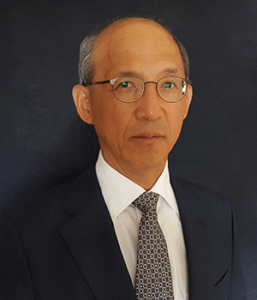
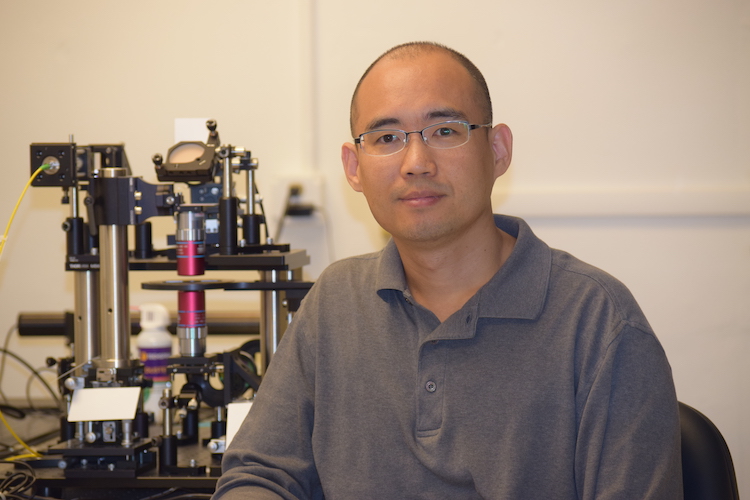
An bald Asian man with glasses and in a lab setting.

The National Institutes of Health, through Massachusetts General Hospital, has awarded Yongjin Sung, associate professor, mechanical engineering and biomedical engineering, $45,000 for a study on the next generation of medical X-rays. Sung will work on a simulation framework for realistic, human-scale X-ray phase-contrast imaging (XPCI), and X-ray dark field imaging (XDFI).

XPCI and XDFI have been explored as next-generation X-ray imaging systems that could provide enhanced contrast for soft tissue. The technology would assist clinicians by allowing them to “see” more while exposing patients to significantly less radiation and reducing the need for toxic contrast-enhancing dyes such as iodine and barium required when imaging soft tissue.

Sung explains that both XPCI and XDFI measure the refraction and scattering of X-rays by soft tissues—measurements that are not captured using existing medical X-ray imaging.

Despite worldwide efforts to develop hardware, a numerical framework for human-scale simulation of XPCI and XDFI has been missing, Sung says. “This is largely due to the enormous computational power required for existing approaches,” he says. The two-year project will address this challenge.

Sung is working with Dr. Rajiv Gupta, who is a staff neuroradiologist and ER radiologist in the Department of Radiology at Massachusetts General Hospital, an associate professor of radiology at the Harvard Medical School, and a lecturer in Mechanical Engineering at MIT.

Donor spotlight: civil engineering alumnus Lawrence Sivak

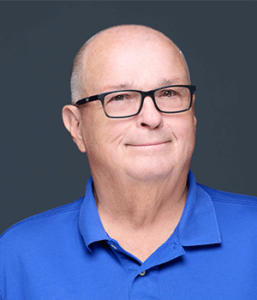
Lawrence Sivak

Thank you to Lawrence E. Sivak (’71 BS Civil Engineering) for his generous support of UWM’s College of Engineering & Applied Science and the UWM Foundation. His donation was part of the college’s New Frontiers in Research campaign, which seeks to raise $5 million so students can learn from the best and brightest faculty and engage in world-changing research.   

The newly established Lawrence E. Sivak ’71 Professorship in Engineering Fund will support two professorships within the college, at least one of which will be awarded to a civil engineering researcher.

The Lawrence E. Sivak ’71 Research Development Award, also new, will provide financial support to the college’s faculty members for research and/or teaching.

“My UWM faculty gave me the tools to impact infrastructure critical to people’s lives, and for over 40 years I made a lot of waves around water,” Larry said. “By supporting an engineering professorship, I’m able to make an even bigger splash, as I double the impact of my gift, funding important next-generation research while also supporting the people who are training and inspiring tomorrow’s engineers.”

About Sivak

Larry held many key positions in civil engineering during his 40-year career, retiring in 2014 as vice president of Arcadis.

With the U.S. Army Corps of Engineers, he addressed harbor maintenance and flood control.

He worked for CH2M Hill on the Milwaukee Water Pollution Abatement Program, where he was a senior project manager responsible for upgrades to the Jones Island and South Shore Wastewater Treatment plants. 

Working for Arcadis, he was a construction manager of the Virginia Initiative Plant Nutrient Reduction Improvements (a national leader in wastewater treatment), played a key role in constructing a new water treatment plant and distribution system for Henrico County (Virginia), and worked on the construction or a $28 million groundwater treatment plant in western Virginia.

Larry lives in Florida with his wife, Vivienne.