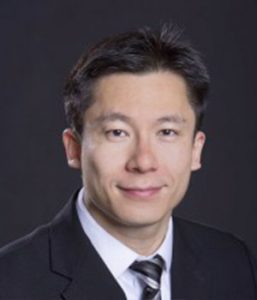
Removing pollution from manure spill offs

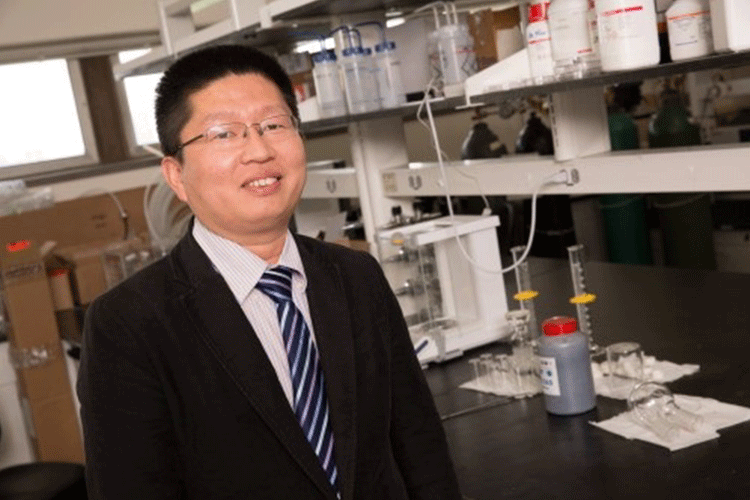
Junjie Niu in lab

Junjie Niu, Richard and Joanne Grigg Professor and associate professor, materials science & engineering, was interviewed by WTMJ-TV news for the story “Why farmers and homeowners alike should check the weather before using fertilizer.” The interview aired March 24 on the station’s Two Americas series, which focuses on significant issues facing southeast Wisconsin and solutions.

“It was a nice experience to introduce our work to the public,” said Niu, who spoke about his research on finding ways to remove pollution from past manure spill offs.

Otieno named a 2022 Notable Woman in Engineering

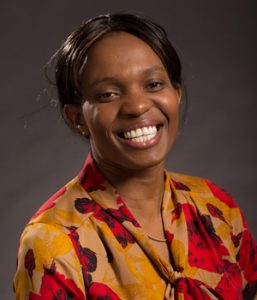
faculty image wilkistar otieno

Congratulations to Wilkistar Otieno on being named one of the 2022 Notable Women in Engineering by BizTimes Milwaukee. Honorees must be currently serving in a senior level role at their organization, must hold a leadership position in their industry outside of their own organization, have made a significant contribution to advancing workplace equality at their own workplace or beyond, and act as a role model or mentor.

Dr. Otieno is a department chair, researcher, associate professor of Industrial & Manufacturing Engineering and co-director of the U.S. Department of Energy Industrial Assessment Center at UWM. She inspires the next generation of engineers and connects the college with members of industry, bridging the gap between academic research discoveries and real-world implementation.

Dr. Otieno partners with members of industry to understand their challenges and work to implement solutions based in research. She adopts applied automation and controls laboratories into her classes (IE 550 class), works with industry researchers, end users, subject matter experts and system integrators to directly shape relevant and forward-looking learning labs and curriculum. She is recognized by industry leaders for her ability to collaborate and share experiences learned across the academic system, and to appreciate the pace at which industry needs to adopt new technologies.

Dr. Otieno expands her research impact by partnering with local and regional businesses, said Michael Cook, director of global academic engagement for Rockwell Automation. 

“Dr. Otieno has continually worked with industry to engage in a true partnering fashion, including a sabbatical in industry, adopting applied automation and controls laboratories into her classes, working with industry researchers, end users, subject matter experts and system integrators to directly shape relevant and forward-looking learning labs and curriculum,” Cook said. 

She is beloved by students and faculty alike because of her enthusiasm and knowledge of the field of industrial and manufacturing engineering, her warm and generous nature, and her ability to inspire and support students of all backgrounds.

Her inspiration extends well beyond the classroom as she advises numerous STEM-focused student organizations on campus including the Society of Women Engineers (SWE), the Institute of Industrial and Systems Engineers (IISE) and the engineering honor society, Tau Beta Pi.

Dr. Otieno is also a champion for diversity and inclusion and works locally to advance STEM opportunities for underrepresented students at UWM through two programs funded by the National Science Foundation: Preparing Engineering and Computer Scientists (PECS) and WiscAMP.

We are proud of Dr. Otieno and all she does to make a difference with our students, our college, our city and beyond. Please join us in congratulating her on this recognition.

More about Dr. Otieno here. See a full list of honorees here, including UWM Civil Engineering alums Lori Rosenthal and Kristi Linsmeier.

8 faculty members recognized with named professorships, fellowships

CEAS Faculty promotions

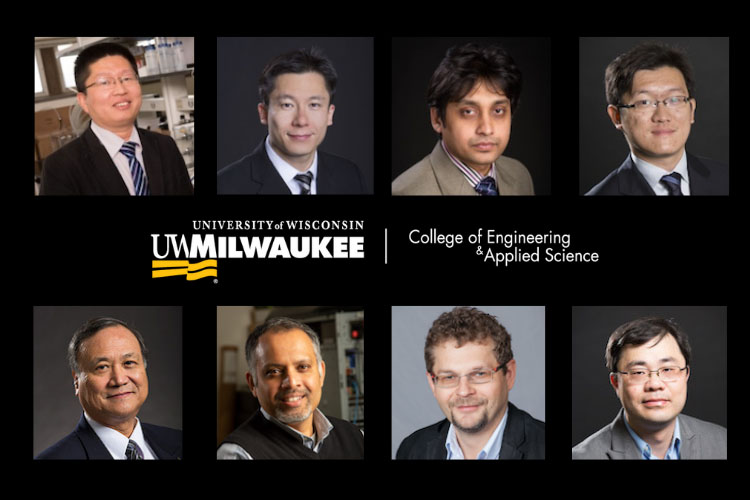
Congratulations to the following eight faculty members at UWM’s College of Engineering & Applied Science, each of whom was honored with a named professorship or named fellowship.

The named professorships and fellowships support the growth of some of the college’s key research areas and honor recipients’ research, teaching and scholarship. They were made possible by the generosity of recent donors. “I am very grateful to our donors, who were excited to support our faculty in this way,” said Dean Brett Peters.

Named professorships:

Junjie Niu was awarded a Richard and Joanne Grigg Professorship. Niu is designing next-generation batteries for electronic devices and electronic vehicles that provide high-energy density and last longer; in other research he is addressing drinking water and groundwater decontamination.

Xiao Qin was awarded a Lawrence E. Sivak ’71 Professorship. Qin, a nationally renowned expert in transportation data analytics and highway safety, is training an interdisciplinary lens on solving both local and national transportation issues.

M. Habib Rahman was awarded a Richard and Joanne Grigg Professorship. Rahman is an expert in bio-robotics, including human-assist robots, service robots, mobile robots, medical robots, rehabilitation robotics, and exoskeleton robots for rehabilitation and activities of daily living (ADL) assistance. 

Yin Wang was awarded a Lawrence E. Sivak ’71 Professorship. Wang is developing advanced and sustainable materials and technologies for water purification applications that aim to rid water of per- and polyfluoroalkyl substances (PFAS), pharmaceuticals, pesticides, heavy metals (e.g., lead) and metalloids (e.g., arsenic), and problematic oxyanions (e.g., nitrate, bromate).

Named fellowships:

Ryo Amano was awarded a Richard and Joanne Grigg Faculty Fellowship. Amano is contributing to research in energy and power areas, including wind, hydro, gas turbines and combustion. He directs Wisconsin’s only U.S. Department of Energy Industrial Assessment Center, which provides strategies to Wisconsin manufacturers and utilities to help them improve energy systems, reduce energy consumption, and enhance their plants’ decarbonization, cybersecurity and more.  

Roshan D’Souza was awarded an Alan D. Kulwicki ’77 Faculty Fellowship. D’Souza’s work is advancing hemodynamics analysis of cardiovascular diseases through advanced processing of blood flow images from scans such as 4D Flow MRI using flow physics informed deep learning.

Konstantin Sobolev was awarded a Lawrence E. Sivak ’71 Faculty Fellowship. Sobolev’s research includes developing spray coatings that would both repel and sterilize virus-laden droplets, superhydrophobic and ice-phobic coatings for porous materials including concrete, and cost-saving, environmentally-friendly ways to make concrete stronger and longer-lasting.

Lingfeng Wang was awarded a Richard and Joanne Grigg Faculty Fellowship. Wang’s research could help public utilities optimize their strategies in planning and operating electrical energy systems; his research quantifies potential technical, economic and environmental implications under various scenarios. 

All named professorships and fellowships provide flexible funds; named professorships provide a salary supplement.

The names behind the professorships and fellowships:

Richard and Joanne Grigg

Engineering alumnus Richard (Dick) Grigg (’04, ’75, ’70) devoted his career to advancing new energy technologies. After earning his BS and MS degrees in engineering from UWM, Dick went on to become the president and CEO of We Generation, the electric generation arm of We Energies. In 2004, he joined FirstEnergy Corp., an Akron, Ohio-based power company, where he retired as executive vice president and president of FirstEnergy Utilities in 2010. Dick and his wife, Joanne Grigg, died in 2018 and 2016, respectively. More.

Alan D. Kulwicki

In 1977, Alan D. Kulwicki graduated from UWM with a BS in mechanical engineering. He would apply this degree to his skill in racecar driving to achieve success on the track. Kulwicki was on the cutting edge of an increasing emphasis on technology in the sport. Despite his death in a plane crash in 1993, Kulwicki’s name and legacy live on, as he was inducted into the NASCAR Hall of Fame in 2019. More.

Lawrence E. Sivak 

Larry Sivak earned his BS in civil engineering from UWM in 1971. He has held many key positions in civil engineering during his 40-year career and experienced many unique projects, including harbor maintenance and flood control with the U.S. Army Corps of Engineers and participating in the Milwaukee Water Pollution Abatement Program. More.  
Meet the winners of the National Clean Water Design Challenge: Public invited to free, Alumni Association event

Spark team Dec 2021

The UWM Alumni Association invites the public to the free, virtual Mobile Master Chat “Bringing Clean Water to Remote Areas,” 11:30 a.m.-1 p.m., April 20.

Carrie Bristoll Groll

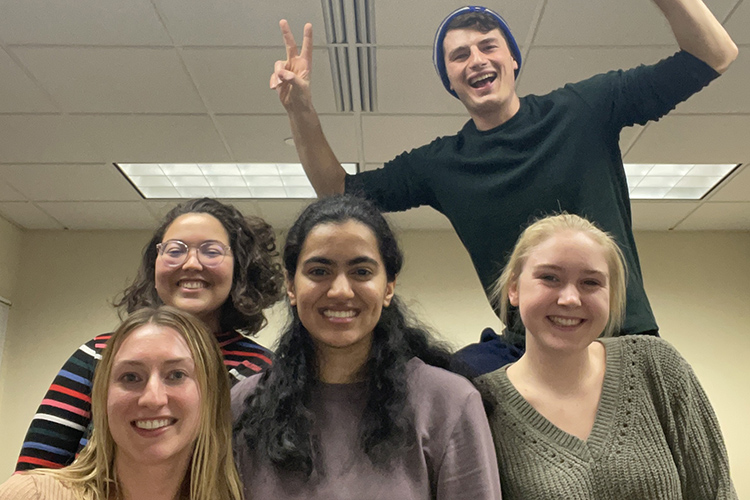
The event spotlights a UWM undergraduate student team that won first place in a national competition that challenged participants to create an inexpensive and practical solution to improving drinking water in remote areas. The competition, Spark, was created to develop solutions to actual industry challenges that have global impact.

The event will feature:

  • Student team members Halah Idrissi, Zach McFarland, Tessa Parrish, Kaveri Salunke and Melissa Schussman
  • Hector Bravo, professor emeritus of civil and environmental engineering, UWM’s College of Engineering & Applied Science

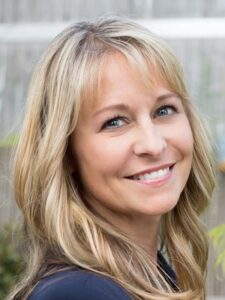
Carrie Bristoll-Groll (’94 BS Civil Engineering) (pictured) will moderate the conversation as students discuss their process, their experience winning this prestigious competition, and the product that they created. Bristoll-Groll is the principal civil engineer and CEO of Stormwater Solutions Engineering.

Register here.

Undergraduate Tien Wong presents research on using AI in materials science to state leaders

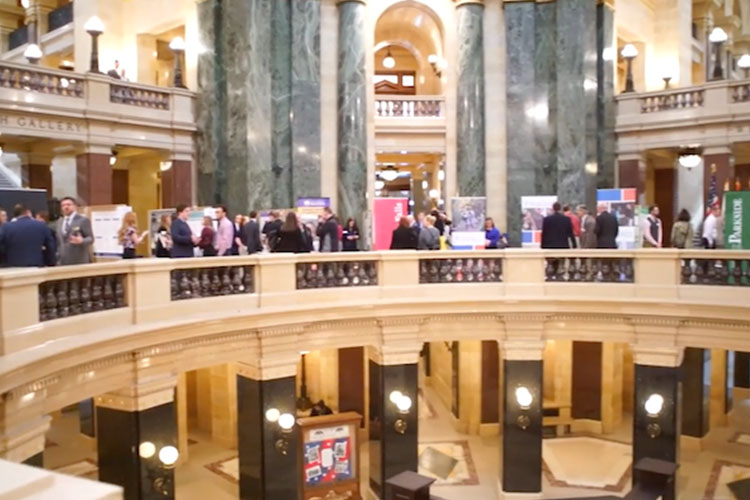
Research at the Rotunda
Tien Wong

Undergraduate materials science and computer science senior Tien Wong was one of nine UWM undergraduates who presented outcomes of their research and creative collaborations with UWM faculty at the UW System’s Research in the Rotunda event in Madison on March 9.

The outstanding students shared findings with legislators, state leaders, UW alumni, and other supporters as they advocated for continued support of research activity. 

Wong works with Pradeep Rohatgi, director of the Center for Advanced Manufacture of Materials, and researches the use of AI/machine learning in materials science. (Applications include defect detection, process optimization, and property prediction.) The AI in Materials Science team research focuses on property prediction, with the aim of developing machine learning models to predict the tribological properties of aluminum-graphene metal matrix composites.

Wong’s research was financially supported by SURF (Support for Undergraduate Research Fellows) program and SERA (Senior Excellence in Research Award). SERA awards are granted to a small group of seniors who have been significantly active in undergraduate research during their time at UWM and who propose a research plan for their senior year.

Congratulations, Tien!

More about this event.

Yi Hu advances in Wisconsin Governor’s Business Plan Contest with submission of new OTC hearing aid

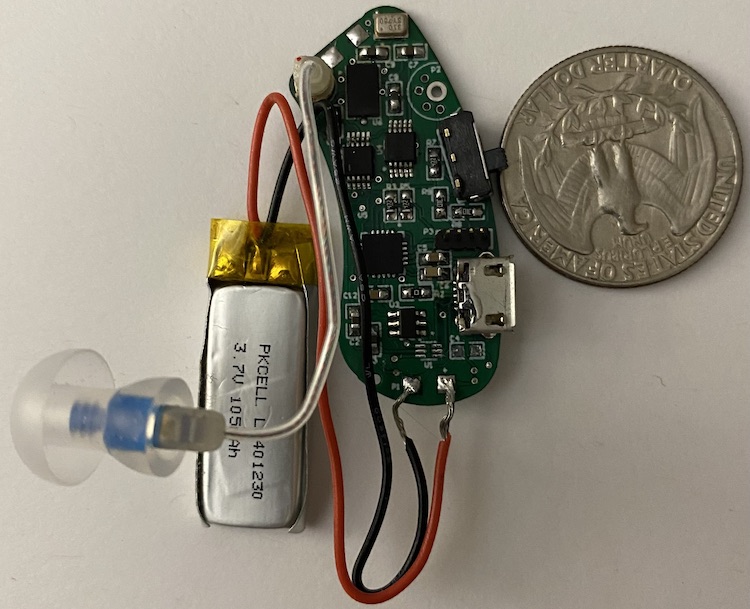
prototype of Yi Hu's over-the-counter hearing aid
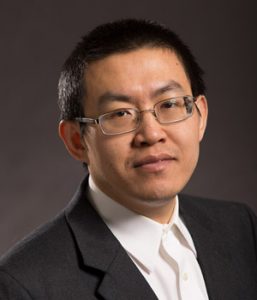
faculty member yi-hu

Congratulations to Yi Hu, associate professor of electrical engineering and computer science, whose submission for My Hearing Care advanced in March to the semi-final round of the 19th annual Wisconsin Governor’s Business Plan Contest. Hu is one of 55 semi-finalists from 24 Wisconsin communities whose entries were spread among four broad categories: advanced manufacturing (13), business services (15), information technology (16) and life sciences (11).

My Hearing Care is developing an over-the-counter hearing aid that makes better hearing more accessible and more affordable for the millions of people suffering from mild to moderate hearing loss. While the price of a pair of My Hearing Care hearing aids has not been set, Hu says it will be significantly less than a traditional pair. “One of my goals is for more people to be able to buy and use high-quality hearing aids,” he said.  While 28.8 million American adults could benefit from hearing aids, Hu notes that less than 20% of this population use the devices.

OTC hearing aids are expected to hit the market later in 2023, a development that stemmed from a 2017 federal law that led the Food and Drug Administration to create a category of OTC hearing aids for adults with mild to moderate hearing loss. This could lessen the need for expensive and repeated visits to audiologists and remove barriers to use.

Soon people will be able to purchase a My Hearing Care hearing aid online, then fit and self-adjust the device at home using clinically established processes.

Building off past research in hearing technology

My Hearing Care builds off Hu’s 20 years of researching technology to help improve life for those with hearing loss, including recent research that aimed at helping people with mild to moderate hearing loss: a Personal Sound Amplification Product, or PSAP.

In 2019, the National Institutes of Health supported collaborative work between Hu and Christina Runge, professor in the Department of Otolaryngology & Communication Sciences at Medical College of Wisconsin, that led to an exclusive license for a Personal Sound Amplification Product (PSAP).

7 engineering students offered UWM Graduate School fellowships for 2022-23

aerial photo of UWM

UWM’s Graduate School recently offered fellowships to seven doctoral students from the college. Congratulations to the students and their advisors.

Distinguished Graduate School Fellowships

  • Saif Mohammad Shehab Al Hamad, Department of Mechanical Engineering
    • Advisor: Ryo Amano, professor, Mechanical Engineering
  • Mark Vygoder, Department of Electrical Engineering
    • Advisor: Rob Cuzner, associate professor, Electrical Engineering, Computer Science
  • Md Samiul Haque Sunny, Biomedical and Health Informatics Doctoral Program  
    • Advisor: Mohammad H. Rahman, associate professor of Mechanical Engineering and Biomedical Engineering, affiliate associate professor of Computer Science 
  • Farzaneh Elyasigorji, Department of Civil & Environmental Engineering
    • Advisor: Habib Tabatabai, professor, Civil & Environmental Engineering

Distinguished Dissertation Fellowships

  • Tanvir Ahmed, Department of Biomedical Engineering
    • Advisor: Mohammad H. Rahman, associate professor, Mechanical Engineering
  • Abdel Rahman Sameeh Hasan Salem, Department of Mechanical Engineering
    • Advisor: Ryo Amano, professor, Mechanical Engineering
  • Huainan Qu, Department of Mechanical Engineering 
    • Advisor: Deyang Qu, Johnson Controls Endowed Professor in Energy Storage Research

To learn more about UWM Graduate School fellowships, click here.

2 Northwestern Mutual software engineers select Girls Who Code to receive donations

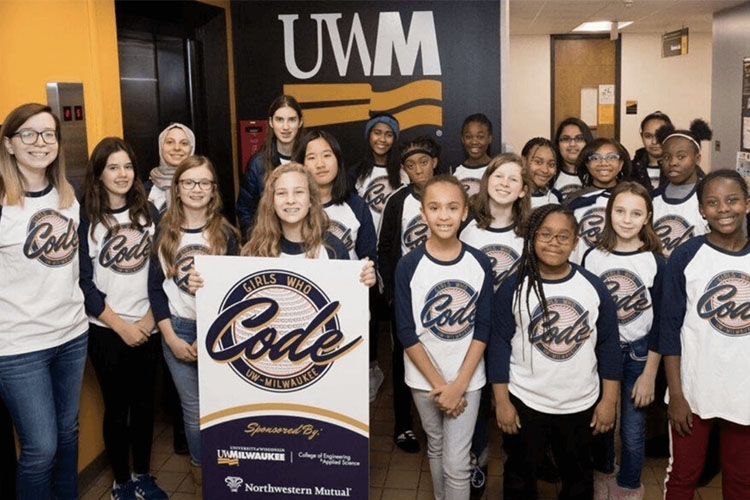
Girls Who Code group

Given $500 each to donate to an organization helping young people – especially those in underrepresented communities—excel in technology, two Northwestern Mutual software engineers recently selected UWM’s Girls Who Code program.

In February, Catelyn Scholl (’22 MS Computer Science, ’19 BS Computer Science), software engineer, and Scott Butler, senior software engineer, were awarded 2021 Volunteer Influencer awards by Northwestern Mutual’s Tech Advancement & Outreach team. The awards recognize strong volunteer supporters for K-20 outreach programs that the company is working to advance.

As part of the prize package, Scholl and Butler were each able to select one such organization to receive $500.

Scholl says she was involved with Girls Who Code at UWM for four years as both a volunteer and instructor. “I chose Girls Who Code because I know how much of an impact this organization has made by providing STEM education to the Milwaukee community and inspiring the next generation of women in technology,” she said.

“I was excited to give back to the organization that gave me my foundation in volunteer work and tech outreach and inspired my passion for computer science.”

GWC classes are free, though donations are welcome for food, supplies, T-shirts and instructors. Find out more about supporting GWC by contacting Jean Opitz, development director for UWM’s College of Engineering & Applied Science, opitz@uwm.edu.

Donor spotlight: Richard S. Schreiner and Alison Graf

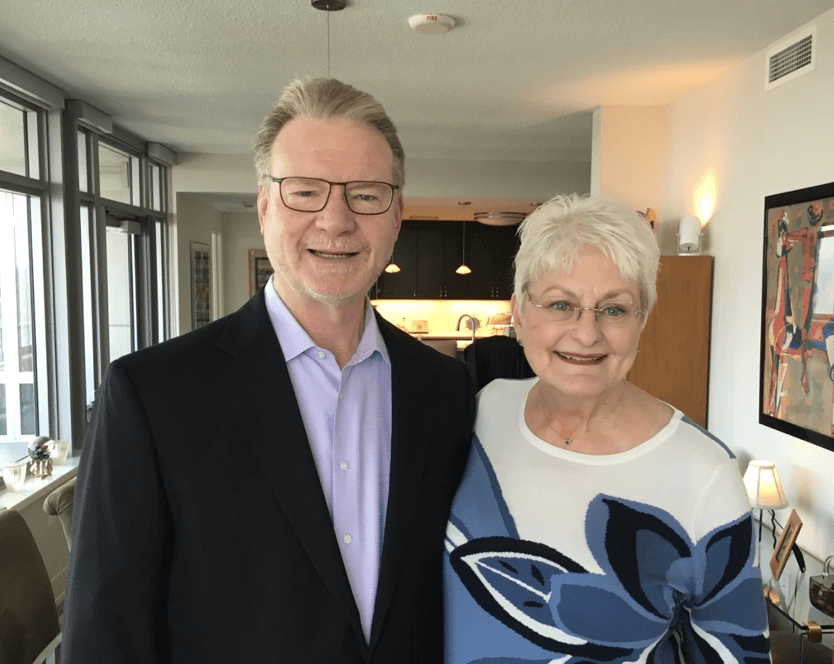
Richard Schreiner and Alison Graf

Thank you to Richard S. Schreiner (‘82 MS Computer Science) and his wife, Alison Graf, who recently established the Richard S. Schreiner ’82 and Alison Graf Scholarship Fund.

The endowed fund will provide scholarships to undergraduates in good academic standing in UWM’s College of Engineering & Applied Science. Preference will be given to students who are in the first generation of their families to attend college.

Richard Schreiner talks about why he chose to support the college’s Student Success Center.

In addition, the couple established the CEAS Student Success Fund, which will support staffing programs and services that help students enrolled in the college succeed academically and develop skills needed to complete their engineering degrees.

“We are pleased to establish both these funds, but the Student Success Fund is especially meaningful,” Richard said. “As a new undergraduate student in 1973, I needed significant remediation of my math skills as my high school did not offer preparatory calculus. From that experience I learned the importance of the services offered by the CEAS Student Success Center.”

About Richard Schreiner and Alison Graf

Richard was a first-generation college student and earned his BS in Electrical Engineering from Marquette University. While working for Johnson Controls, he earned his MS in Computer Science from UWM’s College of Engineering & Applied Science and received tuition reimbursement from the company. Knowing firsthand how helpful financial support was to his engineering career, he would become a consistent and generous contributor to undergraduate scholarships offered by the college.

Alison graduated in 1973 from Mount Mary College, Milwaukee, with a BA in Speech and Drama, a BA in French and a minor in Philosophy. She worked 33 years in Milwaukee’s radio and television industry as a broadcast personality and management executive at stations including WEMP/WMYX, WVTV-TV, and WFMR. She retired in 2007.

The college awarded Richard a Distinguished Service Award in 2007, and the Computer Science Alumnus of the Year Award in 2008. He retired from Johnson Controls in 2013 as a product development engineer.

In addition to his service to UWM, Richard volunteers for various nonprofit organizations and governmental units including the City of Milwaukee and Milwaukee County. He is a member of Toastmasters International (achieving Distinguished Toastmaster status in 2012) and a Life Senior Member of the Institute of Electrical and Electronics Engineering. He and Alison are long-time supporters of the arts in Milwaukee and Chicago.

WisDOT selects UWM’s IPIT to review 2 programs

faculty image xiao qin

In January, UWM’s Institute for Physical Infrastructure and Transportation (IPIT) received two research awards from the Wisconsin Department of Transportation.

Through these awards, IPIT will review and evaluate two programs that WisDOT carries out under state or federal rules; one program is meant to streamline highway projects, the other aims to increase disadvantaged business enterprises (DBE) participation in and success rate of winning highway project contracts.  

Both projects will be conducted by Xiao Qin, IPIT’s director and professor of civil & environmental engineering and his colleagues at the institute.

Evaluate Wis-DOT’s Design-Build program

A UWM team will conduct a third-party evaluation of Wis-DOT’s recently launched Design-Build program. The program streamlines highway improvement projects by bringing together engineering and construction industries at the outset, with the goals of reducing costs, accelerating project delivery, and enhancing synergy, innovation and communication.

The co-PIs on this project are Mark Gottlieb, IPIT’s associate director, and Scott Solverson, a research scientist with IPIT.

The team will review programs in other states, national best practices, and the processes WisDOT uses to select Design-Build projects. Qin says that the final report will include recommendations for process improvement and criteria with which to evaluate the program.

WisDOT awarded $78,228 for this one-year study.

Review Wis-DOT’s Disadvantaged Business Enterprise program

WisDOT carries out the federal government’s DBE program, which provides minorities, women and other eligible small businesses with opportunities to participate in highway, transit and airport contracts that are federally or state funded. The intent of the program is to improve the competitiveness of DBEs and increase their participation in Wisconsin’s highway projects.

UWM researchers will evaluate WisDOT’s DBE. Among the tasks: identify barriers to firms’ participation and methods to remove them; make recommendations to maximize DBE participation and its success rate.

Qin says the team will also recommend a DBE pilot training program to help set directions for developing and implementing a unique and robust DBE pilot training program in Wisconsin.

The PI on this project is Al Ghorbanpoor, emeritus professor, civil & environmental engineering and founding director of IPIT; co-PIs are Steve Trick, research scientist with IPIT, and Qin.

WisDOT awarded $138,178 for this 18-month study.