Dabagh, Wang receive grants to support promising, early-stage research in mechanobiology of wound healing and PFAS adsorbents
Two College of Engineering & Applied Science faculty members recently received Discovery and Innovation Grants (DIG) from UWM’s Office of Research. The DIG program supports high-quality, innovative, early-stage basic or applied research or creative projects that have the potential for later submission at three times the award value through external funding.
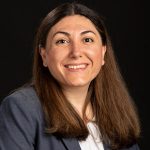
Mahsa Dabagh, assistant professor, biomedical engineering, was awarded a grant for her project “Role of mechanotransduction within wound tissue to characterize and design advanced dressings for non-healing wounds.” Her co-investigator on this project is Sandeep Gopalakrishnan, assistant professor in the College of Nursing.
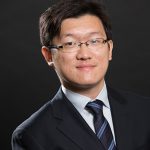
Yin Wang, Lawrence E. Sivak ’71 associate professor, civil & environmental engineering, was awarded a grant for his project “Elucidating the Role of Dissolved Organic Matter in Regulating the Sorption of Per- and Polyfluoroalkyl Substances (PFAS) by Engineered Adsorbents.” His co-investigators on this project are Laodong Guo, professor, School of Freshwater Sciences; and Shangping Xu, associate professor, Department of Geosciences.
Four undergrads start EV Club to support move from fossil fuels
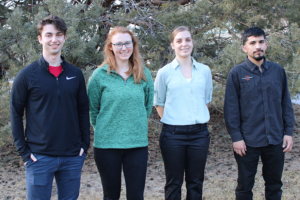
This semester, four of the college’s undergraduate students started a UWM student organization with the goals of promoting the use of electric vehicle and decreasing the use of fossil fuels.
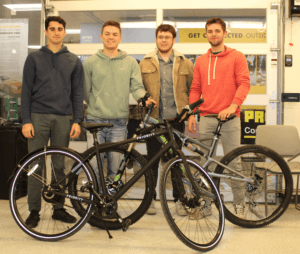
Pictured left to right are Jacob Mattioli (mechanical engineering), Brinn Blum (mechanical engineering), Garrett Kocourek (mechanical engineering) and Braeden Hills (civil engineering), who together launched the Electric Vehicle Club to give students hands-on experience converting conventional and human-powered vehicles (bikes, scooters, skateboards) to electric ones.
“We started EVC to leave a lasting impact on UWM and to teach students the importance of electrification of vehicles in a society where our dependence on fossil fuels is waning,” Kocourek says. “Electrification of public transportation is one of the best, and most feasible, ways to promote sustainability and make a significant impact in decreasing the consumption of fossil fuels.”
The club, which has eight members, is sponsored by Serial 1 (Harley-Davidson’s sub-brand specializing in e-bikes) and meets Wednesdays, noon-1 p.m. in the Kulwicki Garage. In April, Serial 1 donated two traditional bikes to the club, which club members will retrofit to function as EV bikes.
Rahman receives 4th Wisconsin Space Grant Consortium award; leads UWM’s space robotics research and teaching
The Wisconsin Space Grant Consortium (WSGC) has selected UWM’s Mohammad “Habib” Rahman as a 2022-2023 Research Infrastructure Program Grant award recipient, the fourth year the NASA-funded program has supported his robotics research or teaching.
Rahman is a Richard and Joanne Grigg Professor and associate professor, biomedical engineering and mechanical engineering, at UWM’s College of Engineering & Applied Science.
In April, the WSGC awarded Rahman a $10,000 grant with a match commitment of $10,000 for a one-year project that continues his investigation into creating an intelligent system for robot object manipulation.
His goal, he says, is to devise a means for multiple robots to work as a team that handles and manipulates large, heavy objects.
The research is being conducted for Mars exploration. Closer to home, potential applications include handling biohazardous material at hospitals and manipulation of large objects in industries and mines.
Rahman’s bio-robotics research supported by WSGC
Rahman is an expert in bio-robotics, including human-assist robots, service robots, mobile robots, medical robots, rehabilitation robotics, and exoskeleton robots for rehabilitation and motion assistance.
In 2020, he received a $10,000 WSGC Higher Education Incentives award to create a UWM course that introduced undergraduate and graduate students to mobile robot coordination. The course, Introducing Mobile Robots Coordination Control, began enrolling students in Spring 2021.
Also in 2020, the WSGC awarded Rahman a Research Infrastructure Program grant of $10,000 for his project Coordination Control and Obstacle Avoidance for a Team of Mobile Robots in Dynamic Environment. WSGC began supporting Rahman in 2019 with a $10,000 grant that laid the groundwork for his current investigation into creating an intelligent system for robot object manipulation.
Donor spotlight: Beth Gonia establishes scholarship for environmental engineering students
Thank you to Beth Gonia for her generous support of undergraduate students pursuing environmental engineering at UWM’s College of Engineering & Applied Science.
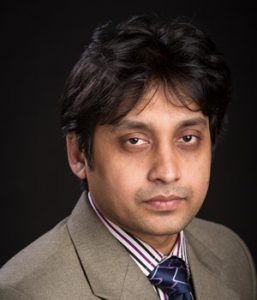
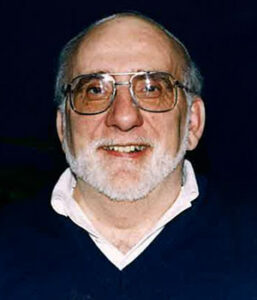
Beth recently established the Michael P. Gonia Memorial Scholarship in memory of her husband of 48 years, Michael (Mike) Gonia (pictured), a Bay View native, civil engineer and champion of education who was known for his loyalty and community service.
Mike had begun his college education at UWM in 1963 then transferred to UW-Madison to complete his degree, as was customary at the time. (Prior to 1971, UWM engineering students completed their freshman and sophomore years at UWM and their junior and senior years at UW-Madison). He graduated with a degree in civil engineering in 1968.
About Mike Gonia
Mike was born in 1942 and graduated in 1960 from Bay View High School. He began working with the City of Milwaukee as an engineering technician. With encouragement from friends, he enrolled at UWM, where he was active in the TKE fraternity. He met Beth at a fraternity/sorority mixer.
After earning his degree, Mike worked as a design engineer for the Illinois Department of Transportation and took post-graduate classes at Northwestern University.
He returned to his home state in 1969 and worked for the Wisconsin Department of Transportation for the next 30 years. During this time, he mentored many student interns and young engineers, attended graduate classes at UWM and participated in numerous Wis-DOT public hearings and seminars. At his retirement in 2000, Mike was district environmental design supervisor for District 2. His last project was the Lake Parkway (I-794).
Mike was active in the communities in which he lived and worked. In Hales Corners, where he lived with Beth, he served as chairman of the village’s Public Works Committee for more than 25 years, the Community Access Cable Committee and the Ecology Committee. For his Bay View High School Class of 1960, he co-chaired reunions and organized classmate data and communications.
Professionally, he was a life member of the American Society of Civil Engineers and the National Society of Professional Engineers.
Mike’s hobbies included attending old car shows, traveling, and following college football. An avid Badger fan, he and Beth followed the team to away games, including three Rose Bowls played in Pasadena and others played in Las Vegas and Hawaii.
Mike died in 2020 of pancreatic cancer at age 77.
If you would like to contribute to the Michael P. Gonia Memorial Scholarship fund for environmental students, please contact Jean Opitz, development director for the College of Engineering & Applied Science, at opitz@uwm.edu.
Hu advances to final round in Wisconsin Governor’s Business Plan Contest with submission for new OTC hearing aid
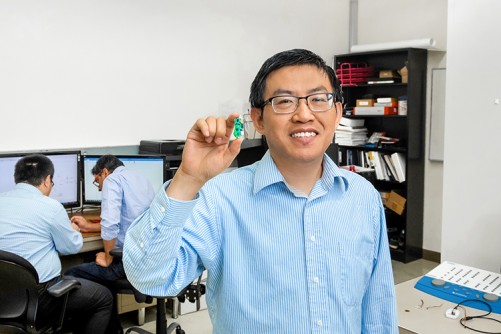
Congratulations to Yi Hu, associate professor of electrical engineering and computer science, who advanced to the finalist round of the 19th annual Wisconsin Governor’s Business Plan Contest with his submission for My Hearing Care, which makes better hearing more accessible and more affordable for the millions of people suffering from mild to moderate hearing loss.
In March, Hu was named one of 55 semi-finalists in the competition; Only 26 projects (10 percent of the initial pool) advanced in April to the final round. More.
Hu was also featured April 5 in the WisBusiness article “UWM engineer developing more accessible hearing aid.” More.
Art + Engineering: 2 professors and 14 students create installation that spotlights electronic and construction waste
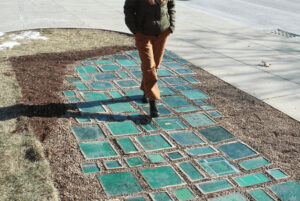
Unusual walkway tiles created at the University of Wisconsin-Milwaukee—using 95 percent recycled materials—now form an inspiring path in front of the engineering building at a New York university: a pedestrian stroll that spotlights problems inherent in electronic and construction waste.
The Binghamton University Art Museum commissioned Nathaniel Stern, professor of art and mechanical engineering, to create a long-term installation that calls attention to personal, institutional and governmental accountability in the production and disposal associated with technology and industry.
The result, installed in January, is “Circuit Boardwalk”—200-square feet of tiles made primarily of discarded circuit boards and concrete composed almost entirely of recycled materials. The concrete was made in UWM’s Advanced and Nano Cement Laboratory under the direction of Konstantin Sobolev, Lawrence E. Sivak ’71 Faculty Fellow and professor, civil & environmental engineering.
With their emerald-green color, the tiles invite pedestrians to walk atop them. When they do, they see the fine details of a printed circuit board—copper, gold and palladium—embedded in concrete and protected by a thin layer of resin.
Inspiring students to rethink waste systems and personal responsibility
In January, Stern and Sobolev attended the exhibition, installation and panel discussion at Binghamton University.
“It was a highlight of my career,” Stern says.
“The dialog between art and science, between inspiring action and change, and the technologies to do so, are key in the design of our futures,” he says. “We need to think about what we can do and change, individually; about the systems that create waste and our influence on them; and about new potentials and possibilities in both of those spaces.”
Each square tile—1.5” thick and of various widths – was created at UWM in Stern’s studio and Sobolev’s concrete lab.
To make them, Stern started with recovering circuit boards from trashed computers that were decommissioned and ready for recycling at UWM Surplus.
Sobolev, with his students, then created a concrete base composed of recycled materials left over from multiple research projects that otherwise would have been sent to landfill.
“Cement and concrete are the world’s most widely used construction materials,” says Sobolev, a recognized expert in innovative concrete materials. “The most promising research in the field today addresses the recyclability of concrete and reducing its carbon footprint.”
To this end, Sobolev is leading efforts to launch a National Science Foundation Concrete Advancement Network, in tandem with Arizona State University, Oregon State University and the University of Texas at Arlington, to tackle these very issues in collaboration with industry.
Fourteen UWM students from three UWM colleges/schools worked with Stern and Sobolev as project assistants on “Circuit Boardwalk.” The students’ work – their research contributions and travel to Binghamton – was supported by UWM’s Office of Undergraduate Research, which fosters faculty-student research across campus.
From Peck School of the Arts: Meghan Berger, Laura Bogyay, Mich Dillon and Mary Widener.
From the College of Engineering & Applied Science: Aparna Deshmukh, Behrooz Farahi, Paul George, Reed Heintzkill, Garrett Kocourek, Roy Wittenberg and Filip Zemajtis.
From the College of Letters & Science: Allison Getty, Ava Ladky and Madison Sveum.
“With the worsening state of the climate, it’s increasingly important to emblemize the problem of waste in a variety of ways,” says Kocourek, a senior in mechanical engineering.
His generation of engineers, Kocourek believes, must consider sustainability in all their work. “It will become a design constraint as we work to eliminate our dependence on fossil fuels and combat material shortages.”
“What’s your real engineering/computer science job like?” 4 alumni answer student questions
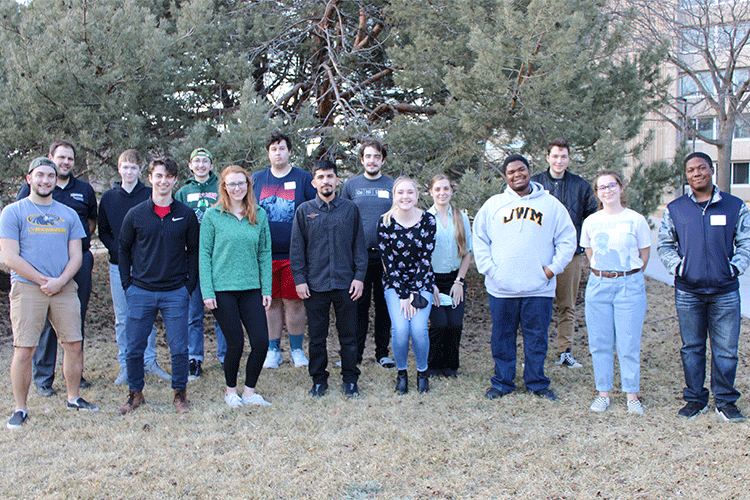
Four College of Engineering & Applied Science alumni recently took time to meet with ten current undergraduate students and share stories about what it’s like to work in the fields of engineering and computer science.
Students who live in the Engineering House for CEAS Majors, a Living Learning Community, talked with the alumni over dinner at the Sandburg Residence Hall in March. This event, hosted in person after a two-year hiatus due to the pandemic, is an example of the benefits provided to (engineering and computer science freshmen?) living in this LLC.
Ian Clark, senior software engineer at Northwestern Mutual (Computer Science)
Caitlyn Resinger, civil engineer at raSmith (Civil Engineering)
Kathleen Zeitz, process-product-metallurgical engineer at Clarios (Materials Science & Engineering).
Erick Rico-Sanchez, associate design engineer at Harley-Davidson Motor Company (Mechanical Engineering).
The event was coordinated by Steven Anderson, tutoring & mentoring coordinator in the college, and Tessa Parrish and Tony Seaks, resident assistants, and College of Engineering & Applied Science students.
Microsoft’s leader and UWM alumnus Satya Nadella honored by National Academy of Engineering
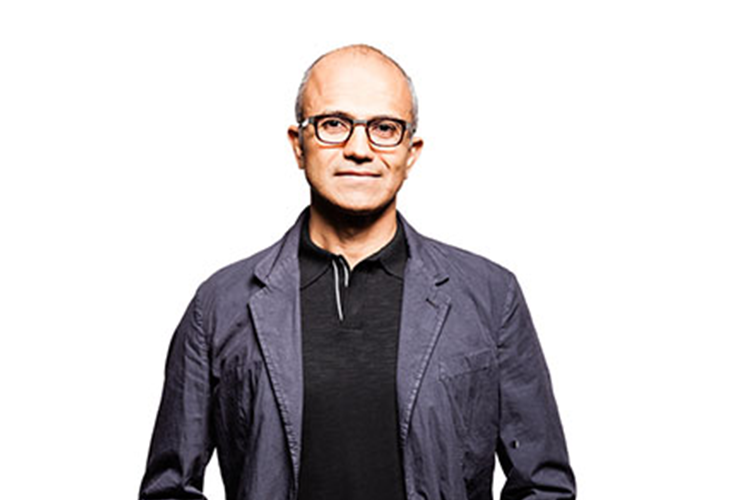
In February, the National Academy of Engineering (NAE) elected Satya Nadella— Microsoft chairman/CEO and UWM alumnus —as a new member. This is among the highest professional distinctions accorded to an engineer.
Nadella earned a master’s in computer science from UWM’s College of Engineering & Applied Science in 1990.
In naming him a member, the NAE cited Nadella’s role in advancing corporate computing infrastructure as a cloud service, and for international leadership on sociotechnical systems and practice.
For a complete list of NAE’s new members, click here.
Funding from Freshwater Collaborative of Wisconsin helps UWM expand hands-on opportunities for students
UWM will receive $777,277 from the Freshwater Collaborative of Wisconsin this year to enhance its water-related academic programs designed to help students interested in water-related fields at the 13 UW System universities. Among the projects funded are a statewide internship program being developed jointly by UWM and UW-Madison.
UWM is a pioneer in water-focused research. Water-related programs are offered in two of its schools.
UWM’s School of Freshwater Sciences is the largest institution of its kind on the Great Lakes and offers a bachelor’s degree program, two master’s degree programs and a PhD.
UWM’s College of Engineering & Applied Science offers a bachelor’s degree program in environmental engineering. Students learn to use the principles of engineering, soil science, biology and chemistry to develop solutions to environmental problems such as pollution and hazardous waste. Read more about environmental engineering at UWM.
CSI awards Rahman $50K to develop augmented reality digital twin of testbed
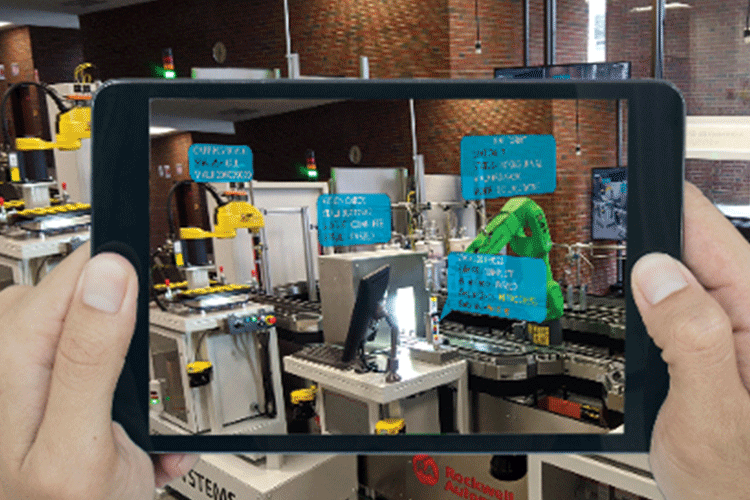
Habib Rahman, Richard and Joanne Grigg Professor and associate professor, biomedical engineering and mechanical engineering, has been awarded $50,000 from UWM’s Connected Systems Institute (CSI) to create an augmented-reality digital twin of CSI’s state-of-the-art vial filling system.
The one-year project will explore the capabilities of digital twin technology in manufacturing, Rahman says.
“Digital twins can reduce downtime, cut the time and cost of product development, and be used for predictive maintenance,” Rahman says.
The digital twin market is growing significantly, especially in the machine and equipment health monitoring segments. Future applications for digital twins include any environment that is inaccessible or hazardous to humans, including space exploration, land mining and nuclear plants.
The aim of Rahman’s project is to develop a framework for remote monitoring and data visualization of the testbed using PTC Kepware, Microsoft Azure IoT (Internet of Things) Hub, and an IIOT (Industrial Internet of Things) platform called the PTC ThingWorx.