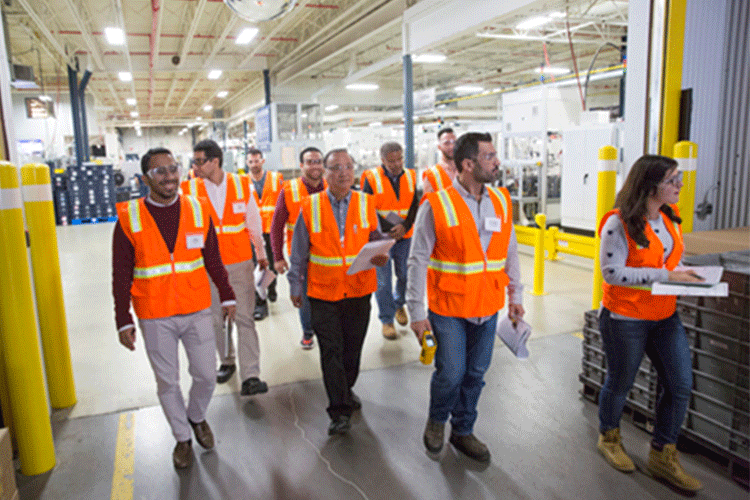
Accreditation from ABET—a nonprofit, non-governmental agency—assures undergraduate programs meet standards to produce graduates ready to enter technical fields that are leading the way in innovation and emerging technologies.
This is the first time that ABET accreditation has been sought for the Biomedical Engineering Program, which has grown significantly over the past several years.
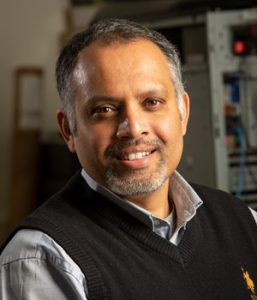
UWM’s Biomedical Engineering Program emphasizes engineering design to prepare students for careers in biomedical industries—or for launching startups—in this fast-growing field, says Dev Misra, professor of biomedical engineering and chair of the Biomedical Engineering Department-like body. Misra led the accreditation process.
For undergraduate students, the new accreditation confirms that the college has added a strong option to its well-established mix of degree programs.
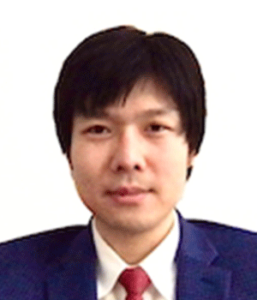
Welcome Xeufeng Bao, visiting assistant professor, biomedical engineering
The Department of Biomedical Engineering welcomes Xeufeng Bao, visiting assistant professor.
Bao’s research interests include: human motor control, rehabilitation robotics, neuromusculoskeletal dynamics, and exoskeletons.
Most recently, Bao completed his post-doc research at Case Western Reserve University’s School of Medicine, at the Advanced Platform Technology Center, a U.S. Department of Veterans Affairs rehabilitation research center. The center addresses clinical needs of disabled veterans by applying engineering and basic science principles to the design of new rehabilitation interventions.
Bao holds a PhD from the University of Pittsburgh, where he conducted research in the Neuromuscular Control and Robotics Laboratory; a master’s degree from the University of Edinburgh (UK); and a bachelor’s degree from Xi’an Jiaotong University (China).
“I learned that UWM was a prominent university when I attended Pitt, because many Pitt graduates went on to work at UWM,” Bao says. “When I visited Milwaukee to attend a conference, I discovered a beautiful city, one that left a deep impression on me.”
An avid basketball fan, Bao says that a bonus is living in a city that hosts an NBA team.
Welcome Xeufeng!
UWM gets major clean-energy grant from DOE
UWM engineering students & faculty, and Wisconsin manufacturers to gain from U.S. Department of Energy Department’s unprecedented funding
UWM engineering faculty and students, Wisconsin manufacturers and the Wisconsin environment stand to benefit from a record-breaking investment by the U.S. Department of Energy to help remove barriers to decarbonization in the manufacturing sector. In July, the DOE committed $60 million over the next five years to its 32 university-based Industrial Assessment Centers (IACs) nationwide.
UWM, which operates Wisconsin’s only IAC, will receive an unprecedented grant from the Department of Energy, in addition to funds from industrial partners and the Wisconsin Focus on Energy Program. The investment is part of the Biden Administration’s goal for the U.S. to achieve a clean energy economy.
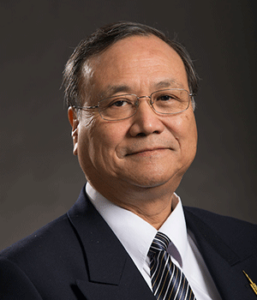
Under the direction of Ryo Amano (pictured), professor, mechanical engineering, the IAC at UWM has provided in-depth, free energy assessments to more than 600 small- and medium-sized manufacturers and utilities—about 20 per year. On average, they received energy-consumption recommendations to save about $150,000 (15 percent) per facility annually, higher than the national IAC average of $130,000.
This unprecedented round of DOE funding will strengthen the impact of the nation’s energy systems. In addition to recommending strategies related to energy, the centers will broaden their focus to include enhancing decarbonization, electrification, cybersecurity, smart manufacturing, promoting resiliency planning, and increasing the number of businesses served in underrepresented communities.
America’s “best and brightest” students helping manufacturers save energy
“America’s best and brightest university students are successfully helping local manufacturers reduce pollution, save energy, and cut their electricity bills,” said Secretary of Energy Jennifer M. Granholm, in a DOE press release.
The DOE’s support will help ensure that UWM can train energy engineering students in emerging technologies in the field.
Which Wisconsin manufacturers will benefit from DOE funding
The DOE’s funding also means Wisconsin small- and medium-sized industries, and those located in disadvantaged communities, will receive a substantial economic impact for the next five years, says Amano.
For all clients, Amano says, the program identifies opportunities for optimizing energy efficiency and environmental performance and promotes emerging concepts and technologies, research and development for renewable and alternate supply heat/power for energy-intensive manufacturers and wastewater treatment facilities.
On average, companies implement around 40% of the Industrial Assessment Center’s recommendations, he says, and break even on their investments in two years.
Amano will conduct overall industrial assessments for energy savings, water and wastewater treatment. Smart manufacturing assessments will be conducted by Wilkistar Otieno, associate professor and department chair, industrial & manufacturing engineering. Energy assessments within the foundry industry will be led by Pradeep Rohatgi, State of Wisconsin and UWM Distinguished Professor, materials science & engineering, and director of the UWM Center for Composite Materials.
Thank you to the Wisconsin partners who made this possible
Amano has established an outstanding reputation internationally for his energy research. In Wisconsin, he has developed partnerships with government agencies, industrial entities, non-profit organizations, and other academic institutions, which act as satellite centers.
At every step, U.S. Senator Tammy Baldwin and Wisconsin Governor Tony Evers have strongly supported the IAC and its mission, Amano says.
Government partners include:
Wisconsin Government Office of Sustainability and Clean Energy
City of Milwaukee’s Environmental Collaboration Office
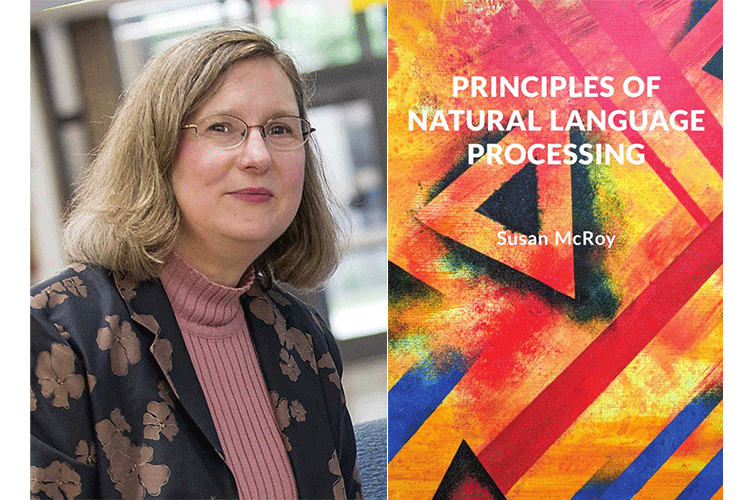
With help from the UWM Libraries, McRoy publishes free book on natural language processing
Motivated to save UWM students money on textbooks, UWM Libraries is supporting faculty members who wish to publish “open textbooks.” These books are written by or remixed by UWM authors, have Creative Commons licenses, and are made available free or low-cost to UWM students and others through digital or print versions.
In August, Susan McRoy, professor and department chair, Computer Science, became the third UWM faculty member to use this library’s service with the publication of “Principles of Natural Language Processing,” a 264-page overview of the discipline of designing and using computer programs to analyze or generate human language.
About 40 UWM students annually take a class on natural language processing. McRoy says that the leading book on the topic costs $165 ($55 for paperback) and is over 1,000 pages, which can be overwhelming.
“I know what our students need to learn and will read,” she says. “My goal was to write a succinct book that presumes only knowledge of computing with data structures and to make the material accessible to students and the general public, including working computer science professionals who want to build their skills.”
For assistance with an open textbooks, please contact Kristin Miller Woodward, teaching and learning team lead at UWM Libraries, at kristinw@wm.edu.
Click here to read McRoy’s book, free of charge, or buy a paperback version for $26.70; or you can order a print version from most bookstores, such as Barnes & Noble.
D’Souza awarded a 3-year grant from NSF for research on 4D-Flow MRI
Congratulations to Roshan D’Souza, associate professor, mechanical engineering, who was awarded a three-year, $298,500 National Science Foundation grant to support his research to advance the newest generation of MRI technology.
Magnetic Resonance Imaging (MRI) is rapidly evolving; 4D MRI adds a time dimension to this traditionally 3D technology, making it possible to image and analyze biological processes, such as blood flow (or hemodynamics) over time and track variations.
However, there are hurdles on the road to utilizing the newest technology. Accurate and reliable hemodynamic analysis of cardio-vascular flows from 4D-flow MRI data are time consuming and difficult, sometimes impossible, due to factors including low spatio-temporal resolution, noise, and image artifacts, says D’Souza.
Working with researchers at Northern Arizona University, D’Souza aims to use physics informed deep learning (a type of machine learning) to address these three issues and create images that are sharp, clear and free of electronic noise.
The project—entitled “Collaborative Research: Enhanced 4D-Flow MRI through Deep Data Assimilation for Hemodynamic Analysis of Cardiovascular Flows” – will provide opportunities to train graduate students at UWM and NAU in the latest deep-learning based techniques used in engineering, engage undergraduate students in research at both universities, and engage Milwaukee high school students, many of whom belong to marginalized communities, through UWM’s summer programs.
Forty-eight percent of adult Americans have cardiovascular diseases, which include atherosclerosis, aneurysms, and congestive heart failure. Hemodynamic forces play a critical role in the development of these conditions. For example, the forces related to blood’s interaction with the walls of an artery have a major impact on the initiation and progression of aneurysms, atherosclerosis, and vasospasms.
The research builds on D’Souza’s previous work, in collaboration with the Medical College of Wisconsin, on new methods of analysis for 4D-Flow MRI to support diagnosis and treatment of brain aneurysms.
From TMJ4: $2 million gift to UWM to create scholarships for Milwaukee high school students and increase diversity in tech education
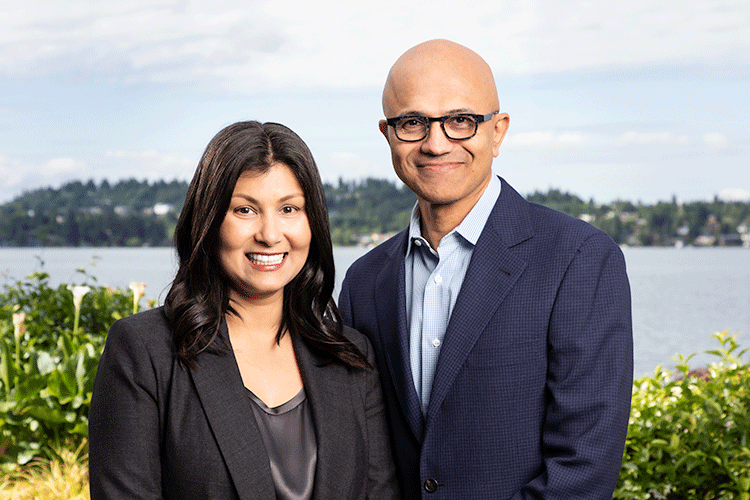
In June, the couple donated $2 million to create the Fund for Diversity in Tech Education at UWM. The fund will support efforts to recruit, retain and graduate undergrads from marginalized and underserved communities, preparing them with the skills to pursue careers in computer science, data science and information technology.
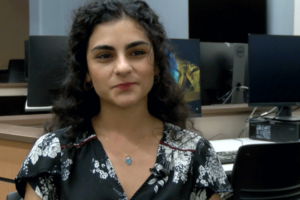
Mariam Adams, senior in computer science
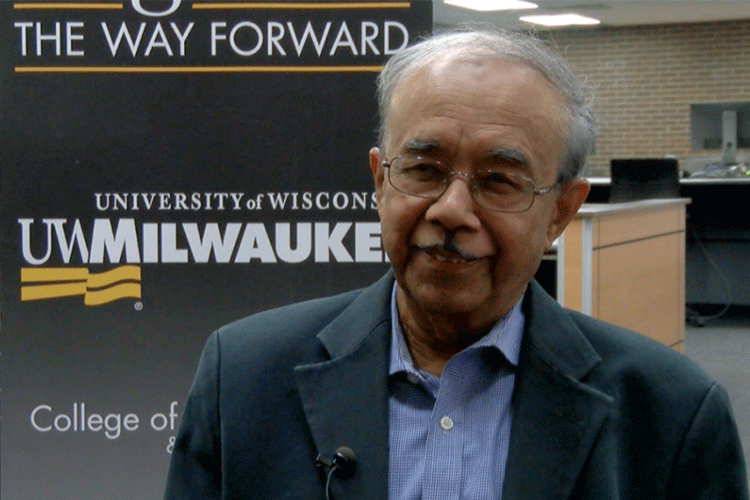
Mariam Adams, a senior in computer science, and Professor Emeritus K. Vairavan, former chair of the Computer Science Department and one of Satya Nadella’s former professors, spoke with the reporter.
“When I walk into a classroom and I don’t see people that look like me, I feel like I don’t belong and that I shouldn’t be here,” said Adams.
“We are not where we should be as a nation,” said Vairavan in referring to diversity within the technical professions. “There are lots and lots of students that have the potential to succeed in high-tech fields, but they don’t have the opportunity.”
How to Join the Effort to Fund Diversity in Higher Ed
The Nadellas hope to inspire others to support this important cause. “We know that while talent is everywhere, opportunity is not. And when people have access to education and skilling, they create new opportunity for themselves and their communities,” Satya and Anu Nadella said.
For information on joining this effort, please contact Jean Opitz, development director, UWM’s College of Engineering & Applied Science, at opitz@uwm.edu.
Satya Nadella—alumnus and Microsoft CEO—and wife Anu donate $2M to UWM to increase diversity in tech education
Microsoft CEO Satya Nadella (’90 MS Computer Science) and his wife Anu donated $2 million to the University of Wisconsin-Milwaukee in June to create the Fund for Diversity in Tech Education at UWM.
The fund will support efforts to recruit, retain and graduate undergrads from marginalized and underserved communities, preparing them with the skills to pursue careers in computer science, data science and information technology.
“We know that while talent is everywhere, opportunity is not. And when people have access to education and skilling, they create new opportunity for themselves and their communities,” Satya and Anu Nadella said.
The Nadellas’ gift will support pre-college programming, undergraduate scholarships, student services, and emergency grant support.
Tempus imperdiet nulla malesuada pellentesque. Dignissim sodales ut eu sem integer vitae justo eget magna. Elementum nibh tellus molestie nunc non blandit massa. Suspendisse potenti nullam ac tortor vitae purus faucibus ornare suspendisse. Sit amet consectetur adipiscing elit duis. Pretium fusce id velit ut tortor. Quis imperdiet massa tincidunt nunc pulvinar sapien et ligula. Eleifend quam adipiscing vitae proin sagittis nisl rhoncus mattis. Maecenas volutpat blandit aliquam etiam erat. Semper feugiat nibh sed pulvinar proin gravida hendrerit lectus a.
Ut ornare lectus sit amet est. Quis enim lobortis scelerisque fermentum dui faucibus in ornare quam. Sapien pellentesque habitant morbi tristique senectus et netus et malesuada. Et netus et malesuada fames ac turpis egestas integer. Vitae turpis massa sed elementum tempus. Neque aliquam vestibulum morbi blandit cursus risus at. Lacinia quis vel eros donec ac odio tempor orci. Turpis massa sed elementum tempus. Eget est lorem ipsum dolor. Condimentum vitae sapien pellentesque habitant morbi. Lectus mauris ultrices eros in cursus. Rhoncus aenean vel elit scelerisque. Turpis egestas pretium aenean pharetra. Tellus pellentesque eu tincidunt tortor aliquam nulla facilisi. Nunc non blandit massa enim. Ultrices tincidunt arcu non sodales.
Enim nunc faucibus a pellentesque
Pellentesque habitant morbi tristique senectus. Nullam vehicula ipsum a arcu cursus vitae congue mauris. Lectus nulla at volutpat diam ut venenatis tellus in. Enim nunc faucibus a pellentesque sit amet. Posuere lorem ipsum dolor sit amet consectetur adipiscing elit duis. Integer quis auctor elit sed. Lorem ipsum dolor sit amet consectetur adipiscing elit pellentesque habitant. Integer eget aliquet nibh praesent. Bibendum at varius vel pharetra vel turpis nunc. Tristique senectus et netus et malesuada fames ac turpis egestas. Interdum consectetur libero id faucibus nisl tincidunt eget nullam. Est ullamcorper eget nulla facilisi. Molestie ac feugiat sed lectus vestibulum mattis ullamcorper.
Odio eu feugiat pretium nibh. Lorem mollis aliquam ut porttitor leo a diam sollicitudin. Eget magna fermentum iaculis eu. Non quam lacus suspendisse faucibus. Dolor sit amet consectetur adipiscing elit ut aliquam purus sit. Nunc sed blandit libero volutpat. Nibh mauris cursus mattis molestie a. Urna porttitor rhoncus dolor purus non enim praesent elementum facilisis. Nibh tellus molestie nunc non blandit. Imperdiet massa tincidunt nunc pulvinar sapien et ligula ullamcorper malesuada. Neque convallis a cras semper auctor neque vitae tempus quam. Lacus sed turpis tincidunt id aliquet risus feugiat. Vel quam elementum pulvinar etiam. Tellus elementum sagittis vitae et leo duis. Sit amet justo donec enim diam vulputate ut. Id eu nisl nunc mi ipsum faucibus vitae. Risus viverra adipiscing at in tellus integer feugiat scelerisque varius. Fusce id velit ut tortor pretium viverra suspendisse potenti nullam.
Gravida in fermentum et sollicitudin
Elementum pulvinar etiam non quam lacus suspendisse. In arcu cursus euismod quis viverra nibh cras pulvinar mattis. Ornare arcu odio ut sem nulla pharetra diam. Ultrices mi tempus imperdiet nulla malesuada pellentesque elit eget gravida. Arcu dictum varius duis at. Nisl nisi scelerisque eu ultrices vitae auctor eu augue. Diam quis enim lobortis scelerisque fermentum dui. Enim ut sem viverra aliquet eget sit amet. Neque sodales ut etiam sit amet nisl purus in mollis. Nulla pellentesque dignissim enim sit amet venenatis. Non sodales neque sodales ut etiam sit amet nisl purus. Viverra justo nec ultrices dui sapien eget mi proin sed.
Pellentesque habitant morbi tristique senectus. Nullam vehicula ipsum a arcu cursus vitae congue mauris. Lectus nulla at volutpat diam ut venenatis tellus in. Enim nunc faucibus a pellentesque sit amet. Posuere lorem ipsum dolor sit amet consectetur adipiscing elit duis. Integer quis auctor elit sed. Lorem ipsum dolor sit amet consectetur adipiscing elit pellentesque habitant. Integer eget aliquet nibh praesent. Bibendum at varius vel pharetra vel turpis nunc. Tristique senectus et netus et malesuada fames ac turpis egestas. Interdum consectetur libero id faucibus nisl tincidunt eget nullam. Est ullamcorper eget nulla facilisi. Molestie ac feugiat sed lectus vestibulum mattis ullamcorper.