Qin named director of IPIT: Highway safety expert to lead UWM’s work on solving national transportation issues

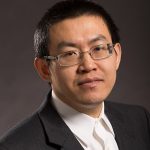
Xiao Qin, a professor in civil & environmental engineering at UWM, has been named director of UWM’s Institute for Physical Infrastructure & Transportation (IPIT).

Qin is a transportation engineer and a nationally renowned expert in transportation data analytics and highway safety.

His appointment follows the retirement of founding director Al Ghorbanpoor, professor emeritus, civil and environmental engineering.

IPIT trains an interdisciplinary lens on solving both local and national transportation issues. Founded in 2017, the institute brings together faculty, industry representatives, and others with expertise in engineering, computer science, urban planning, social science, economy, and policy to find solutions to physical infrastructure and transportation problems.

As the state and nation face questions of allocating resources to infrastructure design, building, repair, maintenance and operations, UWM’s extensive research on creating safer roads, preventing road and bridge failure, preparing for vehicles of the future, increasing the use of mass transportation, creating transportation alternatives for seniors, and more are seen as paramount to addressing the state’s challenges.

IPIT’s new leadership pairs research excellence with public industry

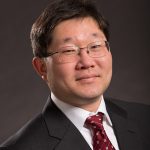
Mark Gottlieb will continue his role as associate director of the institute. Gottlieb served as Wisconsin’s Transportation Secretary from 2011 to 2017.

This leadership pairing of academic research with boots-on-the ground experience is seen as crucial to solving regional and state transportation issues that breach the domain of engineering.

“Together we will tackle a diverse range of problems,” says Qin, “from technological, economic and policy issues to transportation mobility, safety, equity and sustainability.”

Qin is a nationally renowned transportation engineer and expert in highway safety analytics

Qin and his UWM research team have collaborated with the Wisconsin Department of Transportation for years to better position Wisconsin as a leader in transportation and safety efficiency. For example, he successfully led an initiative in 2018 by developing strategies to modernize WisDOT’s legacy spatial and location management systems and helped the agency to identify crash risk factors and evaluate safety improvement countermeasures.

Qin’s research identifies critical issues and solutions to improve transportation systems. He uses statistical modeling, data analytics and engineering techniques to analyze factors –including roadway design, traffic control, weather, vehicle technologies, driver characteristics and behavior –that contribute to motor vehicle crashes, travel costs, traffic congestions and more.

He is a committee member of the Transportation Research Board, editor of both the Transportation Research Record and the Journal of Transportation Safety & Security, and an advisory board member of Accident Analysis and Prevention. He co-authored the textbook Highway Safety Analytics and Modeling, which addresses how to make better engineering and policy decisions using the latest methods and tools for collecting and analyzing highway crash data.

Gottlieb, a distinguished alumnus, brings 20 years’ experience to new post

Gottlieb’s extensive experience and understanding of Wisconsin’s transportation needs are key to developing practical solutions grounded in the latest fundamental knowledge.

In addition to serving as Wisconsin’s Transportation Secretary for six years, he has more than 20 years’ experience as a civil engineer in both the public and private sectors. He also served in the Wisconsin State Assembly for eight years and was mayor of the City of Port Washington. He is a UWM alum, having received bachelor’s and master’s degrees in civil engineering, and was honored as a College of Engineering & Applied Science Distinguished Alumnus in 2013.

“It’s a great opportunity to return to UWM to help Professor Qin and the other affiliated faculty members advance the goals of the institute to solve our state’s transportation problems,” Gottlieb said.

His work for the institute will include strengthening external partnerships, helping to identify research opportunities to solve real-world problems and assisting in the planning for research symposia, seminars and other events.

This expertise and knowledge will help ensure that the research undertaken at IPIT—by faculty and students—will have a significant impact on the state’s most pressing transportation problems.
UWM receives first NATO grant; researchers aim to expand radar’s, lidar’s reach

George Hanson

For the first time, the University of Wisconsin-Milwaukee has received research funding from NATO’s Science for Peace and Security Programme (SPS).

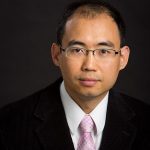
George Hanson, professor, electrical engineering, at UWM’s College of Engineering & Applied Science will be the principal investigator of a $404,000 international collaborative research project. The goal is to expand and enhance radar’s and lidar’s capabilities through the quantum (atomic level) properties of light, creating the capability of mapping objects too small to be picked up by traditional radar. “This could allow the detection of very small objects, and the detection of objects in very noisy and complicated environments,” Hanson says.

“The College of Engineering and Applied Science is honored and excited to receive a research grant of this type from NATO,” said Andrew Graettinger, the college’s associate dean for research. “This is a great opportunity for us to advance science and diplomacy with our partnering universities in NATO countries.”

SPS promotes cooperation between NATO member states and partner nations on scientific endeavors and funds security-relevant activities that respond to NATO’s strategic objectives.

The three-year project–Constructing Novel Non-Classical States of Electromagnetic Field for Far-Field Sensing, RADAR and LIDAR applications – starts Aug. 15 and is funded by SPS’s Emerging Security Challenges Division. Research funded by this division must have a clear link to security and address counter terrorism, energy security, cyber defense, environmental security, or defense against chemical, biological, radiological and nuclear materials or weapons.

In addition to UWM, collaborators on the project are from three institutes in NATO-member countries: Tel Aviv University, Israel; University of Exeter, UK; and the Institute of Physics, Belarus.

UWM tackling main challenge to quantum radar

The basic principle of radar, Hanson explains, is to send trillions of photons with relatively long wavelengths (a few centimeters); this electromagnetic signal hits an object and returns to the radar’s antenna. From this, the target’s size, speed and distance from the radar can be measured.

Quantum radar would use just a few photons that have quantum properties not observable when many photons are involved. This may allow one to pinpoint small objects and filter unwanted electromagnetic noise from other objects that the antenna picked up.

UWM will tackle the existing main challenge to this technology: generating the correct quantum state of light to be used. “We have considerable experience working with the targeted wavelengths,” Hanson says. “Generating the required quantum states will be new to us, and very exciting.”

Potential applications of research results, he says, include military and civilian radar, and lidars.

Two UWM engineering doctoral students will work with Hanson on this project.

In another project, Hanson is one of two UWM researchers collaborating in search of breakthroughs for using light to transmit data, which has vast implications for the speed, bandwidth and efficiency technology.

VP Kamala Harris visits college’s energy research labs; highlights clean energy economy, infrastructure investment

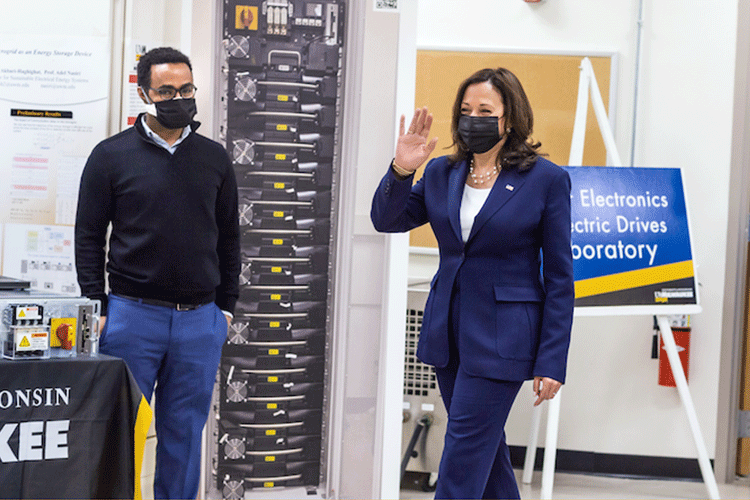
Vice President Kamala Harris enters lab, waving

Vice President Kamala Harris toured UWM’s clean energy labs on May 4. During her visit, researchers in UWM’s College of Engineering & Applied Science shared their work on sustainable energy, including next-generation electric car fast chargers, wind turbines, and smart microgrids. “It’s an example of the kind of transformative research we do at UWM,” said Chancellor Mark Mone.

Harris discussed support for research and investment in universities and for the Biden Administration’s planned investment in U.S. infrastructure.

UWM was chosen as a stop on Harris’ promotion tour in part because of its longstanding work with businesses to improve their energy efficiency and reduce their carbon footprints. The U.S. Department of Energy has supported an Industrial Assessment Center at UWM for more than 20 years, which is directed by Ryo Amano, professor, mechanical engineering. More than 600 Wisconsin companies and water treatment plants have used the IAC’s services to reduce energy and water consumption, enhance cybersecurity, and adopt smart manufacturing technology.

Chancellor’s message.

UWM Report story.

The day in photos

UWM is a leading research institution in energy storage and electric grid technology. Advances in these areas could help America successfully switch to greener technologies.

On May 4, UWM College of Engineering & Applied Science researchers shared highlights of their work in sustainable energy with Vice President Kamala Harris. “It’s an example of the kind of transformative research we do at UWM,” said Chancellor Mark Mone.

Media Coverage

Media coverage of VP’s visit, UWM’s clean-energy technology research.

UWM’s IAC

UWM’s DOE-funded Industrial Assessment Center has helped 600 WI manufacturers reduce energy use.

People who helped

Faculty and students helped welcome Vice President Kamala Harris and make her visit a success each step of the way.

Hu receives license for company to make Smartphone app that is alternative to hearing aids

faculty member yi-hu

Congratulations to Yi Hu, associate professor, electrical engineering, who together with Christina Runge, professor in the Department of Otolaryngology & Communication Sciences at the Medical College of Wisconsin, received an exclusive license for Ascending Hearing Technologies LLC from the UWM Research Foundation.

Hu and Runge have developed a high-performance, personalized, convenient, low-cost Personal Sound Amplification Product (PSAP) in the form of a smartphone app, to bring improved hearing to those who desire amplification in daily life. It is an alternative to a hearing aid.

New to the marketplace, PSAPs—sold over the counter and worn in the ear—transmit and optimize sounds for people with mild to moderate hearing loss.

This research has been supported by a $163,946 award and a $99,731 supplement from the National Institutes of Health for a Phase I clinical trial STTR (Small Business Technology Transfer) grant for the Custom-Fit Personal Sound Amplification Smartphone App. (Originally a one-year trial, it has been extended to three years due to COVID-19.)

The team was also selected for a $75,000 match fund from the Wisconsin Center for Technology Commercialization.

Patents issued to Chang, Sung, Silva

faculty image woo-jin-chang
Woo Jin Chang
faculty member yongjin sung
Yongjin Sung
Marcia Silva
Marcia Silva

The UWM Research Foundation Awards in March recognized researchers campus-wide who were inventors for patents issued in 2020.

Congratulations to:

Woo Jin Chang, associate professor, mechanical engineering, who was awarded the patent Contamination Detection Device and Method.

Chang collaborated with researchers at UW-Madison to create a novel, heavy-metal sensor. The research was funded by the Water Equipment & Policy Center and boosted by participation in the National Science Foundation’s I-Corps Program. The sensor is now licensed by three WEP members, non-exclusively, and Chang is working with Baker Manufacturing to develop and test a prototype of a low-cost, portable, heavy-metal sensor that could be used on-site to detect lead in water in two minutes or less. Read more about Chang’s work with Baker.

Yongjin Sung, associate professor, mechanical and biomedical engineering, who was awarded the patent Snapshot Optical Tomography System and Method of Acquiring an Image with a System.

This quick and accurate imaging device uses holography and tomography to provide real-time snapshots of cells or materials in 3D. It could be used in biological sampling and for quality insurance to detect impurities or contaminants in samples. Read more about Sung’s research.

Marcia Silva, an adjunct professor in the college and director of the Water Technology Accelerator, and David Garman, founding dean (retired) of the UWM School of Freshwater Sciences, were awarded the patent Porous Decontamination Removal Composition.

The technology uses modified zeolite material that can remove phosphorous from contaminated water sources; the phosphorous and the porous mineral material can be recovered for reuse. The technology is licensed by ZAPL.

Watts Water, a WEP member, licensed (non-exclusively) two other of Silva’s technologies: a biofilm sensor and zeolite-based water pollutant adsorbent material.

Read more about Silva’s research here.

Watch the 13-minute video of the UWM Research Foundation Awards, 2021 here.

Solving a MKE stormwater problem: 4 civil engineering alumni help design winning, green idea

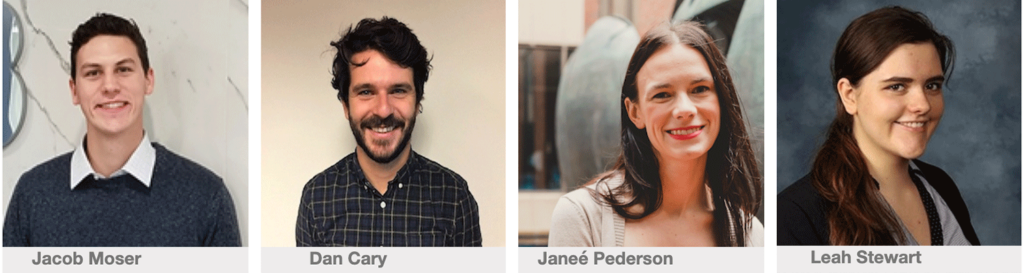
Jacob Moser, Dan Cary, Janee Pederson, Leah Stewart

Imagine the often grimy patches of earth under highway overpasses transformed to green spaces that help clean our drinking water source, store water after heavy rains, and provide a space for public agencies to grow trees.

For their visionary, sustainable design featuring stormwater-fed tree farms planted in the shadows of Milwaukee’s highway overpasses, four UWM civil and environmental engineering alumni are enjoying accolades.

The alumni were part of a nine-member, interdisciplinary team from HNTB, a national, design consulting firm, that in February was awarded first place and $5,000 in Milwaukee Metropolitan Sewerage District’s (MMSD) 2020 Greater Milwaukee Green Infrastructure Overpass Challenge. The contest, funded by the Tellier Foundation, asked teams for innovative designs to manage polluted stormwater runoff from freeway overpasses.

“It’s an exciting time to be working in this profession”

Team HNTB included four graduates of UWM’s College of Engineering & Applied Science’s Civil & Environmental Engineering programs: Dan Cary (MS 2019, BS 2011); Jacob Moser (BS 2019): Janeé Pederson (MS 2018, BS 2014); and Leah Stewart (BS 2020).

Stewart says UWM’s professors, coursework and internships prepared her to work in a rapidly changing field, one that is now addressing urban drainage needs. “Green and blue infrastructure is an important part of that change,” she says, adding that she enjoys being part of the growing movement to address the nation’s infrastructure in a manner that considers the environmental effects of decisions.

“It’s an exciting time to be working in this profession,” Stewart says.

Tree farms are the heart of HNTB’s design  

The heart of the team’s design is salt- and shade-tolerant trees that are drip-irrigated by stormwater collected from an overpass. “The water from overpasses is really dirty and polluted,” explains Pederson. Treating it as a resource, she says, could help prevent pollution from reaching lakes and rivers and reduce the volume of water that enters the city’s water system.

The remaining area of the team’s design includes a walking path constructed with pervious pavers, benches made from recycled materials, sculptures created by local artists using recycled materials, and native landscaping. Educational signs support lessons on ecology and water quality.

Like all entries to the contest, Team HNTB’s design aimed to capture 2-inches of rain for a hypothetical roadway drainage area 50 feet wide by 200 feet long, 100 feet above the urban landscape.

The tree farm would act as an urban nursery, says Pederson. Public sector organizations (WisDOT, the city of Milwaukee, for example) would buy saplings on their own, then use the underpass to grow them. When their trees reached maturity, they would be replanted elsewhere.

Because mature trees can cost significantly more than saplings, this could save money on public projects. Meanwhile, Pederson says, the trees would be acting as sponges as they grew toward their hardened water sources above.

You can see the top three submissions to the Overpass Challenge here.

Milwaukee’s growing stormwater problem

Polluted stormwater runoff is one of the biggest threats to rivers and lakes across the United States. When rainwater does not get soaked up by the ground, it can pick up pollutants as it runs along surfaces to join the water system. The paved landscapes of an urban setting contribute to this problem.

In coming years, more stormwater could enter Milwaukee’s sewer system. Changing weather patterns suggest a warmer and wetter climate in the region’s future – including shorter-lasting, higher-intensity storms. In addition to the threat of increased water pollution, these higher volumes of stormwater may be more than our infrastructure can handle.

UWM part of the solution

Through its civil and environmental engineering programs, UWM is helping to meet the need for new ideas to solve these problems.

“UWM’s location is key,” says Pederson, who completed three summer internships with MMSD while a UWM undergraduate student. “Milwaukee has become a hub for water-focused businesses, technologies, talent and collaboration, a place where students can find a variety of opportunities for hands-on experiences through internships and the like.”

To meet the enthusiastic and growing demand for environmental engineers, UWM in 2020 launched a BSE in Environmental Engineering. The interdisciplinary program is training students in the broad environmental field of engineering, including air, water and soil. It augments UWM’s existing relationships with more than 200 water technology businesses in the region and with economic development organizations dedicated to advancing freshwater technologies.

You can learn more about the BSE in Environmental Engineering here.

Spraying away the COVID-19 virus

Konstantin Sobolev in gym
Konstantin Sobolev

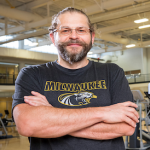
Konstantin Sobolev, professor, civil & environmental engineering, was featured in UWM Research, the university’s flagship research magazine.

The article discusses Sobolev’s vision and work to create a coating that would, for the first time, accomplish two goals in one product: repel and sterilize virus-laden droplets. Surfaces treated with the coating—such as gym equipment, doorknobs, keyboards—would require less frequent cleaning, and the resulting technology could improve preparedness for future outbreaks of airborne pathogens.

In 2020, the National Science Foundation supported Sobolev and his team in this quest through a RAPID grant. Read more.

Message from Dean Peters

Colleagues and Friends,

Like educational institutions worldwide, the UWM College of Engineering & Applied Science has faced enormous obstacles these past few months. I am pleased to say that thanks to our ability to adapt – quickly, in multiple ways—we have successfully executed on our three-fold mission of research, education and community engagement.

It has been my privilege to witness how this has manifested among individuals and our college as a whole.

In a timeframe previously thought impossible, our faculty have adapted by moving all courses online—a stunning accomplishment—and redesigning their lab activities to accommodate the CDC’s social distancing guidelines.

Likewise, our student advisors have moved enormous workloads online, ensuring that they meet the new and urgent needs of many students while providing core services to all. Other staff members have each adapted as well, in individual ways that speak to their ingenuity and commitment.

Finally, our community members have adapted along with us. We have asked you to work with us, virtually, to continue our careers fairs, our student project presentations, and our student research poster competitions. These events benefit our students tremendously and I thank you for your continued support.

Many of you are currently joining us this February—again, virtually—for our fifth annual Milwaukee Engineering Research Conference, a time when engineers and other scientists from academia, industry, and government network and learn about emerging technology that is of local, national and global significance.

This ability to adapt to the challenge before us has proven to be a great strength of our college and our community.

This is a tumultuous time that demands more distance and less physical contact as we meet our mission. While I very much look forward to the day when we work together again in person, I invite you to join us virtually for the remaining MERC sessions this February (two hours each Friday afternoon in February), to judge in this spring’s Student Research Poster Competition, and take part in late February’s Industry Expo/Career Fair. You will find those events enlightening and uplifting, albeit delivered virtually.

Together, we will continue to expand the frontiers of knowledge, develop new technologies, advance the solutions of key problems, and address many critical societal challenges.

Wishing you and your family well,

Brett

Next-gen factory opens on campus

Next-gen lab for industrial and manufacturing engineering on UWM's campus

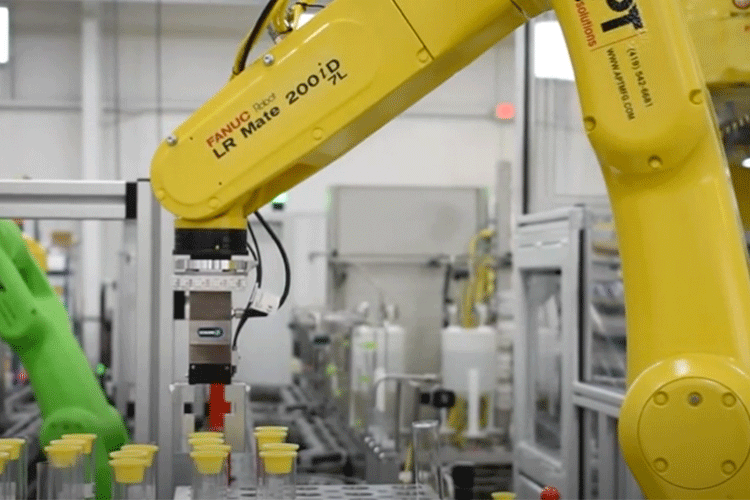
The Connected Systems Institute has launched its first industry testbed and production line, putting a manufacturing facility in the same building that houses UWM’s Golda Meir Library.

The testbed and a companion Digital Twin Laboratory allow researchers and students to virtually simulate solutions to common manufacturing challenges and execute those solutions physically. It makes products that include a variety of ingredients. Read more.

A generous gift from Clarios will power our student organizations for many years

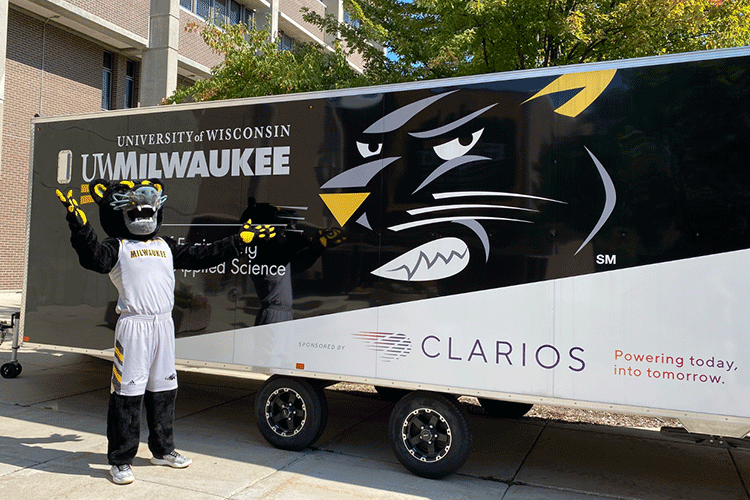
UWM’s College of Engineering & Applied Science recently received a very generous gift from Clarios: a 20-foot enclosed trailer. Clarios—a battery company that powers one in three cars in the world—now will power the college’s student organizations as they travel to competitions throughout the country, using the trailer to transport their equipment and vehicles safely and in style.

We invite you to enjoy a short thank-you video, created with the help of college leadership, UWM’s mascot Pounce, and participants from some of the student organizations — including the Society of Automotive Engineers (SAE), American Society of Mechanical Engineers (ASME) and the American Society of Civil Engineers (ASCE)–who will be using the trailer for their competitions.

Thank you to the following people who contributed their time and talent to making the video:

Brett Peters, Dean
Mike Andrew, Director of Corporate Relations
Jennie Klumpp, Senior Academic Advisor
Todd Wollenberg, Alumnus
Society of Automotive Engineer (SAE Baja Team)
Jacy DeBoer, President
Rosalba Huerta
Ryan Jones
Tyler Oleszak
Sophie Swanson
Andrew Wesolowski
American Society of Mechanical Engineers (ASME and UWM Trike)
Phillip Van Asten, President
Tim Wegehaupt
American Society of Civil Engineers (ASCE Concrete Canoe Team)
John Bowen, President
Kate Jankowski
Riley Smeaton

Clarios Thank You Video (short)