Energy Engineering Graduate Certificate
UWM’s Energy Engineering Graduate Certificate equips you with the expertise to lead in this vital field. Combine electrical and mechanical engineering knowledge to master energy systems, and design and tailor your coursework to your career goals.
As global energy resources decline, the world needs proven professionals who can design smarter, more sustainable energy solutions.
Become an accomplished energy innovator. Take the next step toward becoming a proven leader in sustainable energy—apply for the Energy Engineering Graduate Certificate today and power the future.
Program Type
Graduate Certificate
Program Format
On Campus
Admission
Students must have an undergraduate degree. A minimum 2.75 cumulative undergraduate grade point average is required.
Energy Energy Graduate Certificate Application
- Students wishing to obtain this certificate must declare their intention by applying to the program office or director.
- All graduate certificate applicants—even those already enrolled in a UWM graduate program—must apply to the Graduate School through the Admission Application.
- Graduate degree and previously admitted graduate non-degree students who decide to pursue a certificate program must submit the Panthera application before completing 6 credits in the certificate sequence.
- Applicants must possess a baccalaureate degree and have a minimum 2.75 cumulative undergraduate grade point average to be admitted into a certificate program.
Credits and courses required for an Energy Engineering Graduate Certificate
To obtain this certificate, students are required to complete a minimum of 15 credits from the lists of Groups A and B courses of which at least 12 credits must be taken at UWM.
Students must complete at least two courses from Group A to obtain an Energy Engineering Certificate. Additional electives can be chosen from Group B. At least 6 credits must be 700-level or above. A maximum of 3 credits of independent study may be applied toward the certificate.
Group A Credits
| Code | Title | Credits |
|---|---|---|
| ELECENG 471 | Electric Power Systems | 3 |
| ELECENG 572 | Power Electronics | 3 |
| ELECENG 574 | Intermediate Control Systems | 3 |
| ELECENG 575 | Analysis of Electric Machines and Motor Drives | 3 |
| MECHENG 432 | Internal Combustion Engines | 3 |
| MECHENG 434 | Air Conditioning System Design | 3 |
| MECHENG 435 | Power Plant Theory and Design | 3 |
| MECHENG 436 | Solar Engineering | 3 |
| ELECENG 781 | Advanced Synchronous Machinery | 3 |
| ELECENG 872 | Computer Analysis of Electric Power Systems | 3 |
| ELECENG 890 | Special Topics: (Advanced Power Electronics) | 3 |
| ELECENG 890 | Special Topics: (Automotive Power Systems (New Course) | 3 |
| ELECENG 890 | Special Topics: (Renewable Energy Systems (New Course) | 3 |
| ELECENG 999 | Advanced Independent Study | 1-3 |
| MECHENG 702 | Advanced Engineering Thermodynamics | 3 |
| MECHENG 703 | Principles of Combustion | 3 |
| MECHENG 710 | Advanced Transport Processes | 2 |
| MECHENG 711 | Thermal Radiation and Conduction | 3 |
| MECHENG 712 | Convection Heat and Mass Transfer | 3 |
| MECHENG 714 | Energy Transport in Microscale Systems | 3 |
| MECHENG 721 | Fundamentals of Fluid Flow | 3 |
| MECHENG 722 | Advanced Fluid Mechanics | 3 |
| MECHENG 723 | Computational Fluid Dynamics and Heat Transfer | 3 |
| MECHENG 725 | Fluid Power and Turbomachinery | 2 |
| MECHENG 999 | Advanced Independent Study | 1-3 |

- Vice Chancellor for Research, UWM
- Professor, Electrical Engineering
- abedia@uwm.edu
- Office of Research, Mitchell Hall 235
- Richard and Joanne Grigg Professorship
- Professor, Electrical Engineering and Computer Science
- Director, Center for Sustainable Electrical Energy Systems (SEES)
- Site Director, Center for GRid-Connected Power Electronic Systems (GRAPES)
- cuzner@uwm.edu
- 414-251-6147
- University Services and Research 201M
- Teaching Faculty 2, Electrical Engineering & Computer Science
- wfd@uwm.edu
- 414-251-7904
- Engineering & Mathematical Sciences W280

- Teaching Faculty 3, Electrical Engineering
- mfarrah@uwm.edu
- 414-251-7077
- Engineering & Mathematical Sciences W210
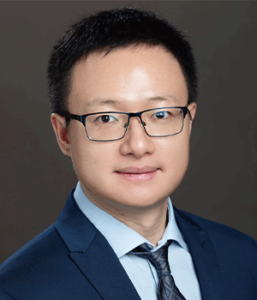
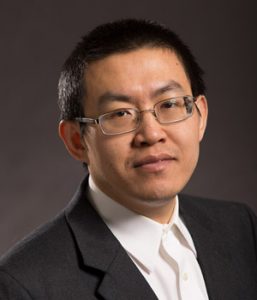
- Associate Professor, Electrical Engineering
- Department Chair, Electrical Engineering
- Associate Professor, Computer Science
- huy@uwm.edu
- 414-251-8830
- Engineering & Mathematical Sciences 1185
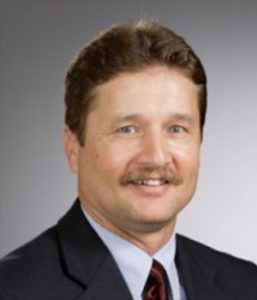
- Adjunct Professor, Electrical Engineering and Computer Science
- General Manager, Hardware Excellence & Chief Electrical Engineer, GE Healthcare
- kautzer@uwm.edu
- 414-229-5189
- Engineering & Mathematical Sciences E222
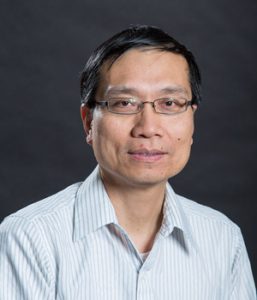
- Associate Professor, Electrical Engineering
- Associate Professor, Computer Science
- lawc@uwm.edu
- 414-229-6203
- Engineering and Mathematical Sciences 1219
- Professor, Physics and Astronomy
- Professor, Electrical Engineering
- vraicu@uwm.edu
- 414-229-4969
- Kenwood Interdisciplinary Research Complex
- Assistant Professor, Electrical Engineering
- shen8@uwm.edu
- 414-251-9264
- Engineering & Mathematical Sciences 1119
- Assistant Professor, Civil & Environmental Engineering
- Affiliate Assistant Professor, Electrical Engineering
- Founder and Director, Automated, Connected & Electric Mobility Systems Lab
- tomshi@uwm.edu
- Northwest Quadrant 4420
- Richard and Joanne Grigg Faculty Fellowship
- Professor, Electrical Engineering
- Professor, Computer Science
- wang289@uwm.edu
- 414-251-7477
- Engineering & Mathematical Sciences 1277
- Associate Professor, Electrical Engineering
- Associate Professor, Computer Science
- wwang@uwm.edu
- 414-229-2247
- Engineering & Mathematical Sciences 1285

- Director of Research, Connected Systems Institute
- Professor, Electrical Engineering
- Professor, Electrical Engineering
- Professor, Computer Science
- junzhang@uwm.edu
- 414-229-4246
- Engineering & Mathematical Sciences 1207
Research centers and labs that focus on energy engineering
The Center for Sustainable Electrical Energy Systems, led by Professor Rob Cuzner, is exploring methods to make electric power systems more sustainable, cost-effective, and secure through research on energy storage, microgrid systems, and renewable energy sources.
Research Focus:
- Synchronous Generator Modeling Under Unbalanced Conditions
- Hybrid Battery Life Testing
- Cost Effective Uninterruptible Power Supply
- Efficient Integrated Power System for Higher Power and Improved Survivability
- Hybrid Energy Module Development for High Efficiency Buildings
The Energy Storage Research Lab, led by Professor Deyang Qu, is a collaboration between UWM, the Wisconsin Energy Institute (WEI) at UW-Madison and Johnson Controls. The lab links academic research with industrial product innovation to develop a new generation of energy products with longer and stronger storage abilities, increasing energy security and improving our environment by reducing carbon dioxide emitted into the atmosphere.
Research Focus:

- Metal air (Li-air and Zn-air)
- Li-Sulfur
- Li-ion
- Advanced Lead-Acid Batteries (AGM and EFB)
- Supercapacitors
- Fuel Cells
- System diagnostics
- Hydrogen Storage Materials
- Alkaline Batteries
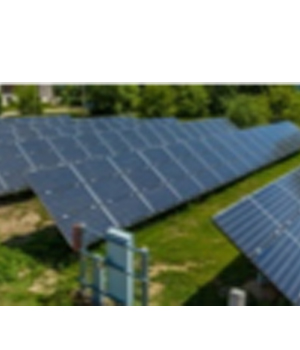
GRid-connected Advanced Power Electronic Systems (GRAPES), led by Professor Rob Cuzner, is a National Science Foundation Industry/University Cooperative Research Center (I/UCRC) with a mission to accelerate the adoption and insertion of power electronics into the grid in order to improve system stability, flexibility, robustness, and economy. Together with our partners we hope to make electric power systems more sustainable, cost-effective, and secure.
Research Focus
- Energy storage systems: inverter topology and controls, integrated compact systems, hybrid storage systems, high frequency inverters, wide band gap (WBG) devices for storage inverters, high voltage and high-power inverters, grid support functions
- Distributed generation (DG): inverters and interface for DG including wind and solar Photovoltaic (PV), controls for DG systems, integration of DG systems into grid
- Microgrids: grid-tie and island microgrids, controls for microgrids, microgrid-tie inverters, energy management
- Reliability for power electronics converters: low-frequency and high-frequency inverters, components, systems, and systems of systems
- High-frequency and high-power converters: converters with WBG power semiconductor switches, electromagnetic interference, cooling, and packaging
- Fault protection for AC and DC microgrids
UWM’s Industrial Assessment Center (UWM IAC), led by Professor Ryo Amano, helps manufacturers and utilities to increase their productivity and competitiveness by reducing energy and water consumption, enhancing cybersecurity, and adopting smart manufacturing technology. The UWM IAC provides assessment services on electric power consumption, waste material removal, water treatment studies, reclamation of energy in the process of heating, power, and water processes with the implementation of biofuel production, renewable energy technology, recuperation, and reheating methods.

To date, over 600 companies and water treatment plants have utilized the UWM IAC’s multidisciplinary energy assessment services, with average recommended savings of about $150,000 per facility and an average implementation rate of 40%.