
Online PhD in Nursing PHD
The School of Nursing online PhD program integrates science, theory and research to educate the next generation of nurse scientists and leaders. Our students strive to advance nursing knowledge and translate research into practice that promotes the health and care of patients.
The UWM online PhD in nursing is a research-intensive program that prepares doctoral students as scientists who generate knowledge to advance nursing.
Program Type
Doctoral
Program Format
Online
About UW-Milwaukee School of Nursing
As the largest nursing program in the state of Wisconsin, UW-Milwaukee partners with over 160 agencies to prepare nurse scientists, researchers and educators. Go beyond the bedside and make an impact on the world around you with a PhD in nursing from UWM.
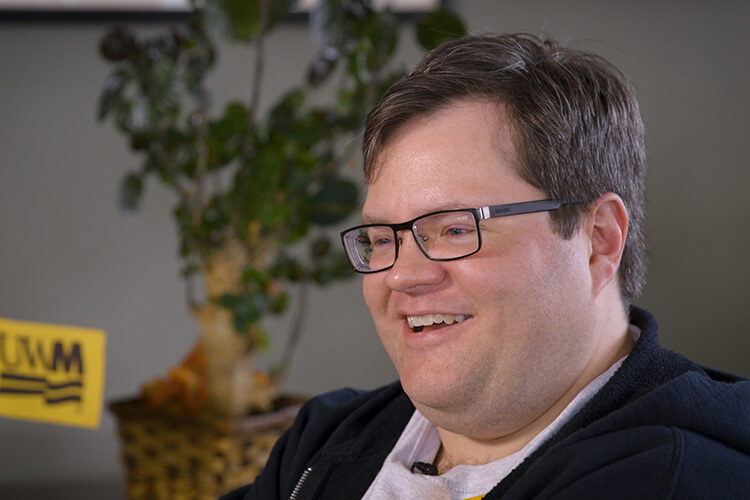
About Our Online PhD Nursing Program
Similar to graduates of the college’s traditional PhD program, graduates of the online PhD nursing program are ready for careers in education, research and practice, and to assume leadership positions. Students work closely with major professors to define their success early so students can plan and conduct cutting-edge research using a variety of research methods.
Students are admitted as a cohort and are required to attend a three day orientation at the beginning of the program and return to campus at the end of their program of study. Online courses are offered every two years and must be taken in sequence.
Scholarships & Funding
We understand that financial support is important to every student. A variety of options are available to help students finance their education at UWM, including over $500,000 in nursing scholarships & funding awarded annually, as well as loans, grants, student employment, fellowships, military education benefits and more. UWM offers generous aid options for students seeking to be nurse educators or nurse faculty.
Students in the online PhD in Nursing program progress as a cohort, starting in the fall of odd years.
Online Tuition
Tuition for the Online PhD in Nursing is $1,000 per credit (flat fee). Dissertator credits/NURS 997 is $780 per credit (flat fee).
Fall Start
Year 1: Fall Semester
| Course | Course Number | Credits |
|---|---|---|
| 3-day on campus orientation prior to the start of the fall semester | ||
| Foundations of Inquiry for Health | NURS 801 | 3 |
| Science of Nursing | NURS 802 | 3 |
| Issues in Scholarship | NURS 890 | 3 |
| Specialty Course | 3 |
Year 1: Spring Semester
| Course | Course Number | Credits |
|---|---|---|
| Qualitative Methods in Health Research | NURS 882 | 3 |
| Quantitative Methods in Health Research | NURS 883 | 3 |
| Multivariate Statistics | NURS 808 | 3 |
| Speciality Course | 3 | |
| Qualifying Exam (Summer) |
Year 2: Fall Semester
| Course | Course Number | Credits |
|---|---|---|
| Choose one advanced methods course: Advanced Quantitative Advanced Qualitative | NURS 885 NURS 886 | 3 |
| Measurement in Health Research | NURS 881 | 3 |
| Health Policy | NURS 803 | 3 |
| Research Practicum | NURS 899 | 2 |
Year 2: Spring Semester
| Course | Course Number | Credits |
|---|---|---|
| Analysis of Nursing Phenomena | NURS 820 | 3 |
| Research Practicum | NURS 899 | 2 |
| Integrative Studies | NURS 809 | 3 |
Year 3: Fall Semester
| Course | Course Number | Credits |
|---|---|---|
| Doctoral Independent Study (Comprehensive Exam) | NURS 897 | 1 |
| Specialty Course | 3 |
Year 3: Spring Semester
| Course | Course Number | Credits |
|---|---|---|
| Dissertator | NURS 997 | 3 |
Year 4: Fall Semester
| Course | Course Number | Credits |
|---|---|---|
| Dissertator | NURS 997 | 3 |
Year 4: Spring Semester
| Course | Course Number | Credits |
|---|---|---|
| Dissertator | NURS 997 | 3 |
All applicants must apply through the Graduate School’s application system and upload the following:
- a nonrefundable application fee;
- unofficial transcripts from each academic institution attended where at least nine or more credits were attempted or completed. Applicants are required to submit official transcripts after an admission offer is accepted;
- current curriculum vitae;
- references from three different people who know about your academic experience and your potential for graduate study in nursing.
- a written statement from the applicant that includes previous professional experience, professional career goals, research interests, motivation for PhD study and educational objectives for the program.
- Two examples of original work that demonstrate the applicant’s academic potential.
- A conversation with a faculty member is required as part of the application process. A telephone conversation or video meeting (e.g. Zoom, Skype) may be used when travel is prohibitive.
Prerequisites
Applicants to the UWM Online PhD in Nursing must have:
- a bachelor’s degree or master’s degree in nursing or health-related field from a professionally accredited program with a cumulative grade point average of 3.2 (4.0 scale) for all previous graduate coursework;
- completion of a graduate-level statistics course (within the last five years) with a grade of B or higher or must complete within the first semester of the program;
- Bachelor-prepared applicants must complete fifteen credits PRIOR to entering the Online PD program: NURS 720, 725, 735, 728 and 804. Contact academic advisor to create a plan.
UWM School of Nursing Approved Graduate Statistics Courses:
| University/College | Course | Course Number |
|---|---|---|
| UW-Milwaukee | Biostatistics (Online/On-Campus) | NURS 720 |
| UW-Stevens Point | Basic Statistical Methods for Social Science (On-Campus) | SOC 590 |
| UW-Stevens Point | Basic Statistical Methods in Education (Online) | EDUC 705 |
| Penn State World campus | Applied Statistics | STATS 500 |
| UMass Online | Introduction to Probability and Applied Statistics | EEOS 601 |
| University of Phoenix | Applied Business Research and Statistics | QNT 561 |
| University of Phoenix | Statistics For The Behavior Sciences | PSYC 625 |
| UCLA Extension | Advanced Statistics and Quantitative Methods | STATS 402.1 |
February 1
(Fall start, odd years)
Upcoming Information Sessions
Register for Information Sessions
PhD Program Research Areas
| Faculty Name | Areas of Interest | Methods Used |
|---|---|---|
| Alexa Anderson PhD, MA Associate Professor | – Behavioral pharmacology – Substance use disorders – Health-related behaviors – Perinatal populations – IPV – Veterans-Military | – Correlational Research – Cross Sectional Studies – Descriptive Research – Experimental Research – Mixed Methods – Quantitative Research – Quasi-experimental Research – Survey Research |
| Jennifer Doering PhD, RN, FAAN Professor & Associate Dean for Academic Affairs, Head of School | – Perinatal mental health – Perinatal sleep and fatigue – Mothering, motherhood ideology, and feminism – High education nursing administration – Leadership and career development including “career cartography” – Philosophy of science focused on nursing science and knowledge development | – Qualitative: Grounded theory – Quantitative – Mixed methods |
| Julie L. Ellis PhD, RN Associate Professor | – Gerontological nursing – Health disparities – Vulnerable populations – Self-management of chronic disease | – Qualitative Research – Quantitative Research – Survey Research – Participatory Research |
| Barbara Haase PhD, MSN, RN, APRN, CPNP-PC, IBCLC Assistant Professor | – Lactation, breastfeeding | – Experimental – Observational Studies |
| Jeana M. Holt PhD, DNP, MSN, RN, FNP-BC, APNP Associate Professor, Kellner Entrepreneurship Fellow | – Human-centered design in healthcare and graduate healthcare education – Nurse-Led Innovation and Entrepreneurship – Art and technology-based Autism interventions – Knowledge representation and terminologies – Person-centered Primary Care | – Program Evaluation – Mixed methods – Community-based Participatory Research – Implementation Science – Artificial Neural Network Analysis and Predictive Analytics |
| Peninnah Kako PhD, RN, FNP-BC, APNP Professor, EC Chair | – HIV/AIDS and women – Health needs evaluation – International research (sub-Saharan Africa) – Vulnerable populations – Rural and urban comparative research – Multicultural research | – Qualitative Research – Multistage Narrative Inquiry – International Collaborative Research – Multilingual approaches to interviews |
| Jennifer Kibicho PhD, DTM, CPA (K) Associate Professor | – Health Economics – Economic analyses of health care costs, prescription drug cost drivers, cost containment policies, and the cost of providing care to persons living with HIV/AIDS – Pharmacy-mediated medication adherence interventions in diverse real-world pharmacy settings – Global health, including evaluations of structural-level interventions that address poverty, gender-based violence, and other structural factors that place individuals at elevated risk for HIV infection in sub-Saharan Africa | – Econometrics – Health system financial analysis – Health care cost – benefit analysis |
| Kim Litwack PhD, RN, FAAN, APNP Professor & Dean, College of Health Professions and Sciences (CHPS) | – Peri-anesthesia Care – Primary Care – Nurse Practitioners – Pain management – Educational Research – Program Evaluation | – Qualitative Research – Quantitative Research |
| Michele Polfuss PhD, RN, CPNP-AC/PC, FAAN Professor & Joint Research Chair in the Nursing of Children, Children’s Wisconsin/UW-Milwaukee | – Childhood overweight and obesity and co-related morbidities – Overweight and obesity in individuals with a developmental disability – Accurate assessment of body composition in a clinical setting – Energy expenditure – Weight-related behaviors (e.g., nutrition, activity, and sleep) – Role of the family in weight-related behaviors – Chronic conditions in children and adolescents – Influence of a chronic condition on the family – Health disparities – Individual and Family Self-Management | – Quantitative Methods – Qualitative Methods |
| Murad Taani PhD, MPH, RN Associate Professor | – Older adult health and illness care – Physical activity – Sarcopenia – Self-Management – Community health nursing | – Clinical Trials Research – Correlational Research – Cross-Sectional Studies – Descripting Research – Experimental Research – Quantitative Research – Quasi-experimental Research |
| AkkeNeel Talsma PhD, RN, FAAN Associate Professor and Kellner Entrepreneurship Fellow | – Health Services Research – Mixed Methods – Participatory Research | – Maternal health and Infant outcomes – Innovation, Clinical registries, Big Data, Quality and Safety |
| Lynne M. Woehrle PhD Associate Professor, Peacebuilding Program Director | – Systems change – Community-based research and evaluation Peacebuilding and community health – Community economic development – Food, Work, Gender, Racism – Health equity – Violence prevention | – Qualitative methods – Mixed methods – Community Based Action Research – Focus groups |