Science
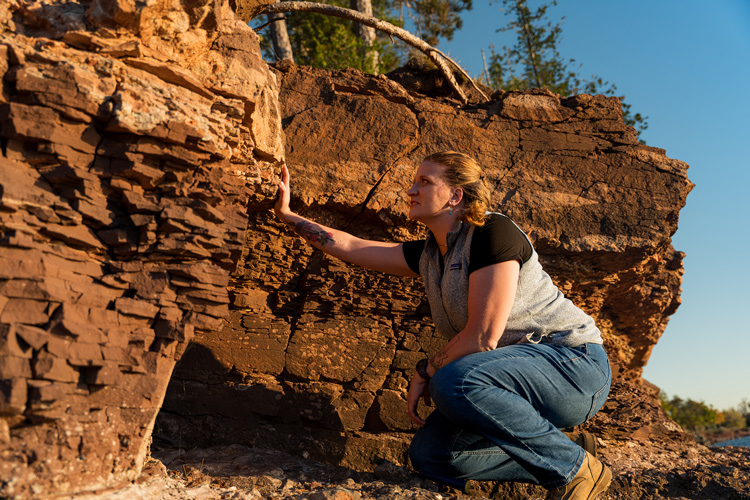
Mathematicians help Rust-Oleum with paint problem
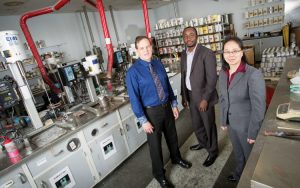
When Rust-Oleum needed some answers, UWM researchers did a different type of paint-by-numbers work.
UWM scores a rare trifecta of grants

UWM has received three highly competitive awards from the National Science Foundation to fund research instrumentation. “It is quite unusual for an institution to receive multiple MRI awards in a single year, and it’s certainly unprecedented at UWM,” said Mark Harris, interim vice provost for research.
Physics students head to Australia for the sake of science
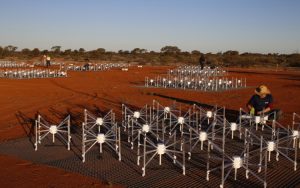
UWM physics students got the chance to combine science with an adventure when they ventured to the Australian Outback recently. They helped build a radio telescope array that’s part of an international hunt for pulsars.
Nobel Prize has a UWM connection
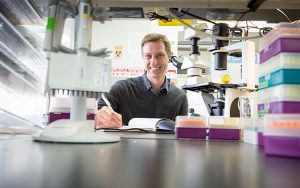
The announcement of this year’s Nobel Prize winners struck home for one UWM faculty member. Alexander “Leggy” Arnold, associate professor of chemistry and biochemistry, did his master’s and doctoral research under one of the winners, Bernard “Ben” Feringa.
The arc of UWM’s wave, from Parker to Brady and beyond

A century after Albert Einstein’s gravitational wave prediction, meet the UWM scientists who helped prove him correct, his doubts wrong, and cemented the school’s status as a premier research institution.
Psychologist zeros in on when sound becomes music
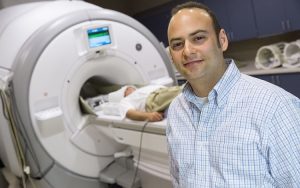
Adam Greenberg, assistant professor of psychology at UWM, is researching how the brain recognizes music and our response to it.
Gravitational waves detected from 2nd pair of colliding black holes
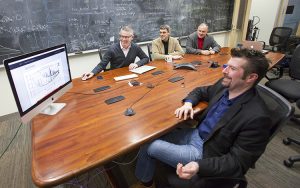
UWM physicists are part of an international team that has detected gravitational waves for a second time.
5 potential drugs of the future incubated at UWM
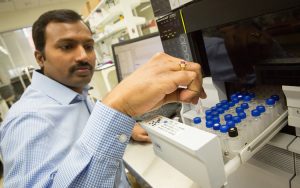
New drugs under development by UWM scientists, who are working through the Milwaukee Institute for Drug Discovery, could eventually change millions of lives.
Split-second imaging sheds light on biology’s grand questions
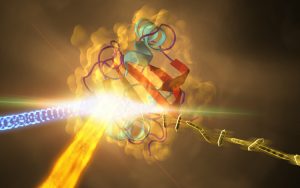
UWM researchers used a groundbreaking experiment to observe molecular changes with unprecedented detail and speed.
UWM researchers create a better way to find out ‘when’
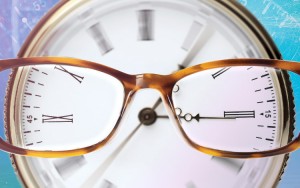
UWM physicists have created a machine-learning algorithm that improves the accuracy of timing estimates by a factor of up to 300.