Exploring the mysterious gap between black holes and neutron stars
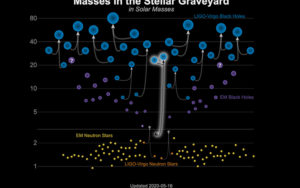
The LIGO-Virgo Collaboration recently discovered an object denser than neutron stars and less dense than black holes. So what does that mean? One of the UWM researchers explains.
News from the University of Wisconsin-Milwaukee
The LIGO-Virgo Collaboration recently discovered an object denser than neutron stars and less dense than black holes. So what does that mean? One of the UWM researchers explains.
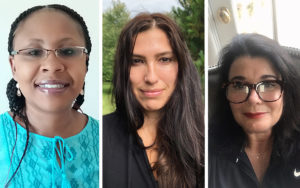
A research team led by Lucy Mkandawire-Valhmu has a received a $2 million federal grant for a project that will support increasing access to medical forensic care and training to help mainstream health care providers and victim advocates deliver culturally sensitive services.
Groundbreaking research at the University of Wisconsin-Milwaukee has implications for understanding and predicting the progression of degenerative disorders of the brain, including Alzheimer’s disease, and for lessening the impact of traumatic brain injuries.
Woo-Jin Chang will investigate the effectiveness of an “electric filter” to quickly extract the viruses that cause COVID-19 in as little as one minute from a saliva or blood sample.
The five-year, $24.4 million grant will allow the institute to continue accelerating the translation of research discoveries into patient care, bringing new therapies and interventions to patients, improving health outcomes and building training programs and community engagement.
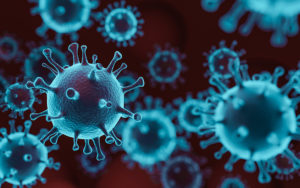
Researchers in UWM’s Department of Physics have recently been awarded special funding that will allow them to probe different aspects of SARS-coV-2, the virus that causes COVID-19, using molecular imaging techniques.
Tullimonstrum is so peculiar that paleontologists haven’t been able to agree on whether it was an invertebrate or not. Now, Victoria McCoy has found strong clues to provide that answer.
Brooke Slavens, associate professor in the College of Health Sciences, is involved in a study that aims to help health care providers identify abnormal movements caused by various kinds of wrist injuries or conditions.
UWM engineer Junjie Niu has developed an electrode material that delivers quick charging with higher capacity and more energy for the batteries used in smartphones and electric cars.
Two researchers at the UWM School of Freshwater Sciences are undertaking an unusual way of monitoring the incidence of COVID-19 in a community – by analyzing its sewage.