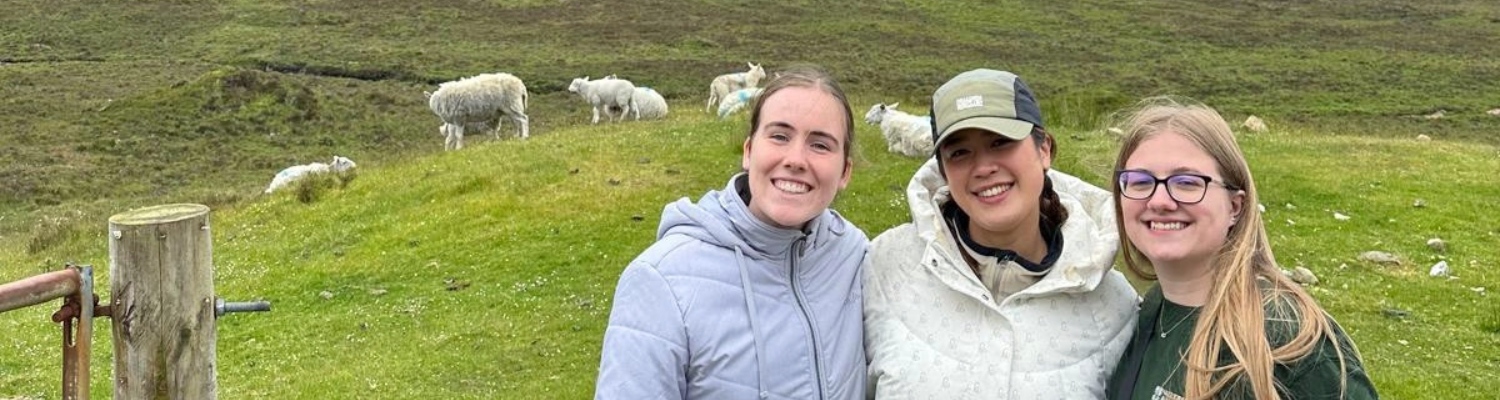
UWM study abroad students in England in front of sheep and a hilly landscape

Your study abroad experience doesn’t end when you land back home. This page covers how to transfer your credits, readjust after study abroad, put your experience to work and more.

Credit Transfer Steps 

The process of bringing your credit home will look a little different depending on your program type: 

Faculty-Led Programs

Your UWM professor assigns and posts your grades to PAWS.

All Other Programs 
  • You’ll need to request your official transcript from the host university or program provider, and have it sent directly to the Center for International Education: 
    • overseas@uwm.edu or
    • UWM Center for International Education (2441 E. Hartford Avenue, Garland 138, Milwaukee, WI 53211) 
  • Submit a Course Equivalency Approval Form (CEAF) if you want courses evaluated for major, minor or general education credit. 
  • Once received, UWM will create course records and post your grades. 
  • Note: Non-UWM sponsored programs are posted as transfer credit. 
Pro Tip For Non-Faculty Led Programs: 
Transcripts from abroad can take 6–12 weeks to arrive. Plan ahead if you need grades for graduation, scholarships or financial aid renewal. 

Readjusting After Study Abroad 

While abroad, you grew in ways others might not see, and that can feel confusing, exciting or even lonely. That tension is called reverse culture shock, and it’s a normal and meaningful part of your study abroad journey.

What You Might Notice After Returning Home 

You might notice:

  • Feeling out of sync with old routines or friends 
  • Missing your host country or idealizing your experience abroad 
  • Frustration with parts of U.S. culture that now stand out 
  • Shifts in your perspective or personal priorities 

These are all signs of growth and proof that your worldview has expanded and is still taking shape.

How to Navigate the Transition
  • Write or talk through what surprised you, what you miss about being abroad and how you’ve changed.  
  • Keep in touch with international friends or mentor incoming international exchange students. 
  • Name your new skills, which can translate directly to your résumé. These might include things like adaptability, independence, cultural awareness and more.
  • Take care of yourself. Readjustment takes time. If you’re struggling, reach out to the Student Health and Wellness Center (SHAW) or your health provider for support. 
Reflecting on Your Experience

Your growth doesn’t stop when you return home. Use these questions to reflect on your experience and to carry what you learned forward:

  1. What did I learn about how I show up in unfamiliar or challenging situations?
  2. What parts of this experience do I want to carry into my life now and how will I do that?
  3. What did this experience teach me about how I want to live, and what will that look like in my relationships, choices and everyday life now?

Put Your Experience to Work

Less than 10% of U.S. college students study abroad, so you already stand out. In today’s global world, organizations want people who can adapt, communicate across differences and think critically. You’ve already done that!

Tips to Make Your Experience Work for You
  • Reframe your story: Move beyond “I studied abroad.” Share how you collaborated, led or solved problems in a new environment. 
  • Add it to your résumé: Highlight what you did and learned, not just where you went. 
  • Use it in interviews: When asked about adaptability or teamwork, draw from a real experience abroad. 
  • Update your LinkedIn: Add your program, include 2–3 skills gained and post a short reflection on your time abroad.
Resources to Help You Articulate Your Experience

Continue Your Global Experience

If studying abroad changed how you see the world, keep that momentum going!

Stay Engaged on Campus

You don’t have to travel far to stay globally connected. We encourage you to share your experience and leadership right here at UWM, by:

  • Becoming a Panther International Pal (PIP) Mentor to support new international students. 
  • Sharing your story at info sessions or re-entry panels. 
  • Joining global student organizations or volunteering at CIE events. 

Your experience makes you a campus leader in intercultural understanding. Keep learning and help others start their own global journeys. 

Take Your Global Experience Further
  • Go abroad again! Apply for fellowships and scholarships like FulbrightGilman, or Boren
  • Pursue international internships or graduate programs abroad.
  • Volunteer or work with organizations that have a global focus. 
Pro Tip:
Think about what energized you most abroad. Was it language learning, research, art or advocacy? That’s your clue for what to pursue next.