UWM-sponsored Lake Sturgeon Bowl celebrates its 20th year
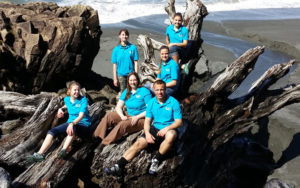
The quiz competition has raised knowledge of and spurred interest in freshwater and ocean science among high school students across the Midwest.
News from the University of Wisconsin-Milwaukee
The quiz competition has raised knowledge of and spurred interest in freshwater and ocean science among high school students across the Midwest.
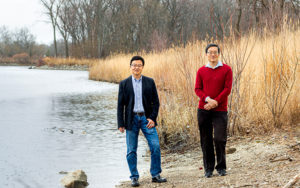
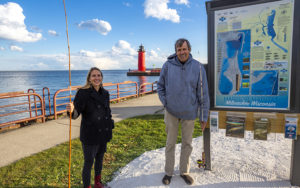
The maps are guiding current restoration efforts that could help get the city’s harbor removed from the U.S. Environmental Protection Agency’s list of “areas of concern” and stimulate the local economy.
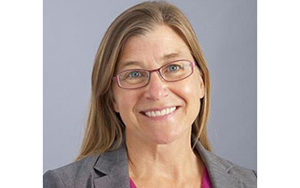
Melissa K. Scanlan has been named the new Lynde B. Uihlein Endowed Chair in Water Policy at the University of Wisconsin-Milwaukee. In this position she also directs the Center for Water Policy at UWM’s School of Freshwater Sciences.
A pioneer in water-focused research and the largest institution of its kind on the Great Lakes, the School of Freshwater Sciences at UW-Milwaukee will offer its first undergraduate program beginning in Fall 2021.
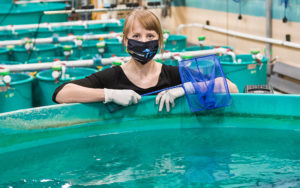
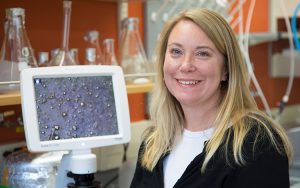
Rebecca Klaper’s research studies how nanoparticles – tiny man-made bits of material found in a multitude of products – interact with aquatic organisms, often in harmful ways.
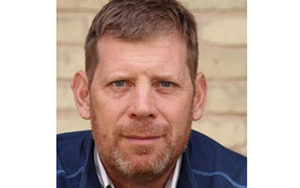
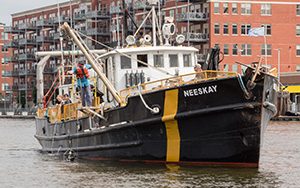
J. Val Klump, dean of UWM’s School of Freshwater Sciences, has been named to serve on the Great Lakes Advisory Board, an advisory committee to the U.S. Environmental Protection Agency.
EPA Administrator Andrew Wheeler visited UWM’s School of Freshwater Sciences to announce a $492,000 grant for the Harbor District in Milwaukee to build and install a trash collector on the Kinnickinnic River designed to help protect Lake Michigan.
Environmental engineer Marissa Jablonski was named as executive director of the Freshwater Collaborative of Wisconsin, a first-of-its-kind statewide research hub around freshwater topics.
Two researchers at the UWM School of Freshwater Sciences are undertaking an unusual way of monitoring the incidence of COVID-19 in a community – by analyzing its sewage.