Journalism grad travels the country to bridge political rifts
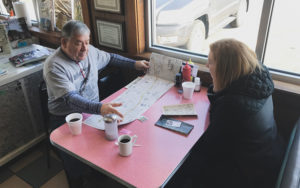
Emily Topczewski’s “We the Voters” project takes her across the country, talking to people in towns small and large, red and blue, about what most concerns them.
News from the University of Wisconsin-Milwaukee
Emily Topczewski’s “We the Voters” project takes her across the country, talking to people in towns small and large, red and blue, about what most concerns them.
Addressing the mental health and financial needs of students and bridging the digital divide are among the biggest issues facing Milwaukee’s three largest public education institutions during COVID-19.
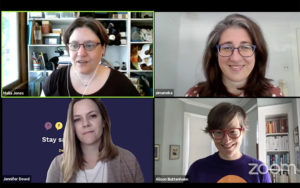
Epidemiologist Amanda Simanek has banded together with colleagues nationwide to battle the misinformation about COVID-19 that’s been spreading like a virus on social media.
UWM Chancellor Mark Mone will join his M3 partnership counterparts to discuss how Milwaukee’s three largest public education institutions are meeting the needs of students during the pandemic.
UWM is part of the first regional consortium of higher education institutions in the country to sign on to the initiative, which aims to ensure that students of color graduate at the same rate as white students.
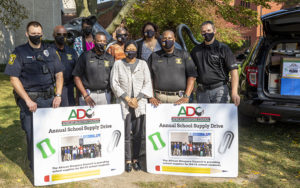
This is the fourth year the African Diaspora Council, which includes 240 Black faculty, staff, retirees and alumni of UWM, and the police department have held a drive for LaFollette. Response was so strong this year that enough supplies were available to also donate to Hopkins-Lloyd.
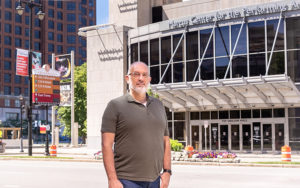
A report from the Helen Bader Institute for Nonprofit Management at UWM found that 40% of arts nonprofits in Wisconsin have been forced to provide programs or services at a “severely reduced” capacity.
UWM is once again serving as an early voting site for the Nov. 3 general election. Any City of Milwaukee resident can register and vote weekdays in the UWM Student Union from Oct. 20 to 30.
In Kenya, a country where one in four people lacks access to electricity, charcoal is a staple fuel source. It’s light, small, easy to store, burns longer and hotter than wood, and is nearly smokeless. It’s also speeding up the country’s deforestation.
ArtsECO – which stands for Arts Education/Community Ecosystem – supports teaching through the arts, placing a particular focus on social justice and the concept of developing teachers as changemakers.