Stable housing provides a foundation for health, well-being, and prosperity for children, families, and communities. Stable housing can positively affect a broad spectrum of outcomes for children and families, including academic performance, employment, physical, and mental health. Threats to stable and healthy housing are complex and intertwined with systemic and interpersonal factors.
Families experiencing housing instability face increased risk of their children being involved in the child welfare system . 81% of families with children entering care identified recent histories of housing instability, including crowding, homelessness, and evictions. Housing instability is also linked to delays in reunification, while placement in foster care is also connected to youth homelessness. Housing Opportunities Made to Enhance Stability (HOMES) is a systemic intervention focused on building new relationships, sharing ideas and knowledge, and starting new collaborations between housing and child welfare partners in the community.
In this webinar from July 30, 2020, ICFW team members Gabe McGaughey and Luke Waldo reviewed:
The link between housing and child maltreatment
The impact of stress and adverse childhood experiences (ACEs) have on executive functioning,
The increased risk of housing instability in the age of COVID
Systems change framework to inform strategy development and evaluation.
Lessons learned from HOMES that can be applied to other system change efforts
Blair, K. H., Topitzes, J., Winkler, E. N., McNeil, C. B. (2020). Parent–Child Interaction Therapy: Findings from an exploratory qualitative study with practitioners and foster parents. Qualitative Social Work.
Abstract: This exploratory study examines practitioners’ and foster parents’ perceptions on use of Parent–Child Interaction Therapy in child welfare. Focus groups were completed with Parent–Child Interaction Therapy practitioners and foster parents. Thematic analysis was employed, and four main themes were analyzed. First, practitioners and foster parents identified implementation barriers. Second, practitioners and foster parents identified factors that facilitate implementation. While practitioners perceived benefits from on-going consultation, foster parents favored treatment flexibility and a strong therapeutic alliance with practitioners. Third, practitioners and foster parents found that the integration of trauma principles into Parent–Child Interaction Therapy helped to meet the needs of the child welfare population. Finally, the translation of Parent–Child Interaction Therapy into child welfare may be facilitated by model adaptations, such as brief treatments, and integrating Parent–Child Interaction Therapy into pre-service foster parent trainings. Findings are discussed within the context of the relevant literature, and recommendations for future areas of study are proposed.
The Institute for Child and Family Well-Being was proud to host the webinar “Trauma screening, brief intervention and referral to treatment (T-SBIRT): Introduction to a promising, brief protocol for social service and healthcare settings.” Led by Dr. Dimitri Topitzes, Clinical Director of the Institute for Child and Family Well-Being, and Lisa Ortiz, UMOS, the webinar took place on June 17th at 11:00 CST.
This webinar introduced participants to a discrete trauma responsive protocol – trauma screening, brief intervention and referral to treatment or T-SBIRT – which has been implemented in various healthcare and social services settings in southeastern Wisconsin. Integrating T-SBIRT within such programs recognizes two interrelated truths: 1) most people experience significant adversity and trauma across the life course, an assertion that is all-the-more salient during this time of pandemic, stay-at-home orders, and collective trauma, and 2) frequent exposure to adversity and trauma undermines functioning across myriad domains including physical, mental, and behavioral health.
Delivered by psychotherapists, case managers, nurses, or other professional service providers, T-SBIRT helps programs address the effects of trauma exposure among clients or patients. More often than not, trauma is at the root of client and patient presenting problems. The protocol therefore contributes to effective and efficient trauma-responsive care and overall service delivery.
During the webinar, we described the T-SBIRT protocol, which is based on SBIRT for substance misuse and requires anywhere from 10 to 30 minutes to complete. In addition, we reviewed results from several studies that we recently published, indicating that it is feasible to implement T-SBIRT within healthcare and social service programs and that T-SBIRT may be associated with improved mental health and employment outcomes.
Dr. Topitzes, designed and tests T-SBIRT, and Lisa Ortiz is a supervisor who oversees implementation of T-SBIRT in her TANF program. While Dr. Topitzes provided details about the protocol and feasibility studies, Ms. Ortiz discussed her experience with T-SBIRT, highlighting obstacles to implementation along with perceived staff and client benefits.
Children who have experienced maltreatment and are involved in the child welfare system often exhibit behavioral difficulties, and their parents often struggle to provide effective discipline, may unintentionally engage in coercive parenting practices, or may appear to lack sensitivity towards their children due to their own history of trauma.
Parent Child Interaction Therapy (PCIT) has been referred to by experts as the “gold standard” treatment for children with disruptive behaviors, and it is a well-known, well-researched evidence-based treatment for children with behavioral difficulties, and has gained significant evidence particularly in the last ten years that suggests its efficacious for parents who have engaged in child maltreatment.
The Institute for Child and Family Well-Being was proud to host the webinar “Parent Child Interaction Therapy (PCIT) & Child Welfare” with Dr. Emma Girard, PCIT Master Trainer, and Kate Bennett, Children’s Wisconsin Well-Being Lead Clinician.
In this webinar, Leah Cerwin discussed the following with Dr. Girard and Kate:
Why it is so important to offer and administer PCIT within the child welfare system;
How PCIT has been adapted and provided to meet the needs of these clients with complex lives, including challenges and potential solutions;
The positive outcomes that have been seen providing this service to these families;
All within the context of the Milwaukee area families.
Mersky, J. P., Lee, C. P., Gilbert, R. M., and Goyal, D. (2020). Prevalence and Correlates of Maternal and Infant Sleep Problems in a Low-Income US Sample. Matern Child Health J. 24(2):196‐203.
Objectives: This study examined the prevalence and correlates of maternal and infant sleep problems among low-income families receiving home visiting services.
Methods: The study sample includes 1142 mother-infant dyads in Wisconsin, United States. Women completed a survey when their infants were between two weeks and one year old. Outcome data were collected using the PROMIS® sleep disturbance short form-4a and the Brief Infant Sleep Questionnaire. Correlates of sleep problems were assessed in two domains: maternal health and home environment quality. Descriptive analyses produced prevalence estimates, and multivariate regressions were performed to test hypothesized correlates of maternal and infant sleep problems. Subgroup analyses were conducted to examine the prevalence and correlates of sleep problems across different infant age groups.
Results: Approximately 24.5% of women reported poor or very poor sleep in the past week; 13% reported an infant sleep problem and 11% reported more than three infant wakings per night. Reported night wakings were more prevalent among younger infants but maternal and infant sleep problems were not. Multivariate results showed that poor maternal physical and mental health and low social support were associated with maternal sleep disturbance but not infant sleep problems. Bed sharing and smoking were associated with infant sleep outcomes but not maternal sleep. There was limited evidence that the correlates of maternal and infant sleep varied by infant age.
Conclusions for practice: The findings point to alterable factors that home visiting programs and other interventions may target to enhance maternal and infant sleep.
We are in unprecedented times. COVID-19 is ravaging our health and economic infrastructure, with untold losses still to come. Globally and nationally the pain of the pandemic is widespread, and it is a particularly dire situation for those among us who are most vulnerable. These include individuals and families who struggle with extreme poverty, housing insecurity, substance use, health and mental health problems, and chronic stress. Even in good times, these challenges are difficult to bear. But now they are compounded by social distancing from the connections that protect us in times of stress—our families, friends, schools, places of worship, and communities.
These tragic conditions will have a profound impact on children, especially those who need protection. At a point when they are most developmentally sensitive, many are being exposed to adverse experiences that will have lasting neurobiological, cognitive, social and emotional consequences. It is a stark reality that, as our lives are being upended, some children are being abused and neglected. Worse still, these children are being dislocated from the social institutions and connections that are in place to protect them.
To illustrate the magnitude of the problem, consider that child protective service (CPS) agencies in the U.S. received over 4.3 million abuse and neglect reports in 2018, representing approximately 7.8 million children. Although most reports are not investigated or substantiated, CPS records indicate that hundreds of thousands of children are abused or neglected each year. Of course, many more children experience trauma that goes unseen or unheard.
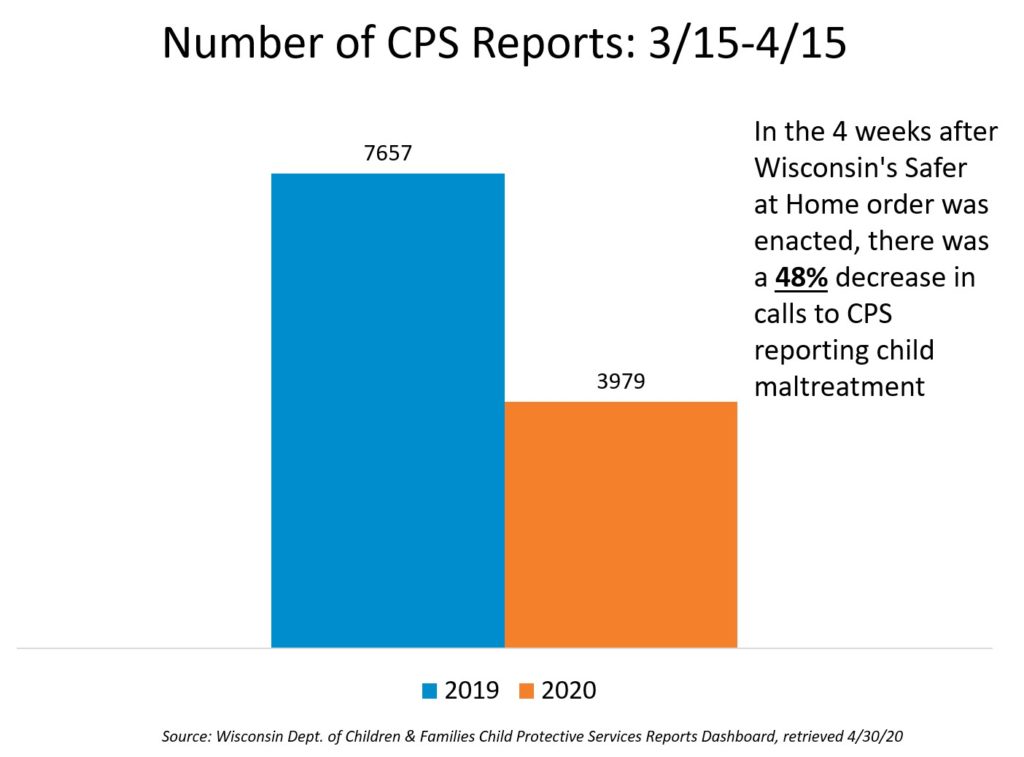
Now consider that, at a time when our most vulnerable children are at even greater risk, rates of CPS reporting and detection are plummeting. Here in Wisconsin, in the four weeks following the stay-at-home order which went into effect on March 15, there was a 48% decrease in CPS reports in Wisconsin as compared to the same time period last year.
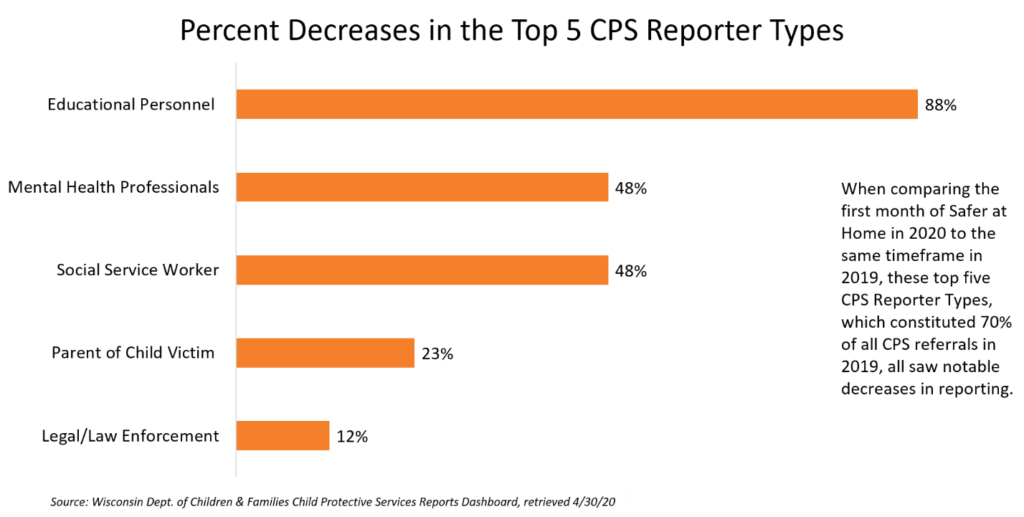
It is unlikely that this trend reflects a true decrease in abuse and neglect, but rather the social isolation of children from mandated reporters. Roughly two-thirds of CPS reports come from professionals such as teachers and doctors. Yet, as shown in the figure below, their reporting has dropped significantly, because they cannot report what they cannot see or hear.
The Child Protection System
If children do come to the attention of CPS, they are now entering a system that is experiencing a period of instability due to COVID-19. Core functions of the child welfare system have been compromised because of the crisis, not unlike other systems. For example, child welfare agencies have been forced to move away from in-person visits where parent-child interactions can be observed directly. Access to substance use and mental health treatment has been reduced significantly. Staffing shortages and court closures have caused delays in removals and permanency decisions.
Disruptions in regular activities are producing a growing backlog of demand for services inside and outside the system. As stay-at-home policies are relaxed, CPS workers who already carry substantial workloads may face even greater job strain, which could lead to high rates of staff turnover. Worse still, assuming the current rate of abuse and neglect reporting is artificially low, the CPS system should be prepared for the coming spike in referrals, substantiations, and out-of-home placements. These impacts are most likely to affect low-income communities of color that are already overrepresented in the CPS system. Disparities in CPS involvement seen before COVID-19 may be compounded by the disproportionate health and economic burdens that these groups are bearing during the crisis. People around the CPS system have been quickly finding new ways of adapting to the social distancing restrictions and accompanying financial hardships, developing clear guiding principles for planning, as the current economic and public health crisis threatens to take a heavy toll on our nation’s most vulnerable population of children and youth.
The Time for Prevention
With state and local governments facing acute budget shortfalls, and with the loss of revenue due to massive increases in unemployment, the need to focus on the most urgent child welfare challenges is clear. And it may seem untimely to increase funding for prevention services that may not pay off immediately, even if these investments tend to yield greater returns in the long run. Although Wisconsin allocates less than 5% of total child welfare funding to prevention services, it may be difficult to justify increased support for anything other than essential responses to known child safety concerns.
On the other hand, the COVID-19 crisis has exposed frailties in the child welfare system, and it is this kind of shock that could force us to reexamine our priorities and rebuild a system that simultaneously ensures the safety, stability, and well-being of children and families. Before this crisis emerged, there were positive signs of movement in this direction with the passage of the Families First Prevention Services Act (FFPSA). Signed into law in 2018, the FFPSA reforms federal child welfare financing by increasing the scope of evidence-based prevention and intervention services that are reimbursable. This includes proven approaches that already have strong roots in Wisconsin such as parent-child interaction therapy, trauma-focused cognitive behavioral therapy (TF-CBT), and evidence-based home visiting.
We believe that our recovery efforts can include plans for increased public investment in prevention services that support families without compromising the vital mission of protecting vulnerable children. It can be difficult to prepare for the future during times of uncertainty and crisis, but bold visions can set in motion lasting change. Let us rebuild our neglected service systems to provide universal, equitable, and accessible services for families and communities.
Trauma-informed care has increasingly become common nomenclature to social service providers, therapists, researchers, school staff and the general public. To become trauma-responsive, it is essential to conduct trauma screening and assessment so as not to make assumptions, miss vital information, reinforce shame through silence and avoidance, set inappropriate goals and lose rapport with clients. This practice creates many questions for professionals and clients such as why these topics are being explored, how the information will be used and how the process is used as a change maker for families and, at a community-level, policies. Through the process of gradual exposure and developing relationships, authentic client engagement around trauma yields real partnership and voice from those most affected by trauma. Meaningful trauma screening and assessment between interviewer and interviewee is a reciprocal process of empowerment and education that constructs a foundation of frank openness. This foundation then allows for co-creation of informed service goals and treatment design, resilience-building experiences and, ultimately, produces sustainable changes that actually benefits the individual, family, and community.
The Institute for Child and Family Well-Being hosted the webinar “Making the Unspeakable, Speakable: Making a Case for Trauma Screening and Assessment” with Dr. James “Dimitri” Topitzes of UW-Milwaukee’s Helen Bader School of Social Welfare and the Institute for Child and Family Well-being, and Cynthia Franzolin of Sixteenth Street Community Health Centers and Franzolin Consulting Services, LLC.
In this webinar, Meghan Christian discussed with Dimitri and Cynthia:
How trauma screening and assessment is crucial to service goal setting, diagnostics and treatment;
The benefits and challenges on the therapeutic relationship;
Some of the available tools and resources for trauma screening and assessment;
Guidelines to follow when asking sensitive questions.
The mission of the Institute for Child and Family Well-Being is to improve the lives of children and families with complex challenges by implementing effective programs, conducting cutting-edge research, engaging communities, and promoting systems change.
The Institute for Child and Family Well-Being is a collaboration between Children’s Wisconsin and the Helen Bader School of Social Welfare at the University of Wisconsin-Milwaukee. The shared values and strengths of this academic-community partnership are reflected in the Institute’s three core service areas: Program Design and Implementation, Research and Evaluation, and Community Engagement and Systems Change.
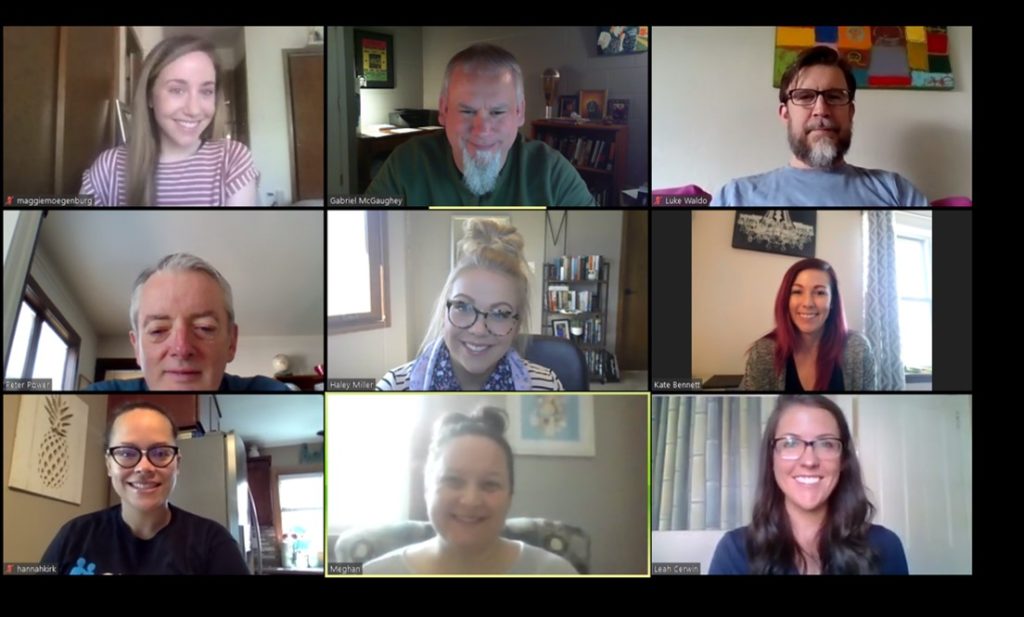
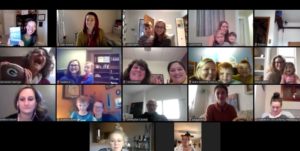
As both Children’s Wisconsin and the University of Wisconsin-Milwaukee implemented “safer-at-home” policies in mid-March in alignment with the best practice and safety guidelines provided to protect our health, “flatten the curve”, and support our essential workers and frontline healthcare providers during these times of COVID-19, we have leaned heavily on Zoom and other technologies to continue to do our work and meet as a team.
The Institute for Child and Family Well-being recently celebrated its 4th anniversary during this first week of May! We will be celebrating with one another from a safe distance via Zoom and phone calls.
Children’s Wisconsin’s ICFW Team (not pictured: Jenni Scott)
ICFW Leadership Team (not pictured: Jenni Scott)
Community Engagement & Systems Change
The Institute develops community-university partnerships to promote systems change that increases the accessibility of evidence-based and evidence-informed practices.
Non-profit and Systems Innovation in Times of COVID-19
At the Institute for Child and Family Well-being, our mission is to improve child and family well-being through the design and implementation of effective practices that reflect the best and latest research, so that we may promote systems change that engages and serves our community. We recognize that COVID-19 poses challenges today that require innovative practices and policies that draw on established evidence to provide the best possible care to our community, and opportunities to learn from those practices and policies that may lead to more resilient and supportive communities in the future.
Source: Milwaukee Independent
In order to effectively meet this challenge, we must first acknowledge that the need to maintain physical distance (or “social distancing”) and wearing masks have the potential to have more adverse impacts on our most vulnerable and historically oppressed families and communities. Within the communities where our most vulnerable families live, our systems are often disjointed or insufficient to meet their challenges around access to quality health care, job and housing insecurity, and under-resourced schools, particularly in times like this. These same children and families are also more likely living in high concentration neighborhoods with multiple generations or families in the same home and higher concentration of apartment complexes, which increases risk of infection. In the absence of responsive social connections, these challenges can create high levels of toxic stress and, consequently, greater likelihood of substance abuse, untreated mental health symptoms, violence, and involvement with the child welfare and criminal justice systems.
Since the beginning of the COVID crisis, our ICFW Children’s Wisconsin team has asked “How might we develop innovative practices to meet these challenges today?” The following is our current set of answers and commitment to our community:
We developed and will facilitate a Community of Practice across our Children’s Wisconsin Community Services and Community Health programs that will promote shared strategic learning and planning around the following:
Innovative practices that address COVID-19 challenges through family and community engagement, collaboration, program adaptation, etc;
Positive stories about how a COVID-19 challenge was met, and children and families benefitted;
Tips for working remotely to improve how we meet these demands under new and challenging working conditions.
Highlight community efforts and positive stories; and share supportive resources to enhance access to social connections and basic needs, and the latest research and science to reduce the likelihood of infection.
We will work closely with our community, academic and health partners to seek innovative and compassionate solutions to these complex challenges through human-centered design, prototyping and strategic learning, so that children and families may remain healthy while also remaining connected to those that they need and trust for their well-being.
More recently, our team began asking “How might we learn from the conditions that led to today’s challenges and how we respond to imagine more resilient, supportive and prosperous communities and systems in the future?” When we consider the role that social determinants of health play in one’s ability to overcome the challenges created by COVID-19, we must propose and develop transcendent solutions much like the Beveridge report did at the height of the Second World War. Formally known as the Social Insurance and Allied Services, the report noted the social and economic devastation that was looming in post-war Britain if a social safety net and national healthcare system weren’t created. The Report, which drew on surveys of British citizens, existing evidence, and policy proposals that were previously considered politically impossible, would serve as the blueprint for Britain’s National Health Service, Maternity and Pension Plan, and major labor and housing reforms. As you will see in some of our articles throughout this newsletter, we have tremendous challenges and, therefore, great potential for change within our child welfare, mental and behavioral health, and housing systems, to name just a few. So, let’s ask ourselves, “How might we understand this unprecedented challenge from a community and systems perspective, so that we may propose and develop solutions that build more resilient, healthy and prosperous communities for all?”
We are in unprecedented times. COVID-19 is ravaging our health and economic infrastructure, with untold losses still to come. Globally and nationally the pain of the pandemic is widespread, and it is a particularly dire situation for those among us who are most vulnerable. These include individuals and families who struggle with extreme poverty, housing insecurity, substance use, health and mental health problems, and chronic stress. Even in good times, these challenges are difficult to bear. But now they are compounded by social distancing from the connections that protect us in times of stress—our families, friends, schools, places of worship, and communities.
These tragic conditions will have a profound impact on children, especially those who need protection. At a point when they are most developmentally sensitive, many are being exposed to adverse experiences that will have lasting neurobiological, cognitive, social and emotional consequences. It is a stark reality that, as our lives are being upended, some children are being abused and neglected. Worse still, these children are being dislocated from the social institutions and connections that are in place to protect them.
To illustrate the magnitude of the problem, consider that child protective service (CPS) agencies in the U.S. received over 4.3 million abuse and neglect reports in 2018, representing approximately 7.8 million children. Although most reports are not investigated or substantiated, CPS records indicate that hundreds of thousands of children are abused or neglected each year. Of course, many more children experience trauma that goes unseen or unheard.
Now consider that, at a time when our most vulnerable children are at even greater risk, rates of CPS reporting and detection are plummeting. Here in Wisconsin, in the four weeks following the stay-at-home order which went into effect on March 15, there was a 48% decrease in CPS reports in Wisconsin as compared to the same time period last year.
It is unlikely that this trend reflects a true decrease in abuse and neglect, but rather the social isolation of children from mandated reporters. Roughly two-thirds of CPS reports come from professionals such as teachers and doctors. Yet, as shown in the figure below, their reporting has dropped significantly, because they cannot report what they cannot see or hear.
The Child Protection System
If children do come to the attention of CPS, they are now entering a system that is experiencing a period of instability due to COVID-19. Core functions of the child welfare system have been compromised because of the crisis, not unlike other systems. For example, child welfare agencies have been forced to move away from in-person visits where parent-child interactions can be observed directly. Access to substance use and mental health treatment has been reduced significantly. Staffing shortages and court closures have caused delays in removals and permanency decisions.
Disruptions in regular activities are producing a growing backlog of demand for services inside and outside the system. As stay-at-home policies are relaxed, CPS workers who already carry substantial workloads may face even greater job strain, which could lead to high rates of staff turnover. Worse still, assuming the current rate of abuse and neglect reporting is artificially low, the CPS system should be prepared for the coming spike in referrals, substantiations, and out-of-home placements. These impacts are most likely to affect low-income communities of color that are already overrepresented in the CPS system. Disparities in CPS involvement seen before COVID-19 may be compounded by the disproportionate health and economic burdens that these groups are bearing during the crisis. People around the CPS system have been quickly finding new ways of adapting to the social distancing restrictions and accompanying financial hardships, developing clear guiding principles for planning, as the current economic and public health crisis threatens to take a heavy toll on our nation’s most vulnerable population of children and youth.
The Time for Prevention
With state and local governments facing acute budget shortfalls, and with the loss of revenue due to massive increases in unemployment, the need to focus on the most urgent child welfare challenges is clear. And it may seem untimely to increase funding for prevention services that may not pay off immediately, even if these investments tend to yield greater returns in the long run. Although Wisconsin allocates less than 5% of total child welfare funding to prevention services, it may be difficult to justify increased support for anything other than essential responses to known child safety concerns.
On the other hand, the COVID-19 crisis has exposed frailties in the child welfare system, and it is this kind of shock that could force us to reexamine our priorities and rebuild a system that simultaneously ensures the safety, stability, and well-being of children and families. Before this crisis emerged, there were positive signs of movement in this direction with the passage of the Families First Prevention Services Act (FFPSA). Signed into law in 2018, the FFPSA reforms federal child welfare financing by increasing the scope of evidence-based prevention and intervention services that are reimbursable. This includes proven approaches that already have strong roots in Wisconsin such as parent-child interaction therapy, trauma-focused cognitive behavioral therapy (TF-CBT), and evidence-based home visiting.
We believe that our recovery efforts can include plans for increased public investment in prevention services that support families without compromising the vital mission of protecting vulnerable children. It can be difficult to prepare for the future during times of uncertainty and crisis, but bold visions can set in motion lasting change. Let us rebuild our neglected service systems to provide universal, equitable, and accessible services for families and communities.
While the health and economic consequences of the coronavirus pandemic are readily apparent, its effects on our collective mental health are less recognizable. Many pundits speculate that a mental health crisis is brewing because stressors accompanying the pandemic reflect the very conditions that impair mental health. These include:
Environmental catastrophe and community disruption
Economic insecurity and unemployment
Social isolation and stressed social relationships
Since the emergence of the COVID-19 crisis in the U.S., Americans everywhere have been exposed to the above-mentioned determinants of poor mental health. Add to the list sickness or death of a loved one during quarantine, and it’s fair to suspect that the population is enduring a collective challenge to its mental well-being unlike any in recent memory. Moreover, families of low-income or racial/ethnic minority status are disproportionately affected by these risk factors, suggesting that they are experiencing extraordinary pressures on their mental health.
Recently released information offers preliminary support for the conclusion that our collective mental health is wavering. For example, calls to crisis hotlines nationwide have jumped nearly nine-fold since the beginning of the crisis, and surveys indicate that nearly half of Americans report negative mental health effects of the pandemic. Low income respondents report mental health effects at even higher rates.
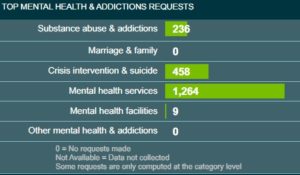
There is also reason to believe that the stress associated with the pandemic is overwhelming Milwaukee area residents. Calls to the local 211 crisis helpline have jumped significantly since the coronavirus outbreak in March. Additionally, Children’s Wisconsin is reporting an unexpected rise in psychiatric emergency visits.
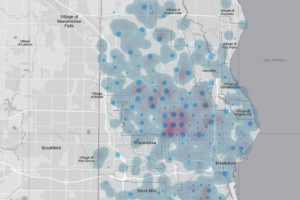
Milwaukee County Mental Health Requests – April 2020 Source: https://wi.211counts.org/
Relative to other Milwaukee enclaves, Milwaukee’s communities of color may be experiencing even higher prevalence of mental health problems. African Americans account for around 65% of the deaths in Milwaukee County due to complications from COVID-19, but only make up about 40% of County residents. Latinx Milwaukee neighborhoods have also seen a recent surge of coronavirus infections and deaths. Both Milwaukee communities, Black and Latinx, tend toward lower income and experience disparities in social and health outcomes. Unfortunately, it is not surprising that families in these communities are bearing a heavy disease burden; nonetheless, it’s important to recognize that the persistent threat to their collective physical health coupled with the secondary consequences of the pandemic could be undermining their mental health in unprecedented ways.
Worse yet, while mental health needs are likely rising exponentially, access to services is probably dropping precipitously. Families of color in Milwaukee with low annual household incomes already face multiple barriers to quality mental health care, including inadequate health insurance coverage, limited availability of care providers, and stigma associated with treatment. Add to these obstacles the current environment of social distancing, and it would seem that many families will go without needed mental health treatment. This is a big problem that warrants a multi-pronged response.
Two solutions rise to the top of our priority list. We at the Institute for Child and Family Well-Being have a history of exploring and providing telemental health services to families with low annual incomes enrolled in public services such as child welfare. For these families, the Institute plans to expand telemental health provision of evidence-based, trauma-informed treatments. These include Parent-Child Interaction Therapy and Trauma-Focused Cognitive Behavioral Therapy. Using a well-established tracking and supervision system, we will ensure high quality service delivery. Recent changes in patient privacy protections allowing for more liberal use of telehealth treatment during the pandemic, along with greater access to online technologies among lower income families, should help facilitate this plan.
In addition, the Institute will continue to train local providers in the delivery of these treatment services. Graduate students from the University of Wisconsin-Milwaukee join the Institute as clinical interns and complete a one-year training apprenticeship. A federally-funded grant also enables the Institute to train over 100 area professionals in the aforementioned intervention types. Institute trainings will now include support for telemental health, and Institute trainers will recruit students and clinicians committed to serving Milwaukee families eligible for public services. Mental health care for these families, who typically experience disorders such as depression and anxiety at astronomically high rates, is critical now more than ever.
Learn More
Milwaukee Coalition for Children’s Mental Health (CCMH) COVID-19 Resource Page
The Institute accelerates the process of translating knowledge into direct practices, programs and policies that promote health and well-being, and provides analytic, data management and grant-writing support.
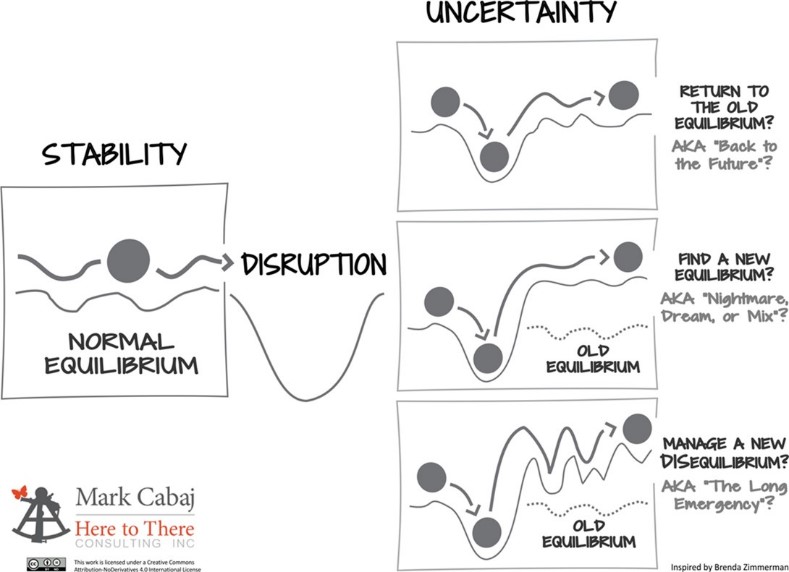
The Institute for Child and Family Well-Being was proud to host the webinar “Evaluating Systems Change: An Inquiry Framework” with evaluation innovator Mark Cabaj, President of Here 2 There Consulting. In this webinar, Mark and ICFW Co-Director Gabe McGaughey discussed why we need to focus on systems change, measuring system change results in uncertain times, with a focus on how strategic learning can be used in times of uncertainty using Developmental Evaluation. Developmental Evaluation combines the rigor of evaluation, being evidence-based and objective, with the creative and adaptive thinking needed to support innovative and rapidly evolving strategies that are typical in systems change efforts. Will the system environment be returning to ‘normal’ quickly, or are we entering a phase of extended uncertainty? What are some questions to ask in applying an Inquiry Framework lens to the child protection system in this uncertain era of COVID-19?
What are the boundaries of the ‘CPS System’ and why change it?
The first step of an Inquiry framework, or any system change effort, is to define the boundaries of the systems and the actors within it. Almost 21% of all CPS reports in Wisconsin made in 2019 came from education personnel. Another 19% from legal/law enforcement. How might those actors be included in improving a system challenged by COVID-19? Minority communities are both disproportionately represented in foster care and the negative health and economic impacts of COVID-19. Can families with lived/living experience in the CPS system contribute to new solutions?
What do system change results look like?
The Inquiry framework outlined three types of results that could be applied to child protection systems.
Systems Change: The extent to which efforts change the systems’ underlying complex issues, including changes in drivers of system behavior, such as policy, mental models, or resource flows.
Mission Outcomes: The extent to which efforts help make lives better for individuals, targeted geography/groups, or populations.
Strategic Learning: The extent of efforts to uncover insights about what we are doing, how we are thinking, and how we are being that are key to future progress.
Recognizing that we’re operating in a crisis context, with rapid change and an uncertain future, focusing on Strategic Learning may elevate insights central not only to the current COVID crisis, but emergent solutions that could be carried forward into future practice.
Strategic Learning
Strategic Learning is the intentional practice of collecting information, reflecting on it, and sharing the findings to improve the performance of an organization or system and inform its direction. With the rapid development of solutions in response to the crisis across the industry, how might we surface solutions that were developed? Adding structure to this process can cut through noise and add efficiency to adapting to an uncertain, and potentially chaotic, environment.
Systems often look for the right tool at the right time to collect information to move forward. Using the correct clinical assessment tool can help separate out trauma from mental health symptoms, leading to more efficient and effective treatment of individuals. Systems are no different. The COVID crisis has already challenged CPS and other systems that support families in unforeseen ways, which are likely to continue for the foreseeable future. Using the right tools at the right time that can evaluate adaptive efforts, can support improving systems and their ongoing efforts to meet the complex needs of families.
The Institute develops, implements and disseminates validated prevention and intervention strategies that are accessible in real-world settings.
Clinical Training Adaptations: PCIT-Toddlers
By Kate Bennett
Reflecting upon the many impacts of the COVID-19 pandemic over the previous few weeks, it’s likely true that each of us have witnessed extraordinary examples of both strengths and challenges affecting individuals, families, and communities. ICFW relies on strategic learning as a way of framing such challenges, with a goal of informing quick adjustments in what we do in our day-to-day work. With shelter-at-home orders in place, the mental and behavioral health needs of families with young children in our community is elevated now more than ever before. For this reason, rapid adaptation has been a standout theme for our team over the last seven weeks.
As we all were pressed to quickly adjust our work and home lives in March, our agency was faced with a question as to whether Children’s Wisconsin would be able to move forward with a previously scheduled in-person Parent-Child Interaction Therapy with Toddlers (PCIT-T) training for mental and behavioral health clinicians. PCIT-T is an adaptation of Parent-Child Interaction Therapy (PCIT) that focuses on meeting developmental needs of children ages 12-24 months through live coaching of a parent or caregiver.1 The 2-day PCIT-T workshop was to take place on March 19-20, just within a week of our team’s transition to home-based work.
Expanding access to early childhood mental health services is a top priority at Children’s, so it was imperative to make sure this workshop could still be offered to clinical staff. ICFW was able to collaborate closely with our PCIT-T trainer, Emma Girard, Psy.D., to determine how we might be able to move forward with this training opportunity knowing that our clinics were physically closing, and an in-person workshop was no longer an option. With a focus on how to continue the dissemination of evidence-based prevention and clinical practices to the many families in need in Milwaukee and beyond, Dr. Girard graciously agreed to adapt PCIT-T training to a web-based format for the very first time with our ICFW and Children’s clinicians as her test group. She worked with our team to create an engaging transition to two 8-hour days of training over Zoom Video Conferencing2, providing well-being baskets filled with PCIT-T themed treats to each clinician participant. ICFW assisted Dr. Girard in ensuring delivery of all training materials to our Milwaukee-based clinicians, and we teamed to provide supplemental training materials to participants through the Basecamp project management and team communication tool.3
From California, Dr. Girard logged onto Zoom shortly after 6am Pacific Standard Time in order to meet clinician need for virtual connection for two full days. Each of the 13 participants joined PCIT-T training from separate locations and remain engaged while Dr. Girard incorporated games, activities, and props into the 16 hours of skills-learning and practice. Reflecting on the experience of training from afar, Dr. Girard indicated that although the process of large-scale distance presentations requires a great deal of energy and planning, she was grateful to be able to offer the physically-distanced workshop to our group of clinicians and was pleased the outcome will provide nurturing and sensitive caregiving practices by brining PCIT-T into the homes of families. We are grateful for her dedication, flexibility, and the thoughtful learning atmosphere she provided.
Additionally, we are nothing short of impressed that Dr. Girard was able to deliver this same training over Zoom for a second PCIT-T clinical cohort grounded in New York the following week. Taking her lead from this web-based experience, Children’s Wisconsin and other Milwaukee-based agencies are now rolling out extensive telehealth services that allow clinicians to engage with families remotely. Utilizing the same HIPAA-compliant technology, clinicians are providing PCIT-T and other evidence-based interventions through video visits with young children and their caregivers. This platform allows continued connections through a child’s MyChart account and is simply accessed by a parent from a mobile device.5 Our mental and behavioral health teams at Children’s and ICFW look forward to continuing the expansion of treatment for kids and families in their natural home environment.
1 Girard, E.I., Wallace, N.M, Kohlhoff, J.R., Morgan, S.S.J., and McNeil, C.B. (2018). Parent-Child Interaction Therapy with Toddlers: Improving Attachment and Emotion Regulation. New York: Springer.
2 Zoom Video Conferencing, Web Conferencing, Webinars, Screen Sharing. (2020). Retrieved April 27, 2020, from https://www.zoom.us/meeting
3 Basecamp Project Management and Team Communication Software. (2020). Retrieved April 27, 2020, from https://basecamp.com/
4 Girard, E. I., Wallace, N. M., Kohlkoff, J. R., Morgan, S. S. J., & McNeil, C. B. (2020). Parent-Child Interaction Therapy with Toddlers (PCIT-T): Improving Attachment and Emotion Regulation. Retrieved April 27, 2020, from http://www.pcit-toddlers.org
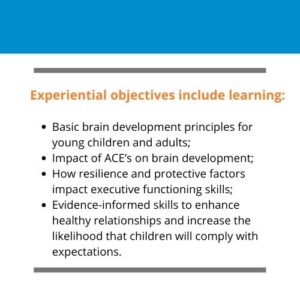
Building Brains with CARE is an experiential knowledge and skill-building platform. ICFW clinicians have been presenting Brain Architecture: ACE’s, Trauma and Resilience for several years which include the Brain Architecture Game. The Brain Architecture Game is a kinesthetic game experience that helps participants understand the powerful role experiences play in early childhood brain development, those that contribute to strong brain function and those that threaten or hinder it. The entire presentation provided foundational knowledge of Adverse Childhood Experiences (ACE’s), the associated physical and neurological changes to the brain and bolstering resilience in youth, but also was useful those with prior exposure to these concepts. Many of past participants had some base knowledge (i.e. had heard of ACE’s and Trauma-Informed Care) and found the experiential nature of the presentation provided more concrete and eye-opening understanding of their prior knowledge. However, the presentation often left the audience, and presenter, wanting more by way of strategies and tools to help children struggling with effects of toxic stress.
This is where Child-Adult Relationship Enhancement (CARE) comes in. Clinicians were formally trained in the Parent-Child Interaction Therapy adaption by master trainer Christina Warner-Metzger, PhD. After a lot of hard work by Lead Clinician Kate Bennett, and with the support of the iCARE Collaborative, Building Brains with CARE was born and became one of only two applications of CARE outside its initial designed scope granted by the iCARE Collaborative in the nation. Building Brains with CARE is a combination of in-person concept introductions and virtual learning and practice. This format is used to celebrate learning and gaining mastery in concepts and new skills.
After an initial in-person session, each cohort gains access to a Building Brains with CARE Community of Practice. ICFW clinicians and participants utilize Zoom Web Conferencing to virtually engage with each other to revisit and complement in-person information. Additional resources can be provided by ICFW clinician participants, everyone practices skills and shares how they’ve tested the implementation of knowledge through the Plan-Do-Study-Act cycle. The Community of Practice topics are flexible as different avenues of discussion are based on participants’ interests, findings and sharing. Basecamp, which is an easily accessible project management platform, is also used to share resources, enable interaction and act as a living archive of discussions and learning objectives.
During the in-person and virtual Community of Practice, participants practice identifying situations that may indicate common trauma reactions and skills they can use within their relationships that support resilience and healthy communication. They have the opportunity for family consultations, skill-building and access to bibliographic resources. Participants learn which evidence-based interventions may be useful to families who are experiencing significant impairment in functioning due to trauma exposure.
While content is traditionally introduced over the course of one day with participants then gaining access to virtual resources including live Community of Practice sessions, there have been a few adaptions made to accommodate audience. Prior to COVID-19 changed so many things, UWM Children’s Learning Center approached ICFW to inquire about schedule flexibility in order to be worked into their pre-established professional development time. ICFW set off on adapting the Building Brains with CARE in-person format from a one-day session to five 2-hour sessions. After social distancing expectations were put in place, ICFW clinicians worked to adapt session three from in-person to Zoom-based in order to carry on with our collaboration with UWM Children’s Learning Center. Building Brains with CARE will soon be available through the Professional Development System at the UWM Partnership. If you’d like to learn more about how to get involved, please contact Luke Waldo at lwaldo@chw.org.
The Institute provides training, consultation and technical assistance to help human service agencies implement and replicate best practices. If you are interested in training or technical assistance, please complete our speaker request form.
Trauma screening, brief intervention and referral to treatment (T-SBIRT): Introduction to a promising, brief protocol for social service and healthcare settings
Community engagement, or “the intentional process of co-creating solutions in partnership with people who know best, through their own experiences,”[1] requires the creation of authentic, collaborative relationships between context and content experts. Complex social problems such as gun violence, children’s mental health, and living through a global pandemic require solutions that are developed in collaboration with the children, families and communities that are most impacted by them. Through meaningful collaboration between service providers, government agencies and our community members with lived experience, we build reciprocal empowerment and education that may lead to co-creation of solutions that will more directly benefit the community and be sustained over time. The greatest challenges to authentic community engagement stem from forced or indifferent collaboration that often results in fraudulent inclusivity and tokenism. In a time of uncertainty and COVID-19, it becomes even more critical that we turn to the people that have lived through these challenges to learn how we might overcome them as a broader community.
The Institute for Child and Family Well-Being was proud to host the webinar “Authentic Community Engagement: Made in Milwaukee” with Leah Jepson and Blake Tierney, Project Director and Manager of the Milwaukee Coalition for Children’s Mental Health, and Reggie Moore, Director of the City of Milwaukee’s Office of Violence Prevention.
In this webinar, Luke Waldo discussed the following with Leah, Reggie and Blake:
Why community engagement is critical to social change;
How it impacts social change;
The challenges and benefits associated with collaboration;
All within the context of the Milwaukee Coalition for Children’s Mental Health and the Office for Violence Prevention’s Blueprint for Peace and 414Life.
“Stable housing is a foundation for family stability, not merely a reflection of it.”
-Mary Cunningham
Stable housing provides a foundation for health, well-being, and prosperity for children, families, and communities. Stable housing can positively affect a broad spectrum of outcomes for children and families, including academic performance, employment, physical, and mental health. Threats to stable and healthy housing are complex and intertwined with systemic and interpersonal factors.
Families experiencing housing instability face increased risk of their children being involved in the child welfare system . 81% of families with children entering care identified recent histories of housing instability, including crowding, homelessness, and evictions. Housing instability is also linked to delays in reunification; and foster care placement is also connected to youth homelessness.
If families experiencing housing instability are at greater risk of child maltreatment and placement into foster care, how can we take a systems approach to support families coping with housing instability, before getting involved in the child welfare system? Housing Opportunities Made to Enhance Stability (HOMES) is a systems change initiative focused on building new relationships, sharing ideas and knowledge, and starting new collaborations between housing and child welfare partners in the community. Housing as a Pathway to Prevent Child Maltreatment is a training ICFW Co-Director Gabriel McGaughey has delivered where participants learn about how brain science, strategic communication, systems change approaches, and design thinking have been used to connect child welfare, health, and housing in efforts to support child well-being.
A nurturing environment promotes resilience, reduces toxic stress, supports healing and is the foundation of child, family, and community well-being. The COVID-19 crisis has presented our communities with unprecedented health and economic challenges, while also accelerating pre-existing disparities. Tools for evaluating system change efforts in an uncertainty context can be a critical tool to inform strategy and direction. Developmental Evaluation combines the rigor of evaluation, being evidence-based and objective, with the creative and adaptive thinking needed to support innovative and rapidly evolving strategies that are typical in systems change efforts.
The Institute for Child and Family Well-Being was proud to host the webinar “Evaluating Systems Change: An Inquiry Framework ” with Mark Cabaj, President of Here 2 There Consulting. Mark is an evaluation innovator, one of North America’s leading developmental evaluation experts who has been supporting system change efforts in eastern Europe, the Untied States, New Zealand, Australia, and Canada.
In this webinar, Mark and ICFW Co-Director Gabe McGaughey discussed:
Evaluation principles and purpose
Why systems change
System change outcomes
The importance of strategic learning to inform adaptive strategies in uncertain times
Systems make people vulnerable. The COVID-19 crisis has amplified the disparities and inequities in our community, but also represents an opportunity to address these wicked problems.
“A revolutionary moment in the world’s history is a time for revolutions, not for patching.” – The Beveridge Report
As Community Engagement and Systems Change are a core service area of the ICFW, collaboration with our community and systems partners is critical to fulfilling our mission. In recognition of those that value collaboration and whose mission seeks to improve child and family well-being, we have invited those partners to join us as ICFW Affiliates. We are honored to introduce our three newest ICFW Affiliates with whom we look forward to partnering with now and into the future.
Penny Dixon
Penny Dixon is the Shelter Manager at the Milwaukee Women’s Center, a division of Community Advocates.
Penny joined the Well-Being Team and the Institute for Child and Family Well-Being in 2015 as a licensed professional counselor with extensive experience training foster parents in the greater Milwaukee area. In her role as a clinician and trainer for the Institute, she quickly mastered and provided several well-validated child mental health treatment models – Parent-Child Interaction Therapy and Trauma-Focused Cognitive Behavioral Therapy – to families involved in the child welfare systems.
Penny also utilized Human-Centered Design to develop a psycho-social education group focused on trauma and resilience at the Community Advocates’ Milwaukee Women’s Center shelter. In 2019, Penny assumed the manager role of Community Advocates’ Milwaukee Women’s Center shelter, an emergency facility for families affected by homelessness and/or domestic violence. In this new role, Penny continues to collaborate with the ICFW on bringing trauma-responsive practices to the Women’s Center shelter through the HOMES initiative.
Tim Grove
Tim Grove is a senior consultant at SaintA, a human services agency whose mission is to facilitate equity, learning, healing and wellness for all.
Tim’s partnership with the ICFW team has a long and deep history. Both Tim and ICFW Co-Director Gabe McGaughey led child welfare case management programs at their respective organizations during a time of significant transition. ICFW Co-Director Josh Mersky and Clinical Director Dimitri Topitzes worked closely with Tim when evaluating an implementation project at SaintA funded by the Greater Milwaukee Foundation. Led by Tim, the initiative integrated a comprehensive trauma-informed case management system within several child welfare service units. Results of the evaluation were published in the Journal of Child Custody. In 2011, Drs. Mersky and Topitzes also partnered with SaintA to test an innovative training model with foster parents and children, Project Connect. Funded by the National Institutes of Health, this successful initiative helped launch the Institute for Child and Family Well-Being.
Tim’s dedication and advocacy around advancing trauma-informed care has been the foundation for transformation change at a wide range of organizations and in our community. His willingness to authentically collaborate and thoughtfully pursue improvements in practice, policy, and systems highlight just a few of the reasons we’re excited about Tim joining the ICFW as an Affiliate.
Reggie Moore
Reggie Moore serves as the Injury and Violence Prevention Director of the Office of Violence Prevention (OVP) located within the City of Milwaukee’s Health Department.
In that role, Reggie led the effort to develop the Blueprint for Peace, Milwaukee’s first comprehensive plan to address violence prevention from a public health perspective. The Blueprint includes six goals and 30 strategies. It was developed through merging extensive community input and the best available evidence, providing a scaffolding to support cross-system collaboration and change efforts. Other OVP programs such as Trauma Response Initiative, ReCAST MKE, and 414Life view addressing trauma as vital to violence prevention and community resilience.
Reggie also serves on the Scaling Wellness in Milwaukee (SWIM) steering committee and leads the group’s Policy Action Team. In that role, he’s worked with ICFW Co-Director Gabe McGaughey around the opportunity to align SWIM’s policy work with the Blueprint for Peace. Reggie’s commitment to social justice and willingness to collaborate across silos is an asset to advancing systems change in our community.
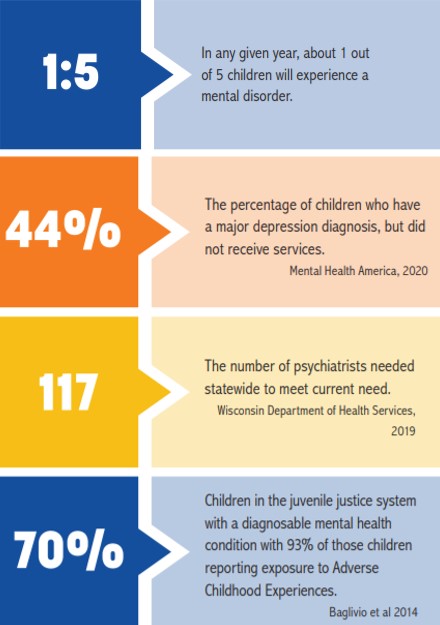
According to the 2019 annual report by the Office of Children’s Mental Health (OCMH), Wisconsin continues to see trends such as increasing rates of diagnosed mental illness in young children and adolescents1,2, increasing rates of untreated depression and anxiety in youth3, and a significant lack of mental health providers available to the community.4 In our state, a common concern shared by families and clinicians alike is the accessibility of early intervention and quality mental health services.
The Trauma and Recovery Project is a five-year initiative that aims to increase access to evidence-based mental health services in southeast Wisconsin by leveraging partnerships between the Institute for Child and Family Well-being (ICFW) and Wisconsin’s Department of Children and Families (DCF), OCMH, and the Milwaukee Child Welfare Partnership (MCWP). Funded by the Substance Abuse and Mental Health Services Administration, one of the project’s primary foci has been on growing the number of clinicians that are trained to deliver trauma-responsive treatments such as Trauma-Focused Cognitive Behavioral Therapy (TF-CBT), Parent-Child Interaction Therapy (PCIT), and Child-Parent Psychotherapy (CPP).
The project has established a Center of Excellence at Children’s Wisconsin to accelerate the implementation and dissemination of these three identified best practices which serve children ages 0-18 and their families. During the first two years of the project, well over 100 clinicians in Milwaukee and Racine counties have received training in one of the project’s three identified evidence-based treatments. Trainings and consultation are provided by the project for a minimal cost to clinicians and their agencies, and training participants are offered continued access to web-based, intervention-specific communities of practice (CoPs) hosted by the Center of Excellence. In the past year alone, clinicians at the Center of Excellence have participated in over 40 hours of CoP video-conferencing sessions to consult on evidence-based practices, and they have served nearly 400 children. Based on current projections by the ICFW, more than 2,000 children will receive TF-CBT, PCIT, or CPP at the Center by the end of the five-year project. Learn more about implementation of these evidence based practices here.
Importantly, parents and youth are sharing their lived experiences through a Collective Impact process led by OCMH to address access to services and family need.5 This innovative and structured approach to systems change is helping to identify facilitators and barriers to mental health services that principally affect disadvantaged and underserved communities. Three committees have additionally been formed with membership from the Milwaukee and Racine communities to oversee the work of the Trauma and Recovery Project. One of the committees, Service Access and Family Engagement (SAFE), seeks to expand family voice by creating a collective culture focused on equity and authentic relationships that work toward shared goals and system strategies. As the SAFE committee continues to evolve, project partners recognize that it is critical to include families who have been participants of the project interventions and clinicians who have provided the interventions in future collaborative efforts.
One major barrier that must be addressed is stigma associated with mental health services, and research suggests that perceptions of stigma tend to be particularly common among racial and ethnic minority groups.6 Parent consumers who are members of the project’s Collective Impact process have expressed this concern, and they have been actively engaged in developing direct outreach and public messaging strategies to combat the issue.
[1]Office of Children’s Mental Health (2020). OCMH 2019 Annual Report. Retrieved from: https://children.wi.gov/pages/annualreport.aspx
[2] Baglivio, M. T., Epps, N., Swartz, K., Sayedul Huq, M., Sheer, A., & Hardt, N. S. (2014). The prevalence of adverse childhood experiences (ACE) in the lives of juvenile offenders. Journal of Juvenile Justice, 3(2).
[3] Mental Health America. (2019). The state of mental health in America 2020. Retrieved from https://mhanational.org/issues/ state-mental-health-america
[4]Wisconsin Department of Health Services. (2019). Wisconsin Mental Health and Substance Use Needs Assessment. Received from Wisconsin Office of Primary Care.
[5] Office of Children’s Mental Health (2020). OCMH Collective Impact Framework. Retrieved from: https://children.wi.gov/Pages/Integrate/CollectiveImpact.aspx
[6] Min, J. W. (2019). The Influence of Stigma and Views on Mental Health Treatment Effectiveness on Service Use by Age and Ethnicity: Evidence From the CDC BRFSS 2007, 2009, and 2012. SAGE Open. https://doi.org/10.1177/215824401987627
The mission of the Institute for Child and Family Well-Being is to improve the lives of children and families with complex challenges by implementing effective programs, conducting cutting-edge research, engaging communities, and promoting systems change.
The Institute for Child and Family Well-Being is a collaboration between Children’s Wisconsin and the Helen Bader School of Social Welfare at the University of Wisconsin-Milwaukee. The shared values and strengths of this academic-community partnership are reflected in the Institute’s three core service areas: Program Design and Implementation, Research and Evaluation, and Community Engagement and Systems Change.
As Community Engagement and Systems Change are a core service area of the ICFW, collaboration with our community and systems partners is critical to fulfilling our mission. In recognition of those that value collaboration and whose mission seeks to improve child and family well-being, we have invited those partners to join us as ICFW Affiliates. We are honored to introduce our three newest ICFW Affiliates with whom we look forward to partnering with now and into the future.
Penny Dixon
Penny Dixon is the Shelter Manager at the Milwaukee Women’s Center, a division of Community Advocates.
Penny joined the Well-Being Team and the Institute for Child and Family Well-Being in 2015 as a licensed professional counselor with extensive experience training foster parents in the greater Milwaukee area. In her role as a clinician and trainer for the Institute, she quickly mastered and provided several well-validated child mental health treatment models – Parent-Child Interaction Therapy and Trauma-Focused Cognitive Behavioral Therapy – to families involved in the child welfare systems.
Penny also utilized Human-Centered Design to develop a psycho-social education group focused on trauma and resilience at the Community Advocates’ Milwaukee Women’s Center shelter. In 2019, Penny assumed the manager role of Community Advocates’ Milwaukee Women’s Center shelter, an emergency facility for families affected by homelessness and/or domestic violence. In this new role, Penny continues to collaborate with the ICFW on bringing trauma-responsive practices to the Women’s Center shelter through the HOMES initiative.
Tim Grove
Tim Grove is a senior consultant at SaintA, a human services agency whose mission is to facilitate equity, learning, healing and wellness for all.
Tim’s partnership with the ICFW team has a long and deep history. Both Tim and ICFW Co-Director Gabe McGaughey led child welfare case management programs at their respective organizations during a time of significant transition. ICFW Co-Director Josh Mersky and Clinical Director Dimitri Topitzes worked closely with Tim when evaluating an implementation project at SaintA funded by the Greater Milwaukee Foundation. Led by Tim, the initiative integrated a comprehensive trauma-informed case management system within several child welfare service units. Results of the evaluation were published in the Journal of Child Custody. In 2011, Drs. Mersky and Topitzes also partnered with SaintA to test an innovative training model with foster parents and children, Project Connect. Funded by the National Institutes of Health, this successful initiative helped launch the Institute for Child and Family Well-Being.
Tim’s dedication and advocacy around advancing trauma-informed care has been the foundation for transformation change at a wide range of organizations and in our community. His willingness to authentically collaborate and thoughtfully pursue improvements in practice, policy, and systems highlight just a few of the reasons we’re excited about Tim joining the ICFW as an Affiliate.
Reggie Moore
Reggie Moore serves as the Injury and Violence Prevention Director of the Office of Violence Prevention (OVP) located within the City of Milwaukee’s Health Department.
In that role, Reggie led the effort to develop the Blueprint for Peace, Milwaukee’s first comprehensive plan to address violence prevention from a public health perspective. The Blueprint includes six goals and 30 strategies. It was developed through merging extensive community input and the best available evidence, providing a scaffolding to support cross-system collaboration and change efforts. Other OVP programs such as Trauma Response Initiative, ReCAST MKE, and 414Life view addressing trauma as vital to violence prevention and community resilience.
Reggie also serves on the Scaling Wellness in Milwaukee (SWIM) steering committee and leads the group’s Policy Action Team. In that role, he’s worked with ICFW Co-Director Gabe McGaughey around the opportunity to align SWIM’s policy work with the Blueprint for Peace. Reggie’s commitment to social justice and willingness to collaborate across silos is an asset to advancing systems change in our community.
Program Design & Implementation
The Institute develops, implements and disseminates validated prevention and intervention strategies that are accessible in real-world settings.
Executive Functioning
The ability to regulate thoughts, emotions, and behavior is central to being a productive and prosperous adult. These skills inform navigating stressful situations, developing long-term plans, understanding the impacts of immediate decisions on those long-term objectives, and parenting children. All of these are key ingredients for providing a nurturing environment that supports the health and well-being of children.
Executive Functioning refers to coordination of multiple types and streams of information in order to arrive at a more effective course of action, including prioritizing tasks, goals, and information1. Executive functioning is a skill developed through practice, using age appropriate experiences and is the foundation for healthy development, cognitive functioning, and successful self-regulation. Strength of executive function skills is predictive of academic and career outcomes.
This edition of the ICFW Newsletter highlights two Executive Functioning projects on which we are currently working.
How Human-Centered Design Led Us to Mobility Mentoring in Our Child Welfare Programs
By Luke Waldo
At the Institute for Child and Family Well-Being (ICFW), we believe that relationships with our program partners at Children’s are one of our greatest assets to improve child and family well-being. Consequently, we put out a Call for Proposals to improve child and family well-being within those programs. While we received many proposals, our Family Support Program, which serves children and families involved with the child welfare system, submitted five proposals that spanned a variety of challenges, which included the question that leads to today’s article – “How might we create a standardized Home Management service that meets the complex needs of families involved in the child welfare system?”
Historically, the Family Support Program provided a Home Management service that “meets the family where they’re at.” Through engagement and informal assessment, the Family Support Specialist (FSS) would attempt to meet basic needs such as housing, education and employment assistance, and financial and parenting support through practices such as providing lists of available homes, contacting landlords, completing applications and budgeting tools, and providing resources. While this approach often yielded short-term progress for families – i.e., emergency rent assistance, submitted applications for GED classes and job opportunities – it required extensive time and effort from the FSS as there wasn’t a blueprint to follow, and it didn’t yield any sustainable skill-building for the client. In response, the ICFW facilitated a human-centered design process to seek solutions that might address the challenges that the Family Support Program faced.
Human-Centered Design
Human-centered design is a creative problem-solving process grounded in empathy, learning and creativity2. By beginning the problem-solving process with the people for whom you are designing, we end with ideas and solutions that are rooted in their experiences and needs. Ultimately, human-centered design confronts problems with optimism, collaboration, and ongoing learning to create solutions that can be embraced by the people that seek them.
IDEO, a social innovation leader, frames human-centered design as an iterative process that incorporates three “overlapping spaces”: inspiration, ideation, and implementation. During the inspiration phase, engaged participants – leaders, practitioners, community members – define the challenge for which they seek solutions. Ideation then leads to the brainstorming of ideas, their development into potential solutions, and the rapid-cycle testing that begins to determine what works, what does not, and how it might be implemented more broadly. Implementation is the leap from testing a prototype to delivery into people’s lives.
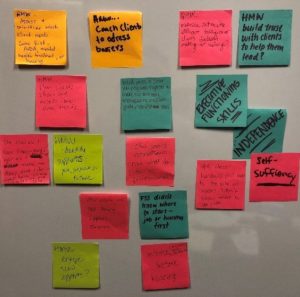
With a team composed of program decision-makers, leaders, and direct service staff, we worked through the human-centered design journey with tools such as Frame Your Design Challenge, Expert Interviews, How Might We?, Brainstorming, and Storyboarding. Through this thorough and engaging creative process, we departed from the idea that we were seeking a standardized curriculum that would build skills specific to finding and maintaining stable housing, education and employment. After scanning the environment and consulting with partners from around the country, we arrived at the conclusion that mentoring clients in development of executive functioning skills such as self-regulation and organization would yield better, more sustainable outcomes for families. This conclusion led us to a model called Mobility Mentoring, which “helps participants develop and strengthen their own skills and confidence to continue setting goals, even after the mentor-participant relationship ends.”
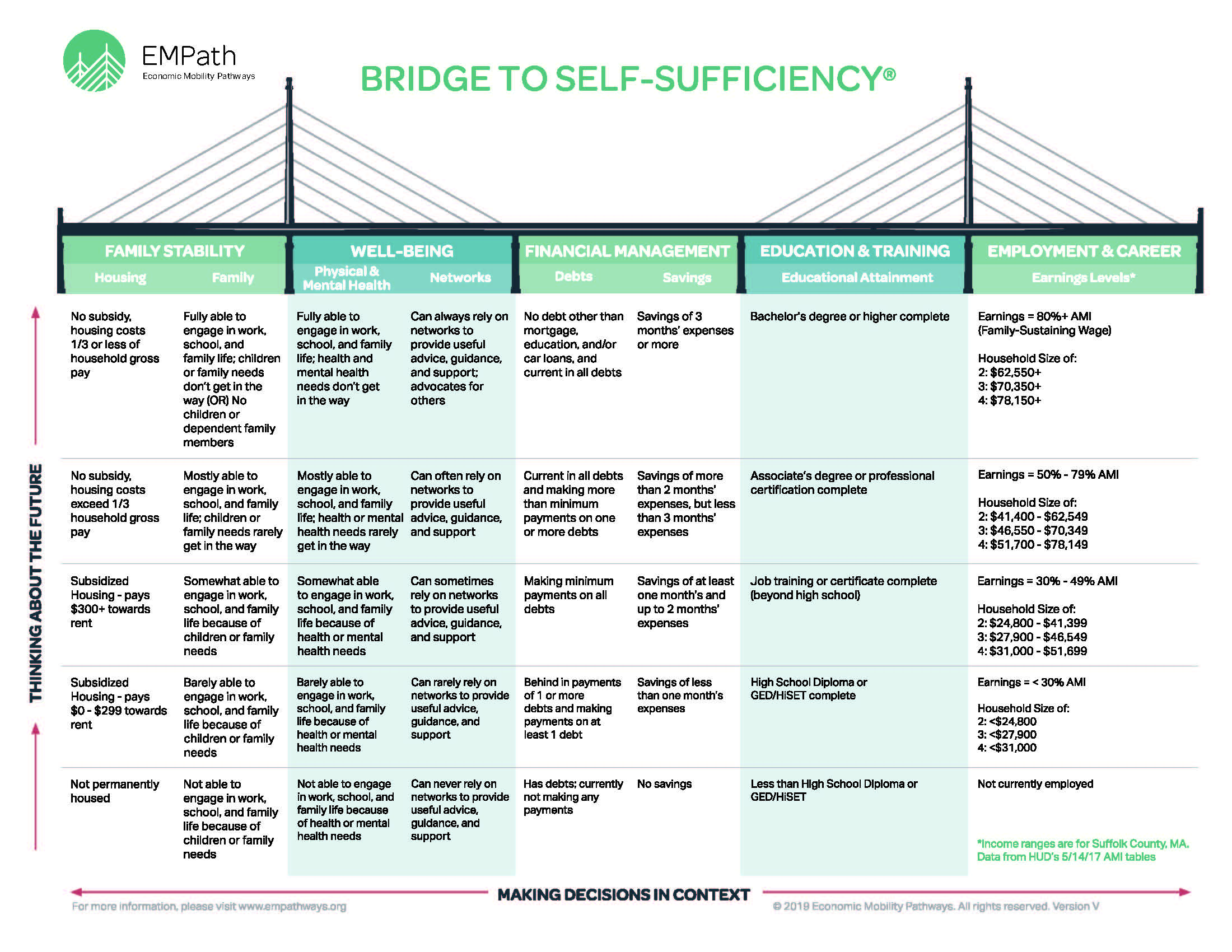
Mobility Mentoring
Source: EMPath’s Bridge to Self-Sufficiency
Mobility Mentoring® (MM) is an innovative evidence-informed coaching model, developed by EMPath3, focused on building economic self-sufficiency. MM is focused on not just helping participants attain specific goals, but helping them acquire the problem-solving and goal-setting skills necessary for successfully managing their lives. MM is built on a foundation of evidence-based Motivational Interviewing (MI), which utilizes incentives and the Bridge to Self Sufficiency assessment tool to determine their individualized goals within each of the model’s five pillars:
Family Stability
Well-Being
Financial Management
Education/Training
Employment/Career Management.
Through our Human-Centered Design process, we determined that the adaptation of Mobility Mentoring could solve the long-standing challenge of how to provide a structured and evidence-informed approach to serving families living in poverty, who have experienced trauma, and face complex challenges.
The ICFW has supported implementation of Mobility Mentoring in the Family Support program. While this implementation is early in the process, some of the early lessons learned include improved staff engagement and morale as a result of staff involvement in the human-centered design process; MM provides an Executive-Functioning and strengths-based framework that extends into all program services; MM provides the ability to measure goal completion and its impact on family teaming and reunification; and systems’ barriers create challenges to obtaining funding for fiscal incentives.
[1] Center on the Developing Child at Harvard University (2016). Building Core Capabilities for Life: The Science Behind the Skills Adults Need to Succeed in Parenting and in the Workplace. http://www.developingchild.harvard.edu [2] Greater Good Studio http://greatergoodstudio.com/ [3] EMPath – Economic Mobility Pathways. Mobility Mentoring – In the knowledge-based economy, snapping the cycle of poverty is more complex than ever. https://www.empathways.org/approach/mobility-mentoring.
Science-Based Innovation
By Gabriel McGaughey
When we take the time to ask families about their biggest stressors, family goals, and hopes for their family’s future, we start to map the gap between the current state of our services and where families want us to be to have impact. In 2017, six Children’s Home Society of America (CHSA) member organizations, including Children’s Wisconsin, partnered with the Center on the Developing Child at Harvard to ask families those questions. The response was clear; families’ two biggest stressors, across a diverse set of survey respondents and geographic locations, were money and having a better place to live.
The question then became, how can organizations providing family-focused interventions address these issues? Our response focused on Executive Functioning. In the fall of 2019, Children’s Wisconsin partnered with Children and Families First (Delaware), Nebraska Children’s Home Society, and The Family Partnership of Minneapolis, the model developer of Executive Functioning (EF) Across Generations, to secure a planning grant from the Center on the Developing Child at Harvard to attend an IDEAS Impact Framework workshop. The goal of the project team attending the workshop was to clarify the core elements of the model to act as a foundation for adapting its use in different program contexts.
IDEAS Impact Workshop
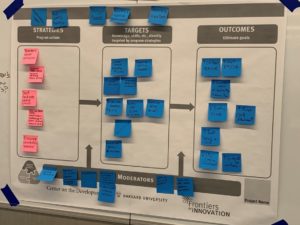
The Center on the Developing Child’s Frontiers of Innovation initiative is focused on building a research and development platform for science-based innovation that supports change in program design, policy, and systems. ICFW Co-Director Gabriel McGaughey was a member of the CHSA project team focused on EF Across Generations, which was specifically looking to adapt the intervention for a feasibility study in Children’s Wisconsin’s Home Visiting program in Wausau.
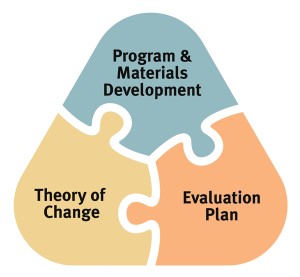
The IDEAS Impact framework combines elements of design thinking, a focus on precision, and three key brain science concepts to identify the active ingredients for programs. This process helped us get specific about the core activities in EF Across Generations through developing a Theory of Change (TOC), understanding how the program materials for families and staff were tied to the TOC, and how the evaluation plan measures these activities. The project team focused on the core model, as creating the adaptations for other contexts would be easier with that solid foundation.
Source: Center on the Developing Child at Harvard
EF Across Generations
EF Across Generations is a two-generation intervention, developed by The Family Partnership (TFP) (Minneapolis, MN) for use in their preschool classroom setting. It is designed to boost executive function and self-regulation (EF/SR) in young children (ages 4-5) and their parents through the development and use of Internal State Words (ISWs). ISWs, or words for sensations, perceptions, feelings, volition, and ideation/imagining, was used in our model to help parents understand what their child may be trying to communicate, making it easier for parents to initiate or respond to emotionally significant events experienced by their child. EF skills are language-based skills, so children’s curriculum focuses on children ISWs; while the parent curriculum teaches core brain science and EF/SR concepts to parents, with a focus on helping parents recognize children’s use of ISWs, so that they can practice serve and return based on these important words.
TFP conducted three pilots of the children’s curriculum, and one of the parents’, using the Internal State Word Inventory to evaluate progress. Results showed an 80-100% increase in use of ISWs by children, as reported by both classroom teachers and parents. Language analysis of personal narratives from the third pilot showed increases in narrative complexity when pre- and post-intervention narratives were compared. In the second and third children’s pilots, the Minnesota Executive Function Scale (MEFS) was used to measure EF change:
Pre-intervention: Children in the pilots had age-adjusted MEFS scores that were .5 to 1.5 standard deviations below the age-adjusted median for EF.
In the second pilot, children’s age-adjusted MEFS score increased post-intervention, but stayed below the national median.
In the third pilot, children again started below the national median, but scored ABOVE the national median for EF post-intervention.
TFP’s first pilot of the parent curriculum was focused on the overall parent experience, and what we learned is that parents were very interested in brain science and EF and started being warmer with each other and staff.
Children’s Wisconsin worked with TFP to develop an adapted TOC to deliver EF Across Generations in our Wausau Home Visiting program as part of an Implementation grant submitted in January 2020. The home visiting adaptation would take place over 10 sessions of 30-minute duration, as part of ongoing home visiting programming with enrolled clients with children ages 4-5. If funded, this prototype would provide the adapted model to 20 families to see if the program was feasible, based on the feedback from parents/caregivers, the model developer, and program staff. If the model proves effective in this setting, there is an opportunity to embed this practice into existing home visiting programs, as opposed to developing funding and infrastructure for a new, “stand-alone” program.
Research and Evaluation
The Institute accelerates the process of translating knowledge into direct practices, programs and policies that promote health and well-being, and provides analytic, data management and grant-writing support.
Mental Health Screening and Reporting: Trauma & Recovery Project Gains and Process Improvement
By Leah Cerwin
The Trauma and Recovery Project (TARP) aspires to build capacity so that clinicians are routinely implementing validated screening and assessment tools in order to improve the identification and treatment of trauma and mental health symptoms in children seen for services at Children’s Wisconsin and throughout southeast Wisconsin.
The Trauma and Recovery Project is a five-year initiative that is increasing access to evidence-based mental health services in southeast Wisconsin by leveraging partnerships between the Institute for Child and Family Well-being (ICFW), Wisconsin’s Department of Children and Families, Office of Children’s Mental Health, and the Milwaukee Child Welfare Partnership for Professional Development.
At the ICFW and Center of Excellence, our clinicians are providing evidence-based treatments to children and families seeking mental health services. Our Lead Clinicians are building a process to track treatment results and demonstrate clinical outcomes. There have been considerable barriers to this data entry process, which is not unique to ICFW as many partner agencies providing mental health services cite similar challenges.
The ICFW Lead Clinicians are working with our Children’s partners to build an Epic data collection system for mental health screenings and treatments, which would be embedded in the child’s medical record. Our goal is to unify mental health and medical health records to create a process that can be easily accessed by clinicians and directors, and easily approached and understood by families.
The Center of Excellence prioritizes the importance of screening for trauma and mental health symptoms and implementing evidence-based treatments to address those symptoms. Our data show that clinicians are significantly more likely to use a validated trauma assessment after completing training in Trauma-Focused Cognitive Behavioral Therapy (TF-CBT) or Parent Child Interaction Therapy (PCIT). In the first two years of the grant, a total of 337 clinicians completed training in one of three evidence-based treatment modalities (TF-CBT, PCIT, or CPP). During TARP’s second year, 83 Milwaukee and Racine clinicians completed training in at least one of the three evidence-based treatment models.
An additional objective of the Trauma and Recovery Project is to improve child mental and behavioral health outcomes, which includes assessments of family functioning. Results from Year 2 indicated that 72% of families that received one of the three treatment modalities reported improved family functioning between baseline and discharge. An additional measure of success for this goal involved children’s report of experiencing trauma symptoms, measured by the Post Traumatic Stress Disorder reaction index. Results from Year 2 indicated that by discharge, all children experienced a decrease in trauma symptoms by 56%.
Despite the inherent difficulties of recording and reporting out data gathered in mental health treatments, the Center of Excellence through the Trauma and Recovery Project has designed its own system for data tracking and will continue to move forward to streamline mental health records into each child’s medical records. Progress toward these aims will help to fulfill the project’s ultimate goal of helping trauma-exposed children and families access mental health services that are evidence-based, highly effective, and that provide understandable and accessible results.
The Institute develops community-university partnerships to promote systems change that increases the accessibility of evidence-based and evidence-informed practices.
Enhancing Systems through Evidence Based Treatment Training and Lived Experience
By Kate Bennett and Joshua Mersky
According to the 2019 annual report by the Office of Children’s Mental Health (OCMH), Wisconsin continues to see trends such as increasing rates of diagnosed mental illness in young children and adolescents1,2, increasing rates of untreated depression and anxiety in youth3, and a significant lack of mental health providers available to the community.4 In our state, a common concern shared by families and clinicians alike is the accessibility of early intervention and quality mental health services.
The Trauma and Recovery Project is a five-year initiative that aims to increase access to evidence-based mental health services in southeast Wisconsin by leveraging partnerships between the Institute for Child and Family Well-being (ICFW) and Wisconsin’s Department of Children and Families (DCF), OCMH, and the Milwaukee Child Welfare Partnership (MCWP). Funded by the Substance Abuse and Mental Health Services Administration, one of the project’s primary foci has been on growing the number of clinicians that are trained to deliver trauma-responsive treatments such as Trauma-Focused Cognitive Behavioral Therapy (TF-CBT), Parent-Child Interaction Therapy (PCIT), and Child-Parent Psychotherapy (CPP).
The project has established a Center of Excellence at Children’s Wisconsin to accelerate the implementation and dissemination of these three identified best practices which serve children ages 0-18 and their families. During the first two years of the project, well over 100 clinicians in Milwaukee and Racine counties have received training in one of the project’s three identified evidence-based treatments. Trainings and consultation are provided by the project for a minimal cost to clinicians and their agencies, and training participants are offered continued access to web-based, intervention-specific communities of practice (CoPs) hosted by the Center of Excellence. In the past year alone, clinicians at the Center of Excellence have participated in over 40 hours of CoP video-conferencing sessions to consult on evidence-based practices, and they have served nearly 400 children. Based on current projections by the ICFW, more than 2,000 children will receive TF-CBT, PCIT, or CPP at the Center by the end of the five-year project.
Importantly, parents and youth are sharing their lived experiences through a Collective Impact process led by OCMH to address access to services and family need.5 This innovative and structured approach to systems change is helping to identify facilitators and barriers to mental health services that principally affect disadvantaged and underserved communities. Three committees have additionally been formed with membership from the Milwaukee and Racine communities to oversee the work of the Trauma and Recovery Project. One of the committees, Service Access and Family Engagement (SAFE), seeks to expand family voice by creating a collective culture focused on equity and authentic relationships that work toward shared goals and system strategies. As the SAFE committee continues to evolve, project partners recognize that it is critical to include families who have been participants of the project interventions and clinicians who have provided the interventions in future collaborative efforts.
One major barrier that must be addressed is stigma associated with mental health services, and research suggests that perceptions of stigma tend to be particularly common among racial and ethnic minority groups.6 Parent consumers who are members of the project’s Collective Impact process have expressed this concern, and they have been actively engaged in developing direct outreach and public messaging strategies to combat the issue. Learn More
[1]Office of Children’s Mental Health (2020). OCMH 2019 Annual Report. Retrieved from: https://children.wi.gov/pages/annualreport.aspx [2] Baglivio, M. T., Epps, N., Swartz, K., Sayedul Huq, M., Sheer, A., & Hardt, N. S. (2014). The prevalence of adverse childhood experiences (ACE) in the lives of juvenile offenders. Journal of Juvenile Justice, 3(2). [3] Mental Health America. (2019). The state of mental health in America 2020. Retrieved from https://mhanational.org/issues/state-mental-health-america [4]Wisconsin Department of Health Services. (2019). Wisconsin Mental Health and Substance Use Needs Assessment. Received from Wisconsin Office of Primary Care. [5] Office of Children’s Mental Health (2020). OCMH Collective Impact Framework. Retrieved from: [6] Min, J. W. (2019). The Influence of Stigma and Views on Mental Health Treatment Effectiveness on Service Use by Age and Ethnicity: Evidence From the CDC BRFSS 2007, 2009, and 2012. SAGE Open. https://doi.org/10.1177/2158244019876277
Recent and Upcoming Events
The Institute provides training, consultation and technical assistance to help human service agencies implement and replicate best practices. If you are interested in training or technical assistance, please complete our speaker request form.
ICFW presented at and participated in the following conferences and trainings:
January 17
Society for Social Work and Research 24th Annual Conference, Washington, DC
Building Brains with CARE Trainers: Kate Bennett and Meghan Christian Audience: UWM Children’s Learning Center
February 21-23
UWM Community Building Workshop
February 26
Carthage College Trauma and Wellness Conference 2020 Panel: On Trauma, Economics, and the Justice System Panelists: Dimitri Topitzes, Lt.-Gov. Mandela Barnes, Katherine Hilson, Jamaal Smith
March 16-20
PCIT-Toddler Training Trainer: Dr. Emma Girard Audience: ICFW and Children’s Clinicians
May 11-13
Trauma-Focused Cognitive Behavioral Therapy (TF-CBT) Learning Collaborative – South Milwaukee
May 14-15 Sustaining Advanced Trauma-Focused Cognitive Behavioral Therapy (TF-CBT) Practice Session – Madison
Goldstein E, Topitzes J, Brown RL, et al. (2018) Mediational pathways of meditation and exercise on mental health and perceived stress: A randomized controlled trial. Journal of Health Psychology.
Abstract: This study investigated the effects of mindfulness and exercise training on indicators of mental health and stress by examining shared mediators of program effects. Community-recruited adults, (N = 413), were randomized into one of three conditions: (a) mindfulness-based stress reduction (MBSR), (b) moderate intensity exercise, or (c) wait-list control. Composite indicator structural equation models estimated direct, indirect and total effects. The results showed that mindfulness-based self-efficacy fulfilled a prominent role in mediating both meditation and exercise program effects. Our findings demonstrated that mindfulness and exercise training share similar mechanisms that can improve global mental health, including adaptive responses to stress.