Chopp, S., Topitzes, J., & Mersky, J. P. (2023). Trauma-responsive vocational rehabilitation services. Behavioral Sciences, 13(6), 511. https://www.mdpi.com/2076-328X/13/6/511
Research on the effectiveness of Vocational Rehabilitation (VR) Programs has revealed that VR services are less effective for trauma-affected and Black consumers. For instance, consumers with trauma exposure disengage from services earlier than their non-traumatized counterparts, and Black consumers benefit less from each phase of VR services compared to others. One midwestern state’s VR program sought to address these disparities by offering trauma-informed and trauma-responsive services that emphasize cultural responsiveness, racial equity, and strengths-based practices. To begin this work, the state’s VR program collaborated with an applied research unit in a public university to establish two work groups: a communications group and a training group. The purpose of the communications group was to build a robust referral network within the VR Division and with other community-based agencies and providers, particularly for low-income, Black consumers. The purpose of the training group was to develop and deliver a training program to support VR professionals in providing trauma-informed and trauma-responsive services. Results from an evaluation of the training indicated that each training module generated for staff both reminders and new insights into ways to effectively work with consumers. Staff expressed that they wanted opportunities to further explore and apply the training content and needed additional, ongoing support to implement what they were learning. In response to staff needs, the state’s VR program is continuing to invest in this community–university partnership by establishing communities of practice for staff and evaluating the effectiveness of the training program.
The work of Dimitri Topitzes, ICFW Director of Clinical Services, on T-SBIRT (trauma, screening, brief intervention, and referral to treatment) was highlighted in Research Features in May 2023. “T-SBIRT can help individuals exposed to traumatic events and situations by reducing their distress, making them aware of their experiences and reactions, providing them with support, and – if required – referring them for treatment. As Topitzes explains, ‘T-SBIRT has two main aims, to help individuals gain insight into the extent and effects of their trauma exposure, and to enhance their motivation to engage in positive coping, such as seeking behavioural or mental health services.’”
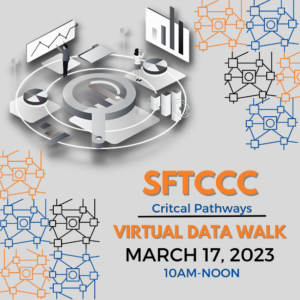
We believe that neglect is preventable. You are invited to join us at our upcoming Strong Families, Thriving Children, Connected Communities (SFTCCC) Virtual Data Walk on March 17th from 10:00am-12:00pm because we believe that you share that vision. Register here.
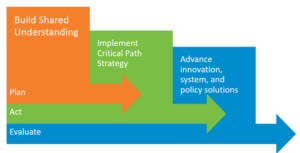
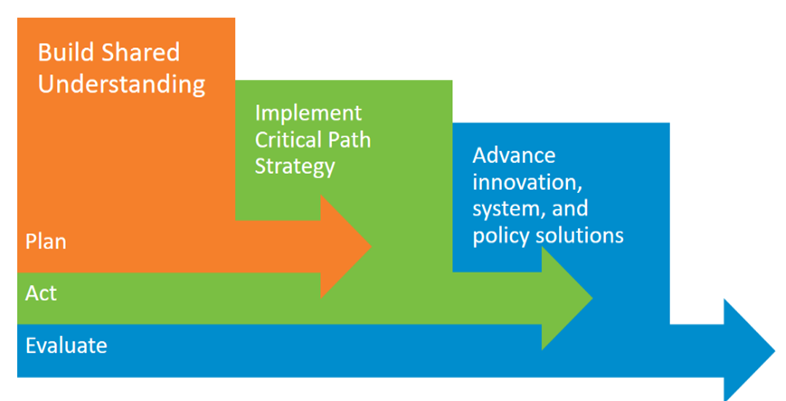
The ICFW’s Strong Families, Thriving Children, Connected Communities (SFTCCC) initiative is focused on reducing the number of families separated for reasons of neglect by creating a network focused on elevating practice innovations, policy recommendations, and systems change. We’ve taken the first step in building a shared understanding through a series of roundtables with Children’s staff, people with lived experience, and community partners over the course of the year, now we’re focused on taking those insights and themes to develop evidence aligned critical pathways for action. Critical Pathways are specific problem/priority spaces that are focal points for elevating or designing specific and actionable system-level solutions.
Connected Communities, a key pillar of the SFTCCC initiative, seeks to elevate the voices of stakeholders, partners and those with lived experience from across the state and beyond. With your active participation, the data walk will be an opportunity to review the data gathered over the course of 7 roundtables, 4 Conversation Cafes, and many hours of research. While engaging in dialogue with peers, you will have the opportunity contribute to the statewide initiative by sharing your unique perspective. Lastly, the data walk will demonstrate innovative data sharing techniques that can be replicated and personalized to use in your own community.
We hope to continue the journey towards determining Critical Pathways with each of you. Join us for the Data Walk on March 17th, 10am-noon.
Mersky, J. P., Choi, C., Langlieb, J., Plummer Lee, C., & Chang, P. (2022). Increasing equitable access to home visiting: An independent implementation study of Family Connects. Journal of the Society for Social Work and Research.
Objectives: Home visiting programs often provide long-term services to at-risk populations, though briefer, universal interventions like Family Connects are increasingly being disseminated to bring home visiting to scale. Extending research by the model’s developers in North Carolina, this paper presents findings from the first independent implementation study of Family Connects.
Method: Observational data were drawn from program records entered between August 2017 and February 2020 at a new Family Connects site in [location blinded]. Indicators of program acceptance, participation, and fidelity were examined. Data collected during home visits were used to describe family needs and demographics. An analysis of data gathered after program completion examined consumer satisfaction and referral connections.
Results: Of 2,304 families who were offered the program, 1,778 (77.2%) accepted services and 1,107 (48.0%) received services. Replicating prior findings, the program was implemented with high fidelity. Most participants had some need for education (99.4%), and over half (50.6%) had a need that warranted a referral. Family needs varied by race/ethnicity, educational attainment, and health insurance status. Post-program data gathered from 648 participants revealed high levels of program satisfaction and high rates of referral connections.
Conclusion: Interpretations of the findings and implications for health equity are discussed.
The mission of the Institute for Child and Family Well-Being is to improve the lives of children and families with complex challenges by implementing effective programs, conducting cutting-edge research, engaging communities, and promoting systems change.
The Institute for Child and Family Well-Being is a collaboration between Children’s Wisconsin and the Helen Bader School of Social Welfare at the University of Wisconsin-Milwaukee. The shared values and strengths of this academic-community partnership are reflected in the Institute’s three core service areas: Program Design and Implementation, Research and Evaluation, and Community Engagement and Systems Change.
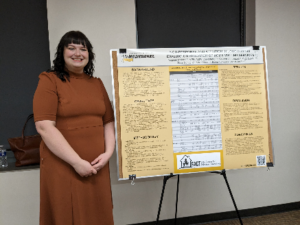
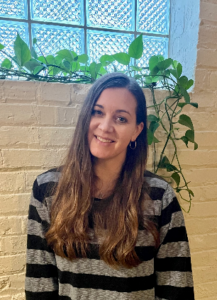
Meet our new Research Program Coordinator and MSW interns.
Research Program Coordinator
Meghan Majors is a new research program coordinator with the Institute for Child and Family Well-Being. She helps to coordinate several projects, including the IV-E Public Child Welfare Training Program (CWTP) and the evaluation of Wisconsin’s Family Foundations Home Visiting Program. Prior to this role, she worked as a graduate research assistant at ICFW on the Families and Children Thriving (FACT) Study. Her areas of interest include program implementation and evaluation, specifically around child maltreatment and mental health.
Meghan earned her Bachelor of Science in Psychology at the University of Minnesota-Twin Cities. She graduated with a Master of Public Health and a Master of Social Work from UW-Milwaukee.
Masters of Social Work Interns
Andrea Bailey is in her third semester as an intern at the Institute for Child and Family Well-Being and is completing her Master of Social Work at the University of Wisconsin-Milwaukee (August 2023). While at ICFW, Andrea has had the opportunity to be involved with the Strong Families, Thriving Children, Connected Communities initiative, participating in its various strategic activities as well as working toward completing Parent-Child Interaction Therapy training.
Prior to moving to Milwaukee, Andrea lived in Lancaster, Pennsylvania, where she directed a language program working with refugees from around the world. She also has experience working with youth in foster care, specifically adolescent mothers and their children. Andrea is also an adoptive parent, networking with foster/adoptive families raising children impacted by trauma. Andrea’s interests include working with children and adults affected by trauma, as well as systems-level work that seeks to strengthen the relationships and communities in which they live.
Jill Finnel graduated from Marquette University as a Burke Scholar with a Bachelor’s Degree in Psychology, Spanish, and International Affairs. As an undergraduate, she was a research assistant at Milwaukee Trauma Outcomes Project and interned with the Benedict Center Sisters Program.
Jill then worked at Children’s Wisconsin Community Services as an Intensive In-Home Family Support Specialist. She is currently pursuing her Master of Social Work at University of Wisconsin-Milwaukee and completing her internship at the Institute for Child and Family Well-Being. Jill is completing her current degree in the hopes of becoming a School Social Worker for the Milwaukee Public School District.
Joe Moreno is an intern with the Institute for Child and Family Well-being. He has several years of experience in childhood education and direct services for children and families.
He is involved in ICFW projects ranging from therapeutic services to skill-building workshops to systems-level coalitions. Currently, Joe is training in Parent-Child Interaction Therapy to obtain certification and looks forward to adding this to his therapeutic toolkit to better serve children and their caregivers.
Joe earned his bachelor’s degree in philosophy, graduating with honors from the University of Wisconsin-Madison. He is completing a Master of Social Work alongside certificates in trauma-informed care and substance abuse counseling from the University of Wisconsin-Milwaukee. His degree is specialized in providing clinical services to children.
Sylvia Onyeiwu is a Master of Social Work student at UW-Milwaukee and an intern with the Institute for Child and Family Well-Being. With over 7 years of experience in Branding, Communication, and Human Resources, Sylvia has worked with start-up and charity organizations in brand development, internal processes and policies, and communication that promotes the well-being of staff and clients.
Her academic interest is primarily focused on Trauma-Informed Care, particularly problem-solving technique models like Human-Centered Design and Trauma Screening, Brief Intervention, and Referral to Treatment (T-SBIRT). She is also interested in macro-level policies and systems and exploring the issue of neglect within the family and child welfare system.
She previously earned her Bachelor’s degree from the University of Port Harcourt, Nigeria in Religious and Cultural studies and majored in Gender.
Program Design and Implementation
The Institute develops, implements and disseminates validated prevention and intervention strategies that are accessible in real-world settings.
Introducing Building Brains with Relationships Workshops
Building Brains with Relationships (BBwR) is a one day workshop with an additional opportunity to continue skill building in a virtual Community of Practice in the upcoming weeks and months.
First, participants:
Build a shared understanding of the power of relationships and connection on brain architecture;
Confront the great nature versus nurture question while playing the Brain Architecture Game.
Then, participants add to their protective factors, sometimes called strengths, by practicing skills that are shown to strengthen relationships, create partnerships and increase desired outcomes.
Although the topic feels serious, it’s a highly useful and dare I say good time, as far as workshops go, of course. At the debut event in February, initial relationships across systems were made thanks to the wide array of participants present. Those participants will be able to continue building those relationships in the virtual Community of Practice to come.
If you’d like to attend a workshop and/or join the Protective Factors Community of Practice at an upcoming date on April 20th, June 14th or November 15th, create an account hereand after that, email wcwpds-mke@uwm.edu with your desired ticket date to reserve your seat. All dates will be hosted at the Wisconsin Child Welfare Professional Development-UWM extension site at 4425 N. Port Washington Road, Suite 400, Glendale, WI 53212.
Children thrive when they have regular interactions with responsive, caring adults. Families experiencing significant stressors can be overloaded with stress, interrupting those interactions. The prolonged stress of poverty negatively impacts those interactions as well (Babcock, 2016). Children in economically insecure households are seven times more likely to experience neglect (Dolan, 2011), and nearly 85% of families investigated by Child Protective Services earn below 200% of the federal poverty line (Sedlak, 2010). The prolonged stress of poverty negatively impacts a family’s ability to gain the skills needed to move out of poverty on their own (Babcock, 2016).
Mobility Mentoring®, an approach developed by EMPath, involves working with and coaching families to obtain resources, develop skills, and create sustainable behavior changes to become economically independent. Participants work with a trained mentor or coach to assess family life, finances, education, health, and career. Participants set long-term goals and create a plan using the Bridge to Self-Sufficiency®. In 2022, Children’s Family Support and Preservation Home Visiting, Employment and Education Services, and Family Support programs participated in an implementation cohort with EMPath through Children’s Home Society of America (CHSA).
Implementation is the art and science of incorporating innovations into typical human service settings (Fixen, et al, 2009). The process of integrating Mobility Mentoring (MM) practices, principles, and tools into existing workflows is an iterative one. This project is integrating Mobility Mentoring into existing evidence-based interventions such as Healthy Families America (HFA) Home Visiting, as well as becoming the more central practice framework for our Employment and Education Services and Family Support programs, all of which operated with different target populations in different geographic regions. In total, this model implementation includes three programs and seven sites from across Wisconsin.
The ICFW will be compiling lessons learned from this project throughout 2023, but we wanted to start with insights gained from the adapted Bridge to Self-Sufficiency and staff perspectives. Mobility Mentoring begins with a self-assessment to set participant driven goal setting. Families then work with their Home Visitor/Family Support worker/Employment and Education specialist who are trained as MM mentors to assess their family life, finances, education, health, and career. Participants set goals, create action plans, and track progress on the Bridge. Staff acknowledge participants’ efforts and celebrate successes, and obstacles that have been overcome.
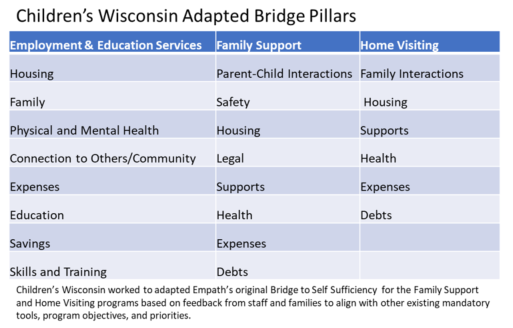
The Bridge is the central assessment and planning tool developed by EMPath, containing pillars which represent different areas that impact family stability. These bridges have been modified to align with existing program objectives and constraints based on feedback from families and staff.
Each of the pillars is split into five sections, or rungs. The lowest section corresponds with the lowest amount of skill or capacity in that pillar. The highest section corresponds with the highest amount of skill. Participants are then asked to choose the section of the pillar that best represents their skill level in each category. A participant that chooses the lowest rung is demonstrating that they have low skills in that pillar of the Bridge. A participant that chooses a higher ring is demonstrating increased skill. Scores are then combined from each of the eight pillars. This combined score comprises a participant’s Bridge Score.
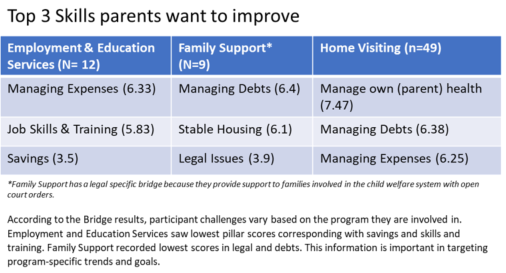
Across the implementing programs we looked at the three lowest pillar scores parents identified as wanting to develop the most, seven of them are financially related. While families are mostly referred to Children’s Wisconsin programs initially for support or education around parenting practices, MM has provided tools like the Bridge that helps us explore what the families’ most important priorities are, which are often underlying stressors tied to financial insecurities that impact parenting. Combining evidence-inform processes from MM, that provide staff with training and tools to be able to engage families around financial challenges, provides a compliment to established evidence-based interventions focused on parent-child interactions. While policy and structural changes are needed to reduce economic hardships that contribute to families being overloaded and becoming involved with the child welfare system, Mobility Mentoring provides families and staff a framework to navigate current state barriers to economic self-sufficiency.
The Institute accelerates the process of translating knowledge into direct practices, programs and policies that promote health and well-being, and provides analytic, data management and grant-writing support.
Spotlight on Home Visiting: Translating Research into Practice and Policy
For more than a decade, ICFW faculty have worked with the Wisconsin Department of Children and Families (DCF) to evaluate the Family Foundations Home Visiting Program. Guided by a community-university partnership model, these activities have helped to shine a light on children and families that enroll in home visiting programs as well as the providers and agencies that offer these services. ICFW and DCF are now collaborating with four other states and Washington, D.C. on a coordinated evaluation that focuses on family engagement and health equity. ICFW also has joined forces with health departments in Racine and Walworth Counties to develop a universal program that will ensure all families have access to nurse home visiting services soon after the birth of a child.
Home Visiting Publications
ICFW faculty have headed several home visiting research projects, including the FACT Study, Healthy Families Study, and REACH Project. Below is a list of recent ICFW publications related to home visiting programs and the families they serve:
Trauma Screening, Brief Intervention, and Referral to Treatment (T-SBIRT) Implemented within TANF Employment Services: An Outcome Study
Topitzes, J., Bacalso, E., Plummer-Lee, C. T., Jonas-Gordon, S., & Mersky, J. P. (2022).
The current study tested a trauma screening, brief intervention, and referral to treatment (T-SBIRT) interview protocol as implemented within Temporary Assistance to Needy Families programming.
Adverse adult experiences and health outcomes: Racial and ethnic differences in a low-income sample
Mersky, J. P., Plummer Lee, C., & Janczewski, C. E. (2022).
Extending research on adverse childhood experiences (ACEs), this study aimed to investigate whether the prevalence of and outcomes associated with adverse adult experiences vary among racial and ethnic subgroups.
The Association between Family Physical Environment and Child Maltreatment
Zhang, L., & Topitzes, J. (2022).
A body of emerging research has indicated that adverse family physical environment is related to parenting problems such as parent-child conflict, decreased caregiver sensitivity, and less parental emotional availability. Yet, no study has examined if family physical environment is also associated with child abuse and neglect. This study aimed to examine the relationships between family physical environment and different types of child maltreatment.
The Institute develops community-university partnerships to promote systems change that increases the accessibility of evidence-based and evidence-informed practices.
Children thrive when they have regular interactions with responsive, caring adults. Families experiencing significant stressors related to financial insecurity, housing instability, or the impact of systemic racism and interpersonal trauma can be overloaded with stress, interrupting those interactions. In the United States 1 in 3 of all children will experience a Child Protective Services (CPS) investigation, 1 in 10 will have confirmed or substantiated instances of maltreatment, and in Wisconsin 70% of all children in foster care were separated from their families with neglect cited as a removal reason.
We believe that neglect is preventable. The goal of the Strong Families, Thriving Children, Connected Communities (SFTCCC) initiative is to reduce the number of family separations for reasons of neglect by building a community focused on collaboratively pursuing policies and practices that support overloaded families and address systemic failings. SFTCCC launched in early 2022 and is focused on building a shared understanding of the root causes of neglect to better identify critical pathways towards prevention.
Critical Pathways are specific problem/priority spaces that are focal points for elevating or designing specific and actionable system-level solutions. Through a progressive series of seven roundtables during the past year, we’ve worked with staff at Children’s Wisconsin, community members, and people with lived experience to identify systemic challenges, risk factors, and barriers to supporting families overloaded by stress.
Over the past month, we hosted four Conversation Cafes that explored Wicked Questions that were informed by our roundtables and four emerging Critical Pathways: 1) Poverty, 2) Systemic Racism and Mental Models, 3) Informal Community Supports, and 4) Systems/Service Coordination. During the remainder of this month, we will be analyzing the data that we have collected through these Roundtables and Conversation Cafes along with the emerging research in the field to prepare for our Critical Pathways Data Walk. On March 17th, we are hosting a virtual data walk to explore with community partners and stakeholders how these specific themes overlap with evidence from research and other data sources. Even if you haven’t been to any SFTCCC events before, we welcome all new interested parties to participate.
If you are interested in learning more, participating in the upcoming Data Walk, and/or joining this initiative, please visit the SFTCCC project page or sign up here.
Recent and Upcoming Events
The Institute provides training, consultation and technical assistance to help human service agencies implement and replicate best practices. If you are interested in training or technical assistance, please complete our speaker request form.
This past year we celebrated the conclusion of some of our seminal projects such as our Trauma and Recovery Project, Birth to Three Social-Emotional Innovation Evaluation, and Family Drug Treatment Court Evaluation, and the launch of new projects that seek to strengthen families and the systems that support them such as our Strong Families, Thriving Children, Connected Communities initiative, Wisconsin Child Welfare and Home Visiting Data Project, Coordinated State Evaluation of Family Engagement and Health Equity, and JobsWork MKE. As we reflect on the past five years of the Trauma and Recovery Project and the potential of our new initiatives and projects, we recognize and honor the enormous value of the relationships that we have developed over these years that make possible the advancing of our mission to promote the well-being of all children and families by addressing barriers that result in unequal access to the best available care and solutions. As we embark on these new opportunities, we will continue to strengthen those relationships, learn from our partners’ research and lived experience, and aspire to translate what we learn into prevention and intervention strategies that make a real difference in people’s lives. The list of agencies and stakeholders who deserve our gratitude is too long to acknowledge here, but we invite you to check out our project pages where you will find many of our key partners.
As we begin 2023 – our seventh year as the Institute – our aim is to strengthen these alliances and forge new community connections that are necessary to disseminate effective strategies and produce lasting systems and community change. So take a moment to review what we learned and accomplished in 2022, and check out our newsletter, social media, webpage, and SFTCCC signup to learn more about what we are doing and how you can join us.
Meet the New ICFW Team Members
We welcomed new team members and roles to the Institute this year. Learn more about them here.
The goal of the Strong Families, Thriving Children, Connected Communities (SFTCCC) initiative is to reduce the number of family separations for reasons of neglect by building a community focused on collaboratively pursuing policies and practices that support overloaded families and address systemic failings.
The Overloaded: Understanding Neglect podcast represents the important first step of building a shared understanding of the problem and will serve as a foundation for future innovations in practice, policy, and systems change.
ICFW Dissemination in 2022: New Journal Articles and Webinars
The ICFW had 11 journal articles published in 2022 on topics ranging from adverse adult experiences and intergenerational transmission of adverse childhood experiences to the impacts of COVID and secondary traumatic stress on home visiting and how home visiting supports low-income women. To learn more, explore the publications here.
Strong and Stable Families in partnership with Wisconsin Child Abuse & Neglect Prevention Board, Strengthening Families Together Association, and statewide Family Resource Centers.
The Institute provides training, consultation and technical assistance to help human service agencies implement and replicate best practices. If you are interested in training or technical assistance, please complete our speaker request form.
The purpose of this project is to enhance therapeutic services at the Sojourner Family Peace Center (FPC) that aim to promote healing among children and youth who have witnessed domestic violence. FPC will increase its capacity to deliver evidence-informed services while working with partner agencies to link children and families to community-based...
JobsWork MKE is partnering with personnel from the University of Wisconsin-Milwaukee (UWM)/ Institute for Child and Family Well-Being (Institute) to enhance the trauma-informed nature of their employment services. The project goal is to effectively address unresolved trauma among JobsWork MKE program participants or members. In turn, the project...
Topitzes, J., Bacalso, E., Plummer-Lee, C. T., Jonas-Gordon, S., & Mersky, J. P. (2022). Trauma Screening, Brief Intervention, and Referral to Treatment (T-SBIRT) Implemented within TANF Employment Services: An Outcome Study. Journal of Social Service Research, 48(6), 753-767.
Abstract
The current study tested a trauma screening, brief intervention, and referral to treatment (T-SBIRT) interview protocol as implemented within Temporary Assistance to Needy Families programming. Using a non-experimental process evaluation and quasi-experimental outcome evaluation (N = 88), the study assessed four research questions. First, do T-SBIRT providers reach model adherence rates above 90%? Second, do over 90% of T-SBIRT completers experience the intervention as tolerable? Third, is T-SBIRT completion associated with decreases in mental health symptoms? Fourth, is T-SBIRT completion linked to reductions in positive mental health screenings? Process data emerged from provider-completed integrity checklists. Participant-completed baseline and follow-up surveys furnished outcome data, i.e., mental health indicators from validated scales of depression, anxiety, and post-traumatic stress disorder (PTSD). Descriptive statistics answered questions one and two; multivariate analyses addressed questions three and four. Results revealed that providers realized adherence rates at 98.5%; 91.3% of completers found the protocol tolerable; and completers reported significant reductions in depression symptoms, PTSD symptoms, and positive PTSD screenings relative to a comparison group. Findings recommend integrating T-SBIRT into social services to promote participant mental health and potentially enhance program outcomes. Future T-SBIRT research should include a randomized controlled trial assessing long-term mental health, employment, and income outcomes.
This webinar will make the case that all new parents deserve to be offered a home visit by a highly qualified healthcare professional. Research has shown that postnatal visits can have significant prevention benefits, including a reduced risk of child abuse and neglect. A new initiative in Racine and Walworth counties will be described that aims to ensure that all parents with newborns are eligible for a home visit by a public health nurse. Grounded in the principle of progressive universalism, which balances equal access to care with an equitable distribution of resources, this program will be tailored to ensure that each family receives direct care and connections to community services that match their needs.
Accessible, affordable and high-quality early childhood education (ECE) can contribute to cognitive, emotional and social development in children helping them grow into thriving, contributing adults. For parents and caregivers, ECE provides them with the opportunity for gainful employment, economic stability and self-sufficiency. The Jackson County Childcare Network (JCCN) identified Jackson County as an early childhood education desert, with capacity to only serve 278 children of the estimated 1000+ children in need of care. This disparity has resulted in an estimated $2.5 million loss in work productivity, parents unable to work to their full capacity, while 17.8% of children in the county live in poverty. The stressful conditions and circumstances associated with the lack of ECE options, un/under-employment, the effects of poverty, and toxic stress all are risk factors for poor child health outcomes, including increased risk for experiencing neglect.
In 2021, the Jackson County Action Initiative (JCAI) was formed to engage the local community to address the ECE crisis in Jackson County and enhance protective factors for families to mitigate negative outcomes and support family well-being. To achieve these goals and address this complex challenge, the JCAI is using a collective impact approach. Collective impact is a network of community members, organizations, and institutions who advance equity by learning together, aligning, and integrating their actions to achieve population and systems level change. In this webinar, you’ll learn about:
The importance of early child education in supporting child, family, and community health and prosperity.
Challenges around insufficient early childhood education facing rural communities.
Core principles from the Collective Impact model and how the JCAI is applying them.
Mersky, J. P., Plummer Lee, C., & Janczewski, C. E. (2022). Adverse adult experiences and health outcomes: Racial and ethnic differences in a low-income sample. Stress & Health.
Abstract
Extending research on adverse childhood experiences (ACEs), this study aimed to investigate whether the prevalence of and outcomes associated with adverse adult experiences vary among racial and ethnic subgroups. Survey data were collected from 1566 low-income women in Wisconsin using the Adult Experiences Survey (AES). Ten major adult adversities were assessed, including items that reference an intimate partner or household member (e.g., physical or emotional abuse, substance use) along with other social and economic stressors such as homelessness and discrimination. Adverse adult experiences were highly prevalent overall, but even more so among non-Hispanic Whites than their Black and Hispanic counterparts. The results reinforce prior research on ACEs in low-income populations. Lending further credence to these findings, tests of measurement invariance indicated that the AES demonstrated acceptable configural and scalar invariance across racial and ethnic groups. As expected, greater exposure to adult adversity was significantly related to poorer physical and mental health. These associations manifested cross-sectionally and longitudinally for observed and latent measures of adult adversity—even after controlling for ACEs. Associations between adult adversity and health were not moderated by race/ethnicity. In sum, adverse adult experiences were unequally distributed across racial/ethnic groups, but the consequences associated with adversity appeared to be evenly dispersed.
Zhang, L., & Topitzes, J. (2022). The Association between Family Physical Environment and Child Maltreatment. Children and Youth Services Review, 106551.
Abstract
Background
A body of emerging research has indicated that adverse family physical environment is related to parenting problems such as parent-child conflict, decreased caregiver sensitivity, and less parental emotional availability. Yet, no study has examined if family physical environment is also associated with child abuse and neglect.
Objective
This study aimed to examine the relationships between family physical environment and different types of child maltreatment.
Participants and Setting
The study sample includes 1,624 mothers who participated in both year 3 and year 5 surveys of the U.S. Fragile Family and Child Well-Being Study (FFCWS).
Methods
Family physical environment was measured by the Infant-Toddler Child Care Home Observation of Environment (HOME). Child maltreatment was assessed by the Conflict Tactics Scale: Parent-Child Version (CTS-PC), and mother’s self-report if child protective services had a concern about the family’s child maltreatment. Multivariate logistic regression models were run to test if family interior (i.e., inside house conditions) or exterior (i.e., immediate outside house conditions) environment would predict child abuse and neglect, while controlling for a series of covariates.
Results
Results indicated that family exterior environment was not related to any type of child abuse and neglect. However, family interior environment was significantly associated with child neglect (OR = 1.10; 95% CI = 1.02–1.20), but not with physical abuse, emotional abuse, and sexual abuse.
Conclusions
Study findings suggest that family interior environment is significantly associated with initial or ongoing child neglect. Implications for future research and practice are discussed.
Goldstein, E., Topitzes, J., Brown, R. L., & Jussel, A. B. (2022). Mental health among university employees during the COVID-19 pandemic: The role of previous life trauma and current posttraumatic stress symptoms. Psychological Trauma: Theory, Research, Practice, and Policy.
Abstract
Objective: Previous studies indicated that the coronavirus disease 2019 (COVID-19) pandemic has harmed the mental health of diverse samples. Adopting a trauma lens with a sample of university faculty and staff, this study examined risk conferred by previous exposure to traumatic life events (TLE) on pandemic-related mental health harm (MHH) and stress and the mediating influence of posttraumatic stress disorder (PTSD) symptoms. Method: In Spring 2021, employees (N = 641) of a public university in the United States completed an online cross-sectional survey, including validated scales of TLE and PTSD and single-item measures of MHH and stress taken from published COVID-19 studies. A structural probit model was used to estimate: (a) direct effects of cumulative TLE on PTSD, MHH, and stress; and (b) indirect effects of cumulative TLE via PTSD adjusting for age. Gender was tested as a moderating influence. Results: Nearly 36% of the sample reported positive PTSD screens along with high levels of MHH (22.5%) and stress (42.3%). Cumulative TLE was significantly and positively associated with MHH and stress. Both genders experienced a negative impact on mental health and stress either fully or partially through PTSD symptoms; however, the gender by trauma interaction term was not significant. As age decreased, PTSD and MHH increased. Conclusion: Results suggest that PTSD symptoms play a crucial role in the experience of MHH and stress during the pandemic for those who endured previous trauma. Implications for employer policies, public health messaging, and mental health services are explored.
The mission of the Institute for Child and Family Well-Being is to improve the lives of children and families with complex challenges by implementing effective programs, conducting cutting-edge research, engaging communities, and promoting systems change.
The Institute for Child and Family Well-Being is a collaboration between Children’s Wisconsin and the Helen Bader School of Social Welfare at the University of Wisconsin-Milwaukee. The shared values and strengths of this academic-community partnership are reflected in the Institute’s three core service areas: Program Design and Implementation, Research and Evaluation, and Community Engagement and Systems Change.
As we begin celebrating the holiday season this week, we would like to express our gratitude to you for being a part of our journey. Over the past six years, we have built relationships with so many passionate individuals and organizations that are committed to improving the lives of children and families who face complex challenges. We believe that through these relationships, at an individual, organizational, community, and systems-level, we can aspire to and inspire changes that lead to child and family well-being and prosperity.
During this year alone, we have celebrated the final year of our Trauma and Recovery Project, which trained hundreds of therapists and served hundreds of children and families with evidence-based, trauma-focused therapies. We launched our Strong Families, Thriving Children, Connected Communities initiative that aspires to reduce family separations for reasons of neglect by building a collaborative community. Through that initiative, we have hosted a half dozen roundtables with hundreds of Children’s Wisconsin colleagues and Community and Lived Experience partners, and released our first podcast series, Overloaded: Understanding Neglect, by highlighting the voices and expertise of those that have worked tirelessly by our sides over these past six years.
We are deeply grateful for you and your partnership, and look forward to what will come in the years to come. We wish you a holiday season full of community, happiness and hope.
Program Design and Implementation
The Institute develops, implements and disseminates validated prevention and intervention strategies that are accessible in real-world settings.
Throughout the summer, we were finally able to conduct our Building Brains with CARE Community of Practice with Newcap. In response to the challenges presented by COVID, it was a truly multimedia learning experience. The group was larger than the initial design, but Newcap staff in the Fox Valley area and ICFW Clinician Meghan Christian just completed a six-session virtual Community of Practice that followed an initial in-person session back in April 2022. This format celebrates learning and gaining mastery in concepts and new skills.
ICFW clinicians and participants used Zoom to virtually engage with each other over the past four months to revisit and complement in-person information. In the Community of Practice, skill-building time was cultivated based on different interests, findings and sharing by the participants. Identification of common trauma reactions and skills they can use within their relationships that support resilience and healthy communication were practiced. Family consultations and resource networking also occurred.
As with all efforts from ICFW, evaluation and iteration are continuous. As indicated in the exasperated opening to this article, change is also continuous. In the next iteration of Building Brains with CARE it is being used as a base for two new ICFW community education and engagement efforts, Building Brains with Community and Building Brains with Relationships. Upcoming dates for those to follow.
If you are interested in our workshops, please visit our website and check out our Training page or contact Meghan Christian at mchristian@childrenswi.org.
Research and Evaluation
The Institute accelerates the process of translating knowledge into direct practices, programs and policies that promote health and well-being, and provides analytic, data management and grant-writing support.
Marcus, L. Topitzes, J., Pathak, D.R., Cho, Y., Hirko, K., Houang, R., Kwarteng, J., Hamilton, A.S., & Velie, E.M. Association of childhood socioeconomic position and race with adverse childhood experiences in a population-based sample of women. American Public Health Association Annual Meeting, Boston, MA, November 6th-9th, 2022.
Topitzes, J. (2022). Understanding trauma and its effects: Applications to criminal justice settings I & II. Justice Point and the Difference Principle, Milwaukee, WI (virtual), October 21st, 2022.
Topitzes, J., Ruffalo, L., Barry, C., & Potter, T. (2022). Opportunities to address trauma. Wisconsin Department of Children and Families Work 2022 Programs Conference: A world of opportunities, Elkhart Lake, WI, October 25-26, 2022.
The Institute develops community-university partnerships to promote systems change that increases the accessibility of evidence-based and evidence-informed practices.
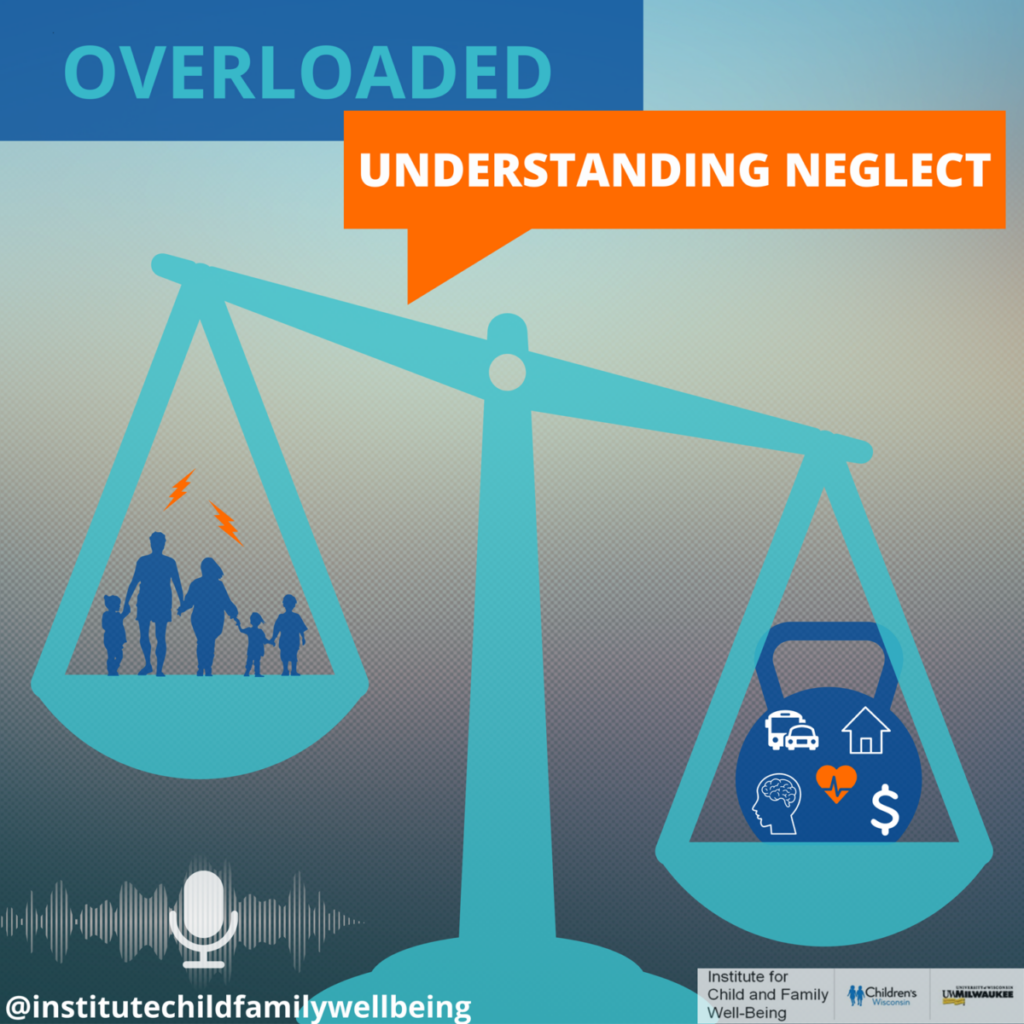
We are excited to announce our first podcast series, Overloaded: Understanding Neglect. Neglect is a complex and wicked problem, but it’s one that we believe is preventable if we work together to reimagine how we support families overloaded by stress. Neglect is a public health crisis, as it’s the most common reason that children are separated from their families by the government. 37% of all US children experience a CPS investigation, 13% of all children have confirmed/substantiated maltreatment, and children of color are disproportionately represented in foster care. In Wisconsin, nearly 70% of children in foster care are separated from their families due to neglect.
The Overloaded: Understanding Neglectpodcast represents the important first step of building a shared understanding of the problem and will serve as a foundation for future innovations in practice, policy, and systems change. Join host Luke Waldo, Director of Program Design and Community Engagement at the Institute for Child and Family Well-being, as he explores these issues with research and policy experts Tim Grove (Wellpoint Care Network), Jennifer Jones (Prevent Child Abuse America), Bryan Samuels (Chapin Hall), and Dr. Kristi Slack (University of Wisconsin), Lived Experience expert Bregetta Wilson (Wisconsin Department of Children and Families) and five Children’s Wisconsin child welfare and child maltreatment prevention experts. Through these conversations, we developed a compelling narrative that seeks to build a shared understanding of the realities of overloaded families, so that we might find solutions that reduce family separations for reasons of neglect.
Join the conversation wherever you listen to your podcasts.
Children thrive when they have regular interactions with responsive, caring adults. Families experiencing significant stressors related to financial insecurity, housing instability, or the impact of systemic and interpersonal trauma can be overloaded with stress, interrupting those interactions. In the United States 1 in 3 of all children will experience a Child Protective Services (CPS) investigation, 1 in 10 will have confirmed or substantiated instances of maltreatment, and in Wisconsin 70% of all children in foster care were separated from their families with neglect cited as a removal reason.
We believe that neglect is preventable. The goal of the Strong Families, Thriving Children, Connected Communities (SFTCCC) initiative is to reduce the number of family separations for reasons of neglect by building a community focused on collaboratively pursuing policies and practices that support overloaded families and address systemic failings. SFTCCC launched in early 2022 and is focused on building a shared understanding of the root causes of neglect to better identify critical pathways towards prevention.
Critical Pathways are specific problem/priority spaces that are focal points for elevating or designing specific and actionable system-level solutions. Through a progressive series of six roundtables so far this year, we’ve worked with staff at Children’s Wisconsin, community members, and people with lived experience to identify systemic challenges, risk factors, and barriers to supporting families overloaded by stress.
In the next roundtable on December 7th, we invite anyone interested to learn more about the themes we’ve discovered so far, as we look to cultivate a deeper understanding of how issues like poverty, systemic racism, social isolation, and other issues lead overloaded families to child welfare involvement. In early February 2023 we’ll be hosting a virtual data walk to look at how these specific themes overlap with evidence from research and other data sources. Even if you haven’t been to any SFTCCC events before, we welcome all new interested parties to participate!
If you are interested in learning more, participating in a Roundtable, and/or joining this initiative, please visit the SFTCCC project page or sign up here.
Recent and Upcoming Events
The Institute provides training, consultation and technical assistance to help human service agencies implement and replicate best practices. If you are interested in training or technical assistance, please complete our speaker request form.
Mersky, J. P., Choi, C., & Plummer Lee, C. (2022). Quasinatural experiment of postnatal home visiting: An independent impact study of Family Connects. American Journal of Preventive Medicine, 63(5), 783-789.
Family Connects (FC) is a postnatal nurse home visiting program that has scale-up potential because it is brief, inexpensive, and universal. Three investigations have linked Family Connects to improved maternal and family outcomes, but no independent impact studies have been conducted to date. This study investigates a FC program in Racine County, WI that was implemented by a multimunicipal health department in partnership with a local hospital.
Mersky, J. P., Janczewski, C. E., Plummer Lee, C., & Yasin, T. (2022). Impact of home visiting programs on parenting stress in low-income women: Findings from a community-based trial at an urban health department. Children and Youth Services Review, 142, 106638.
Four decades of home visiting research has yet to reveal clear implications regarding the amount and type of services required to produce intended outcomes like reduced parenting stress. This study compared the effects of two home visiting programs on parenting stress and examined whether depressive symptoms and social support were associated with stress levels and differential program effects. Data were collected during an impact study at an urban health department in the Midwest United States from 237 low-income pregnant women who were referred for services between April 2014 and March 2017. Referrals were randomly assigned to a Healthy Families America program or a briefer prenatal care coordination program. A third quasi-experimental study group included women who were referred to but did not receive services. Data on demographics, depressive symptoms, and social support were collected at baseline near the time of program enrollment; 210 participants completed post-baseline parenting stress assessments at up to three time points during the child’s first year. Results from mixed model repeated measures analysis of covariance showed that receiving prenatal care coordination was associated with lower parental distress at 14–60 days postpartum. Neither intervention was linked to reduced stress at 6 or 12 months postpartum. Higher depressive symptoms and lower social support predicted greater stress. Depressive symptoms moderated the effects of prenatal care coordination, with benefits concentrated among participants with higher depression scores. Joining recent calls for greater precision in home visiting, the findings highlight the need to optimize limited resources by effectively tailoring services to address specific outcomes in different populations and contexts.
Zhang, L., Mersky, J. P., Gruber, A. M., & Kim, J. Y. (2022). Intergenerational transmission of parental adverse childhood experiences and children’s outcomes: A scoping review. Trauma, Violence & Abuse.
Adverse childhood experiences (ACEs) are among the leading environmental causes of morbidity and mortality. Extending research on within-generation effects, more recent scholarship has explored between-generation consequences of ACEs. Despite growing interest in the intergenerational effects of parents’ ACEs on children’s outcomes, this line of scholarship has yet to be coalesced into a comprehensive review. The current study is a scoping review on the intergenerational transmission of parental ACEs and children’s outcomes. Ten databases such as PubMed, APA PsycArticles, and Social Work Abstracts were searched. To be included, empirical studies must have been published in English and analyzed associations between a cumulative measure of at least four parental ACEs and children’s outcomes. Sixty-eight studies qualified for the review and, among these, 60 were published in the most recent 5 years (2018–2022). Fifty-one studies had sample sizes smaller than 500, and 55 focused on the effect of maternal ACEs. Nearly all studies demonstrated that parental ACEs could affect children’s outcomes directly or indirectly via mechanisms like maternal mental health problems or parenting-related factors. By scoping the extant literature, this review advances the knowledge base regarding the intergenerational impacts of parental childhood trauma and children’s outcomes. It also reveals methodological limitations that should be addressed in future research to strengthen causal inferences along with practical implications for interventions that aim to interrupt the intergenerational transmission of trauma.
Tim Grove, MSSW, is a senior consultant at Wellpoint Care Network (formerly SaintA), a human services agency whose mission it is to facilitate equity, learning, healing and wellness for all. He has over 25 years of professional experience in a variety of direct care, administrative and executive positions. Tim created, developed and lead Wellpoint’s Trauma Informed Care (TIC) initiatives. He created a TIC training curriculum centered around the Seven Essential Ingredients, or 7ei, of understanding and practicing TIC. Tim and the training team at Wellpoint have used the 7ei framework to train more than 60,000 people from diverse disciplines over the past 15 years. Tim is an Affiliate of the Institute for Child and Family Well-being.
Ashlee Jackson is a Family Support Specialist II at Children’s Wisconsin in Milwaukee. She has worked for Children’s for 8 years, 6 of those as a Family Support Specialist, and 2 in our Prevention Program as a Home Visitor. She also has volunteer experience supporting families at the La Causa Crisis Nursery. Ashlee graduated with her BSSW from UW-Milwaukee.
Jennifer Jones, MSW, serves as the Chief Strategy Officer at Prevent Child Abuse America (PCA America) where she develops, implements, and advocates for an integrated strategic framework to help grow PCA America’s leadership role consistent with national prevention priorities, and serves as the lead on regional and national strategic partnerships. Prior to her role with PCA America, Jones was the Director of the Change in Mind Institute and the Co-Director of the Safety and Resilience Impact Area at the Alliance for Strong Families and Communities. Jones led all aspects of the Institute, including raising $1.7 million for the Texas Change in Mind Learning Collaborative and National Impact Study. Jones also served as the Project Director of the Child Safety Forward Initiative, a three-year Department of Justice cooperative agreement working with 5 jurisdictions to develop community-led, systematic solutions to reduce child fatalities caused by child maltreatment. Jones worked closely with the Alliance policy team, other national organizations and congressional representatives to advance brain science infused policy and trauma-informed care legislation. Preceding her role at the Alliance, Jones served as the Associate Director of the Wisconsin Children’s Trust Fund (CTF). In her last two years at the agency, Jones served as Interim Executive Director, at the Board’s request, and coordinated all activities related to the Governor-appointed Child Abuse and Neglect Prevention Board, including managing all operations, and overseeing the agency’s budget and grantmaking functions. Before her positions with the Children’s Trust Fund, Jennifer served as the communications specialist in the Secretary’s Office at the Wisconsin Department of Children and Families and as a child welfare policy advisor in the Wisconsin Division of Children and Family Services. Jones is an affiliate of the Institute for Child and Family Well-Being, a joint project of Children’s Wisconsin and the University of Wisconsin-Milwaukee. Jones is also a member of the National HOPE (Healthy Outcomes from Positive Experiences) Advisory Board and serves on the Board of Directors of the Hunger Task Force. Jennifer received her master’s in social work from the University of Wisconsin-Madison and bachelor’s in social work from Marquette University.
Hannah Kirk is the Healthy Start Supervisor in Milwaukee, and was previously a Family Case Manager Training Specialist with Children’s Wisconsin, who partners with the Division of Milwaukee Child Protective Services.
Hannah has dedicated her professional career to Child Welfare within Milwaukee County, where she has worked extensively with children who have adverse childhood experiences. Hannah has a decade of experience in child welfare, where she has served children and families extensively with strengths-based and evidence-based interventions. Hannah has trained several child welfare case managers at Children’s Wisconsin over the last four years, supporting service implementation, and highlighting the importance of community engagement.
Hannah earned her Masters of Social Work from the University of Wisconsin-Milwaukee in 2021 and served as an intern with the Institute. She holds a Bachelor of Science degree in Criminal Justice from the University of Wisconsin-Oshkosh.
Bryan Samuels is the Executive Director of Chapin Hall at the University of Chicago, a nonprofit policy research institute focused on connecting research to action. Under Bryan’s leadership, Chapin Hall is actively working in more than 40 states in building knowledge and creating solutions with and for public system partners, community leaders and members, and families—all with an aim to improve the wellbeing of children and youth and ensure all families thrive.
Across his career, Bryan’s work has centered on identifying and addressing inequities using evidence in policymaking. Key accomplishments include the creation and application of a well-being framework based on the best developmental understanding of normal childhood development; formation of a shared and actionable understanding of the effects of exposure to violence, trauma, poverty, and adverse childhood experiences on the mental, emotional, behavioral, and physical health of children; and emphasis on the importance of building the capacity of public and private child- and family-serving systems and organizations to focus on and produce positive outcomes.
Bryan was appointed by President Obama as the Commissioner of the Administration on Children, Youth, and Families (ACYF), where he served from 2009 to 2013 and leveraged the work of federal departments including Health and Human Services, Justice, and Education, among others, on behalf of children in foster care, youth experiencing housing instability, and families impacted by domestic violence. He received his B.A. in Economics from the University of Notre Dame in 1989 and his M.P.P. from the University of Chicago-Harris School in 1993.
Dr. Kristen Slack’s research focuses on understanding the role of poverty and economic hardship in the etiology of child maltreatment, with a particular emphasis on child neglect. She is also interested in the caseload dynamics of child welfare systems in relation to other public benefit systems, and in community-based programs designed to prevent child maltreatment. Her work advances approaches to better coordinating services and benefits to effectively address the economic needs of families at risk for child maltreatment, and improved assessment strategies for identifying risks and protective factors related to child neglect. Her current research is supported by the Centers for Disease Control and Prevention and the Wisconsin Child Abuse and Neglect Prevention Board. Dr. Slack has been published in dozens of academic journals, authored dozens of reports and manuscripts, and been primary investigator on over 20 federally-funded research projects.
Dr. Slack is also the founder of Prof2Prof, a free platform for professionals and doctoral students in academia to showcase their work, network, and find resources for college teaching, research, higher education administration, and student affairs services.
Theresa Swiechowski is a Family Support Supervisor for Children’s Wisconsin’s Northwoods Family Resource Centers, where she has worked for 7 years in various roles. She is a UW Oshkosh graduate with a bachelor’s degree in Human Services. After moving around a bit from Oshkosh to the state of Maine, she and her husband returned to her hometown of Merrill, Wisconsin to raise their 5 children. The balance of work and family is always a challenge for families and theirs was no exception. Theresa’s career, although weaved in and out of raising her kids, has always been working in the human service field but mainly in case management involving mental health, addiction, and parent education. Over the years, she has seen those that were faced with the most difficult obstacles, build resilience and become super heroes of their own stories.
Soua Thao has been a Home Visitor for Children’s Wisconsin for 16 years. She serves parents of young children from before they have their child up to their child’s fifth birthday. Soua works primarily with Hmong families in Central Wisconsin. Over the past 18 months, I have had the pleasure of getting to know Soua as she has worked with me as a champion for elevating the voice of the families that she serves to better design and improve our programs. I was thrilled when she accepted our invitation to participate in this podcast as she brings so much experience and understanding of the families that she serves, their strengths, the challenges that they face, and the opportunities that our programs and systems have to support and empower them further.
Bregetta Wilson, MS, LPC-IT, is a positive person, an advocate, community leader, and change agent. She has been working for and with families for the last eighteen years. Bregetta has worked with Pew Charitable Trusts and National Organization Foster Club on Capitol Hill to bring awareness and issues regarding children and families on behalf of Wisconsin. She is a recipient of the Black Excellence Award for her work around Child & Youth Advocacy. Bregetta’s current role within the Department of Children and Families includes working with Lived Experience Partners to elevate the voices of families and children within system and policy change.
A graduate of Alverno and Cardinal Stritch University, she resides in Milwaukee with her fiancé, three children, and pet Husky. Bregetta enjoys going to Orangetheory, dancing, traveling, collecting crystals, practicing holistic aspects of healing, and spending time with family and friends.
Dr. Julie Woodbury has been actively involved in the education of families and youth for more than 30 years. Her focus has been on teaching resilience to emerging adults through youth education and development, staff management, and leadership. Julie has been with Children’s Wisconsin for 6 years and is currently a Family Preservation and Support Manager in Black River Falls, Wisconsin. Dr. Woodbury supervises the delivery of child abuse prevention services to Children’s Wisconsin clients in the Western Wisconsin area. She holds a Bachelor of Science Degree in Technical Management, a Master’s Degree in Public Administration with an emphasis on Non-Profit Organizations, and a Doctorate in Education.
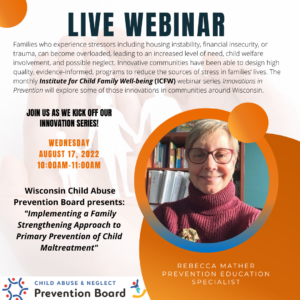
Innovation, the process of trying new ideas to solve new or under addressed challenges has long been central to child maltreatment prevention. The ICFW Innovations in Prevention webinar series focuses on elevating innovations in Wisconsin, serve as a platform to share new ideas, and make connections across communities. This webinar focuses on the primary prevention of child maltreatment tactic referred to as the Family Strengthening approach. Rebecca Mather from Wisconsin’s Child Abuse Prevention Board provides a presentation focuses on:
The dynamics and internal resources of the individual family as well as the community and social environment that surrounds it
The Protective Factors Framework and how it is integrated into primary prevention, highlighting specific projects to support and strengthen families.
A review of the Five for Families model and how it aligns with the Protective Factors Framework to support families.
The mission of the Institute for Child and Family Well-Being is to improve the lives of children and families with complex challenges by implementing effective programs, conducting cutting-edge research, engaging communities, and promoting systems change.
The Institute for Child and Family Well-Being is a collaboration between Children’s Wisconsin and the Helen Bader School of Social Welfare at the University of Wisconsin-Milwaukee. The shared values and strengths of this academic-community partnership are reflected in the Institute’s three core service areas: Program Design and Implementation, Research and Evaluation, and Community Engagement and Systems Change.
Families who experience stressors including housing instability, financial insecurity, or trauma, can become overloaded, leading to an increased level of need, child welfare involvement, and possible neglect. In 2020, 64% of family separations were due to neglect nationally (AFCARS Report #28, 2021), with many of its risk factor tied to issues of poverty, with a minimal number of evidence-based interventions available for communities to implement. To address this unmet need, innovative communities have been able to design high quality, evidence-informed, programs to reduce the sources of stress in families’ lives that contribute to neglect. These innovations not only provide potentially scalable solutions but can also inform how communities might approach addressing the unmet needs of families.
Neglect is a complex challenge, which often presents as a constellation of concurrent issues, that have come to a crisis point by the time a family has contact with the child welfare system. The Family First Prevention Services Act (FFPSA) provides flexibility in funding to be used for specific evidence-based interventions in the IV-E Prevention Services Clearinghouse that reach ‘candidates for foster care’ to prevent separations once a family has contact with child protective services. The Title IV-E Prevention Services Clearinghouse fails to specify which interventions target neglect, but at the time of this writing, only three of one hundred and seven programs in the Clearinghouse include “economic and housing stability” as target outcomes.
To fill this gap, many organizations and communities work to support families overloaded by economic stress utilizing often limited resources to create new solutions that work within their community. Social innovation is the creation and implementation of proposed solutions that promote change. Successful innovation is context specific and requires consideration of specific characteristics of communities and community members. Different communities have specific needs and perspectives that must be accounted for to truly cultivate change. How do innovative communities support innovations to support families overloaded by stress?
Evidence Informed: Drawing on principles rooted in brain science and/or trauma informed care principles, communities strive to develop innovations that meet their specific context while still being rooted in the best available evidence. Integrating these principles into innovation, or improvement, efforts will provide a foundation for scaling successes, and advancing programs towards being evidence-based.
Co-creation: Participation of individuals and families with lived experience, or context experts, in the change process provide crucial insight into the factors that impact their communities and into what works and what does not work. Without the co-creating of solutions with context experts, content experts may enter the field with preconceived notions of community needs and solutions. While co-creation may be new, and at times feel slower than prior practices, the learning and insights present with co-creation contribute to more efficient solutions.
Resources: Prevention services get a fraction of the funding compared to child welfare, often limiting the number of resources available to support improvement and innovation efforts at scale. Operating in this scarcity environment can make taking the time for an innovation process feel like a luxury. However, scaling to pilots, or larger implementations of ideas, can be inefficient, even generating negative attitudes towards current and future change efforts from staff, stakeholders, and families. Funders can support infrastructure for innovation in prevention through targeted innovation grants, clarity and simplification of rules, training, and encouraging collaboration instead of competition. Organizational culture can provide the scaffolding for innovation by providing time, elevating shared learning as an outcome, and supporting scaling of innovation with ongoing quality improvement support.
Evaluation: The first ‘real world’ interaction most innovations have are as prototypes, small scale tests of ideas that inform if an idea may warrant eventual pilot testing. Approaches to evaluating prototypes can be different compared to quality improvement efforts with set assessment tools and metrics. The challenge for innovators is to select the prototype evaluation approach that best suits their situation and capacity. Taking evaluation approaches that fit the small scale and provide rapid feedback from participants, both those providing and receiving the service, is essential to thoughtful iteration and innovation.
Strategic learning: Learning is an outcome. Strategic learning is about deliberately gathering lessons learned in near real time to inform strategic decision making. Strategic learning serves multiple purposes, including creating institutional memory, supporting just-in-time iteration, and clarifying our hypotheses about our work. Innovators can use tools and processes from Strategic Learning to help clarify thinking, develop or refine a theory of change, and support rapid iteration.
Neglect is a prevalent wicked problem with few available options for communities to address it, requiring new evidence-informed innovations that can work in unique community contexts. At times, there is a hesitation to implement innovation due to existing struggles in current programs and the strong emphasis on the need to utilize evidence-based interventions. Evidence based interventions are important tools, however the current scope of interventions is insufficient. Innovation is all around our work, as people strive to work together to address the complex problems that overload families. By creating a clearer path to support innovation in preventing neglect, sharing lessons learned, while remaining rooted in evidence-informed principles, we create conditions to foster practices that may be the evidence-based interventions to support overloaded families of tomorrow.
Communities need more interventions to address neglect and its root causes.
Developing effective programs relies on framing learning as an outcome. One of ICFW’s longest running workshops, Building Brains with CARE, is getting the rebuild treatment this year in response to the needs of our program and community partners. Now, two different workshops will take its place. Building Brains with Relationships will focus on building communication skills rooted in evidence-based interventions such as Motivational Interviewing and Parent-Child Interaction Therapy to support executive functioning skills such as self-regulation, person-to-person. Building Brains with Community will engage community members of various personal and professional backgrounds in illuminating critical pathways to improve community well-being through program design and practice innovation, people-to-people. With great hope for the future, ICFW expects to offer each workshop in person on a quarterly basis with registration being handled on Eventbrite. Be on the lookout for these workshops in the near future.
At Children’s Wisconsin, the ICFW partnered with Child and Family Counseling to offer our 8-week virtual group for caregivers and a child in their care: Parenting with PRIDE. This group was facilitated by mental & behavioral health clinicians in consultation with Well-Being Lead Clinician Leah Cerwin, and ICFW Master’s Level Intern Joe Moreno.
The group includes components from evidence-based Parent-Child Interaction Therapy (PCIT), offering caregivers and children the opportunity to learn with one another in a supportive virtual environment, and helps parents/caregivers of younger children manage challenging behaviors such as not listening, difficulty with transitions, acting out, and handling big emotions. Parents and their children learned about strategies that promote positive behaviors, enhance parent-child relationship, and decrease undesired behaviors through engaging activities and live coaching feedback with a PCIT-trained therapist.
Child and Family Counseling offered two groups this summer, and both showed success in lowering externalizing behaviors in children and improving parental confidence in caregivers. Linda Chaplin, former ICFW intern and current Qualified Treatment Trainee at Children’s Wisconsin, who delivered Parenting with PRIDE to one of these cohorts shared the following progress that one family made during the eight weeks.
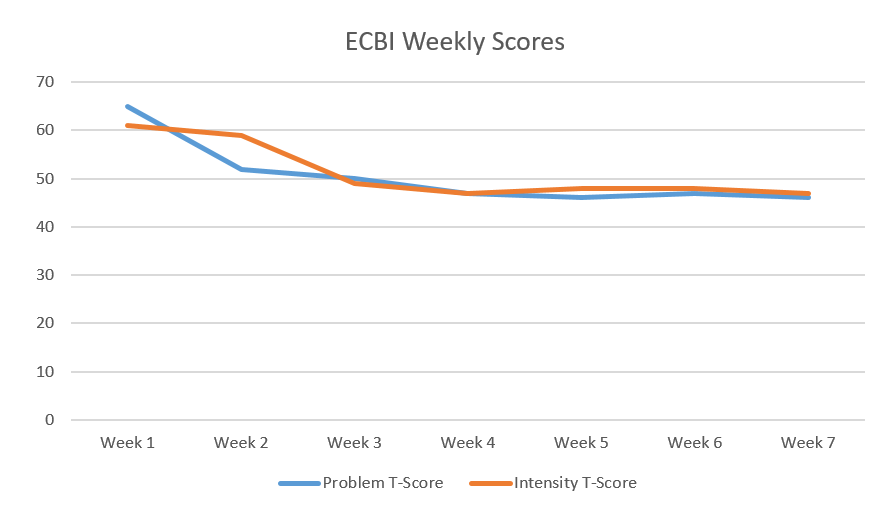
At intake, Mom and Dad shared that their child was having tantrums at least once or twice a day during the week, and more often on weekends. He hated being told no, and would throw things at his parents and the dog when he was angry.
Mom and Dad were excited to use the skills and both jumped right in. As shown by the ECBI scores (see chart above), their child responded right away. After our last session, Mom wrote, “We feel confident that we have the tools we need to continue to manage our child’s periodic tantrums, bedtime routine, etc. Thanks again for all the support.”
It was so rewarding to see them go from being so unsure and really questioning how to handle some challenging behaviors to feeling confident, engaged and more connected as a family.
The Institute accelerates the process of translating knowledge into direct practices, programs and policies that promote health and well-being, and provides analytic, data management and grant-writing support.
Recent ICFW Publications
Secondary traumatic stress among home visiting professionals
Janczewski, C. E. & Mersky, J. P. (2022). Secondary traumatic stress among home visiting professionals. Psychological trauma: theory, research, practice and policy.
Working with clients with histories of trauma can put helping professionals at risk of experiencing secondary traumatic stress (STS). This study found that one in ten home visiting professionals experienced PTSD symptoms as measured by an STS assessment. Higher levels of adverse childhood experiences among professionals were associated with higher levels of trauma symptoms. Findings also suggest that staff who work in organizations with positive work environments experienced lower levels of STS. Given the association between STS and workers’ personal histories of adversity, more research is needed to understand the connection between primary and secondary exposure to traumatic events.
The Institute develops community-university partnerships to promote systems change that increases the accessibility of evidence-based and evidence-informed practices.
Changing Course: Considering Systems Change within Social Work Practice
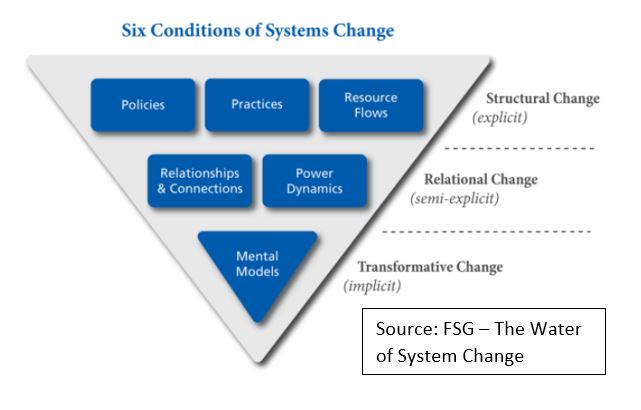
Greater than reduced perceptions of social work as direct or clinical practice, the reach of this field encompasses much more than clinical practice interventions. While clinical social work is an integral component of the profession, it only represents a portion of the work being done. Dimensional in its composition, social work is most readily divided into three levels: micro, mezzo, and macro. Micro social work focuses on individuals or families while mezzo social work focuses on groups or organizations. Macro social work, sometimes referred to as systems social work, differs from micro and mezzo in that its primary focus is on large-scale change. While designating the work into these levels is helpful in defining scope and practice within each station, have these categories unintentionally created a divided practice that values micro-level interventions, while forgetting to enact change within unjust systems creating them? As professionals who abide by a code that values justice and the dignity and worth of the people we serve, to abide by our own standards of ethics we need to take action to undo these oppressive systems.
Unfortunately, the disproportionate focus on clinical social work has obscured or minimized much of the invaluable work that is being done on a macro level. Macro social work often includes community-based research, community organization, program administration, philanthropy, political advocacy, and policy practice (Iverson et al., 2019). These areas of social work target larger systems in society. Presently, many established systems uphold and sustain toxic environments which social workers must work to deconstruct. Unseen by those who are not affected by such systems, social workers have the unique opportunity to see, with unmistakable clarity, the patterns and repetitive outcomes invisible to so many. This work, inherent to the ethic of social work practice, is done to mitigate devastating systemic impacts on the lived realities of those social workers have committed to support.
Throughout our time as students, we have observed the shifting gaze, the lowering of heads, and the collective posture, when the concept of ‘macro practice social work’ is mentioned in a lecture. From the classroom to conversation amongst peers, this disengaged sentiment seems to play on repeat. Curious, we asked fellow MSW students what comes to mind when they think about macro practice within social work. Responses ranged from paperwork, to community advocacy, to quality assurance, and eventually landed on policy. The responses from our peers, while accurate in their own nebulous and disconnected way, fail to inspire connection and imagination for pathways forward that empower individuals, families, and communities, and change systems culpable of harm. So, what is needed to reimagine macro practice in a way that inspires students and social workers alike, to engage in systems change efforts?
Consider the lack of literature and social work research aimed at identifying and dismantling inequitable systems. A recent content analysis of literature focused on social work interventions at an institutional level, revealed that the majority of literature discussing social work practice focused on micro-level interventions (Corley & Young, 2018). In their research, Corley and Young (2018) implore, “Glaringly absent from these articles were calls for institutional change that challenged structural inequalities.” Likewise, consider the fractional percentage of students in academic contexts pursuing macro level practice in their careers. Social work education has, and continues to, lack adequate macro level curriculum and practice opportunities as the focus remains on clinical and direct service social work. It is necessary that social work education places an increased focus on macro level social work by increasing curriculum and practice opportunities to allow social workers to challenge systemic issues. Social work is comprised of and inhabits layers of intervention. Rather than dichotomizing macro and micro interventions, recognizing they are dynamic and integral components to the field’s overall integrity is pivotal.
As future social workers, the very ethic of our profession requires action—action to advocate, defend, support, and empower those whose care we oversee. While direct practice is essential within our field, failure to act on a macro level is passive inaction. We must exhort one another to seek change, not just in care for those harmed by toxic environments, but in the systems that are creating those environments. This is just one of many steps needed to build trust in our communities and break down strongholds of racism in social work practice. Moving forward, let us seek skilled direct practice interventions that provide the needed care for today; but even more, let us recognize our obligation to change the systems that will better tomorrow.
References: Corley, N. A., & Young, S. M. (2018). Is Social Work Still Racist? A Content Analysis of Recent Literature. Social Work, 63(4), 317–326. https://doi.org/10.1093/sw/swy042
Iverson, M., Dentato, M. P., Green, K., & Busch, N. (2019). The continued need for macro field internships: Support, visibility and quality matter. Journal of Social Work Education, 57(3), 478–488. https://doi.org/10.1080/10437797.2019.1671265
The goal of the Strong Families, Thriving Children, Connected Communities (SFTCCC) initiative is to reduce the number of family separations for reasons of neglect by building a community focused on collaboratively pursuing policies and practices that support overloaded families. SFTCCC is a developmental strategy that allows for tactics to be developed and adapted over time based on lessons learned, stakeholder feedback, and emergent opportunities. This approach can result in multiple concurrent activities across the three core phases of Building a Shared Understanding, Implementing a Critical Path Strategy, and Advancing Innovation, Systems, and Policy Solutions.
Currently, SFTCCC has been focused on Building a Shared Understanding through five Roundtables so far in 2022. These roundtables are one-hour or 90-minute long interactive sessions, that include a brief overview of the impact of stress on family functioning, small group discussions, and sharing of insights from your experience to identify challenges and develop pathways forward. Roundtables have included participants from across Children’s Community Services programs and a group of Lived Experience partners. We will be hosting an open community roundtable on September 16th from 10:00-11:30am. To keep this an interactive event, we will have limited slots, so please register here. Given that not everyone will be able to attend a roundtable, we’re also providing an opportunity to provide feedback through the SFTCCC survey, which takes the most common themes from roundtables so far and asks you to prioritize important risk factors, systemic challenges, opportunities, and contribute anything you may think is missing.
Themes from each roundtable are drafted into a report and shared with participants, and through surveys and future roundtables, will be prioritized to create the foundation for the SFTCCC’s critical pathways. Critical Pathways are specific problem/priority spaces that are focal points for elevating or designing specific and actionable system-level solutions. Developing pathways helps focus attention on the changes we want to achieve together, fosters cross systems relationships, and helps clarify shared intent. This approach provides the flexibility to connect existing efforts, invites new contributions, promotes shared learning, and roots efforts in evidence and lived experiences. This flexibility is key to building community around complex challenges that can present differently in different communities, but share root causes and impact.
SFTCCC in many ways represents an operationalizing of many of the efforts around advancing or transforming child welfare systems into a child well-being system. Core principles, such as including those with lived experience in the process, reframing how we talk about prevention, and using the best available evidence are central to SFTCCC. We believe that this initiative can uniquely contribute to the robust national dialogue by engaging providers, supporting promising practices that address root causes, and supporting innovation.
If you are interested in learning more, participating in a Roundtable, and/or joining this initiative, please visit the SFTCCC project page or sign up here.
Recent and Upcoming Events
The Institute provides training, consultation and technical assistance to help human service agencies implement and replicate best practices. If you are interested in training or technical assistance, please complete our speaker request form.
SFTCCC Roundtable with Children’s Family Preservation and Support Leaders – July 20th
SFTCCC Roundtable with Lived Experience Partners – July 29th
The Institute for Child and Family Well-Being was proud to host the Translational Design: An Introduction workshop led by Luke Waldo, ICFW Director of Program Design and Community Engagement, on August 3rd from 10:00-12:00 CST.
Why?
Children thrive when they have regular interactions with responsive, caring adults. Families experiencing significant stressors related to financial insecurity, housing instability, or the impact of systemic and interpersonal trauma can be overloaded with stress, interrupting those interactions. Over time, and without adequate supports, overloaded families can become vulnerable to adverse experiences, ranging from toxic levels of stress to involvement in the child welfare system, and even family separation for reasons of neglect.
A staggering 36,000 randomized controlled trials are published each year, on average, and it typically takes about 17 years for findings to reach clinical practice. Our understanding of brain science and human development has advanced dramatically in the past 20 years, and many of our evidence-based interventions have not caught up, so we must design and adapt solutions to ensure that they are effective. What’s in it for you?
What’s in it for you?
The Introduction to Translational Design workshop is an interactive presentation of:
The impact of stress on childhood development and family functioning;
Engaging content and context experts in the design and improvement processes;
Identifying and framing the challenges that overloaded families face;
Brainstorming and designing solutions to the challenges that the overloaded families face;
Approaching learning as an outcome; and
Design and strategic learning tools.
How?
Through an introductory session that explores why translational design is essential to balancing the latest brain science with the strengths and needs of your local context, participants will begin framing their programs through these questions:
How might we center the voice and experience of overloaded families so that we may better understand their strengths, challenges and needs?
How might we design our services so that they translate the latest science into the greatest possible impact on reducing the burden on overloaded families?
Families who experience stressors including housing instability, financial insecurity, or trauma, can become overloaded, leading to an increased level of need, child welfare involvement, and possible neglect. In 2020, 64% of family separations were due to neglect nationally (AFCARS Report #28, 2021), with many of its risk factor tied to issues of poverty, with a minimal number of evidence-based interventions available for communities to implement. To address this unmet need, innovative communities have been able to design high quality, evidence-informed, programs to reduce the sources of stress in families’ lives that contribute to neglect. These innovations not only provide potentially scalable solutions but can also inform how communities might approach addressing the unmet needs of families.
Neglect is a complex challenge, which often presents as a constellation of concurrent issues, that have come to a crisis point by the time a family has contact with the child welfare system. The Family First Prevention Services Act (FFPSA) provides flexibility in funding to be used for specific evidence-based interventions in the IV-E Prevention Services Clearinghouse that reach “candidates for foster care” to prevent separations once a family has contact with child protective services. The Title IV-E Prevention Services Clearinghouse fails to specify which interventions target neglect, but at the time of this writing, only three of one hundred and seven programs in the Clearinghouse include “economic and housing stability” as target outcomes.
To fill this gap, many organizations and communities work to support families overloaded by economic stress utilizing often limited resources to create new solutions that work within their community. Social innovation is the creation and implementation of proposed solutions that promote change. Successful innovation is context specific and requires consideration of specific characteristics of communities and community members. Different communities have specific needs and perspectives that must be accounted for to truly cultivate change. How do innovative communities support innovations to support families overloaded by stress?
Evidence Informed: Drawing on principles rooted in brain science and/or trauma informed care principles, communities strive to develop innovations that meet their specific context while still being rooted in the best available evidence. Integrating these principles into innovation, or improvement, efforts will provide a foundation for scaling successes, and advancing programs towards being evidence-based.
Co-creation: Participation of individuals and families with lived experience, or context experts, in the change process provide crucial insight into the factors that impact their communities and into what works and what does not work. Without the co-creating of solutions with context experts, content experts may enter the field with preconceived notions of community needs and solutions. While co-creation may be new, and at times feel slower than prior practices, the learning and insights present with co-creation contribute to more efficient solutions.
Resources: Prevention services get a fraction of the funding compared to child welfare, often limiting the number of resources available to support improvement and innovation efforts at scale. Operating in this scarcity environment can make taking the time for an innovation process feel like a luxury. However, scaling to pilots, or larger implementations of ideas, can be inefficient, even generating negative attitudes towards current and future change efforts from staff, stakeholders, and families. Funders can support infrastructure for innovation in prevention through targeted innovation grants, clarity and simplification of rules, training, and encouraging collaboration instead of competition. Organizational culture can provide the scaffolding for innovation by providing time, elevating shared learning as an outcome, and supporting scaling of innovation with ongoing quality improvement support.
Evaluation: The first ‘real world’ interaction most innovations have are as prototypes, small scale tests of ideas that inform if an idea may warrant eventual pilot testing. Approaches to evaluating prototypes can be different compared to quality improvement efforts with set assessment tools and metrics. The challenge for innovators is to select the prototype evaluation approach that best suits their situation and capacity. Taking evaluation approaches that fit the small scale and provide rapid feedback from participants, both those providing and receiving the service, is essential to thoughtful iteration and innovation.
Strategic learning: Learning is an outcome. Strategic learning is about deliberately gathering lessons learned in near real time to inform strategic decision making. Strategic learning serves multiple purposes, including creating institutional memory, supporting just-in-time iteration, and clarifying our hypotheses about our work. Innovators can use tools and processes from Strategic Learning to help clarify thinking, develop or refine a theory of change, and support rapid iteration.
Neglect is a prevalent wicked problem with few available options for communities to address it, requiring new evidence-informed innovations that can work in unique community contexts. At times, there is a hesitation to implement innovation due to existing struggles in current programs and the strong emphasis on the need to utilize evidence-based interventions. Evidence based interventions are important tools, however the current scope of interventions is insufficient. Innovation is all around our work, as people strive to work together to address the complex problems that overload families. By creating a clearer path to support innovation in preventing neglect, sharing lessons learned, while remaining rooted in evidence-informed principles, we create conditions to foster practices that may be the evidence-based interventions to support overloaded families of tomorrow.
Communities need more interventions to address neglect and its root causes.
Cleek, E. A., Totka, J. P., Sheets, L. K., Mersky, J. P., Haglund, K. L. (2022). Helping nurses identify and report sentinel injuries of child abuse in infants. Pediatric Nursing Journal, 48(3), 123-128.
Abstract
Sentinel injuries (SIs) are some of the earliest and most readily identifiable red flags of child abuse. SIs are unexpected bruising or intra-oral injuries in premobile infants and highly correlated with child abuse. However, SIs are not always recognized and reported as red flags of child abuse. Infants are left at risk for continued harm when SIs are not identified and reported. Although increasing nurses’ knowledge of SIs is important, child abuse researchers and behavioral theorists have identified that knowledge alone does not predict nurses’ behaviors when identifying and reporting suspected child abuse. Other predictors may include implicit biases, interpersonal and interprofessional relationships, and nurses’ understanding of mandatory reporting laws. Nurses may improve their recognition and comfort of reporting SIs and all suspected child abuse by being alert for SIs, being aware of potential implicit biases, communicating in non-technical language with families, understanding the clinical evaluation of suspected child abuse, and understanding the processes of Child Protective Services (CPS). Using these steps, nurses can fulfill their legal and ethical responsibilities to protect and advocate for victimized children.
Janczewski, C. E. & Mersky, J. P. (2022). Secondary traumatic stress among home visiting professionals. Psychological trauma : theory, research, practice and policy.
Abstract
Objective: This study examined the reliability and factor structure of the Secondary Traumatic Stress Scale (STSS) and the prevalence and correlates of secondary traumatic stress (STS) among home visitors.
Method: Survey data were collected between 2015 and 2020 from 301 home visitors with caseloads. Participants completed the 17-item STSS, which assesses intrusion, avoidance, and arousal symptoms using the DSM-IV-TR diagnostic criteria. Internal reliabilities of the scale and subscales were measured and confirmatory factor analyses were performed to validate hypothesized model solutions. Symptom prevalence among the sample was calculated and linear regressions were conducted to examine whether personal and workplace factors were associated with STS.
Results: Analyses confirmed that the STSS had sound internal consistency and that both 3- and single-factor measurement models fit the data. Approximately 10% of home visitors met the clinical criteria for PTSD, though prevalence decreased to 8% after omitting an intrusion item that was endorsed by most respondents. Increased exposure to adverse childhood experiences and poorer work environment ratings were associated with increased STS. Non-Hispanic White race was associated with elevated arousal symptoms. No other personal or workplace factors were associated with scores on the STSS full scale or subscales.
Conclusion: This study reaffirms that the STSS has sound psychometric properties, but it also raises questions about the prevalence and etiology of STS. Given the likely costs of PTSD to personal well-being and professional efficacy, further research is needed to advance the measurement and prediction of secondary traumatic stress.
The mission of the Institute for Child and Family Well-Being is to improve the lives of children and families with complex challenges by implementing effective programs, conducting cutting-edge research, engaging communities, and promoting systems change.
The Institute for Child and Family Well-Being is a collaboration between Children’s Wisconsin and the Helen Bader School of Social Welfare at the University of Wisconsin-Milwaukee. The shared values and strengths of this academic-community partnership are reflected in the Institute’s three core service areas: Program Design and Implementation, Research and Evaluation, and Community Engagement and Systems Change.
A virtual game-based, social skills group recently completed its second prototype iteration with the goal to improve social and emotional skills such as social communication, cooperation, problem solving, and self-control. For 8 weeks, children ages 7.5-13 years old gathered on Zoom and the Minecraft® education edition platform along with facilitators Melissa Sobish, Mental Health Consultant, and MSW intern Brianna Schneeburger. First, a brief conversation took place on a specific social skill. Then the group played Minecraft® together; this provided space for practice which lays down neural pathways towards the development of the skill. In order to practice shifting focus, attunement, and frustration tolerance, the group was brought back together at the end to discuss what had occurred.
Based on the Lived Experience of participants and After Action Reviews with staff, several changes were tested in this iteration of this Minecraft® social skill group. The group size was reduced from 9 to 5 participants. This time around each participant attended every week! The group time was increased from 60 to 75 minutes and was lengthened from 6 to 8 weeks, and a co-facilitator was added. The Strengths and Difficulties Questionnaire (SDQ) parent and self (for 11+) versions was administered as a standardized assessment pre and post group. The post group assessment was turned into a Survey Monkey versus attaching to an email. A small incentive was offered for the return of post group assessments.
Lessons Learned
A group size similar to the 1st group is optimal in order to maximize socializing opportunities and ability to accept referrals across a maximum amount of Wisconsin counties. Two facilitators makes a larger group (around 10 participants) much more doable. Participants liked that facilitators were playing together with them. This would suggest steering away from group sizes in the dozens.
Parents want information on how they might incorporate group topics and practice into home life sent along with the weekly group updates.
According to SDQ results, difficulties persisted in more or less all the same areas for participants, however 60% of parents reported the impact of difficulties was less.
Promising Outcomes
80% of parents and participants provided feedback in a survey. All (children and parents alike) were glad they joined the group. The majority of parents said their child was communicating, managing emotions and/or navigating social situations better. Half of participants reported using what they learned in real life weekly or more with the other half using the information several time times since starting group. Participants noted feeling successful, powerful, and hopeful.
Children often preferred to continue interacting with each other in the game world after group time had ended.
An integrity checklist was developed by the facilitator so future facilitators may replicate the group.
100% of requested assessments were returned.
Resources Needs
Iterate to incorporate best practices into a single group.
Melissa Sobish (facilitator) is interested in leading another iteration. ICFW expects this could happen starting in early September. An intern would need to be identified to co-facilitate.
Development of relationships with interested partners to begin targeting scalability and sustainability.
As a result of earlier prototype designs and testing conducted by the Institute for Child and Family Well-being (ICFW), Children’s Wisconsin’s Child and Family Counseling programs are currently providing Parenting with P.R.I.D.E., an 8-week virtual therapy group for parents/caregivers and a child in their care. This group is being facilitated by licensed mental and behavioral health clinicians and masters-level student interns, and includes components from the evidence-based intervention, Parent Child Interaction Therapy. We are proud of the efforts that went into designing, testing, and now implementing within one of our Children’s programs so that we may provide the best and safest care to the children and families that we serve.
If you are interested in Parenting with PRIDE for yourself and your child, call Children’s Wisconsin Mental and Behavioral Health Access Department at 414-266-3339.
The Institute accelerates the process of translating knowledge into direct practices, programs and policies that promote health and well-being, and provides analytic, data management and grant-writing support.
Recent ICFW Publications
ICFW recently published two studies that underscore the mental health needs of low-income women receiving home visiting services in Wisconsin.
Advancing research on perinatal depression trajectories: Evidence from a longitudinal study of low-income women
Choi, C., Mersky, J. P., Janczewski, C. E., & Goyal, D. (2022). Journal of Affective Disorders, 301, 44-51.
This study of 899 women showed that most women who experience postpartum depression also report prenatal depression, and that a history of abuse and low social support predicted poor mental health outcomes over time.
Zhang, L., Mersky, J. P., & Plummer Lee, C. (2022). Child Abuse & Neglect.
This analysis of 831 participants in the Families and Children Thriving Study revealed that mothers with higher ACE scores were more likely to have children with social-emotional difficulties. These intergenerational effects were largely explained by the negative effects of ACEs on mothers’ mental health.
The Institute develops community-university partnerships to promote systems change that increases the accessibility of evidence-based and evidence-informed practices.
The goal of the Strong Families, Thriving Children, Connected Communities (SFTCCC) initiative is to reduce the number of family separations for reasons of neglect by building a community focused on collaboratively pursuing policies and practices that support overloaded families and address systemic failings. SFTCCC is a developmental strategy at its core, recognizing that more can be accomplished through shared learning and action to address the drivers of systems change that either hold the conditions that contribute to neglect in place or provide scaffolding for progress. This strategy includes three core phases:
Building shared understanding
Implementing a critical path strategy
Advancing innovation, systems, and policy solutions
Each phase can happen concurrently as we work to build community around preventing family separation for reasons of neglect. Over the past few months, we have worked to build a shared understanding by building consensus around shared language for the root causes that impact families, systems, and the decisions that may lead to family separation. We hosted two Roundtables with over 75 participants representing all Children’s Wisconsin Community Services’ programs and regions from Southeastern Wisconsin to the Northwoods. Through these Roundtables, we explored:
Individual and Systemic challenges that overload families with stress and create conditions for neglect and family separation;
Opportunities and existing practices, policies, and systems collaborations that we can leverage to reduce stress and keep families together;
Barriers to those opportunities that may limit their impact.
We have also hosted presentations and meetings with organizational and systems partners that are committed to preventing child maltreatment to share our vision for this initiative and to learn about our partners initiatives, so that we might more effectively collaborate and support one another.
We will be hosting additional Roundtables, presentations, and meetings throughout this year to continue to build a shared understanding. If you are interested in learning more, participating in a Roundtable, and/or joining this initiative, please visit the SFTCCC project page or sign up here.
Recent and Upcoming Events
The Institute provides training, consultation and technical assistance to help human service agencies implement and replicate best practices. If you are interested in training or technical assistance, please complete our speaker request form.
Choi, C., Mersky, J. P., Janczewski, C. E., & Goyal, D. (2022). Advancing research on perinatal depression trajectories: Evidence from a longitudinal study of low-income women. Journal of Affective Disorders, 301, 44-51.
Abstract
Objectives: The current study aimed to describe and predict perinatal depression trajectories in a sample of low-income women from the first trimester of pregnancy to six months postpartum.
Methods: The study sample consisted of 899 women in Wisconsin who received home visiting services. Eligible participants were screened for depressive symptoms by home visitors using the Edinburgh Postnatal Depression Scale at least three times across four time periods from the first trimester of pregnancy to six months postpartum. Growth Mixture Modeling was applied to identify distinct trajectory classes, and multinomial logistic regressions were performed to analyze predictors of class membership.
Results: Mean depressive symptom scores in this racially/ethnically diverse sample of low-income women decreased significantly over time from a high of 8.1 at time1 to a low of 6.8 at time4. Four classes were identified, including a low-stable group (78.2% of sample), a high-stable group (10.6%) along with decreasing (7.1%) and increasing (4.1%) trajectories. Women with a history of abuse and mental health difficulties were more likely to be classified in the high-stable and decreasing depression groups than the low-stable group. Low social support was linked to an increasing trajectory that resulted in high levels of postpartum depression.
Conclusions and implications: Although most women exhibited stable and positive trajectories, more than one out of five presented with either persistently or intermittently high depression scores. Taken together, the findings underscore the importance of depression screening throughout the perinatal period and identifying factors that may be used to target resources to at-risk populations.
Zhang, L., Mersky, J. P., & Plummer Lee, C. (2022). Intergenerational Pathways Linking Mothers’ Adverse Childhood Experiences and Children’s Social-Emotional Problems. Child Abuse & Neglect.
Abstract
Despite the persistent hypothesis that adverse childhood experiences (ACE) have intergenerational implications, empirical research documenting the effects and the mechanisms of transmission remains underdeveloped. This study examined the intergenerational effects of mothers’ adverse childhood experiences on their offspring’s social-emotional development and whether the association was mediated by mothers’ mental health, adult adversity, and perceptions of paternal involvement. The study sample included 831 mothers (19–49 years old, 47.5% White) with children aged 12–48 months who participated in a longitudinal investigation of low-income families in Wisconsin. ACEs were assessed by home visitors, and two waves of survey data were collected by researchers to assess demographics, mediators, and social-emotional outcomes. A path analysis showed that the association between maternal ACEs and children’s social-emotional problems was fully mediated, with postpartum mental health acting as a primary mechanism. Implications for intervention and future research directions are discussed.
The Wisconsin Public Child Welfare and Home Visiting Data Project was a rapid cycle analysis conducted to help inform Wisconsin’s IV-E service planning process. Using eight years of administrative records, we examined the risk profiles of families who received a screened-in CPS report during their time...
Join the initiative and receive updates regarding upcoming roundtables and events. Sign up here.
Children thrive when they have regular interactions with responsive, caring adults. Families experiencing significant stressors related to financial insecurity, housing instability, or the impact of systemic and interpersonal trauma can be overloaded with stress, interrupting those interactions. Families that are experiencing this overload of stress are at greater risk for having neglect identified as a threat to their child(ren)’s safety. If we ensure that communities are equipped to ease the burden on overloaded families, we make resilience a real possibility.
Neglect is cited as the primary or contributing reason for 73% of family separations into foster care nationally and 68% here in Wisconsin. Neglect is frequently defined as the failure of a parent or other person with responsibility for the child to provide needed food, clothing, shelter, medical care, or supervision to the degree that the child’s health, safety, and well-being are threatened with harm[1]. Children who experience the trauma of family separation for reasons of neglect are more likely than not to return home. Overloaded families are left vulnerable by systems that are misaligned to meeting their basic necessities. Poverty, trauma, and systemic racism are some of the deep seeded root causes to this inequity. We believe that there are pathways forward to preventing a significant portion of these separations from happening.
The conditions that lead to family separations for reasons of neglect are complex, extending beyond any single system or solution. The goal of the Strong Families, Thriving Children, Connected Communities (SFTCCC) initiative is to reduce the number of family separations for reasons of neglect by building a community focused on collaboratively pursuing policies and practices that support overloaded families and address systemic failings. SFTCCC is a developmental strategy at its core, recognizing that more can be accomplished through shared learning and action to address the drivers of systems change that either hold the conditions that contribute to neglect in place or provide scaffolding for progress.
Children’s ICFW team will strive to support programs, organizations, and communities to collaborate on solutions and generate knowledge to address these complex challenges families overloaded by stress face before safety threats emerge. By elevating the latest thinking and resources we hope to foster a community of changemakers, support shared learning, expand their networks, and inspire innovation and collaboration.
To learn more and sign up to get involved, please visit the SFTCCC project page.
[1] For a further discussion about what constitutes child neglect, see Child Welfare Information Gateway’s Acts of omission: An Overview of Child Neglect.
The mission of the Institute for Child and Family Well-Being is to improve the lives of children and families with complex challenges by implementing effective programs, conducting cutting-edge research, engaging communities, and promoting systems change.
The Institute for Child and Family Well-Being is a collaboration between Children’s Wisconsin and the Helen Bader School of Social Welfare at the University of Wisconsin-Milwaukee. The shared values and strengths of this academic-community partnership are reflected in the Institute’s three core service areas: Program Design and Implementation, Research and Evaluation, and Community Engagement and Systems Change.
The ICFW recently created a new position, Translational Design Coordinator, to support both a strategic and operational evolution within our design and capacity-building projects. We are excited to announce that Megan Frederick-Usoh has recently joined our team in this new role.
Megan has over 16 years of experience in public health and child welfare. She has worked in both the for-profit and non-profit sectors in foster care, injury prevention and with adults with intellectual and developmental disabilities. Megan began her tenure with Children’s Wisconsin in 2019 as a Treatment Foster Care Recruiter and Educator, with an additional focus on program evaluation. She earned a Bachelor of Arts degree in Psychology, Political Science and Criminal Justice from the University of Tennessee, Honors College-Knoxville.
Meet Our Predoctoral Fellows
The ICFW recently launched a predoctoral fellowship training program that will provide mentorship and funding to doctoral students whose research can be applied to promote better and more equitable outcomes for children and families. We are proud to announce the selection of two predoctoral fellows for 2022: Darejan Dvalishvili and Anthony Gómez.
Darejan Dvalishvili is a predoctoral fellow at the Institute for Child and Family Well-Being. She is completing her Ph.D. in social work at Washington University in St. Louis. Her research focuses on intersections of poverty, child maltreatment, and adverse childhood experiences. Following her work with UNICEF and other international and local non-profit organizations, her interests include exploring the impact of various economic interventions on children’s wellbeing both in the US and globally. Darejan earned an MSW from Columbia University (New York, US) and an MD from Tbilisi State Medical University (Tbilisi, Republic of Georgia).
Anthony Gómez is a predoctoral fellow at the Institute for Child and Family Well-Being. Anthony’s research broadly focuses on child and family well-being, and its relationship to the child welfare system. Driven by professional experience working in early education and child welfare, he is interested in understanding how service systems can better fulfill the material and emotional needs of parents and caregivers, and in turn, how such support can improve parenting, mental health, and child development outcomes. Anthony holds a master’s degree in social welfare from UCLA and is currently a doctoral student at the UC Berkeley School of Social Welfare.
Meet our Parent Child Interaction Therapy (PCIT) Trainer Team
During the past month, our Parent Child Interaction Therapy Trainer Team of Dimitri Topitzes and Leah Cerwin has begun delivering the PCIT International Within Agency Trainer (WATer) training to our team member, Meghan Christian. Dimitri became a Certified PCIT International Regional Trainer in 2020, a distinction held by less than fifty PCIT therapists globally, and Leah became a Within Agency Trainer in 2019. We are excited to add Meghan to our training team, so that we may train more clinicians within Children’s and across the state in order to provide greater access to this effective therapy for children and their caregivers.
Research and Evaluation
The Institute accelerates the process of translating knowledge into direct practices, programs and policies that promote health and well-being, and provides analytic, data management and grant-writing support.
Recent ICFW Publications
Effects of COVID-19 on Home Visiting Services for Vulnerable Families
ICFW faculty published a multi-state study that documented the toll of the pandemic on home visiting programs that offer services and support to new and expectant parents. Compared to pre-pandemic levels, post-COVID enrollments decreased by 33–36% and total visits fell by 15–24%. These findings are especially concerning given the vital role that these programs play in supporting children and families from more vulnerable and marginalized populations.
The Institute develops community-university partnerships to promote systems change that increases the accessibility of evidence-based and evidence-informed practices.
Children thrive when they have regular interactions with responsive, caring adults. Families experiencing significant stressors related to financial insecurity, housing instability, or the impact of systemic and interpersonal trauma can be overloaded with stress, interrupting those interactions. Families that are experiencing this overload of stress are at greater risk for having neglect identified as a threat to their child(ren)’s safety. If we ensure that communities are equipped to ease the burden on overloaded families, we make resilience a real possibility.
Neglect is cited as the primary or contributing reason for 73% of family separations into foster care nationally and 68% here in Wisconsin. Neglect is frequently defined as the failure of a parent or other person with responsibility for the child to provide needed food, clothing, shelter, medical care, or supervision to the degree that the child’s health, safety, and well-being are threatened with harm[1]. Children who experience the trauma of family separation for reasons of neglect are more likely than not to return home. Overloaded families are left vulnerable by systems that are misaligned to meeting their basic necessities. Poverty, trauma, and systemic racism are some of the deep seeded root causes to this inequity. We believe that there are pathways forward to preventing a significant portion of these separations from happening.
The conditions that lead to family separations for reasons of neglect are complex, extending beyond any single system or solution. The goal of the Strong Families, Thriving Children, Connected Communities (SFTCCC) initiative is to reduce the number of family separations for reasons of neglect by building a community focused on collaboratively pursuing policies and practices that support overloaded families and address systemic failings. SFTCCC is a developmental strategy at its core, recognizing that more can be accomplished through shared learning and action to address the drivers of systems change that either hold the conditions that contribute to neglect in place or provide scaffolding for progress.
Children’s ICFW team will strive to support programs, organizations, and communities to collaborate on solutions and generate knowledge to address these complex challenges families overloaded by stress face before safety threats emerge. By elevating the latest thinking and resources we hope to foster a community of changemakers, support shared learning, expand their networks, and inspire innovation and collaboration.
To learn more and sign up to get involved, please visit the SFTCCC project page.
[1] For a further discussion about what constitutes child neglect, see Child Welfare Information Gateway’s Acts of omission: An Overview of Child Neglect.
Voice of Lived Experience in Program Design and Improvement
COVID-19 has created enormous stress on families, staff, and communities, and exposed existing and new challenges that families face when it comes to accessing and benefiting from supportive services. In response to these new challenges, we conducted our strategic learning process with the COVID Resilience Plan (PDF) through which we learned that we could better meet the needs of our clients if we increased the voice of lived experience in our program design, implementation and improvement efforts. “…Lived experience brings value, particularly in contexts with rich histories, cultural nuances, and generations of communal knowledge. These are the things we can’t bottle up in a diagram or find best practices for in a textbook” (Ali, 2019).
When we elevate the voice of lived experience and create authentic engagement and accountability between our program staff and clients, we “prioritize relationships, increase trust across all stakeholders, and use participatory approaches to ensure the work is guided by those most affected” (Hayden et al). So, how might we bring the voice of lived experience to our programs’ training, use of evidence-based models, and “content expertise” to ultimately deliver more positive outcomes for the children and families that we serve?
Many programs already include the voice of lived experience in their program design and improvement efforts in the form of:
Program completion/ satisfaction surveys
Focus groups
Family Advisory Councils
Parent Advocates
Through the use of these approaches, programs can better understand our clients’ needs, barriers, priorities, and strengths. Empowered with this knowledge, we are better positioned to design, implement, and adapt programs that more effectively meet our clients where they are, build trust, and lead to better engagement. Additionally, these approaches can provide feedback on what works and what doesn’t work for our clients, so that we may make program improvements that demonstrate authentic engagement and accountability to those we serve.
Children’s Child Well-being Programs’ Voice of Lived Experience Journey
Prior to COVID-19, Children’s Child Well-being leadership was polled on its priorities, and the overwhelming majority chose “client voice” in program activities and improvement as its top priority. In 2020, through the COVID Resilience Plan we conducted 19 After Action Reviews, in which it became clear that there were three core areas that we needed to prioritize:
Client Voice/Community Engagement in Program Design and Improvement
Virtual Practice/Service Delivery and Training
Remote/Work from Home Transitions
Consequently, we developed a Community Engagement in Program Design and Improvement Community of Practice, which met over four months and developed three core recommendations, which were then presented as the primary design objectives of the Champions team that represented each program area of the Child Well-being department.
Framing the Challenge
Upon recruiting Champions from each program area across the Child Well-being department, we focused our design project on the following question, so that we could effectively design program and department-wide policy and practice recommendations.
As our service environment has changed due to families’ complex situations and needs – COVID-19, access and technology issues, cultural needs, etc. – how might we increase and/or center family/client voice in our program design, implementation, and improvement processes?
Our Translational Design Process
Over the course of 8 working 90-minute meetings, we centered the Champions team activities on the three COVID Resilience Plan Community Engagement recommendations.
Develop a Parent Advisory Council
Improve Client Satisfaction Survey process
Develop a client readiness/access assessment process
Our Translational Design process centers the principle that the lived experience of the professional and client should be present in all activities while also elevating the best available evidence from our fields. As a result, each phase of the process incorporated reflective practices, client and colleague feedback, and tools that centered the client’s experience, relationships and needs.
Frame the Challenge. Define accountability.
Create sub-committees for each core recommendation based on Champions’ experience and interests.
Storyboard.
Prototype Workflow.
Theory of Change.
Best practice readings.
Office Hours.
As the Champions completed their Storyboards, Prototype Workflows, and Theories of Change, they worked closely with their sub-committee partners to review and reflect on their ideas before sharing them with their colleagues and clients for further feedback. They then reworked their ideas and updated the tools to reflect what they had learned. Lastly, they shared their tools on our Basecamp page where all Champions could review them and share their lessons learned. Additionally, throughout the process, the Champions could attend Office Hours with me to work individually on their tools, reflect on what they had learned, and make final updates before submitting to Basecamp.
In our final phase of the design process, we reviewed best practices and evidence by reading literature from national and local partners that have been strong examples of incorporating lived experience into their organizational practices and culture. We then made final additions to our design projects or cited those ideas that we had already developed that are supported by evidence.
In the coming weeks, we will present our final policy and practice recommendations along with a number of the design projects to the Child Well-being leadership team to determine how we might implement them.
Hayden, Justin, Kalra, Surbhi, Rudd, Christopher, Walker, Justin. How can organizations assess their readiness to co-design? Casey Family Programs, Questions from the Field. Retrieved from: https://www.casey.org/codesign-lived-experience/
As the final year of Trauma and Recovery Project 5-year SAMHSA grant comes to a close, the final cohort of 21 Trauma-Focused Cognitive Behavioral Therapy trainees from around the state of Wisconsin completed their last synchronous training days. Already this cohort has begun treating 55 child and families affected by post-traumatic stress. During these training days, topics included developing and processing a trauma narrative, identifying supportive caregivers to serve as a witness to the narrative, in-vivo exposure, developing future resilience and safety and creating resilience and longevity in clinicians using the Components for Effecting Clinician Experience and Reducing Trauma (CE-CERT) model by Dr. Brian Miller. Cohort trainees will continue to develop their practice through literature review and consultation with the trainer, Jennifer Wilgocki, LCSW and ICFW team member, Meghan Christian.
If you would like to refer a family to a Children’s provider for trauma therapy, please call 414-266-3339. You can also search for certified clinicians by visiting https://tfcbt.org/.
Learn More
More information on Trauma-Focused Cognitive Behavioral Therapy can be found at https://www.nctsn.org/.
Recent and Upcoming Events
The Institute provides training, consultation and technical assistance to help human service agencies implement and replicate best practices. If you are interested in training or technical assistance, please complete our speaker request form.
Reimagining Neglect Prevention Through Local Leadership and Systemic Change
Strong Families, Thriving Children, Connected Communities (SFTCCC) is a statewide initiative that empowers changemakers to reimagine how we strengthen families and prevent child neglect. It moves beyond crisis response to build conditions...
Children thrive when they have regular interactions with responsive, caring adults. Families experiencing significant stressors related to financial insecurity, housing instability, or the impact of systemic and interpersonal trauma can be overwhelmed with stress, interrupting those interactions. To better support families overloaded by stress, Children’s...
This past year marked the fifth anniversary of the Institute for Child and Family Well-being. As we reflect on the past five years, we are humbled by the opportunities we have had to join many others who are dedicated to strengthening families and nurturing children. Our community-university partnership emerged from a shared commitment to promoting the well-being of all children and families and to addressing barriers that result in unequal access to the best available care. We do so by translating the science of what works into prevention and intervention strategies that are effective in the real world. Central to this process is the relationships that are present in communities, organizations, and systems with whom we work to integrate effective, culturally responsive, and sustainable solutions. The list of agencies and stakeholders who deserve our gratitude is too long to acknowledge here, but we invite you to check out our project pages where you will find many of our key partners.
As we look to the future, our aim is to strengthen these alliances and forge new community connections that are necessary to disseminate effective strategies and produce lasting systems change. So take a moment to review what we learned and accomplished in 2021, and keep an eye on our newsletter, social media, and webpage that will celebrate our five years of partnership as the Institute for Child and Family Well-being.
Meet the 2021 ICFW Affiliates
As Community Engagement and Systems Change are a core service area of the ICFW, collaboration with our community and systems partners is critical to fulfilling our mission. In recognition of those that value collaboration and whose mission seeks to improve child and family well-being, we have invited those partners to join us as ICFW Affiliates. We were honored to introduce eight ICFW Affiliates in 2021, and are looking forward to expanding our affiliates in 2022.
We are excited to announce that Children’s Wisconsin was presented with the Key Innovator award from Economic Mobility Pathways (EMPath). Over the past few years, our ICFW team has worked closely with Jen Winkler, an ICFW Affiliate, to adapt and implement Mobility Mentoring® into Children’s Wisconsin’s child welfare program in Milwaukee. We are honored to be recognized for the collaboration and innovation that have contributed to the implementation of this promising model. Please read the award statement from the EMPath Annual Report below.
ICFW Dissemination in 2021: New Journal Articles, Report and Webinar
The ICFW had 7 journal articles published in 2021 on topics ranging from equity and access to mental health treatment, disparities in Adverse Childhood Experiences to vaccine hesitancy, and processes of healing self and community. To learn more, explore the publications here.
Mersky, J. P., McKelvey, L. M., Janczewski, C. E., & Fitzgerald, S. (2021). Effects of COVID-19 on home visiting services for vulnerable families: A multi-state analysis of enrollment, engagement, and attrition patterns. Families, Systems, & Health.
Abstract
Introduction: COVID-19 has resulted in massive health and economic consequences, with effects felt most acutely by populations that were disadvantaged prior to the pandemic. For families with young children, the effects have been compounded by service interruptions, though there is a lack of empirical evidence that demonstrates how COVID-19 has affected home visiting programs. This cross-state study is the first to examine the effects of the pandemic on home visiting enrollment, engagement, and retention patterns.
Method: Program implementation records gathered from 2017–2020 in Arkansas and Wisconsin were analyzed. Both states operate a large network of home visiting programs that serve predominantly low-income families and that are supported by the federal Maternal, Infant, and Early Childhood Home Visiting program. Trends prior to COVID were compared to post-COVID trends (March 12 to December 31, 2020) in program enrollments, service capacity, visitation frequency, service modalities, attrition rates, and service duration.
Results: Compared to average pre-pandemic enrollments from 2017–2019, post-COVID enrollments decreased by 33–36%. Total visits fell by 15–24%; the percentage of completed visits relative to expected visits declined more modestly. However, the average duration of services increased post-COVID while rates of early program dropout decreased.
Discussion: The findings suggest that enrollment and engagement in home visiting decreased during the COVID-19 pandemic, which is unfortunate given the large number of vulnerable families served nationwide. Further research is needed to examine how COVID affected both consumer and program behaviors.
A new Institute paper highlights how T-SBIRT was successfully integrated into a universal home visiting program called Family Connects. Findings showed that it was feasible for Family Connects providers to identify trauma-related postpartum mental health challenges and provide referrals to community mental health providers. The results suggest that implementing T-SBIRT on a large scale within an active system of care may help to reduce disparities in access to mental health care.
Strong and Stable Families is a mixed-methods study that aims to (1) identify protective factors that reduce the risk of child abuse and neglect in Wisconsin households; (2) examine the impact of Wisconsin’s Family Resource Centers. Family Resource Centers (FRCs) are universal,...
The mission of the Institute for Child and Family Well-Being is to improve the lives of children and families with complex challenges by implementing effective programs, conducting cutting-edge research, engaging communities, and promoting systems change.
The Institute for Child and Family Well-Being is a collaboration between Children’s Wisconsin and the Helen Bader School of Social Welfare at the University of Wisconsin-Milwaukee. The shared values and strengths of this academic-community partnership are reflected in the Institute’s three core service areas: Program Design and Implementation, Research and Evaluation, and Community Engagement and Systems Change.
We are excited to announce that Children’s Wisconsin was presented with the Key Innovator award from Economic Mobility Pathways (EMPath). Over the past few years, our ICFW team has worked closely with Jen Winkler, an ICFW Affiliate, to adapt and implement Mobility Mentoring® into Children’s Wisconsin’s child welfare program in Milwaukee. We are honored to be recognized for the collaboration and innovation that have contributed to the implementation of this promising model. Please read the award statement from the EMPath Annual Report below.
Program Design & Implementation
The Institute develops, implements and disseminates validated prevention and intervention strategies that are accessible in real-world settings.
Mobility Mentoring® in Family Support and Preservation Programs
Children thrive when they have regular interactions with responsive, caring adults. Families experiencing significant stressors related to financial insecurity, housing instability, or the impact of systemic and interpersonal trauma can be overwhelmed with stress, interrupting those interactions. To better support families overloaded by stress, Children’s Wisconsin is proud to announce a partnership through Children’s Home Society of America (CHSA) to bring EMPath’s Mobility Mentoring intervention into our Family Preservation and Support programs around the state for implementation starting in January 2022. Mobility Mentoring® focuses on using a science-based approach to support family-led goal attainment with a primary goal of economic mobility out of poverty. Children’s ICFW team members will be supporting this implementation, evaluation, and shared learning moving forward.
Executive Function and Mobility Mentoring®: Using Brain Science to Promote Mobility Out of Poverty
By Meghan Majors
Early adversity can derail the development and use of the core capabilities for success in adulthood. Childhood stress and trauma can have a negative impact on the developing brain. The prefrontal cortex, which controls executive functioning, and the limbic system, which controls the assessment of threats, are the most affected. When exposed to enough stress, this leads to brains that lack skills in planning and impulse control and are hypervigilant of threats. Chronic stress can also lead to a dysfunctional stress response over the lifespan. When experiencing a threat, the brain activates the “fight-or-flight” response to deal with the threat, limiting one’s ability to utilize self-regulation skills. Therefore, living in an environment of frequent fear and anxiety leads to brains that are continuously in “fight-or-flight”, affecting one’s ability to both develop and use executive function skills.
Executive function refers to the capacity to plan ahead and meet goals, control impulses, prioritize tasks, and stay focused despite distractions. These skills are developed through practice. Early childhood is an important period for developing executive function. Children who do not have the opportunity to use and strengthen these skills are less proficient and may have a difficult time managing routine tasks of life. In adulthood, executive functioning and self-regulation are the key skills necessary to get and keep a job, develop healthy relationships, and manage finances.
Growing up in poverty, even without the addition of trauma, can have a negative impact on the developing brain and executive function. Poverty is associated with chronic stress and fewer opportunities to practice executive functioning skills. Chronic scarcity, such as that experienced when living in poverty, can be viewed as a series of frequent, stressful events that can result in an overloaded brain. Constantly needing to direct attention to crises takes a toll and requires an incredible amount of energy and time. This bandwidth tax leads to poor decision making and difficulty setting realistic goals. Additionally, it can be difficult for people experiencing chronic scarcity to plan and set goals for the future because needing to frequently handle short-term crises can consume a lot of bandwidth. Executive functions, like impulse control, working memory, and mental flexibility, are important for success in work and school. This contributes to the cycle of poverty, as living in poverty itself limits one’s ability to have mobility out of poverty.
Poverty itself can impact executive functioning but considering the large overlap between living in poverty and experiencing early trauma, the cumulative impact on executive functioning is greater. This intersection of trauma and poverty is frequently seen in the populations involved in home visiting and the child welfare system. The impact can span across the life course. Childhood poverty and adversity can lead to increased parenting stress as an adult and reduce the ability to provide effective care to children. This can be associated with poor emotional regulation in children and neglect, contributing to intergenerational effects. Therefore, to implement programs that will improve the lives of child and families in this population, it is necessary to consider the impact of trauma, stress, and poverty on executive functioning.
Mobility Mentoring® is an executive functioning and trauma informed intervention that focuses on partnering with clients to build the skills, resources, and behavior to achieve financial independence. Mobility Mentoring®engages clients through a coaching model to develop decision-making and goal-setting skills in five key pillars: family stability, health and well-being, financial management, education and training, and employment and career. The intervention includes the use of external incentives to build intrinsic motivation in participants. Children’s Wisconsin is expanding the Mobility Mentoring® program to five programs in six regions in Wisconsin: Family Support (Black River Falls, Northwoods), Home Visiting (Black River Falls, Northwoods, Stevens Point, Milwaukee, Rock County), Early Head Start (Northwoods), and Education and Employment (Madison).
T-SBIRT, or trauma screening, brief intervention and referral to treatment, is a one-session interview protocol that has been integrated into health and human service programs across Wisconsin. Implementing T-SBIRT in such settings recognizes two interrelated truths: a) most people experience significant adversity and trauma across the life course, an assertion that is all-the-more salient during this time of pandemic and collective trauma, and b) cumulative trauma exposure undermines functioning across many domains and limits engagement in various service systems.
Derived from screening, brief intervention, and referral to treatment for substance use, T-SBIRT has several distinct goals for participants. Namely, it was designed to:
help participants generate insight into the extent and effects of trauma exposure,
deepen participants’ awareness of and commitment to positive coping skills,
enhance participants’ motivation to seek formal or informal supports, and
strengthen participants’ engagement in current service episodes.
Thus far, T-SBIRT has been delivered by direct service providers from a variety of settings, including community-based primary care clinics, nurse home visiting programs, and employment service programs. Typically, providers conduct T-SBIRT sessions early in the course of services to strengthen rapport with service recipients, generate insight into root causes of presenting problems, and develop well-informed service and referral plans. T-SBIRT sessions extend over approximately 10 to 45 minutes, dependent on context, and evaluators have published three studies to date indicating that it is feasible to implement T-SBIRT across these diverse settings.
The primary author of T-SBIRT, Dimitri Topitzes, has led multiple T-SBIRT training initiatives in southeastern Wisconsin and other parts of the state. Typically, trainings involve one or two day intensive workshops followed by ongoing technical assistance. The workshops cover topics such as the rate and consequences of trauma exposure. He also presents the trauma service frameworks on which T-SBIRT is based, such as trauma-informed care and trauma-responsive practices. Subsequently, training participants observe T-SBIRT demonstration role-plays and complete T-SBIRT practice role-plays.
The gatherings generally end with discussions about implementation drivers and barriers along with agency-specific plans for integrating T-SBIRT within service workflows. Dr. Topitzes provides monthly T-SBIRT technical assistance or consultation during initial phases of integration to support ongoing practice. During these consultation sessions, usually held remotely, participants present T-SBIRT case examples, discuss T-SBIRT practice themes, and raise T-SBIRT-related questions.
In September of 2021, Dr. Topitzes delivered a two-day T-SBIRT training workshop to health and human service prevention specialists in Dayton, Ohio. Thirty-five direct service or administrative professionals from six area agencies attended the event, sponsored by Montgomery County Alcohol, Drug Addiction, and Mental Health Services (ADAMHS). All agencies represented at the training received grant funding from ADAMHS, and many were planning to combine T-SBIRT with SBIRT services, a relatively common practice. According to evaluations completed by participants at the conclusion of the training workshop, participants found T-SBIRT to be very useful for their practice and were very satisfied with the training event. The participating agencies are currently completing the initial stages of implementation with the help of monthly consultation. If interested in learning more about T-SBIRT, please see the T-SBIRT Issue Brief or contact the Institute for Child and Family Well-Being.
The Institute accelerates the process of translating knowledge into direct practices, programs and policies that promote health and well-being, and provides analytic, data management and grant-writing support.
The Institute develops community-university partnerships to promote systems change that increases the accessibility of evidence-based and evidence-informed practices.
Evaluating Systems Change at the Organizational Level
“Real and equitable progress requires exceptional attention to the detailed and often mundane work of noticing what is invisible to many.” – The Water of Systems Change.
Introduction
As demand for mental and behavioral health services has grown over the past decade and is projected to outpace growth of most sectors in the coming decade, mental and behavioral health organizations face complex challenges as to how to meet the needs of children and families. At Children’s Wisconsin, we have been implementing evidence-based therapies as one potential strategy and evaluating their impact over the past four years as part of a five-year Substance Abuse and Mental Health Services Administration (SAMHSA) grant.
The Trauma and Recovery Project (TARP) is a 5-year SAMHSA-funded initiative that aims to increase the availability and accessibility of trauma-responsive treatments for children and families in southeastern Wisconsin. Children’s Wisconsin’s Child and Family Counseling programs in southeastern Wisconsin form part of the project’s Center of Excellence (CoE), which consists of clinicians who have been trained in trauma-informed and evidence-based therapies and deliver these models to children and families. In order to demonstrate the impacts of the CoE to SAMHSA, clinicians must complete a National Outcomes Measures (NOMs) assessment at baseline, every six months, and discharge.
Presenting Challenge
During the third year of TARP, NOMs completion rates fell below 10% and the project was notified by SAMHSA that completion rates needed to improve to a benchmark of 80% or better. Clinicians face increasing and, at times, conflicting demands on their time and ability to focus on the care of their clients. By adding new assessments to their workflow, there may be a perception that their limited time with their client is being infringed upon even further. Consequently, an intense effort was made by leadership and CoE clinicians to increase completion rates. After a variety of systemic interventions, NOMs completion rates eventually reached a high of 82.1% in year four of the grant.
In order to learn how we addressed this challenge and improved our outcomes, we conducted interviews and surveys with grant managers, administrative staff, clinical supervisors, and CoE clinicians. We explored the six drivers of systems change to evaluate the factors involved in this process.
According to Kania et al, policies include the “rules, regulations, and priorities that guide actions”. Resource flow is “how money, people, knowledge, information, and other assets such as infrastructure are allocated and distributed.” Relationships and connections are the “quality of connections and communication occurring among actors in the system, especially among those with differing histories and viewpoints.” Based on these conditions and feedback from clinicians, supervisors, and administrative support staff, the most significant impact on NOMs compliance was the addition of an administrative support staff member to manage the NOMs process across offices. Having an administrative staff member assigned to track compliance and offer support to clinicians centralized the process. The administrative support staff emailed the clinicians and their supervisors each month with upcoming NOMs due dates so they knew in advance what their NOMs workload would be. Each week, emails were sent to the clinicians individually reminding them what they needed to complete. The information including specific clinician, child, caregiver, and due dates made next steps very clear. The administrative support staff also entered all the NOMs into the SAMHSA database within one week of them being completed further reducing clinician burden. The policies, resource flow, and relationships and connections impacted by this change helped to improve NOMs completion by guiding actions, distributing information, centralizing core responsibilities, and ensuring quality communication.
Policies ♦ Practices
A second area that contributed to improved NOMs completion was the adaptation of tools to increase accessibility and use. This involved the organizational policies that guide actions, and practice or the “activities targeted to improving social and environmental progress; and the procedures, guidelines, or informal shared habits that comprise their work.” NOMs was initially a long, printed assessment that was filled out by hand. When COVID-19 hit, SAMHSA converted it into a six-page word document that could be completed electronically. The electronic format caused issues with clinicians not being able to type in responses and check boxes, which created another barrier to timely completion. Consequently, our team modified the assessment to make it more user friendly. This included dividing the assessment into three separate measures to use at baseline, reassessment, and discharge. Finally, clinicians were not required to enter NOMs into a database and instead were able to email them directly to the administrative support staff upon completion. These tools and increased accessibility worked to simplify processes for all staff.
Relationships & Connections ♦ Power Dynamics
Another contribution to improved NOMs completion was increasing the accountability between clinicians and their supervisors. The relationships and connections involved in this process, and the power dynamics or “the distribution of decision-making power, authority, and both formal and informal influence among individuals and organizations” were central to creating change. Regular meetings were set up with supervisors to discuss NOMs completion. These meetings were designed to support the sites with their individual issues, empower supervisors to enhance their clinicians’ NOMs completion rates, and build a community of practice to meet SAMHSA requirements.
Mental Models
Mental models are deeply held beliefs that influence our behavior and are instrumental in making transformational change. In this case study, we asked the CoE clinicians about their attitude towards assessment-based interventions to learn more about barriers to completing NOMs. All thirteen clinicians who completed the survey reported that assessment-based interventions were important in their clinical practice. Working with clinicians who value assessment-based interventions likely contributed in a positive way to the increase in NOMs completion because the clinicians understood and valued the importance of the measure.
Conclusion
Organizational and system change can be tremendously complex. We believe that we must strive for ongoing improvement, but improvement without understanding what, how and why we improved is simply not enough. Through the evaluation of our small internal system change, we were able to engage clinicians, supervisors, and administrative support staff to determine that the most influential drivers of change were new policies, resource flows, and relationships and connections. By using the six conditions of systems change, we are able to identify the many factors that impact our ability to accomplish our objectives and, ideally, replicate similar efforts in the future for sustained improvements and success.
The Institute provides training, consultation and technical assistance to help human service agencies implement and replicate best practices. If you are interested in training or technical assistance, please complete our speaker request form.
Presentations, Trainings and Workshops:
August 2021
PCIT National Biennial Convention – ICFW presented the following panels, symposia, papers and posters:
Creating a Community Harvest: Addressing Multifamily Needs in a Pandemic and Beyond
The Nature of Gathering: Virtually Sowing CDI and PDI Skills and Curtailing Caregiver Stress in Group-Based Telehealth
Unleash Your Coaching Superhero: Skills That Will Take You from a Good PCIT Therapist to a SUPER PCIT Therapist
Irrigate Your Field of Connections: WATer-ing Collaboratively
September 2021
September 15th: Brain Science and Self-Esteem Workshop for Foster Parents
December 2021
December 1st: Mindfulness for the Family – Workshop for UWM’s Children’s Learning Center
Mersky, J. P., Topitzes, J., Langlieb, J., & Dodge, K. A. (2021). Increasing mental health treatment access and equity through trauma-responsive care. American Journal of Orthopsychiatry.
Abstract
Adverse childhood experiences and other potentially traumatic events have lasting implications for mental health. Evidence-based treatments are available to address trauma-related symptoms, but their impact is hindered because access is limited and unequal. In the U.S., adverse experiences and mental disorders disproportionately affect socioeconomically disadvantaged groups that face treatment access barriers—disparities that are compounded by passive systems of care that wait for clients to seek treatment. This article presents a conceptual argument, backed by empirical evidence, that population health can be improved by implementing trauma-responsive practices, and that greater mental health equity can be achieved if these strategies are used to engage underserved clients. A description is provided of the Trauma Screening, Brief Intervention, and Referral to Treatment (T-SBIRT), a promising protocol that can be used by nonclinical providers to detect trauma-related mental health concerns in adults and help them access therapeutic services. The T-SBIRT protocol has been successfully implemented in diverse settings, and it is currently being piloted in a universal postpartum home visiting program called Family Connects. Prior results from three trials of Family Connects are summarized, including evidence of program impact on maternal mental health. New results are also presented indicating that T-SBIRT is feasible to implement within Family Connects, as denoted by indicators of suitability, tolerability, provider adherence, and referral acceptance. Closing recommendations are offered for reducing mental health disparities by testing and disseminating T-SBIRT through Family Connects and other large-scale programs and systems of care.
Romain Dagenhardt, D., Mersky, J.P., Topitzes, J., Schubert, E., & Krushas, A. (2021). Assessing polyvictimization in a family justice center: Lessons learned from a demonstration project. Journal of Interpersonal Violence.
Abstract
There is a growing interest in developing comprehensive assessments that measure intimate partner violence (IPV) alongside other adverse events that correlate with IPV and compound its effects. One promising line of research in this area has focused on the impact of exposure to multiple types of victimization, i.e., polyvictimization. The purpose of this study is to examine the experience of administration of a polyvictimization tool from staff and client perspectives in order to inform future tool developments and assessment procedures. Qualitative interviews and focus groups with clients and staff from a family justice center who had experience with the assessment tool were used to identify strengths and challenges of the assessment too and inform future tool development. Findings demonstrate that an assessment tool provides the space for clients to talk about trauma and facilitate empowerment, while providing the opportunity for psychoeducation and service referrals. Concerns about the assessment tool included adverse reactions without proper framing and language, as well as shifting the emphasis from screening for adversities toward strengths, coping skills, and resilience. Implications for future measurement development and establishing best practices in polyvictimization assessment are discussed, with an emphasis on the benefits of social service agencies utilizing assessment tools.