
Research
Our faculty are internationally known for their work in areas such as freshwater contaminants, biological pollutants, fisheries, invasive species, aquaculture, observation technology, climate variability, weather prediction, and water policy.
Our research teams include scientists, economists and legal experts who are advancing fundamental and strategic science and training the next generation of freshwater and climate professionals. Their work informs policy, improves management, and promotes the health and sustainability of the Earth and its ecosystems worldwide.
Investment in our research includes funding from the National Science Foundation, National Oceanic and Atmospheric Administration, National Institutes of Health, U.S. Department of Agriculture, U.S. Department of Energy, state of Wisconsin and local government, as well as corporate partners, foundations and private donors.
Our researchers and students collaborate with on-site partners, and our building houses offices for the Wisconsin Department of Natural Resources, U.S. Geological Survey, Wisconsin Sea Grant, U.S. Environmental Protection Agency, U.S. Department of Agriculture, Milwaukee Riverkeeper, Southeast Wisconsin Watershed Trust, Freshwater Collaborative of Wisconsin and Milwaukee’s Harbor District.


Research Impact
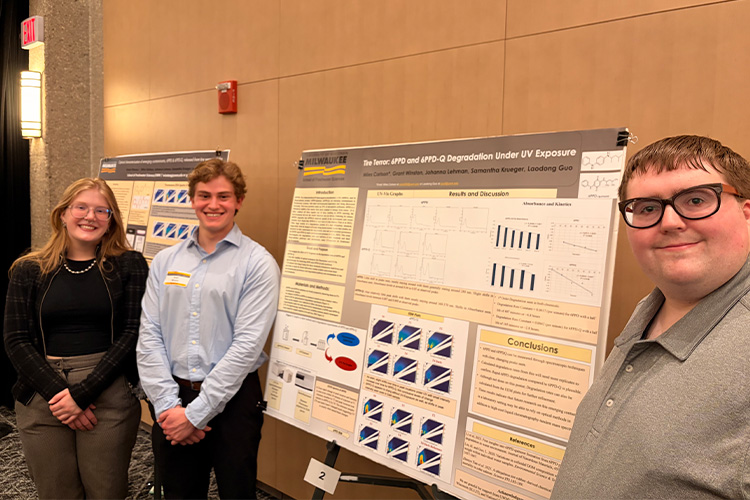
- Students present at 18th Annual Undergraduate Research SymposiumSixteen Freshwater Sciences undergraduate students participated in the 18th Annual Undergraduate Research Symposium on Friday, April 24th. Congratulations to our stellar undergraduate research student presenters! A special thanks to our faculty members who have served as mentors in their labs: Carmen Aguilar-Diaz, Harvey Bootsma, Michael Carvan, Russell Cuhel, George Duffy, Brandon Gerig, Laodong Guo, Sandra …
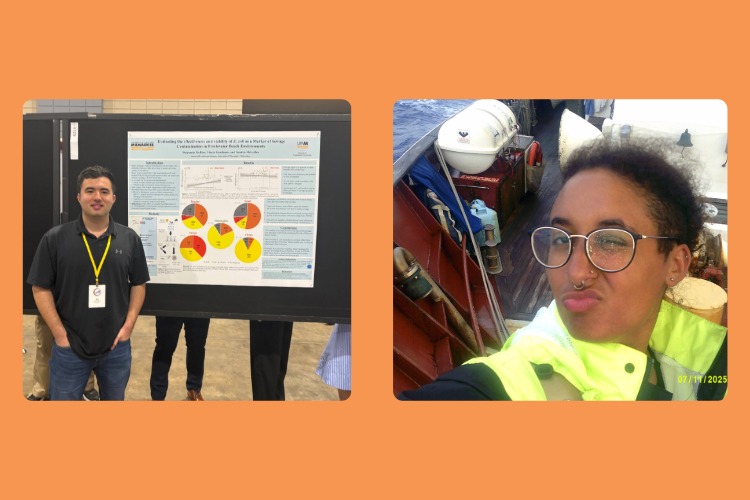
- The faces of Freshwater Sciences Undergraduate ResearchUndergraduate Research Week at UWM is officially April 20-24, the week leading up to the 18th annual Undergraduate Research Symposium on Friday, April 24th. At the School of Freshwater Sciences, we're proud to have 19 students working in faculty labs via the Office of Undergraduate Research's SURF (Support for Undergraduate Research Fellows) program. Of those, …
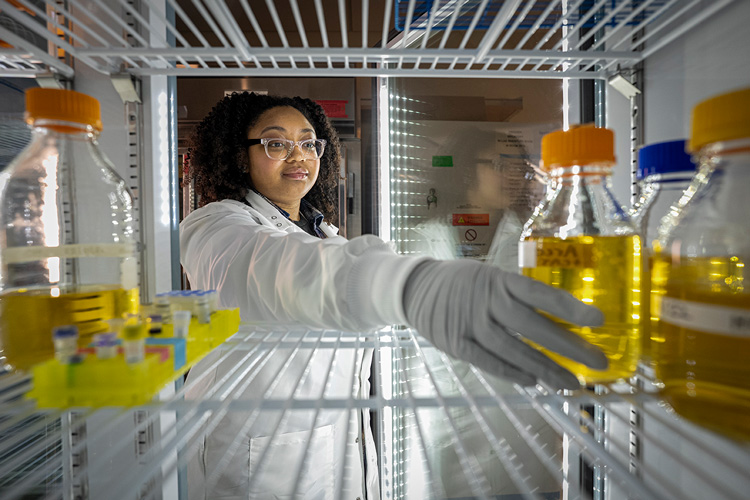
- UWM student taps into her love of bugs to fight antibiotic-resistant organismsKieyarrah Dennis can wear a lot of hats. In fact, versatility has shaped her personal and academic pursuits. Her adaptability blossomed during her elementary years at a community-focused bilingual school in Milwaukee. Later, it drove her to earn a bachelor’s degree in biochemistry and history as an undergraduate student at the College of Saint Benedict …
We’re committed to advancing key research priorities
Explore freshwater systems and develop methods for their preservation and management. Study the impacts of climate change, human activity, and invasive species on the Great Lakes and Earth’s ecosystems worldwide. Improve water safety through cutting-edge research. Track the presence and sources of pathogens and determine the impacts of contaminants on human and ecosystem health. Form collaborations among scientists, engineers, and industry.
Predict weather and climate and their impacts to society. Manage, replace and restore the Great Lakes’ commercial and recreational fisheries. Drive new technologies in water research and management and fisheries management and urban aquaculture. Advance understanding of atmospheric processes on local to global scales. Link science to action and generate transformational policies from great science.