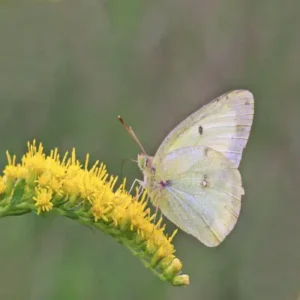
Howdy, BugFans,
It’s the start of December – and of meteorological winter – and it’s cold out, and the BugLady is still wondering what, exactly, happened to August. Here’s a little slice of August, from 15 years ago.
The BugLady’s advice for the day is: Find yourselves a big clump of goldenrod and start looking. Bring your camera. Bring a lawn chair. Bring Eaton & Kaufman’s Field Guide to Insects of North America and The Audubon Society Field Guide to North American Insects and Spiders by Lorus and Marjory Milne so you can find out what you’re looking at. Bring Donald W. Stokes’ excellent A Guide to Observing Insect Lives so you can find out what they’re doing there. You have time – one inscrutable species of goldenrod follows the next, from mid-August through the end of September (botanist Asa Gray once said that the 12 pages devoted to goldenrod taxonomy were the most boring in his book). Each critter has its own story, and it is in understanding the small stories that we start to get a handle on the big picture.
Worried about pain? The BugLady has been photographing insects for 35 years, and she really, really gets in bugs’ faces, but she has never been bitten or stung in the process (well, except for some peripheral ants, but ants have been lying in wait for the BugLady all of her life).
Worried about allergies? The pollen of goldenrod is large and is not spread through the air, but its showy flowers take the rap for the very airborne pollen produced by inconspicuous, green ragweed flowers.
What will you see?
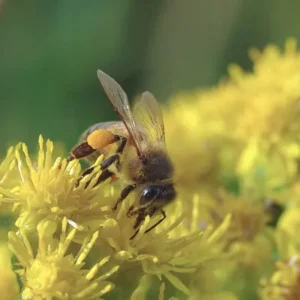
HONEYBEES who, if they start the day on a yellow flower, continue to visit yellow flowers (a phenomenon called flower constancy);
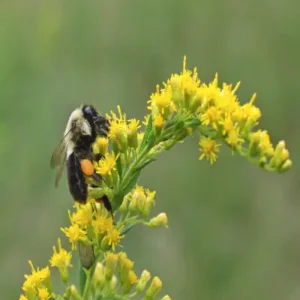
Worker BUMBLE BEES who can “buzz pollinate” some flowers – set up a vibration that loosens the pollen so they can collect it and carry it to an underground nest to nourish their queen and siblings – with no inkling that when goldenrods bloom, bumblebee days are almost over;
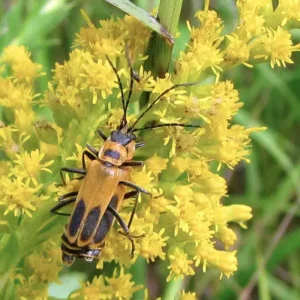
PENNSYLVANIA LEATHERWING (Soldier) beetles, seldom alone, who visit the flower tops to feed and frolic (count the antennae) and who discourage predators with poisonous chemicals that drip from the bases of their legs;
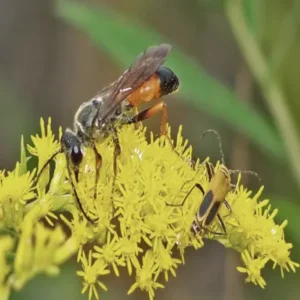
SOLITARY WASPS catching a light snack of pollen or nectar for themselves while hoping to catch a fellow arthropod to provision their offspring’s egg chamber;
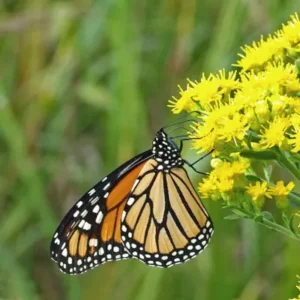
BUTTERFLIES, the most graceful among us, who surround us with magic;
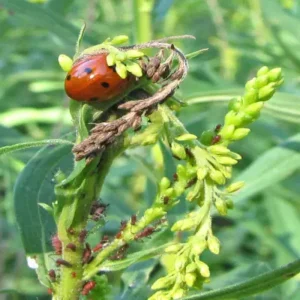
LADYBIRD BEETLES grazing on herds of aphids;
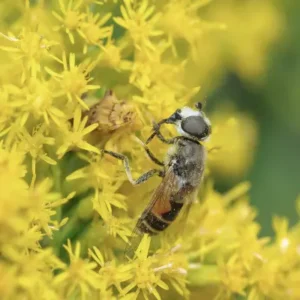
AMBUSH BUG – Insects that are sitting way too still, who may still be in the clutches of a well-camouflaged predator like the ambush bug (here with a Syrphid fly), who grabs and immobilizes them, injects a meat tenderizer, slurps out their innards, and discards the empties;
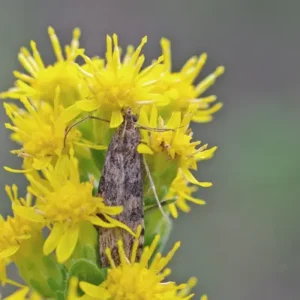
MOTHS – small, amorous, plain and fancy;
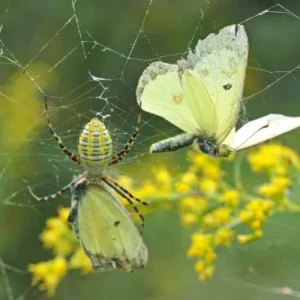
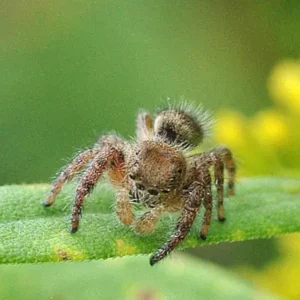
SPIDERS, who catch their prey using tools (an orb-weaver’s web) or ambush (jumping spiders);
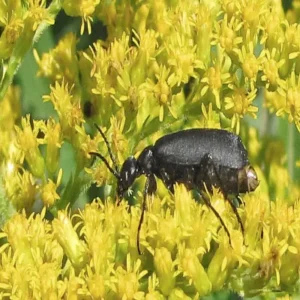
BLISTER BEETLES, whose velvety, black coat contains an itch-and-lump-producing chemical that will bug you for a week. Like the Pennsylvania, they are August specialties;
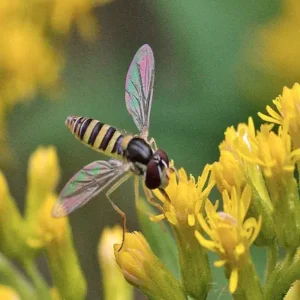
SYRPHID (HOVER, FLOWER) FLIES that come in sizes so small that their flight doesn’t even rustle the pollen grains;
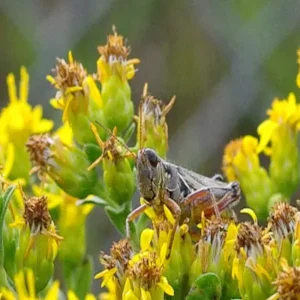
GRASSHOPPERS AND KATYDIDS, who see us coming and launch themselves into the air with a thrust of legs and wings;
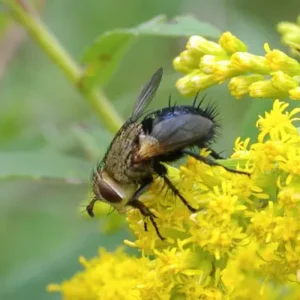
TACHINID FLIES, they of the bristly butts, who lay their eggs on flowers so that their young can climb aboard an unwary insect and eat it from the inside, out.
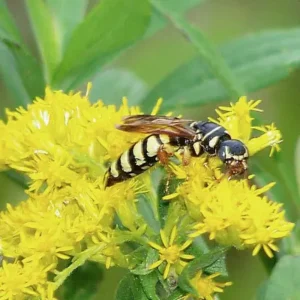
TIPHIID WASPS, whose larvae prey on soil-dwelling larvae of some scarab beetles like June beetles. The female doesn’t bring food to her egg; she brings her egg to food. When the female wasp locates a grub in the ground), she lays an egg on/near it
They’re all there, and more. Pollinators and predators. The drama of life and death playing out hundreds of times against the buttery backdrop of goldenrod, whose Ojibwe name means “sun medicine.”
Carpe diem,
The BugLady