Two seniors-Slawinski, Xia-recognized by UWM for their research
Congratulations to seniors Marina Slawinski (biomedical engineering) and Weiling Xia (materials science & engineering) who in September were awarded Senior Excellence in Research Awards (SERA) for 2022-23 from UWM’s Office of Undergraduate Research.
These awards are given annually to a small group of seniors campuswide who have been significantly active in undergraduate research during their time at UWM and who propose a research plan for their senior year. This year, eight students were awardees.
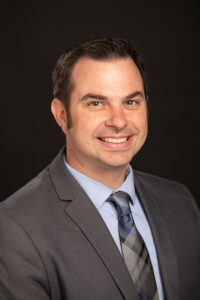
Slawinski (pictured, left) is currently working with Priyatha Premnath, assistant professor, biomedical engineering, on a project developing double-walled microparticles to assist in bone regeneration.
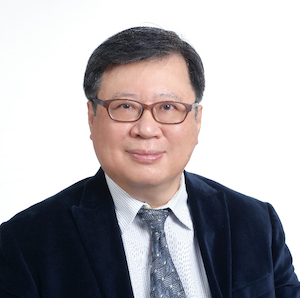
Xia (pictured, right) worked under the guidance of Xiaoli Ma, assistant professor, materials science & engineering, on a project developing nanofiltration membranes for water treatment, with a focus on removing the emerging PFAS pollutants. She recently received the Undergraduate Student Travel Award from the North American Membrane Society (NAMS) and presented her research work at the NAMS annual conference in Arizona in May.
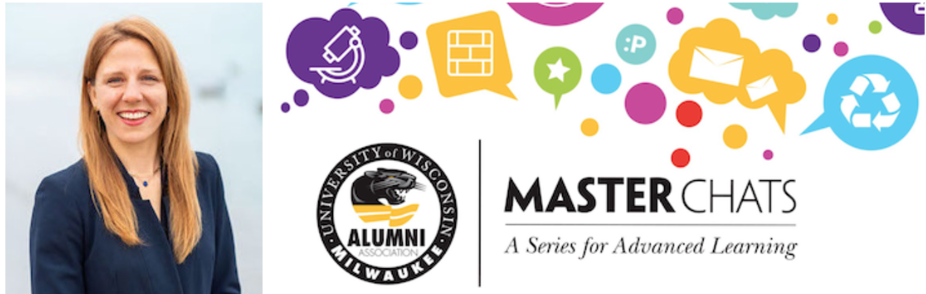
UWM Alumni Association features Jablonski in Master Chats
Marissa Jablonski (‘15 PhD Civil & Environmental Engineering, ’09 MS Civil & Environmental Engineering) was the featured speaker at the UWM Alumni Association’s Master Chats on Sept. 7 at the Lubar Entrepreneurship Center and UWM Welcome Center. Jablonski’s talk was titled “Environmental Impact: From the Individua to the World.” She is the executive director of the Freshwater Collaborative of Wisconsin, a first-of-its-kind statewide research hub around freshwater topics.
U.S. DoE awards excellent IAC proposal from Amano, Abdelhadi, Habash
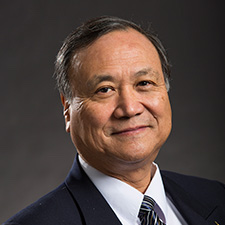
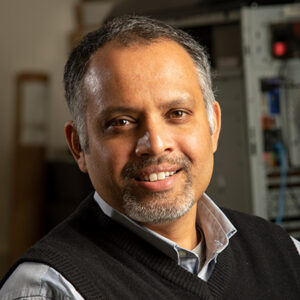
Ryo Amano
Students and faculty at UWM’s College of Engineering & Applied Science have once again been recognized by the U.S. Department of Energy as national leaders in the areas of manufacturing and industrial energy efficiency, waste and water use reduction, smart manufacturing, energy management systems, productivity improvement and cybersecurity.
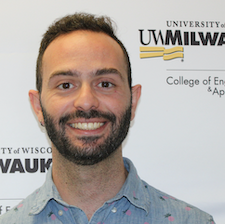
Ahmad Abdelhadi
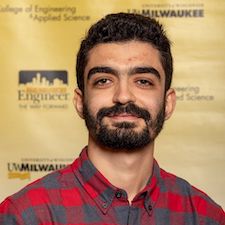
Led by engineering graduate students Ahmad Abdelhadi and Omar Habash, UWM’s team wrote a research proposal that, in August, took high honors in the 2022-23 Industrial Assessment Center (IAC) Awards for Excellence in Applied Energy Engineering Research competition, funded by the U.S. Department of Energy, Advanced Manufacturing Office.
Omar Habash
Ryo Amano, professor and Richard & Joanne Grigg Fellow, mechanical engineering, was the team’s advisor.
The team will receive a grant of $25,000 to conduct their project and will present it at the DoE webinar in spring.
The highly competitive, nationwide competition drew research proposals from 39 DoE-funded, university-based industrial assessment centers, or IACs. Eight were awarded high honors this year. These IACs conduct energy assessments for small and mid-sized companies and identify opportunities to improve productivity and competitiveness, reduce waste, and save energy.
About the IAC UWM’s DOE IAC—under the direction of Amano—is the only one in Wisconsin. The IAC provides free, in-depth energy assessments to small- and medium-sized manufacturers and utilities. The goal is to increase their productivity and competitiveness by reducing energy and water consumption, enhancing cybersecurity, and adopting smart manufacturing technology. To date, more than 600 companies and water treatment plants have used the center’s services. On average, they received energy-consumption recommendations to save about $150,000 annually, higher than the national IAC average of $130,000.
NSF awards D’Souza $1.1M through its Smart and Connected Health Program
The National Science Foundation awarded Roshan D’Souza, associate professor of mechanical engineering and Alan D. Kulwicki ’77 faculty fellow, a $1.1 million grant to research the hemodynamics from subtraction-computed tomography angiography (SCTA). The four-year grant comes through NSF’s Smart and Connected Health Program and starts in September.
SCTA is a non-invasive diagnostic imaging technique to assess cerebral artery stenosis, or arteries in the brain that are fully or partially blocked. The condition can lead to strokes.
While SCTA produces static images of anatomy of blood vessels, D’Souza’s project is a physics-informed machine-learning approach to map time-resolved blood flow velocities from SCTA. The goal is accurate image-based analysis of blood flow which could lead to prognostic tools based on hemodynamic biomarkers in diseases such as cerebral aneurysms.
D’Souza’s research is advancing image-based hemodynamic analysis of cardiovascular diseases
D’Souza is advancing hemodynamics analysis of cardiovascular diseases through advanced processing of blood flow images from imaging scans using flow physics-informed deep learning.
In 2021, the NSF awarded him a three-year, $298,000 grant to research hurdles to 4D-Flow MRI, which represents the newest generation of Magnetic Resonance Imaging (MRI) technology; 4D MRI adds a time dimension to this traditionally 3D technology, making it possible to image time-resolved hemodynamic flows.
The concept feasibility studies for both grant proposals were supported by seed grants from the college’s Dean’s Office in 2019 and 2020.
Following FDA decision on OTC hearing aids, CBS58 and Spectrum spotlight Hu’s expertise
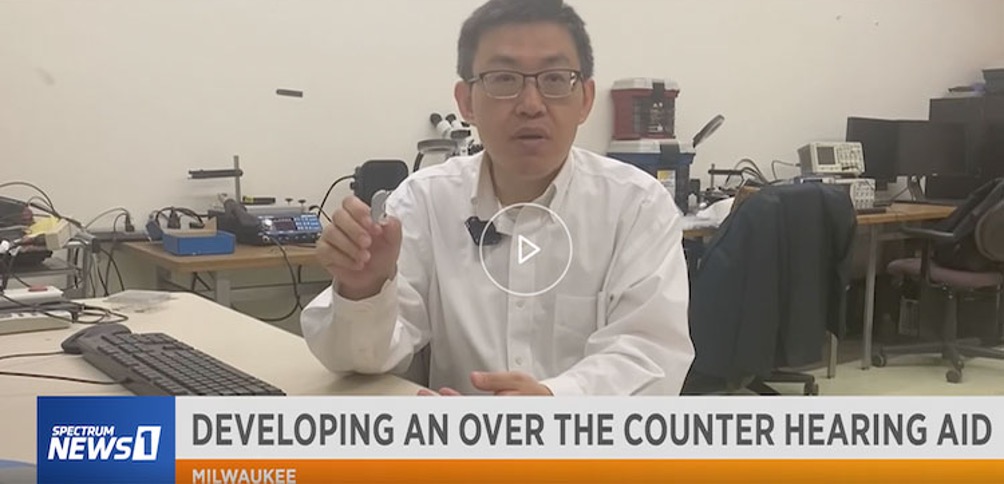
Following the FDA’s recent landmark decision to allow the sale of over-the-counter hearing aids, CBS58 and Spectrum News interviewed Yi Hu, associate professor, electrical engineering, and Santosh Yegnaraman, a PhD candidate and a member of Hu’s team, on Aug. 31.
In preparation for the revolution in hearing technology, Hu had developed a prototype of a hearing aid and a companion Bluetooth app he hopes to bring to mass market by 2023.
“With this new FDA guideline, I would expect that more people would start using the devices because this dramatically lowers the cost and removes the barrier to access audiologists,” Hu told CBS 58.
Welcome Shideh Yavary Mehr; Networks and security expert
Shideh Yavary Mehr, visiting assistant professor, computer science, and three-time winner of outstanding teacher awards, is an expert in networks and security. Her other research interests include software-defined networking, optical networking and network security, machine learning and big data.
“The Computer Science Department is happy to welcome her as she brings passion for research and teaching, industrial experience and community service,” said Susan McRoy, department chair and professor, computer science. “She has worked in industry for more than ten years in security and network and software development and has taught as a volunteer for several nonprofit organizations in her community, including AmeriCorps, Center for People in Need and Good Neighbor Center.”
Yavary Mehr’s research has looked into ways to prevent cyberattacks and strengthen computer system and network security. In 2019, she won the Best Poster Award at the Association for Computing Machinery International Conference on Emerging Networking Experiments and Technologies. The research project – which examined different types of cyberattacks on a centralized network architecture— was supported in part by the National Science Foundation. She has published five peer-reviewed journal and conference papers.
3-time winner of outstanding teacher awards in computer science and engineering
Yavary Mehr is at home in the classroom – she has received three outstanding teacher awards from the School of Computing at University of Nebraska-Lincoln. (Nominating students stated that she is “outstanding,” “amazing” and “extremely generous with her time.”)
“My mission is to inspire students in their academic lives,” Mehr said. “Every student can excel if they are provided with the right motivation and guidance.”
Yavary Mehr earned her PhD (2022) in computer engineering from the University of Nebraska at Lincoln, where she was a member of the Network Research Group, whose members create and build efficient, scalable, reliable, secure and cost-effective network architectures and systems. She received her MS (2006) and BS (1998) in Electrical Engineering from a university in Tehran.
When offered the position at UWM, Yavary Mehr did not hesitate, even though the job started just five weeks after she completed her PhD.
“I had heard good things about Milwaukee from a family member who attended college at UWM several years ago. He told me ‘Milwaukee is pretty. Milwaukee is a nice place to live,’ ” she said. “When I got the offer, I already had a passion for the city and the university.”
Contact Shideh Yavary Mehr Email: yavaryme@uwm.edu Temporary office: 371M
Welcome Shuaiqi Shen; Embedded systems researcher
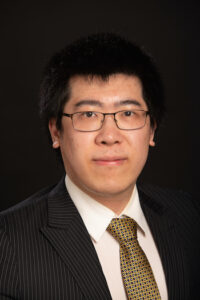
In August, Shuaiqi (Roger) Shen joined UWM’s College of Engineering & Applied Science as an assistant professor in the Electrical Engineering Department.
He is an embedded systems researcher and his expertise will strengthen the college’s already strong collaborations with local industry in the evolution of the Industrial 4.0 era, says Yi Hu, chair of the Electrical Engineering Department.
“Dr. Shen will make a significant contribution in revamping the college’s four-course sequence in embedded systems,” Hu says.
Shen joins a department that is already on the cutting-edge of electronics research (in areas including battery energy storage, cybersecurity, machine learning and AI) and produces graduates who are in high demand by local industry.
Shen’s research will focus on embedded systems—including the power they consume when used within the Internet of Things (IoT)—and energy-efficient artificial intelligence (AI).
Embedded systems are small computers that are embedded inside larger mechanical or electric systems, where they perform a dedicated function, typically in real time. They are changing how all of us interact with technology and are increasingly being used in everyday technology associated with communications (cellphones), home electronics (smart home appliances), cars and trucks (keyless entry), healthcare (medical imaging) and much more.
The IoT enables AI to be distributed to embedded systems, Shen says. However, the additional energy required for the embedded system’s AI algorithms raise sustainability issues.
Milwaukee’s manufacturing community offers opportunity to “turn research outcomes into real-world applications”
Shen’s research interests include green computing, AI-empowered connected vehicles, edge intelligence, cybersecurity, and next-generation wireless networks. He has published more than 10 peer-reviewed journal and conference papers.
UWM and the city of Milwaukee, he said, offered him an “ideal” place to continue his career.
“UWM has first-class scholars in electrical engineering, computer science and industrial engineering,” Shen says. “It is especially strong in embedded systems and IoT, which are the fields I have been interested in.
“Plus, Milwaukee is home to top manufacturing companies, which could offer the necessary partnerships to turn research outcomes into real-world applications. The avenues for collaboration are plentiful and I’m excited to be here.”
Eager to teach undergraduates, graduates
Shen enjoys teaching both graduate and undergraduate students and has taught courses related to AI, machine learning, digital systems, embedded systems, programming language, algorithms, cybersecurity, and computer networks.
“I am looking forward to helping students realize their potential as members of the creative community in engineering,” he says. “I always feel a sense of accomplishment when students obtain new knowledge and, more importantly, the habit of critical thinking and life-long learning.
“For me, teachers are not only responsible for conveying knowledge to students, but for conveying the methodology to apply the knowledge.”
Shen comes to UWM from the University of Nebraska-Lincoln, where he recently completed his PhD in Electrical and Computer Engineering. He received a B.Sc. degree in Electronic and Information Engineering from Hong Kong Polytechnic University (2016) and a M.Phil. degree in System Engineering and Engineering Management from the Chinese University of Hong Kong (2018).
Contact Roger Shen Email: shen8@uwm.edu Temporary office: 584
Welcome Chanyeop Park; Power and energy researcher joins UWM
As society increasingly turns away from fossil fuels to power cars, trains, machines and more, it is looking for advances in the field of power electronics and sustainable energy.
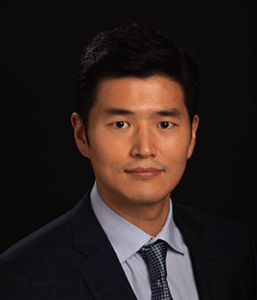
In August, Chanyeop Park joined UWM’s College of Engineering & Applied Science as an assistant professor in the Electrical Engineering Department. Much of Park’s research has focused on securing the dielectric integrity and preventing the aging of next-generation power and energy technologies.
Specifically, he has aimed to identify, characterize, and address existing knowledge gaps and challenges that are emerging with the advances in power electronics, renewable energy, electric ships, electric aircraft, and soft electronics.
“Conventional solutions are ineffective in the emerging power and energy systems driven by power electronics,” he says.
Park said UWM offered a great fit for his career goals, as it is surrounded by large power industries and is a member of the National Science Foundation-backed research center GRAPES (GRid-connected Advanced Power Electronic Systems).
“It’s one of the few universities that recognizes the growing significance of electrical insulation research for power-electronic-driven systems,” he said. “I see a great synergistic potential between my fundamental research projects and the practical research projects ongoing at the Center for Sustainable Electric Energy Systems.”
Wants to “cultivate environment where young researchers can thrive”
Park’s areas of expertise include dielectrics, high voltage engineering, power electronics, composites, plasma physics, applied superconductivity, and machine learning.
As a principal investigator, he has secured $1.3 million in research funding from federal and industry sponsors including the Office of Naval Research (ONR) and the NSF. As a co-PI, his share of research funds has reached $1.1 million, granted from various sponsors including AIRBUS and the Advanced Research Projects Agency-Energy.
He has published more than 60 peer-reviewed journal and conference papers.
As a faculty member at UWM, Park said, his goals include establishing a lab dedicated to dielectric resiliency and electrical aging mitigation and winning ONR’s Young Investigator Award.
“I also want to cultivate an environment where young researchers can thrive,” he said.
Shortage of young power and energy engineers motivated him in classroom
Park is an ardent teacher, who says that the shortage of young power and energy engineers motivates him as an educator.
“Teaching engineering students how to transform their ideas into useful systems and applications is more important than ever,” he says. “Excellent GPAs don’t guarantee that students understand how their knowledge can be applied in the real world.”
Park comes to UWM from Mississippi State University, where he was research director of the Paul B. Jacob High Voltage Laboratory. He was a postdoctoral fellow at Georgia Tech (2018 -19). and received his PhD degree in Electrical and Computer Engineering from Georgia Tech (2018). He earned his MS degree (2013) and BS. degree (2011) in Electrical Engineering from Hanyang University, Seoul, South Korea.
Welcome William Musinski; Expert in materials research and advanced manufacturing joins UWM
William Musinski comes to UWM from the Air Force Research Laboratory’s (AFRL) Materials and Manufacturing Directorate at Wright-Patterson Air Force Base, Ohio. His addition in August to the faculty at UWM’s College of Engineering & Applied Science bolsters the college’s research and teaching in advanced manufacturing and materials science.
Musinski has a joint appointment as an assistant professor in the Materials Science & Engineering and Mechanical Engineering departments.
At the AFRL, Musinski worked as a materials research engineer with a specialty in fatigue analysis–specifically high-fidelity, experimental characterization and modeling of the meso- to macro-scale mechanical performance of aerospace metal alloys. Such studies on the variability in performance and evolution of stress during fatigue of materials play a crucial role in understanding the limits of current materials systems and developing better-performing, longer lasting alloys for the next generation of aircraft and engines.
His other areas of expertise include high-temperature materials, additive manufacturing, and computational materials science, all of which he plans to pursue at UWM.
Strong industry presence drew him to UWM
Musinski was attracted to UWM because it is centered in a vibrant and culturally diverse city with a strong industry presence in the areas of manufacturing and automation. “These factors were a huge driving force in my decision to come to UWM,” he said.
He is particularly excited about collaborating with Milwaukee-area industry members. “I look forward to augmenting existing university-industry partnerships and developing new ones by coupling my strengths in solid mechanics and materials science with advanced manufacturing.”
Promising technologies such as additive manufacturing, he said, will enable the next generation of advancements in defense, health care, energy, and transportation.
While working at the AFRL, Musinski mentored undergraduate, graduate, and post-doc researchers as an adjunct professor with the University of Dayton. Among the topics he taught were mechanics of materials and fatigue and fractures of metals and alloys.
“I loved seeing the students grow and helping them discover their own passions,” he says. “At UWM, I look forward to fostering growth in a larger number of students so that they can navigate their next steps and solve the problems they encounter in their careers.”
Musinski earned both his PhD (2014) and master’s degree (2010) in Mechanical Engineering from Georgia Tech.
Contact William Musinski Email: musinski@uwm.edu Temporary office: E371F
Welcome Dah-Chuan Gong; Supply chain and logistics expert will strengthen IME instruction and research efforts
Dah-Chuan Gong, PhD, is joining UWM’s Department of Industrial & Manufacturing Engineering (IME) this fall as a visiting scientist. Gong was most recently dean of the College of Management and a professor of industrial and business management at Chang Gung University, Taiwan.
At UWM, he will support IME faculty in instruction and research endeavors, including research projects, publications, and research grant submissions, with special attention given to those related to logistics and supply chain. Gong also will be instrumental in the college’s collaboration with UWM’s Connected Systems Institute.
Gong’s areas of expertise include sustainable and resilient supply chain management, global logistics, applied operations research, and production-inventory systems analysis. In 2013, he was a member of the National University of Singapore team which won the grand prize (USD $1 million) in the Next Generation Container Port Challenge, organized by the Maritime and Port Authority of Singapore and the Singapore Maritime Institute.
Between 2000 and 2011, he was involved in Taiwan’s effort to become more competitive with business process re-engineering and IT-oriented commercial applications. He advised, reviewed or monitored more than 100 large-scale government-sponsored projects in industries including computer, telecommunications, electronics, automobile, mechanical and machine tools.
Gong first served as a visiting professor at UWM in the 2014/15 academic year and has been instrumental in the IME Department’s international collaborations with Chang Gung University and Chung Yuan Christian University in Taiwan.
“It is exciting to welcome Dr. Gong for a second time,” said Wilkistar Otieno, associate professor and chair of the IME Department. “He will fortify our instructional capacity while Dr. Petering is on sabbatical, and, most importantly, strengthen our research collaboration.”
Gong earned his PhD (1991) in Industrial and Systems Engineering from Georgia Institute of Technology.
Contact Dah-Chuan Gong Email: gongd@uwm.edu Office: E371J