Welcome Qingsu Cheng; Biomedical Engineering researcher in cancer and biomaterials joins UWM

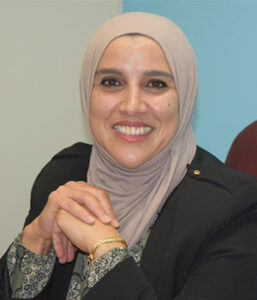
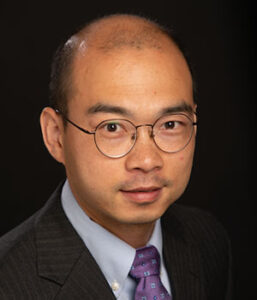
Qingsu Cheng joined the UWM College of Engineering & Applied Science in August as an assistant professor in the Department of Biomedical Engineering.

In this role, Cheng will advance the college’s multidisciplinary research and education in the diverse and evolving field of biomedical engineering.

With the addition of Cheng, the department—which launched in 2015 with just one student—now boasts nine faculty members and two visiting faculty who bring expertise in biomedical engineering, mechanical engineering, materials science, and computer science. ABET (the Accreditation Board for Engineering and Technology) accredited UWM’s Bachelor of Science in Biomedical Engineering Program in 2021.

From battling breast cancer to identifying bacteria

Cheng’s cutting-edge, translational research in the areas of cancer and biomaterials has been supported by the National Institutes of Health, the U.S. Department of Agriculture and NASA, which funded his proposal to study astronaut health on the moon and Mars. He has published 25 peer-reviewed journal papers, which received more than 400 citations. 

“UWM is giving me the opportunity to contribute to broadening our knowledge about the interaction between microenvironmental factors and a variety of diseases,” Cheng says. “I hope to translate my research into commercial products, with the university’s support.”

Cheng’s cancer research is in the areas of early detection, risk assessment, and development of new treatments. He is currently investigating the biomechanical properties of breast tissue—knowledge that aids in detecting the disease and planning surgical procedures. He also is researching fibroblasts, a non-cancerous cell type that is found in most solid tumors and associated with disease’s progression. “The goal of non-invasive treatment is to manipulate the tumor microenvironment in a way that combats breast cancer,” he says.  

In the expanding field of biomaterials, Cheng’s focus is on biosensors. “Home COVID-19 tests are one example of biosensors that we’re all familiar with,” Cheng says. In general, biosensors alert people to the presence of viruses and bacteria and are being used in disease detection and progression, food safety, environmental monitoring and more.

At UWM, Cheng says, he hopes to develop biosensors that identify diseases in microbiomes—the collection of microbes that live on or inside a person’s body.

Cheng has already developed one biosensor—now patented—that identifies foodborne bacterial pathogens in just 30 minutes. The technique also can be used as a viral pathogen sensor, he says.   

The field of biomedical engineering is highly collaborative, and Cheng has developed partnerships with scientists at the University of California-San Francisco, University of California-Los Angeles, Arizona Statue University, the Jet Propulsion Lab and NASA.

In his biosensor research, he typically works with local hospitals and farms to obtain the biological specimens specific to the region and necessary for blind validation tests.

Committed to helping students flourish

Most recently, Cheng was a research scientist in the Department of Electrical and Biomedical Engineering at the University of Nevada Reno. He obtained a PhD in Biomedical Engineering from the University of South Carolina and completed postdoc training at the Lawrence Berkeley National Laboratory.

Prior to joining UWM, Cheng both taught and designed a variety of courses—including Tissue Engineering, Cellular Engineering and Introduction to Biomedical Engineering—and mentored undergraduate and graduate students on both academic and career paths.

“I am committed to fostering a friendly environment that respects, supports, and values all members of our community,” he said.

Contact Qingsu Cheng
Email: chengq@uwm.edu
Temporary Office: 845

Welcome Sarah Blackowski; Expert in engineering education

UWM’s College of Engineering & Applied Science has hired its first designated expert in engineering education.

Sarah Blackowski joined the college in August, bringing expertise in increasing student engagement in the classroom, preparing first-generation and minority students for engineering degrees, and more. She is an assistant professor in civil & environmental engineering.  

“I hope to support students at UWM to feel included and valued in the engineering classroom,” she said. Among her priorities: to develop an engineering class that’s project-based around problems facing the greater Milwaukee area.

Blackowski arrives at a time when the college seeks to further improve undergraduate student retention with teaching innovation and personalizing student services. Her academic preparation will help the college implement the latest research in engineering education and her presence and efforts will help the college compete for federal grants in engineering education.

Strength lies within diversity of students’ backgrounds  

Blackowski’s areas of expertise within engineering education are extensive and include: student motivation, self-regulated learning, and metacognition; research-based instructional strategies; and leveraging knowledge to benefit diverse students and faculty in core engineering courses.

To significantly improve engineering students’ experiences and outcomes, Blackowski said, an institution must support both students and faculty in the classroom.

“Engineering students enter the classroom with varying levels of engineering-related beliefs, motivations, and experiences,” she said. “UWM students bring a wide range of diverse backgrounds and experiences—a strength that can be used to craft student-focused courses.”

In addition, she hopes to better prepare PhD students for their potential roles as professors, noting that those who go on to tenure track jobs typically enter the classroom with little to no teaching experience, as few graduate programs prepare early-career faculty to teach. “Teaching is a core skill and it’s crucial to support faculty members in this role,” she said.

NSF-funded projects addressed engineering student experience, faculty development, K-12 engagement

Blackowski comes to UWM from Virginia Tech’s Department of Engineering Education, where she earned a PhD in Engineering Education. She has experience as an instructor of record for the first-year engineering sequence and won the Graduate School Teaching Excellence Award in Spring 2022. Her dissertation explored how early-career, tenure-track engineering faculty at R1 institutions learn about teaching through narrative methods.

She has seven years of experience in engineering education research and has worked on National Science Foundation-funded projects that addressed K-12 engineering engagement, undergraduate engineering student experience, graduate student success, engineering faculty development and more.

In addition, she has co-authored three peer-reviewed journal publications and 15 conference papers.

Blackowski earned a BS in Aerospace Engineering with a concentration in Astronautics from Embry-Riddle Aeronautical University in Daytona Beach, FL. She has worked as a flight simulator technician for Level D flight simulators and a chief engineer on a theoretical project to explore Mars’ largest moon, Phobos.

Contact Sarah Blackowski
Email: blackows@uwm.edu
Office: E1107

Welcome Hanaa Alqam; Mechanical Engineering lecturer

Hanaa Alqam (’19 PhD Mechanical Engineering) stepped into the role of Mechanical Engineering lecturer, starting this fall. Alqam, who has been an adjunct instructor with the college since 2019, will teach undergraduate and graduate courses in mechanical engineering.

Alqam hopes to be a strong asset to the department. “I have 15 years of experience in teaching,” she said, “and the skills and knowledge needed to help the department advance to the next level in the teaching field.”

Alqam earned a MS degree (2011) from UWM in Mechanical Engineering and a BS degree (2003) in Mechatronics, Robotics and Automation Engineering from Al-Balqa Applied University in Jordon.

Contact Hanaa Alqam
Email: hmalqam@uwm.edu
Office: E386C

Donor spotlight: Dr. Philip F. Judy

In May, Dr. Philip F. Judy made a blended gift consisting of a cash gift combined with an estate gift to establish the Philip F. Judy Biomedical Engineering Fund to support biomedical engineering research and fellowships at the UWM College of Engineering & Applied Science.    

Dr. Judy earned his undergraduate degree in Applied Science from UWM’s College of Engineering & Applied Science in 1964 and his doctoral degree in Radiological Sciences (Physics) from UW-Madison in 1971.  

Now retired, Dr. Judy was the Director of the Physics and Engineering Division at Brigham and Women’s Hospital, Boston and an Associate Professor of Radiology at Harvard University.  He has served on the boards of directors for the American Association of Physicists in Medicine and the Academy of Radiology Research. In 1986, he served as vice-president of the Radiological Society of North America. 

Dr. Judy lives in Massachusetts with his wife Karen Doppke, a senior medical physicist with the Department of Radiation Oncology at Massachusetts General Hospital and fellow of the American Association of Physicists in Medicine.   

When asked why he made this gift to UWM, Dr. Judy said, “I was fortunate to spend my career in research doing something I loved, and I want to give back to the next generation of engineers and researchers at the university that started my lifelong journey of discovery.”  

If you would like to learn about making a planned gift to the college, please contact Jean Opitz, development director for the College of Engineering & Applied Science, at opitz@uwm.edu, or click here.  

WEDC awards Amano $250K to ID best renewable energy recovering technologies for Wisconsin manufacturers

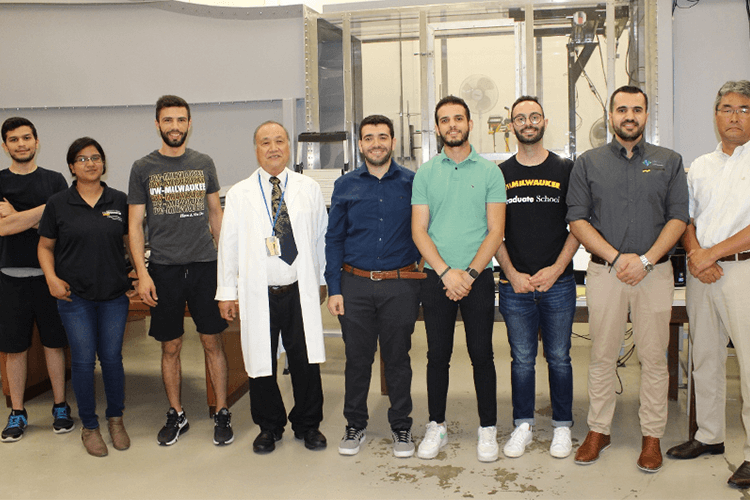
Ryo Amano, professor of mechanical engineering and Richard and Joanne Grigg Faculty Fellow, was awarded $250,000 from the Wisconsin Economic Development Corp toward a three-year, $375,000 project to identify and generate new technologies to recommend to Wisconsin manufacturing industries and energy utility treatment facilities. He and his UWM team (pictured) will partner with several energy advisory sectors in the state.

Amano says the team will study efficient, renewable energy recovering technologies (wind, solar, biomass, hydropower, and hybrids) and the manufacturing skillsets needed to produce them.

“The study will extend to include better buildings and manufacturing plants, and green and clean energy systems,” he says. “Our goal is to significantly contribute to Wisconsin industries by helping them make drastic improvements in their manufacturing technologies.”

The team will study emerging technologies

The team will study several emerging technologies including the following: phase change material (PCM) for thermal management; heat pumps for manufacturing processes; combined heat and power (CHP); concentrating solar power for manufacturing; and cybersecurity technologies.

“All these are energy efficient and promising for different situations,” Amano says.

Ultra-efficient heat pumps, for example, could use electricity to transfer heat from one space to another and could be suitable for certain industrial processes, Amano says.

The team also will explore battery-powered stationary energy systems that generate, store, and convert energy. “This system can store energy, including solar energy, and deliver smooth and predictable power for send the power to the grid,” Amano explains. This technology could be particularly useful in instances of power outage situations and as an auxiliary power source.

UWM engineering students save Wisconsin steel company $43,000 a year

Based entirely on the work of four materials engineering students, a Saukville specialty steel manufacturer saved $43,095 last year. And those savings will continue into the future.

Starting in spring 2021, Charter Steel fully implemented an idea proposed by the UWM student team that was tasked in its capstone materials engineering class with developing ways for the company to reduce the cost of a heat-treatment cycle used to produce a particular steel.

Read more.

Male engineering student
Zachary Breider
Female engineering student
Hannah Ullberg
Male engineering student
Ismael Coello
Male student working in lab
Davan Siegfried

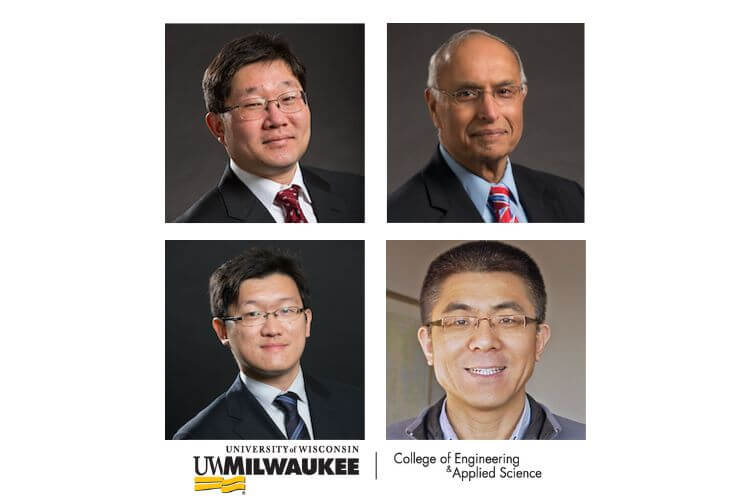
Chang, Rohatgi, Y. Wang receive UWM Research Foundation Awards

The UWM Research Foundation in June recognized UWM inventors—including three at the College of Engineering & Applied Science—who in the last year were issued patents or whose technologies were licensed to an outside company or to the inventor through a startup company.

Woo Jin Chang, associate professor, mechanical engineering, was awarded the patent Contaminant Detection Device and Method. Patents were issued in five countries.   

The Chang lab has collaborated with researchers at UW-Madison to create a novel heavy metal sensor. The project was initially funded by the Water Equipment and Policy (WEP) Research Center and is licensed by three of the center members non-exclusively. Chang formed the startup Septillionth, Inc. and is working with one of the licensees to create a working hand-held prototype for lead detection, which could be used both residentially or commercially in realms such as well drilling, tap water and wastewater treatment. 

Pradeep Rohatgi, UWM distinguished professor, mechanical engineering, was presented with a technology license award for corrosion prevention.

Rohatgi and his team developed materials and methods of surface alloying using metal alloying powders and low-cost mild steel to prevent corrosion resistance. This work has been supported for many years by WEP members with over $250,000 in research funding. A U.S. patent has been filed and published, and the technology has been licensed by a national manufacturer.

Yin Wang, Lawrence E. Sivak ’71 associate professor, civil & environmental engineering, and Shangping Xu, associate professor, Department of Geosciences, were presented with a technology license award for adsorbent materials to remove PFAS.    

Wang and Xu are developing a powdered adsorbent material to remove per- and polyfluoroalkyl substances (PFAS) from the environment. PFAS have been banned by the EPA, but the man-made chemicals—once ubiquitous in everyday items such as food packaging—continue to pose harm to the health of humans and the environment. Known as the “forever chemicals,” PFAS have emerged in soil and aquatic systems and are extremely hard to destroy.

The technology was supported by WEP and licensed by a national manufacturer. 

To date, 137 patents have been issued with the UWMRF and 79 patent applications are pending. The UWMRF has 51 active license or option agreements.

Bui, Pedley represent IME in IISE’s first undergraduate workshop

Hamid Seifoddini, Bao Bui, Kevin Pedley and Wilkistar Otieno at IISE’s conference.

The IME Department nominated two students—Bao Bui and Kevin Pedley—to participate in the first undergraduate workshop offered during the annual conference of the Institute of Industrial & Systems Engineers (IISE). This year’s conference—held in Seattle, May 21-24—featured keynote speakers followed by several panels and team-based project competitions.

“I was extremely excited to be nominated to attend the conference,” Bui said. He took advantage of all that an in-person conference offers—he talked with industry experts and learned more about the field and job opportunities, met professors from other universities and discussed their academic experiences, and formed bonds to help re-energize the IISE chapter at UWM. 

Bao also took part in a design competition in which competitors were tasked with using emerging technologies in a new way. (Click here for a short slide show of the team’s final presentation: Emerging Technology and Life in the Future: Virtual Applied Concepts in Mathematic Courses.)

The IISE conference is a forum for exchanging knowledge and discoveries in the industrial and systems engineering research and practitioner communities.

The students’ participation was funded by the National Science Foundation.

Thoughts on Ecommerce

By Dennis Oates

As we (fingers crossed) enter the post-pandemic world, it is interesting to look back at the role industrial engineers (IEs) played in helping us through this incredibly challenging time.

The expansion of Ecommerce allowed us to safely continue life during lockdowns.  The pandemic’s Ecommerce explosion would not have been possible without industrial engineering tools and practitioners. This growth was unprecedented. For example, according to the U.S. Department of Commerce, Ecommerce sales in 2021 were up 50 percent over 2019. And the use of food and beverage ecommerce services (Grubhub and DoorDash, for example) was up a whopping 170 percent during that same period.

IEs made significant contributions to new staffing and capacity models. Existing supply chains were strained as the retail world shifted to online shopping and direct home delivery.  Logistics networks required redesign; optimization tools became key and workers who could use them became indispensable. Facilities needed to be reconfigured and material handling systems implemented – again IEs at work. Addressing the need for robust capacity and staffing models, critical to ensuring orders could be picked, packed, sorted and delivered, was yet another area of significant contribution by IEs.

What’s next for Ecommerce? I am excited by innovations that are still to come: ultra-fast delivery, better visibility of in-transit shipments, optimizing networks that improve customer experience while lowering cost, and more.  One thing is clear to me; IEs will be in demand to assist with them. 

A note for current students. If you are working through your time at UWM, understand that the two-pronged approach of your education is extremely valuable. You are learning the theory of industrial engineering plus beginning to apply what you learn in your Senior Design class. When you graduate, you will be prepared to participate in the continued Ecommerce supply chain revolution. 

About the author

Dennis Oates is the chief logistics officer at Sendle, a 100% carbon neutral carrier specifically designed for small ecommerce businesses. He is also a member of UWM’s IME Industry Advisory Board.

About the Industry Advisory Board The Industry Advisory Board plays an active role in the department, helping to ensure that students have access to, and experience with, the newest tools and technologies. We provide guidance to the department on programs’ educational objectives; design surveys to gather feedback from employers, alumni and graduating seniors; propose curriculum revisions; develop strategies to increase undergraduate enrollment; serve as guest and part-time lecturers; interview faculty candidates; and participate in the annual College of Engineering & Applied Science’s open house. 

Creating a Pipeline to Talent: The Connected Systems Institute’s Manufacturing Workforce Innovation Program

CSI Testbed

The Fourth Industrial Revolution delivers affordable technologies that provide a seemingly endless supply of possibilities with the potential to add tremendous value to business. Why, then, are so many manufacturers slow to implement advanced manufacturing?

Recent industry reports reveal that it is not just new technology that prevents manufacturers from adopting Industry 4.0 methods and achieving their business success; rather, the chief concern is finding, training, and retaining the right talent. In Wisconsin alone, 83% of 400 employers surveyed in 2021 by the Wisconsin Center for Manufacturing & Productivity stated they were having difficulty finding the right talent.  (Read the report.)

CSI logo

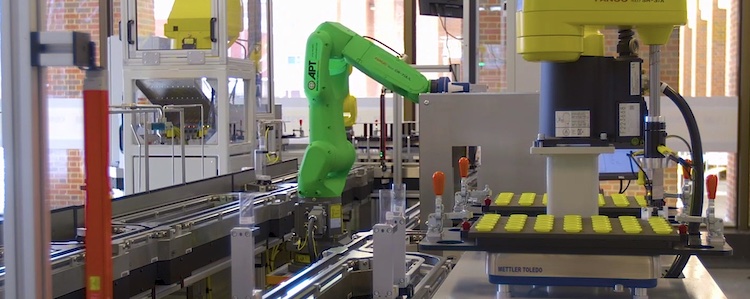
Enter the Connected Systems Institute (CSI) at the University of Wisconsin-Milwaukee. Launched in 2018, CSI is one of UWM’s flagship strategic partnerships. Located on UWM’s campus, the CSI facility is a 10,000-square-foot state-of-the-art simulated manufacturing plant representing the IIoT-connected factory of the future. The laboratory space provides a work environment for students and researchers to experiment with new concepts and test IIoT solutions across domains specific to manufacturing. To address the critical manufacturing talent shortage, CSI’s Manufacturing Workforce Innovation Program (MWIP) is developing a suite of specialized courses for those already in—or seeking to move into—advanced manufacturing careers.

Two new courses geared for working professionals

MWIP provides comprehensive, flexible training needed to navigate the Industry 4.0 manufacturing environment. These courses are driven by industry demand and developed by UWM’s faculty and industry subject matter experts. With support from a generous grant from the Wisconsin Economic Development Corporation, CSI launched two MWIP courses this spring: Digital Manufacturing Leadership and Microsoft Azure in Manufacturing.

Designed with busy working professionals in mind, the self-paced courses are accessible from computers or portable devices when schedules permit. The lessons are brief and organized into weekly modules of learning, which include instructor videos and downloadable content. Participants get to interact with and learn from their peer cohort and meet weekly online for real-time learning with instructors. Courses also include in-person, hands-on exercises at CSI’s facility and access to keynote events. Both courses are enrolling fall cohorts.

Comprehensive suite of courses being developed

CSI is continuing to develop a comprehensive suite of MWIP offerings, which will further enable manufacturers to effectively adopt AI, machine learning, and deep learning technologies and be more competitive in Industry 4.0. The forthcoming courses, which will be offered starting in spring 2023, include:

  • Fundamentals of Networking for Industrial Control Systems
  • Operational Technology Cybersecurity
  • Fundamentals of Robotics in Manufacturing
  • Industrial Automation and Controls
  • Integrated Robotics for Manufacturing
  • Data Structuring for Advanced Manufacturing
  • Augmented Reality and Virtual Reality in Manufacturing
  • Digital Twins in Manufacturing
  • Industrial Internet of Things and Smart Sensors

While MWIP courses are currently available as non-credit, badge-earning courses, CSI is developing these future courses to be dual credit-bearing for both UWM and Gateway Technical College students.

Interested in partnering with CSI or know someone who is? Visit the CSI website.