Levon Van Der Geest named finalist in Kulwicki Driver Development Program

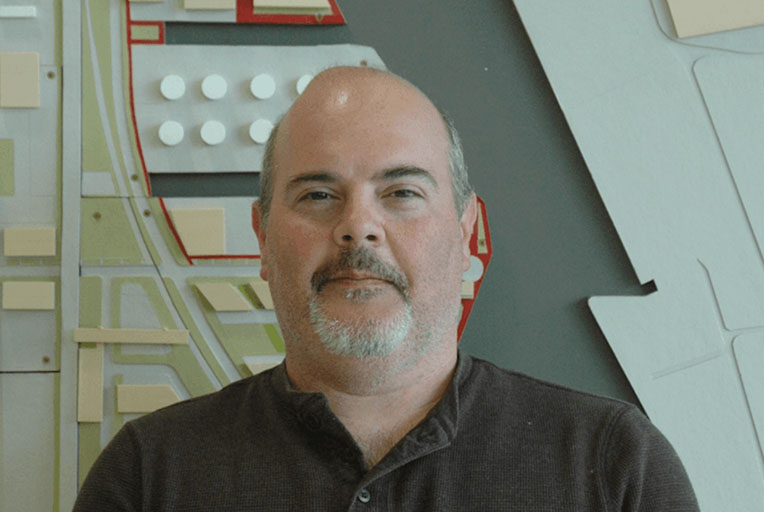
Congratulations to engineering undergraduate Levon Van Der Geest, who was selected as one of seven finalists in the eighth annual Kulwicki Driver Development Program from a national applicant pool of 54.

The program honors the legacy of UWM alumnus and NASCAR Hall of Famer Alan Kulwicki (BSE ’77) and helps young stock-car drivers pursue their dreams.

Finalists receive a stipend of $7,777 (a nod to Kulwicki’s car number, 7) and assistance in marketing, publicity, sponsor development and industry networking. The winner will earn $54,439.

Read more in the Milwaukee Journal Sentinel.

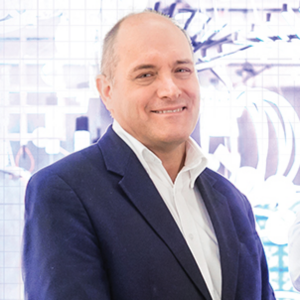
Welcome Zhen Zeng; expert in network and cloud security

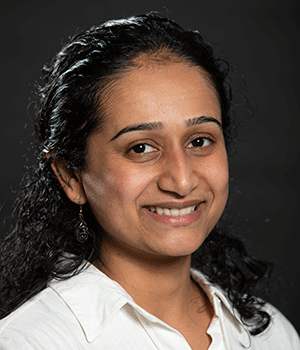
Zhen Zeng joined UWM’s Computer Science Department in March as an assistant professor. Her primary research focuses on AI-based solutions for securing the network and cloud environment. She also is interested in cloud networking, cloud infrastructure, cybersecurity and computer science education.

“Professor Zeng’s work is of critical importance – both for research and for what students must understand to be effective in the workforce,” said Susan McRoy, professor and chair of UWM’s Department of Computer Science. “Cloud computing creates fantastic opportunities for everyone to benefit from complex data-driven software, but also huge risks to those who upload proprietary resources.”

Zeng has worked in the high-tech industry for years. She recently earned a PhD in computer science from Arizona State University.

Niu gets patent for self-cleaning coating; could be applied to windows, glasses, windshields and more

Imagine never having to clean your glasses again.

An inventor at UWM’s College of Engineering & Applied Science has developed a self-cleaning coating that could be applied to commercial products, including eyeglasses, building glass and car windshields.

Junjie Niu, Richard and Joanne Grigg associate professor, materials science & engineering, was issued a U.S. patent in November for the technology, called 3D hybrid composite coating.

“It’s a super-hydrophobic coating,” Niu says. “When it gets wet, it activates and repels water and prevents particles from adhering to the surface.”

In addition to reducing the need for cleaning, the coating could reduce water consumption—in public urinals, for example—and prolong the life of products such as pipelines and sensors that are at risk of corrosion.

Decreasing consumption of energy and water are goals

At UWM, Niu and his 10-person research team have partnered with many Milwaukee-area companies in the past few years on several projects with the goals of decreasing energy consumption and decontaminating drinking water and water that is discharged from sewage lines into the environment.

In the past five years, he has been awarded more than $2.5 million in grants—from federal agencies, local agencies and industries—for research in these areas. 

“Worldwide, energy conservation and clean water are the big topics of our time,” says Niu. “My background is interdisciplinary and I combine chemistry, physics and materials science in my research.”

His research on self-cleaning coatings has been supported by Sloan Valve, the Water Equipment and Policy (WEP) Research Center, and the University of Wisconsin System.

More.

College welcomes Science Olympians from across Wisconsin

The Wisconsin Science State Olympiad State Championship drew more than 1,200 high school and middle school students to UWM April 1. Close to 40% of students and their families arrived a day early to tour campus, visit research labs, sit in on lectures and more.

Students who toured the EMS building enjoyed plenty of hands-on activities with student organizations and faculty members,

They toured the foundry, the Makerspace, the Mechatronics Lab and the Biomechanics & Biomaterials Engineering Lab.

They also attended a talk about engineering research, which included video tours of Brooke Slavens’ Mobility Lab and other facilities. Finally, the visitors met the SAE Baja team and UWM’s Engineers Without Borders student chapter.

The opening ceremonies for the Olympiad included a welcome by Dean Brett Peters.

Thanks to the two university liaisons for this event—Chris Beimborn, STEM outreach manager, and Anja Blecking, associate professor of chemistry and biochemistry—and the volunteers within the College of Engineering & Applied Science who made the event a success.

More.

Alum Alan Kulwicki commemorated on the 30th anniversary of his death

Former pit crew members and friends of the late Milwaukee NASCAR Hall of Fame member Alan Kulwicki (’77 Mechanical Engineering) shared memories at an event March 31 to mark the 30th anniversary of Kulwicki’s death. The event was held outside the Kulwicki Garage in EMS.

More.

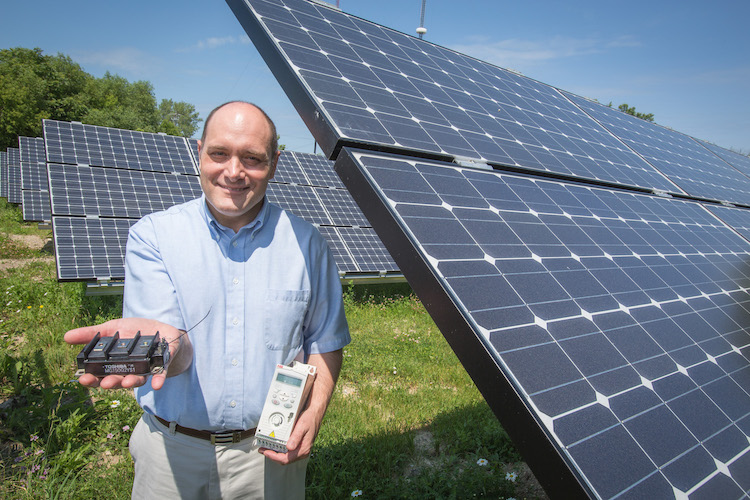
Park and collaborators showcase their green-energy research to U.S. Secretary of Energy Jennifer Granholm

Experimental green technologies took center stage at the 13th annual Advanced Research Projects Agency-Energy (ARPA-E) Innovation Summit, held in March in Washington D.C.

UWM was represented by Chanyeop Park, assistant professor of electrical engineering in the College of Engineering & Applied Science who—alongside collaborators from Georgia Tech and the Center for Advanced Power Systems (CAPS) at Florida State University—met with U.S. secretary of energy Jennifer Granholm and showcased their ARPA-E-funded research.

ARPA-E is the U.S. Department of Energy’s incubator. Through funded research, they help move promising research out of university labs and into the marketplace. ARPA-E’s annual innovation summit brings together more than 2,000 of the nation’s leading scientists, engineers, and investors and showcases cutting-edge energy technologies, facilitates relationships to move those technologies to market, and hosts an open dialogue to find solutions to current and future energy challenges. 

Park recently brought to UWM $1 million in research funding for his role in an ARPA-E-funded, collaborative project that aims to develop a clean alternative to the world’s most potent greenhouse gas—SF6, or sulfur hexafluouride. He is working with Georgia Tech researchers, who lead the nearly $4 million project to develop and test a prototype of a three-phase SF6-free AC high-voltage circuit breaker.

Saadeh and Salem earn two of nine national awards from U.S. Department of Energy

In March, the U.S. Department of Energy (DoE) recognized nine of the nation’s leading student researchers for their outstanding accomplishments in researching and promoting practices, principles and procedures that increase an industry’s energy saving efficiency and manufacturing productivity.

Of these nine, two—Walaa Saadeh and Abdel Rahman Salem—are graduate students at UWM’s College of Engineering & Applied Science.

Saadeh and Salem each received a 2023 Industrial Assessment Center Outstanding Student Award at the DoE’s 2023 IAC (Industrial Assessment Center) Student and Alumni Awards. The nationwide competition is open to students and alumni from 37 IACs. (Alumni awards also were presented at the competition.)

The next generation of energy engineers

DoE-funded IACs train the next generation of energy engineers.

UWM’s IAC is Wisconsin’s sole site and is under the direction of Ryo Amano, professor, and Richard and Joanne Grigg Faculty Fellow, in mechanical engineering.

The center provides in-depth energy assessments to small- and medium-sized manufacturers and utilities. The goal is to increase their productivity and competitiveness by reducing energy and water consumption, enhancing electrification, decarbonization, cybersecurity, and adopting smart manufacturing technology.

“Our IAC has many talented students who are well qualified to conduct energy assessments at nearly professional levels,” Amano said.

To date, more than 600 companies and water treatment plants have used the center’s services. On average, they received energy-consumption recommendations to save about $150,000 annually, higher than the national IAC average of $130,000.

The UWM IAC, Amano says, has achieved annual savings for Wisconsin manufacturers of 41 million kilowatt hours (kWh), 98,000 kilowatts (kW) of demand and 3.5 million therms.

Spray-on protection for concrete, a stronger aluminum: UWM Research Foundation supports startups created by college’s researchers

Congratulations to faculty members Konstantin Sobolev (left) and Pradeep Rohatgi (right), who received UWM Research Foundation Bridge grants that will support the commercialization of their inventions: spray-on protection for concrete and a stronger aluminum.

Sobolev is a Lawrence E. Sivak ’71 Faculty Fellow and professor, civil & environmental engineering; Rohatgi is a UWM distinguished professor in materials science & engineering, biomedical engineering and mechanical engineering.

More.

UWM part of $15M Great Lakes Innovation Hub; Avdeev, Thompson lead university’s efforts to move more discoveries from lab to real world

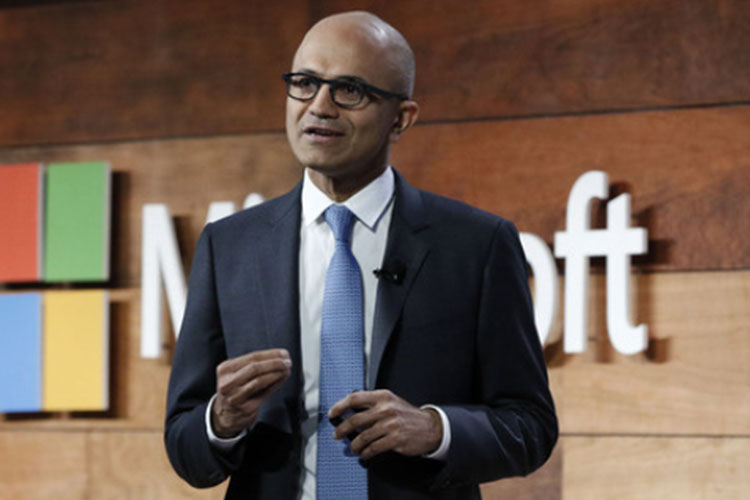
In March, Ilya Avdeev and Brian Thompson received the second of five years of funding for leading UWM’s participation in the Great Lakes Region Innovation Corps Hub (I-Corps Hub).

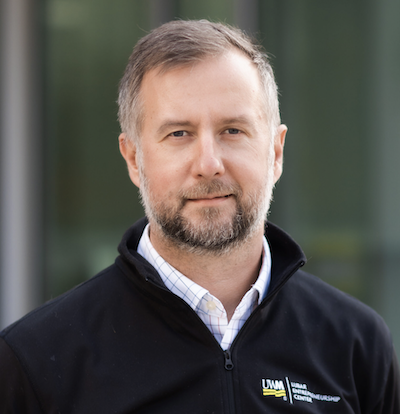
Avdeev is an associate professor, mechanical engineering, in UWM’s College of Engineering & Applied Science, director of the Milwaukee I-Corps Program, and director of innovation at the Lubar Entrepreneurship Center. Thompson is director of the Lubar Entrepreneurship Center and a member of the Milwaukee I-Corps Program’s core team.

Established in 2022 by the National Science Foundation, this I-Corps hub pools researchers at 16 universities to nurture the region’s innovation ecosystem and move more discoveries from the research lab to the real world.

Total funding for the Great Lakes Region I-Corps Hub is $15 million; UWM’s sub-grant this year is $92,672.

Goal is to train 2,350 teams

The Great Lakes Region I-Corps Hub is one of five nationally and is led by the University of Michigan. The goal is to train 2,350 teams in the next five years and send 220 teams to the in-depth National NSF I-Corps program, where participants use the scientific method to help create their business model designs and connect with potential customers to ensure the solutions they’re developing fill a pressing market need.

Avdeev has led the NSF I-Corps Site of Southeastern Wisconsin for six years. The program has trained 750 researchers and students from more than 200 translational research teams representing UWM, Marquette University, Milwaukee School of Engineering, Concordia University of Wisconsin, Medical College of Wisconsin, and a few other universities. These teams formed 35 startups and raised more than $25 million in early-stage funding and federal grants supporting commercialization of research.

UWM awarded $1.67M for role in next generation of transportation

The nation is preparing for seismic changes in transportation and UWM secured a role at the table in February with a $1.67 million grant from the U.S. Department of Transportation to advance research and education programs that address a specific challenge: promoting pedestrian and bicycle safety.

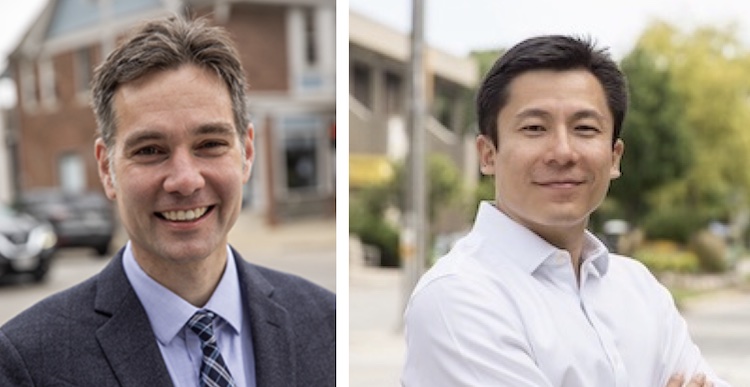
Robert Schneider (pictured, left) and Xiao Qin (pictured, right) will contribute to the Center for Pedestrian and Bicycle Safety, a DOT-funded, Tier 1 University Transportation Center (UTC), as members of a team led by the University of New Mexico. Schneider is a professor of urban planning in UWM’s School of Architecture & Urban Planning. Qin is a Lawrence E. Sivak ’71 professor of civil & environmental engineering in CEAS. More.