Spectrum News quotes Cheng in collaborative UWM research story
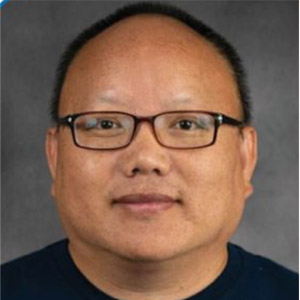
Spectrum News Milwaukee featured a story about the bacterial decontamination research of Troy Skwor, associate professor of biomedical sciences, and Qingsu Cheng, assistant professor, biomedical engineering.
Cheng, who leads a USDA grant that includes Skwor, is quoted in the segment. The USDA project aims to develop a technology that assures the quality of reclaimed water used to irrigate crops.
Currently, these alternative water sources are poorly monitored and can transmit waterborne diseases that are passed on to people who eat the crops.
Alum brings trust to wastewater treatment with ‘explainable AI’
Most of us never think about what happens after water spirals down a drain. But for the people who run wastewater treatment plants, keeping the promise of clean water is a race against time – and data.
Treatment plant operators face a major challenge: Conducting critical water-quality tests take days to complete, while operators often need to make decisions within hours.
A growing field of artificial intelligence – explainable AI, or XAI – is helping bridge that gap, said Fuad Nasir (’25 PhD Civil Engineering), a water supply specialist with the Wisconsin Department of Natural Resources.
“Operators were hesitant to use it because they couldn’t see the process for how it arrived at its prediction.”
-Fuad Nasir
During his graduate studies, Nasir delved into research involving data collection from a local treatment plant. And he noticed something important happening in the broader world of technology: “AI and machine learning were becoming used in many sectors,” he said, “but they were not using AI in wastewater treatment very much in the United States.”
A matter of trust
The problem wasn’t lack of interest – it was lack of trust.
Traditional machine learning has been compared to a black box: It takes in data and produces predictions, but, Nasir said, “Operators were hesitant to use it because they couldn’t see the process for how it arrived at its prediction.”
For wastewater operators making high-stakes decisions about chemical dosing and treatment timelines, that opacity was a deal-breaker.
That led him to explainable AI. XAI doesn’t just predict an outcome; it highlights the variables that shaped that prediction. “It reveals what’s going on in the background,” Nasir said. “You can literally visualize it when you apply XAI.”
A real-world example
A key example illustrates why this matters. Wastewater plants rely on a lab test called biochemical oxygen demand (BOD) to gauge how much organic material remains in treated water. High BOD can harm aquatic life, so operators need to adjust treatment chemicals to keep it low. But BOD testing takes five days, too long for operators to make decisions.
XAI-guided models can predict BOD using historic data, showing which factors – such as temperature, flow rate, or ammonia – are driving the levels up or down.
XAI has grown rapidly. “I’ve seen a surge of people using it in wastewater in the last few years,” he said. The medical field adopted explainable AI earlier, but wastewater research is now catching up and citing Nasir’s work in the process.
Real-world deployment will take time, he admitted, because utilities need instruments, training, and funding, but the direction is clear.
Nasir arrived at UWM in 2019 as a master’s student from Bangladesh, attracted by UWM’s strong research culture and environmental engineering faculty, including Professor Jin Li, his advisor. “UWM was ranked as an R1, a top research institution, which definitely caught my attention,” he said.
After a year, he switched to the PhD track. Today, Nasir focuses on aspects of public water systems tied to health and regulation. With AI advancing quickly, he believes technical expertise will be increasingly valuable in regulatory spaces.
His advice for undergraduates? Pay attention. “The thing about AI or machine learning is it changes so fast.”
Artist and engineer Stern’s new exhibit examines intersection and co-evolution of art and technology
What happens when artists create with artificial intelligence while also interrogating it? A new Milwaukee exhibit explores that question through sculptures, prints, interactive pieces and poetry, all born from creative collaboration with AI.
Nathaniel Stern teamed up with Sasha Stiles, who has a concurrent solo exhibit at the Museum of Modern Art in NYC to develop the exhibit “Generation to Generation: Conversing with Kindred Technologies.” Stern has degrees in both mechanical engineering and design and is a UWM professor of both mechanical engineering and visual art & design.
The exhibit invites viewers to consider the relationship and the “always-evolving dialogue” between humans and the tools we invent.
“Overall, we should neither approach with blind optimism nor crippling fear around new technologies,” Stern said. “We’re trying to nuance the conversations from a space of real understanding and use.”
Feb. 12 Opening Day Events, Kenilworth Square East Gallery
11 a.m. – noon Language as Collaborator: Co-Creating with Thinking Machines – workshop
2-3 p.m. Gallery walkthrough
3-4:30 p.m. Generations and Generativity: Post-AI Aesthetics in Practice -panel discussion
5-7 p.m. Reception
More than a theme
The answer is both, he said. The exhibit highlights human–technology interaction while also grappling with real concerns – like the environmental cost of running large AI systems.
To reduce energy consumption, the artists used AI selectively and with small datasets. For example, they trained their own diffusion model on photos of letters to create a stylized alphabet. Because the model was given minimal data, the results resemble rough, childlike handwriting – an intentional artifact that underscores the trade-offs between creativity, technology, and resource use.
This environmental tension shows up thematically as well. “We’re balancing matters of technology vs. the environment,” Stern said, noting that pieces like the Mother Computer in the installation, Weighing, hint at “Mother Earth.”
Not everything in the show was computer-driven. Some components rely on decidedly “old school” methods as a nod to technologies of the past. For Weighing, for instance, letters were cast at MetCovery Foundry in Menomonee Falls, Wisconsin, using recovered industrial waste metal. It continues the conversation around human and technology’s evolving side by side.
Is AI really original?
Another question Stern is often asked to debunk: “Is this just artwork stitched together from other people’s creations?”
The creative process, he said, is intentional and transparent with manipulation of the AI tools in nonstandard ways, to invite strategic possibilities. Viewers can decide.
In the piece TheE-Waste Land, AI is used only to extend Stern’s own experimental imagery, and all training data comes from owned sources. For this, he used Adobe Firefly’s stable diffusion –feeding in fragments of his abstract images and prompting the system to complete them.
Stiles, meanwhile, works with a large language model that she has fine-tuned on her own contemporary poetry. She treats AI as “a sounding board” – asking it for multiple sentence variations and iterating those until the results emerge in a way she is happy with.
Both artists began incorporating AI into their practices long before the current buzz. For example, Stern custom-built the motion-tracking algorithm used in the interactive installation Still Moving, predating today’s body-tracking tools such as MediaPipe.
The exhibit runs Feb. 12-20 at the Kenilworth Square East Gallery. This research was funded by UWM’s Office of Research. The Milwaukee exhibit was funded by Center for 21st Century Studies and the Lubar Entrepreneurship Center.
IPIT researchers, including students, present a bevy of papers at national conference
Researchers and students in the college’s Institute for Physical Infrastructure & Transportation (IPIT) presented more than a dozen papers at the 2026 TRB Annual Meeting in Washington DC in January.
The Transportation Research Board, a program of the National Academies of Sciences, Engineering, and Medicine, hosts the world’s largest gathering of transportation researchers and practitioners at its annual meeting.
Professor Qin and student Joely Overstreet presented their work.
Faculty members from the college who co-authored the papers are: Xiao Qin, professor, and Xiaowei Tom Shi, assistant professor, civil & environmental engineering, and Susan McRoy, professor, and Tian Zhao, associate professor, computer science. Also represented is Robert Schneider, from UWM’s urban planning department.
The list of papers and their authors are:
Rai, N.; Liang, X.; Shen, D.; Huang, S.; Shi, X.* Taming Stop-and-Go Traffic Shockwaves: Evidence from Radio-Controlled Car Experiments.
Sadeghi Koupaei, A.; Shi, X.* A Novel Surrogate Safety Measure Incorporating Detection and Communication Imperfections.
Jung, S.*; Qin, X. Data-Driven Approach to Prioritizing Emergency Facility Deployment in High-Risk Freeway Tunnels.
Schneider, R. J.*; Hemze, N.; Barbee, H.; Sveen, C.; Thorne, K.; Ogunniyi, O. E. Midblock Pedestrian Crossing Volumes and Crash Rates in Milwaukee, WI.
Schneider, R. J.*; Gu, X.; Nelson, K.; Ferenchak, N. N.; Qin, X. Neighborhood-Level Shifts in Fatal and Severe Injury Pedestrian Crashes: 2008–2012 vs. 2017–2021.
Overstreet, J.; Qin, X.*; Parajuli, S.; Cherry, C.; Li, Y. Does Height Matter? An Analysis of Contributing Factors to Tall Vehicle – Pedestrian Crashes.
Rukhsana, F.; Qin, X.*; Schneider, R. J. A Sequential Spatial-ML Framework for Interpretable Macro-Level Pedestrian Crash Modeling.
Abrari Vajari, M.; Shi, X.; Qin, X.* A Computer Vision Pipeline for Crosswalk Detection, Classification, and Quality Evaluation.
Parajuli, S.; Cherry, C.; Overstreet, J.; Li, Y.; Qin, X.* Impact of Tall Vehicles on Pedestrian Injury Severity Outcomes: Insights from Multi-State Pedestrian Crash Data.
Devadiga, M.; Abrari Vajari, M.; McRoy, S. W.; Qin, X.* Enhancing Data Accessibility Through Automated PII De-Identification in Crash Narratives.
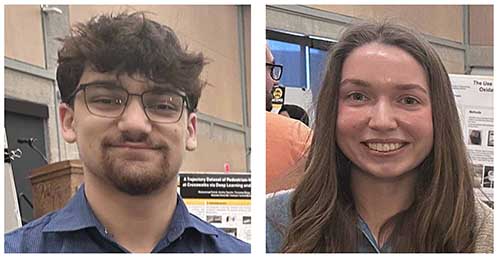
Fahad, M.; Tasnim, A.; Xiong, T.; Damaraju, A.; Zhao, T.; Qin, X.; Shi, X.* A Trajectory Dataset of Pedestrian – Vehicle Interactions at Crosswalks via Deep Learning and Roadside Cameras.
Fahad, M.; Tasnim, A.; Xiong, T.; Damaraju, A.; Zhao, T.; Qin, X.; Shi, X.* A Comprehensive Evaluation Framework for Roadside Perception Systems.
Liang, X.; Yang, C.; Shi, X.* An Unsupervised Framework for Abnormal Driving Detection Using Utility-Based Feature Sequences.
Niu featured on Spectrum News showing how AI helps improve rechargeable batteries
Junjie Niu, professor, industrial & manufacturing engineering, recently showed Spectrum News Milwaukee how elements from the periodic table are combined to improve the performance of rechargeable batteries.
Each element has different properties alone — and when combined — leading to endless possibilities. Niu’s lab is using AI to quicken the pace of finding the best properties for each battery application. Different uses require different qualities, Niu said.
PhD student and researcher M Shaikhul Islam
“It [AI] can tell you, ‘No, this is not possible. Even if you tried, you will not get the ideal result you expect.'”
The lab then tests the most promising blend of elements to validate. The chemistry must be made into a battery for this step.
The segment also featured M Shaikhul Islam, a PhD student in materials science & engineering, working in the Niu lab. He explained his research into how the element of nickel may help improve rechargeable batteries used in electric vehicles.
“My target is to increase the nickel content so that we can get a higher capacity and higher energy in one charge,” Islam said. “The vehicles can run like 6 or 7 hours. My target is to increase this to double.”
Rockwell Automation makes a new gift of $1 million to the Connected Systems Institute
Rockwell Automation is renewing its founding partnership with UWM’s Connected Systems Institute (CSI) with a new $1 million, five-year commitment, bringing its total investment to $5 million since 2017.
CSI connects engineering, business and industry partners around the industrial internet of things and recently became home to Microsoft’s first higher-ed AI Co-Innovation Lab focused on manufacturing. The collaboration supports a shared goal of preparing the next generation of manufacturing talent as the industry shifts toward AI, robotics, and software-driven automation.
Rockwell’s renewed support comes as it expands its own manufacturing footprint in Southeast Wisconsin and emphasizes the need for skilled workers.
In the past year, CSI involved more than 500 students, many of them from the college, in expanded courses and research. The institute also launched an engineering master’s degree program and completed industry-directed projects with major companies. Read the full press release.
AV expertise of two faculty tapped by local media
Two faculty members in the college were recently featured in the media, speaking on what a wider use of autonomous, or “self-driving” vehicles, in Wisconsin would look like.
On Jan. 8, Xiao Qin, professor, civil & environmental engineering, commented in a story on Wisconsin Public Radio about the relatively safety of AVs.
State law currently doesn’t allow autonomous vehicles that operate without someone in the driver seat. And the story reported on a proposed state bill that would create a permitting process for autonomous vehicles.
Qin, founder of the Safe and Smart Traffic Lab at UWM and a member of the Wisconsin Automated Vehicle External Advisory, spoke about the relative safety of AVs.
Milwaukee Magazine quoted Xiaowei Tom Shi, assistant professor, civil & environmental engineering, in its December issue on a related topic — the remaining issues that researchers are trying solve, what he calls “the long tail of AVs.”
Otieno named one of Wisconsin’s most influential Black leaders of 2025
Kudos to Wilkistar Otieno, associate professor, industrial & manufacturing engineering, who was recognized as one of Wisconsin’s 32 most influential Black leaders of 2025 by Madison 365.com.
Madison365, a nonprofit online news publication, has published annual power lists recognizing Wisconsin leaders from different racial and ethnic groups since 2015. The purpose of the lists is to “highlight the beauty of the diversity across our state,” according to Henry Sanders, Jr., the co-founder and publisher of Madison365.com.
Otieno joins notables including UWM Provost and Vice Chancellor for Academic Affairs Andrew Daire, who was recognized on the 2024 list.
See the entire list of 2025 honorees on the news organization’s website.
Students recognized at national Foundry Educational Foundation conference
Four students and two faculty members from the materials science and engineering department attended the 2025 Foundry Educational Foundation College Industry Conference, held in Chicago in November. The annual conference is FEF’s flagship recruiting and networking event, bringing metal-casting companies together with top students from FEF schools for a career fair, technical sessions, and an awards luncheon where scholarships were presented.
UWM was represented by Key Professor Pradeep Rohatgi and Associate Professor Benjamin Church, along with students Owen Bellevage (PhD candidate), Aaron Macek (senior), Carol Martinez (senior), and Swaroop Behera (PhD dissertator).
Students met with dozens of metal-casting companies and professional societies.
More than $79,000 in scholarships were distributed to students. Behera received the MAGMA Scholarship honoring John Suoboda, and Martinez received the Carpenter Brothers Endowed Scholarship, each worth $2,500.
The conference also featured student networking workshops, and an evening reception that gave students additional informal time with employers.
Fall Senior Design teams face off
Senior Design courses provide experiential learning for students that includes team work, communication, and project management.
The winning teams – one each from five departments – will be recognized at the Order of the Engineer ceremony on Saturday, Dec. 20.
The college thanks GE HealthCare, which sponsors the Senior Design competition, and to all the companies who submitted projects. See details on all the team projects.
Winning teams and their challenges are:
The winning biomedical engineering team designed a wearable infrared sleeve for vascular dialysis access that delivers far-red and infrared light to reduce clotting and stenosis.
Biomedical Engineering: “Wearable Infrared Sleeve for Vascular Dialysis Access.” Team Members:
Lakyn Graves
Mikayla McWilliams
Janelle Schultz
Advisor: Mohamed Yahiaoui Industry Mentor: Ashraf El-Meanawy, MCW
Civil & Environmental Engineering: “Elm Grove Pedestrian Bridge Project.” Team Members:
Caleb Castro
Jennifer Seerchen
Gabrielle Spitz
Advisors: Sarah Blackowski & Clayton Cloutier
Computer Science: “The OverCoded Project.” Team Members:
Zack Hawkins
Zenith Le
Ryan Nanney
Randall Sanders
Advisor: Ayesha Nipu
Electrical Engineering: “Automated Animal Feeder Project.” Team Members:
Ujjwal Dhunganam
Kayla Knudtson
An Le
Vedant Thakkar
Kristina Van Patten
Advisors: William Dussault & Jeff Kautzer
Mechanical Engineering: “Lightweight, Inverted Oil Tank for Aerobatic Diesel Applications.” Team Members:
Jeremy Anstedt
Keaton George
Peter Hanson
Advisor: Mohamed Yahiaoui Industry Mentor: Niklas Barrett, DeltaHawk