Two engineering seniors featured in UWM ‘Hired Before Graduation’ slideshow
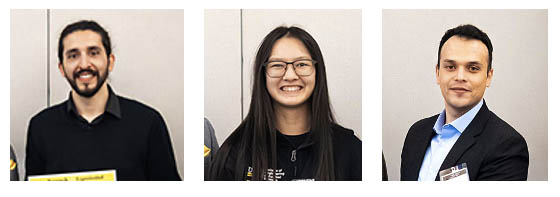
Congratulations to seniors Shriya Mehrotra, civil engineering, and Nicholas Birschbach, electrical engineering, who are featured in the UWM slideshow of students with job offers before graduation.
After transferring to UWM in 2022, Mehrotra completed a co-op as a project engineer, giving her real-world experience. After graduation, she will work for Chicago-based Power Construction where she is specializing in mass timber construction.
Birschbach is one of two UWM students who has been accepted into the Edison Engineering Development Program at GE HealthCare. In this two-year program, he will work with teams on CTs, MRIs and other medical imaging technologies. Alyssa Frisch, also electrical engineering (not pictured) was also accepted to this prestigious leadership program.
Doctoral student’s outreach efforts recognized with a unique FEF fellowship
Swaroop Behera is a strong believer in the value of student clubs and had been quite involved as an undergraduate and master’s student in materials science.
In 2019, the doctoral student was looking for an activity that could stir up interest in foundry education, while also involving the UWM student chapter of the American Foundry Society (AFS).
His idea ultimately sparked a passion for introducing the public to the metalcasting industry.
Metalcasting is a highly modern industry with ancient roots and is the backbone of the U.S. manufacturing economy. It is the process in which high-temperature molten metal is poured into a mold made of sand, metal or ceramic, to form geometrically complex parts.
Help from a national organization
Behera’s first step in was to work with the Foundry Educational Foundation (FEF), a nationwide organization whose mission is to work with universities to encourage and recruit engineering degreed talent to enter the metalcasting industry.
Since 1996, UWM has been part of the FEF university network and the organization has provided UWM with scholarships and program support, along with connecting students to jobs and internships in the industry.
FEF provided a table-top demonstration that shows all the steps needed to produce a metal souvenir from molten metal and a mold. Called Foundry in a Box (FIAB), the activity uses tin, which can easily be melted on a small stove, so it could be set up outside of the UWM Foundry Lab.
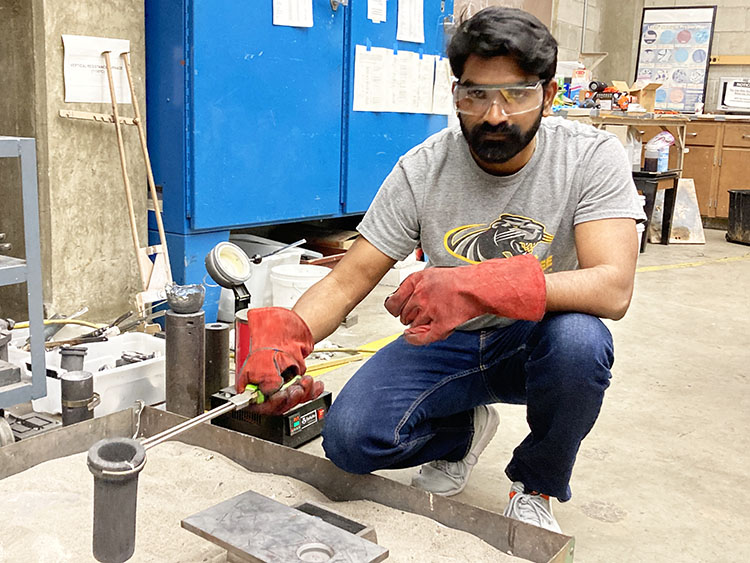
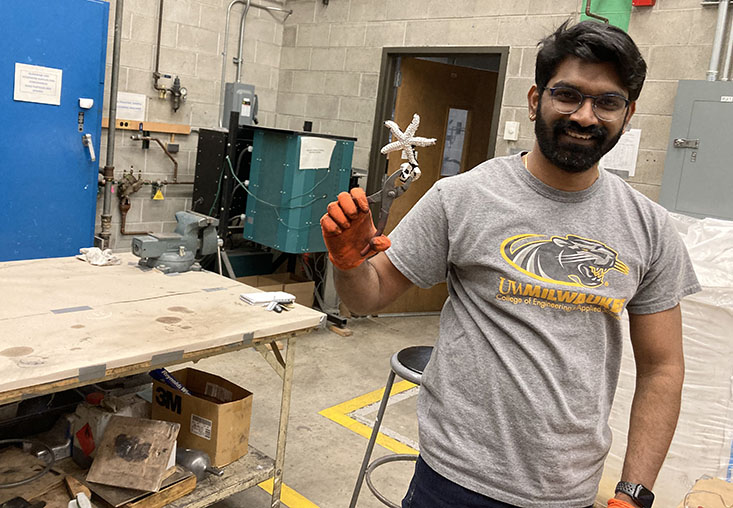
Behera, who has managed the Foundry Lab since 2021, displays his metal-casting product.
FIAB became a hit with UWM metalcasting students who, as a group, learned how to perform the demonstration and guide onlookers in creating their own metal souvenirs.
“We started doing FIAB at open houses for UWM freshman coming in, for Enquest, a camp for high school girls over the summer, Party on the Plaza and at other big events around campus,” Behera said.
A perfect show for middle and high schools
In 2021, Rohatgi, the FEF Key Professor at UWM, applied for and won the FEF’s Overture Grant, which allowed Behera and the UWM student organization to begin outreach to middle and high school students.
“With this, we began to think of different ways we could increase enrollment in materials science,” Behera said. “We bought supplies to put together FIAB sets that we could donate to middle and high schools. We got in touch with science teachers so they could bring in groups of high school students to show them materials science laboratories and have them experience foundry in a box.”
In 2023, the group engaged 95 students with FIAB, he said, almost the same number as 2021 and 2022 put together.
The FEF has been so impressed with these outreach efforts that the organization’s leadership created a graduate fellowship specifically for the UWM College of Engineering & Applied Science.
Behera was selected as the first recipient in recognition of the work he has done outside the demands of his own research and his duties as foundry lab manager. The fellowship is expected to pay $25,000 a year for three years.
“He embodies the mission of the FEF, especially now when the Baby Boomers are retiring and industry needs to replace that workforce,” said Maureen Gerard, director of resource development for FEF. “The foundry industry is robust, especially in Wisconsin. And foundries are very at the cutting edge of using new techniques and technology coming from research in areas like advance sensors and machine learning.”
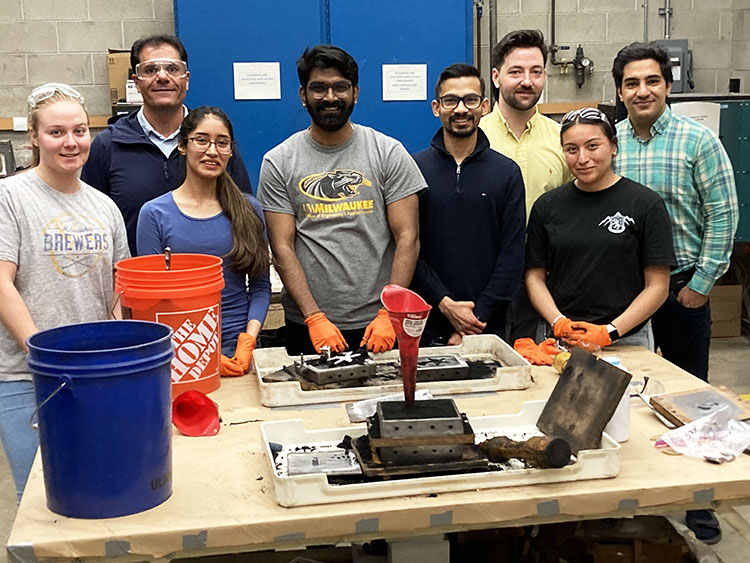
Current members of the Foundry Lab are (from left) Jenna Van Hoogstraten, Omid Ghaderi, Carol Martinez, Behera, Kaustubh Rane, Alec Buhler, Sara Huerta and Mehran Zare.
“I believe the FEF outreach program at UWM will also help increase enrollment in the Materials Science Department in our College,” Rohatgi said. “That reflects the goals of both FEF and UWM, and Swaroop Behera played an important role in this effort.”
For his part, Behera said the credit is shared.
“I could not have done this by myself,” he said. “We had built the structure, and it was all of us together who made it happen.”
UWM to house nation’s first Microsoft AI lab focused on manufacturing
A flurry of media accompanied the announcement on May 8 that Microsoft will build the nation’s first manufacturing-focused AI Co-Innovation Lab at UWM’s Connected Systems Institute.
The lab will give students hands-on learning with artificial intelligence and connect them to Wisconsin manufacturers and Microsoft AI experts. There are only six of these labs in the entire world. This will be the first one on a college campus.
Brad Smith, vice chair and president of Microsoft, made the announcement at a news conference at the company’s data center complex in Racine County that featured remarks from President Joe Biden and Gov. Tony Evers.
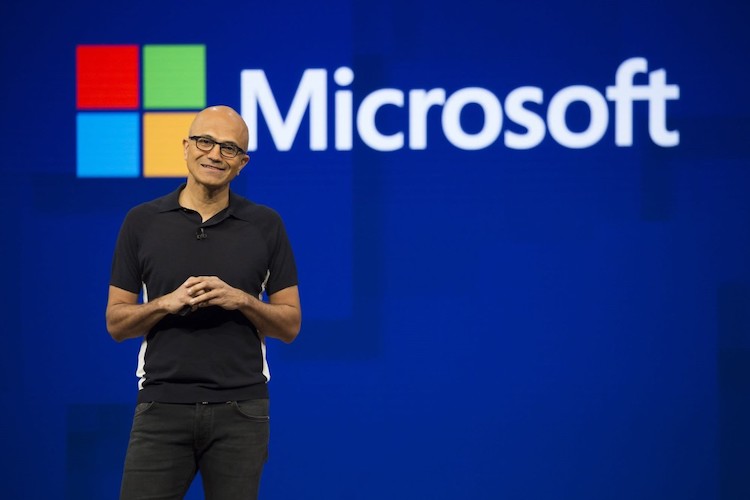
Corporate leadership at Microsoft has strong Wisconsin ties. Smith was born in Milwaukee and grew up in Appleton. Microsoft Chairman and CEO Satya Nadella is an alum of the College of Engineering & Applied Science (’90 MS computer science).
The lab is part of Microsoft’s $3.3 billion investment in southeast Wisconsin.
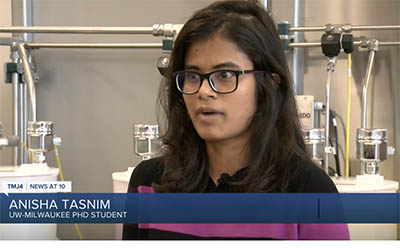
“There’s not so many schools that get the opportunity to work with Microsoft and we are one of them,” Anisha Tasnim, a PhD student in computer science, told TMJ4 News. “It’s so amazing and we will be able to work with them very closely when the project starts.”
Kevin Klocko, a senior in industrial engineering was also quoted in the TMJ4 report. Undergraduate biomedical engineering student Abhiroop Reddy Tokala was quoted in the Fox 6 report.
The CSI is a UWM-industry partnership with a mini-factory production line on campus that trains UWM students and workers in manufacturing in new digital technologies, including those that use AI. The institute also serves as a research hub where academics and industry can work together on optimizing automation.
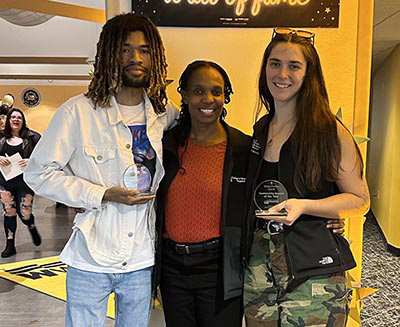
Two student organizations and two students from the College took home awards given as part of the Student Excellence Awards on April 29. The awards, sponsored by the UWM Student Leadership Programs, honored 20 individuals and six organizations.
The Society of Women Engineers was recognized with the “Community Impact of the Year” award, which is presented to an organization that has created a positive, measurable impact on our campus and/or community and embodies UWM’s values. Sydney Block, SWE president, accepted the award.
The National Society of Black Engineers shared the “Outstanding Student Organization Award” with the Student Social Work Association, which is given to an organization that has exhibited a high commitment to improving campus life at UWM. The organization will have shown unity within membership and produced strong programming. Kalen Walker, NSBE Milwaukee chapter president, accepted the award.
Sreeteja Tummala (left) and Abhiroop Reddy Tokala
Both the individual awards were shared.
Sreeteja Tummala, computer science, shared the “Outstanding Graduate Student Award” with Aubrie Gorski, kinesiology. Abhiroop Reddy Tokala, biomedical engineering, was named “Outstanding Undergraduate Student” with Drew Skyberg, business.
These awards are presented to students who have exhibited a strong commitment to UWM in multiple areas of campus life. They are recognized for their academic excellence, leadership and contributions to their community.
Happy 50th anniversary to Mr. Kahn!
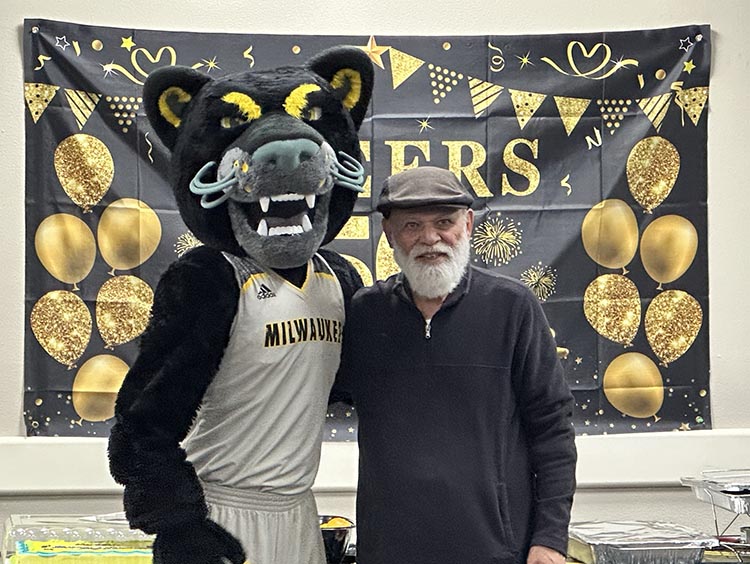
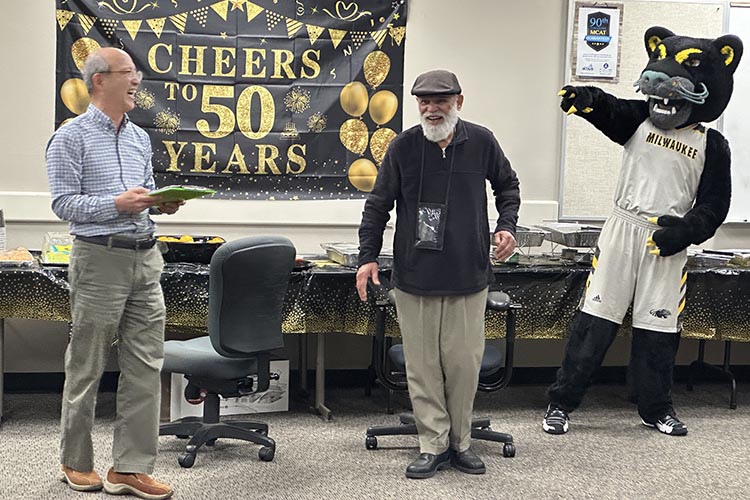
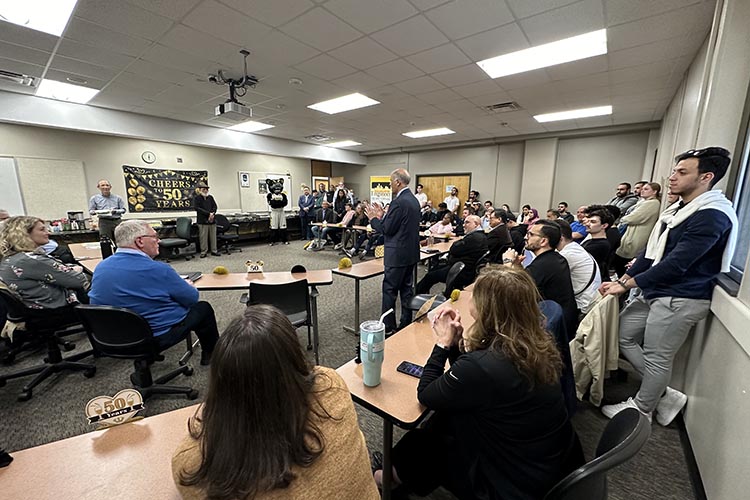
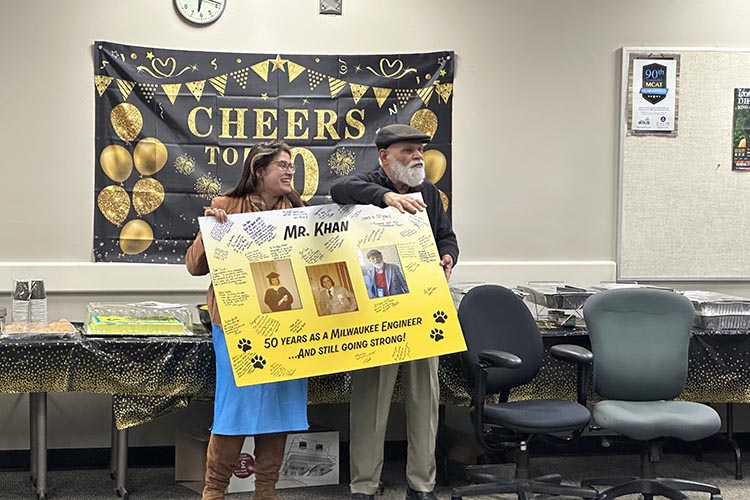
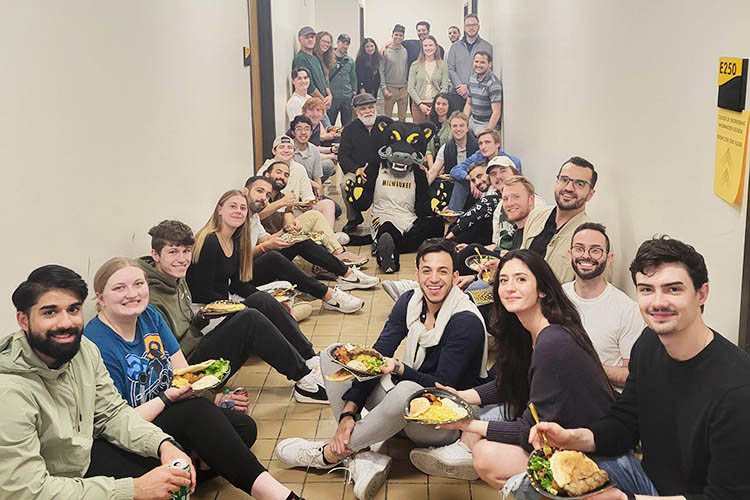
About 60 people attended a surprise party May 2 for Iftekharuddin Khan in honor of his 50th anniversary of teaching as an adjunct at the College. He has continuously taught part-time at UWM after earning his master’s degree in industrial engineering from UWM in 1974.
Khan was greeting by faculty, staff, students, family and friends, who spoke fondly about him and his influence on the College, including the following from the industrial engineering department: Chair Jaejin Jang; Rina Ghose, professor; Hamid Sefoddini, associate professor; Wilkistar Otieno, associate professor; and Matthew Petering, associate professor.
Others speaking were Professors Pradeep Rohatgi and Kishna Pillai, both materials engineering, and teaching faculty Dan Beller, who years ago had been a student of Khan’s. Associate deans Andy Graettinger and Prasenjit Guptasarma also paid tribute.
No plans to retire are in the works, Khan said.
Was it really a surprise? Khan said he suspected something when someone in the hallway wished him a happy 50th birthday! Close enough. He is pictured here with Jaejin Jang, chair of industrial engineering (left). Hamid Seifoddini (center), associate professor, industrial engineering, shares a memory of meeting Khan for the first time.Madiha Ahmed (left), teaching faculty, industrial engineering, planned the party, which included a poster board with messages from well-wishers. A portion of the group who attended the event surround Khan and Pounce (second row from top).
Outstanding Presentation Awards at UWM Undergraduate Research Symposium
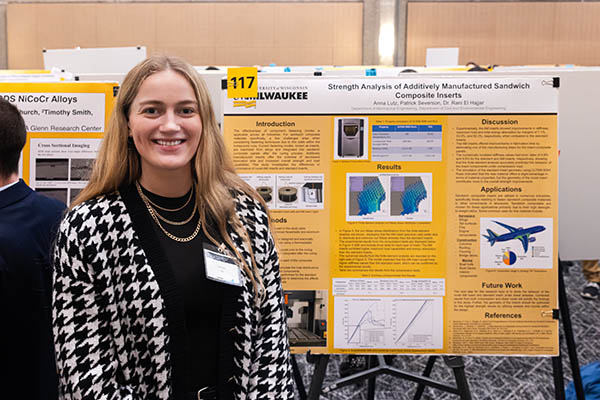
Hats off to five students from the College who were recognized with Outstanding Presentation Awards at the annual campuswide Undergraduate Research Symposium held April 26.
Sponsored by the UWM Office of Undergraduate Research, the event was an academic year-end celebration of 250 UWM students, mentored by over 130 of UWM’s faculty and research staff. The OUR brings students looking for on-campus research opportunities together with faculty mentors who have positions.
These students were among the 22 ribbon-winners:
Madisyn Adelman. Mentor: Jacob Rammer, biomedical engineering. Comprehensive Assessment of Community Mobility and Participation of Wheelchair Users Using Wearables.”
Anna Lutz. Mentor: Rani El Hajjar, civil & environmental engineering. “Strength Analysis of Additively Manufactured Sandwich Composite Inserts.”
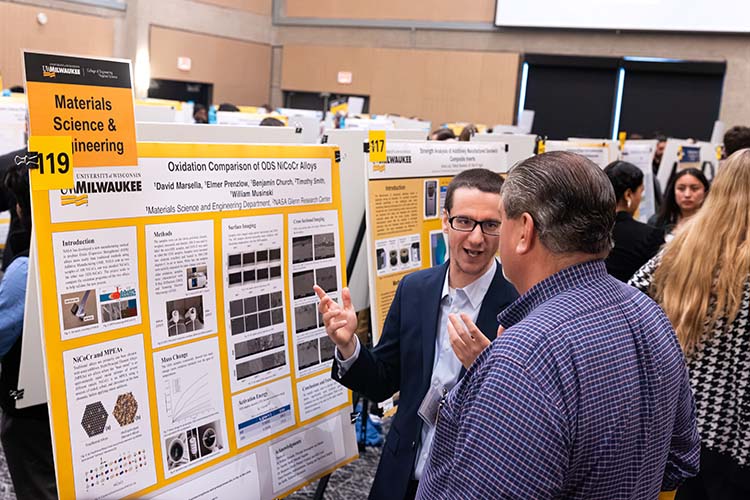
David Marsella. Mentor: William Musinski, materials science & engineering. “High-Temperature Oxidation Comparison of Additively Manufactured NiCoCr Alloys.”
Emlyn Swardenski. Mentor: Priyatha Premnath, biomedical engineering. “Segmentation of Blood Vessels in a Murine Fracture Callus.”
William Zickler. Mentor: Jerald Thomas, computer science. “The Development of Augmented Reality Software for Controlling and Observing Robotics.”
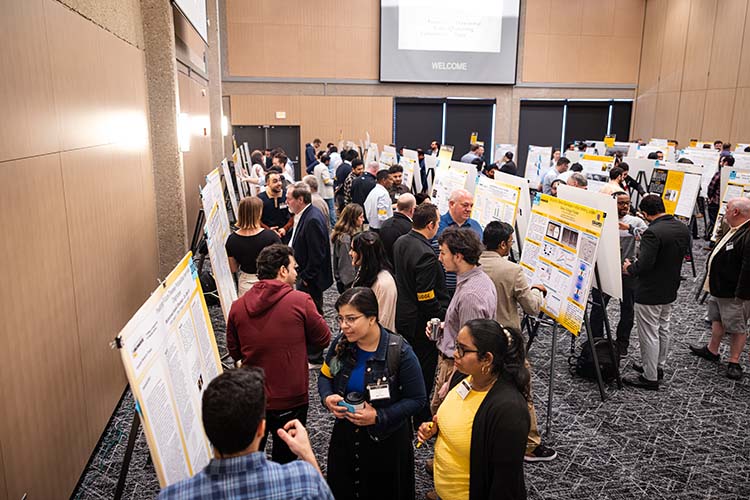
Nearly 100 submissions to the 2024 Student Research Poster Competition & Experiential Learning Expo
Congratulations to the winners of the 2024 Student Research Poster Competition and their faculty advisors. This year’s event was expanded and its name changed to the Student Research Poster Competition & Experiential Learning Expo to include a poster session for those who had experiential learning opportunities, such as internships, co-ops, study abroad or work with student organizations.
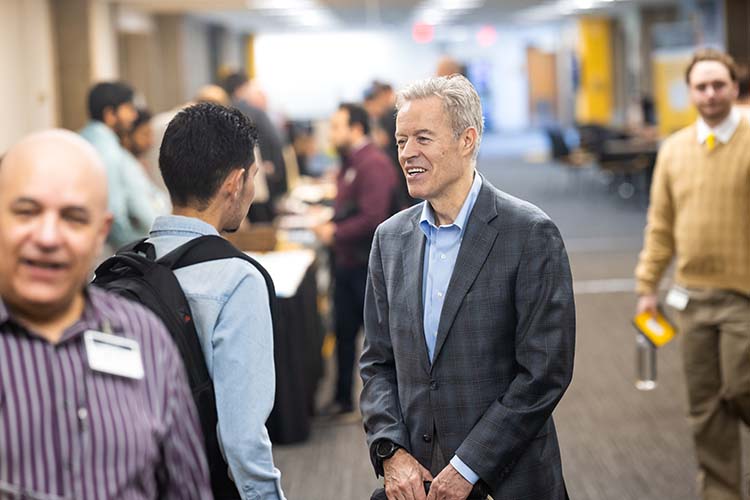
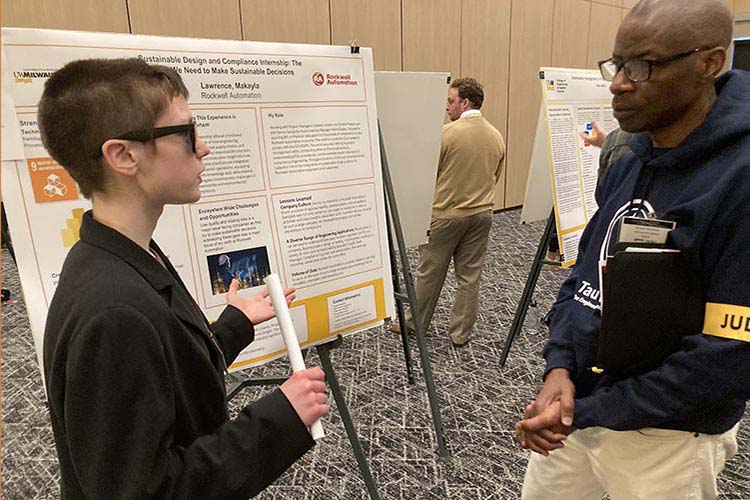
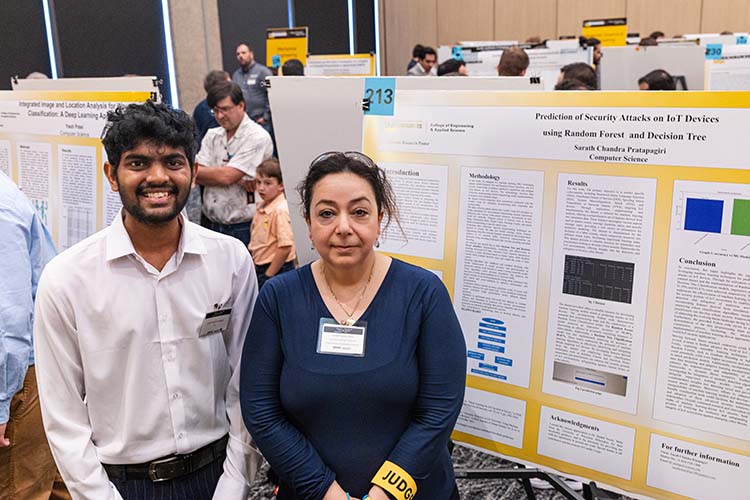
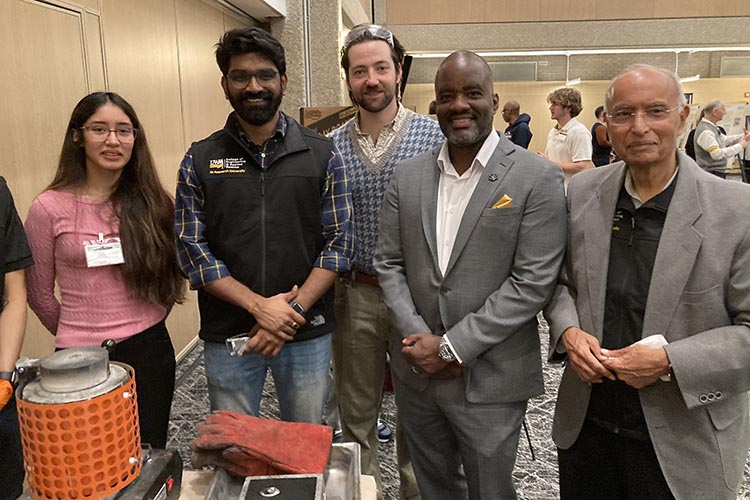
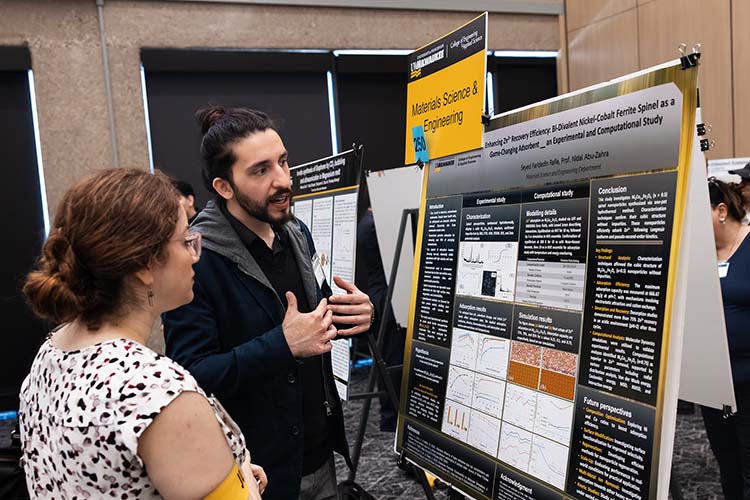
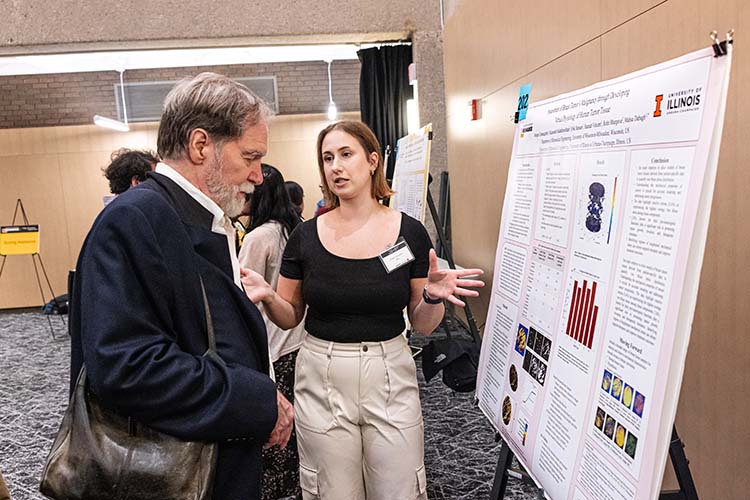
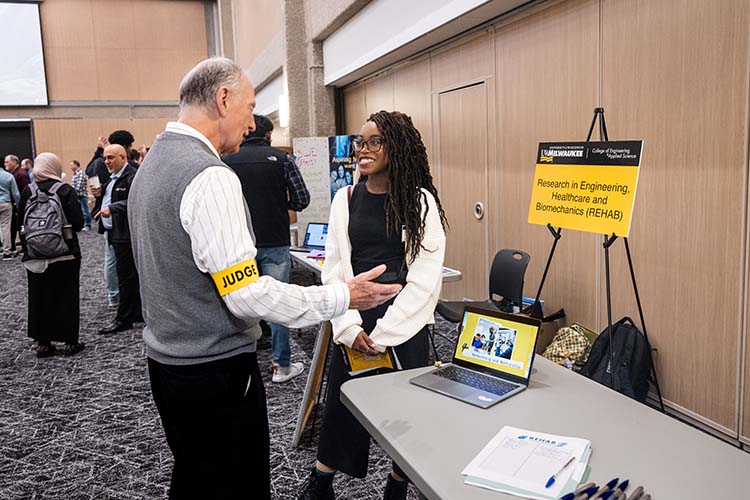
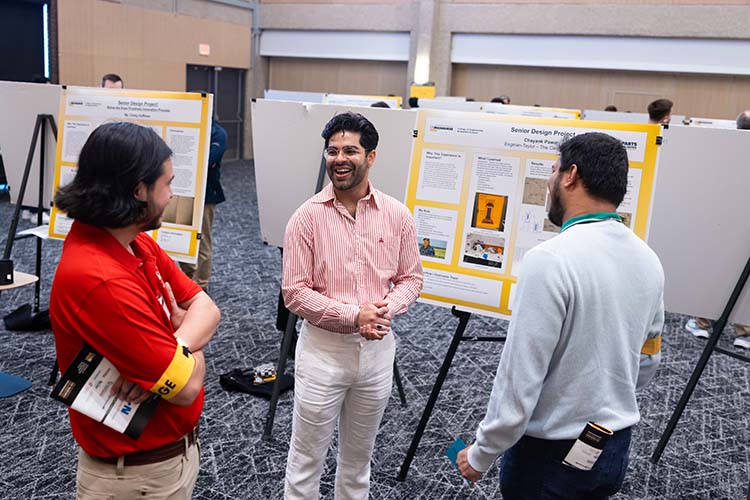
The energy was high in both the research poster competition side of the event and also the experiential learning expo side. UWM Chancellor Mark Mone stopped by to greet students, alums and judges.Makayla Lawrence explains her experience as an intern at Rockwell Automation to judge Nicaise Mbunteu, a mechanical engineer from Baxter.Sarath Chandra Pratapagiri, graduate student in computer science, displays his work with judge and assistant professor Shideh Yavary Mehr. A group including senior Carol Martinez (from left), foundry lab manager Swaroop Kumar Behera, and junior Alec Buhler demonstrated metal-casting for UWM Provost Andrew Daire and Professor Pradeep Rohatgi (far right). Seyed Faridedin Rafie, materials science & engineering, explains his work to a judge at the research poster competition. Rafie placed first in the graduate category. Morgan Suzanne Connaughton, a graduate student in biomedical engineering, banters with one of the judges. Her poster explains her use of computer simulations to understand how malignant breast tissue behaves under normal physiological conditions in the body. The work can help improve medical treatments and diagnoses.David Marsella, undergraduate in materials science & engineering, talks with one of the judges about his poster. Marsella also competed in the UWM Undergraduate Research Symposium, in which he and four other engineering students won Outstanding Presentation Awards. Judge Mark Juds talks with Grace Oluwaseun Fasipe, a grad student in biomedical engineering about the student organization REHAB.Chayank Pawar, mechanical engineering, and friends discuss the senior design project Pawar is working on. The team made a working prototype that cleans resin off the 3D printed parts created in figure 4 modular printers. The work was done for sponsor Engman Taylor.
All together, 99 students participated, with 70 research posters backed by 42 faculty advisors, both up from last year. Of the 70 posters, 21 were from undergraduates.
There were 29 new submissions on the experiential learning portion, included 19 co-ops/internships, four senior design projects, five student organizations, and one study abroad experience.
Sixty-eight volunteered as judges, including industry employees, alums, and 14 faculty members from the college. A thank-you also goes out to the eight sponsors and 25 students and staff members who supported or helped to stage this event.
GraduateAwards
First Place: Seyed Faridedin Rafie, Materials Science & Engineering Advisor: Nidal Abu-Zahra, Associate Professor, Materials Science & Engineering
Second Place: Zayeed Bin Mamun, Mechanical Engineering Advisor: Roshan D’Souza, Associate Professor and Richard and Joanne Grigg Professor, Mechanical Engineering
Third Place: Kada Kada, Mechanical Engineering Advisor: Ryoichi Amano, Professor and Joanne Grigg Faculty Fellow, Mechanical Engineering
Michael Krauski Memorial Award
Hamza Alnawafah, Mechanical Engineering Advisor: Ryoichi Amano, Professor and Joanne Grigg Faculty Fellow, Mechanical Engineering
Undergraduate Awards
First Place: Cameron Lee, Data Science Advisor: Inga Wang (Associate Professor, School of Rehabilitation Sciences & Technology)
Second Place: Nicholas Birschbach, Electrical Engineering Advisor: Shuaiqi Shen,Assistant Professor, Electrical Engineering
Third Place: Anna Lutz, Mechanical Engineering Advisor: Rani El Hajjar, Associate Professor, Civil & Environmental Engineering
Martinez wins first prize in national foundry research competition
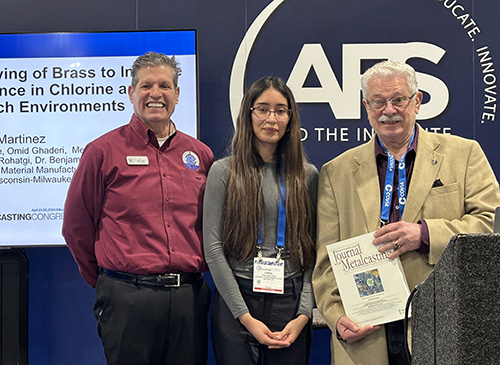
For the second year in a row, a UWM engineering undergraduate earned first prize at a national competition showcasing original metal-casting research. Carol Martinez, a senior in materials science & engineering, took the top prize at the International Journal of Metal-Casting’s Foundry Education Foundation Student Research Competition, part of the American Foundry Society’s Metal-Casting Congress, held in Milwaukee on April 24.
The conference brought together professionals from around the world to explore the latest trends and advancements shaping the metal-casting industry.
Martinez’s research poster described a project in which she modified the surface of brass, using sand casting with a mixture of alloys that improved the brass’ corrosion resistance in water distribution systems.
She received a cash prize of about $2,500 and her paper on the work will be published in the International Journal of Metal-Casting.
Martinez began working on this project in last summer with support from the Support for Undergraduate Research Fellows (SURF). Additional funding came from UWM’s Water, Equipment and Policy research center. The research was conducted under the supervision of graduate research assistants Swaroop Behera, Kaustubh Rane, Omid Ghaderi, Mehran Zare, and faculty members Pradeep Rohatgi and Benjamin Church.
Last year, Jenna Van Hoogstraten, mechanical engineering, took home the top prize when the competition was held in Cleveland, Ohio.
More accolades for alum Satya Nadella
Time magazine has named Microsoft Chairman and CEO Satya Nadella (’90 MS computer science) one of its 100 Most Influential People of 2024. For the magazine’s special 2024 Time100 issue, other leaders in an awardee’s field write about them in a short essay.
Nadella’s essayist is Mellody Hobson, co-CEO and president of Ariel Investments, who knows Nadella. She writes of him: “There’s rightful concern about unintended consequences and misuse [of AI]. That’s why it’s so reassuring that Satya is one of AI’s stewards. His thoughtfulness and humility should make us safer.”
The laurels are piling up for Nadella. In January, CNN Business chose him as its CEO of the Year for 2023, and in July last year, Time put Microsoft on its list of the 100 most influential companies of 2023.
Slavens lab hosts National Biomechanics Day at UWM
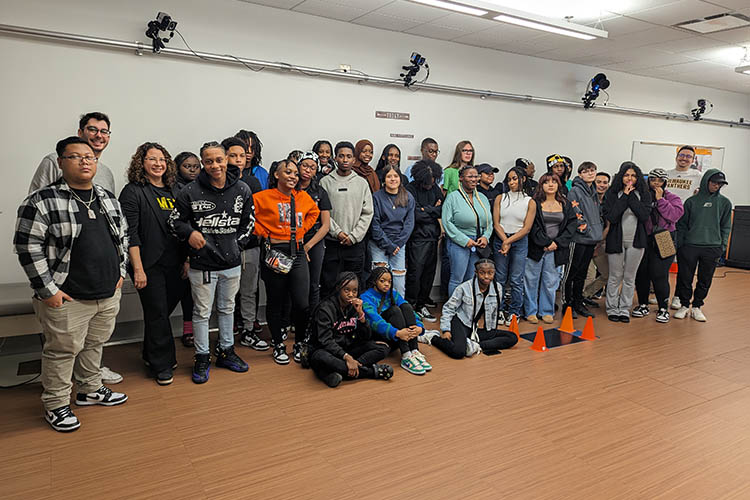
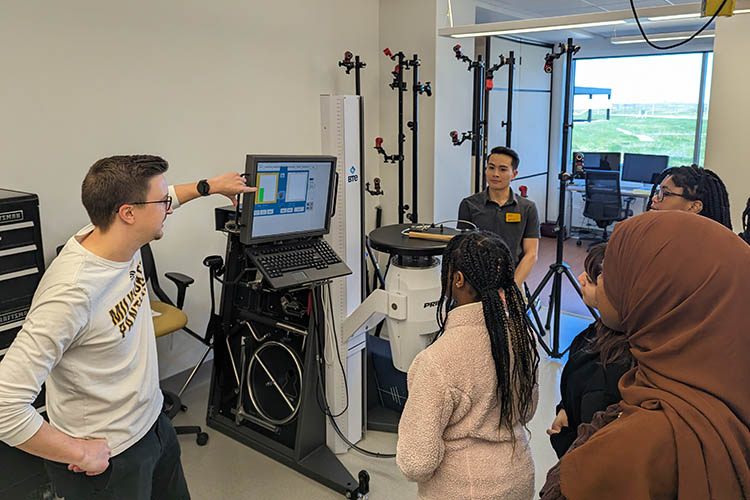
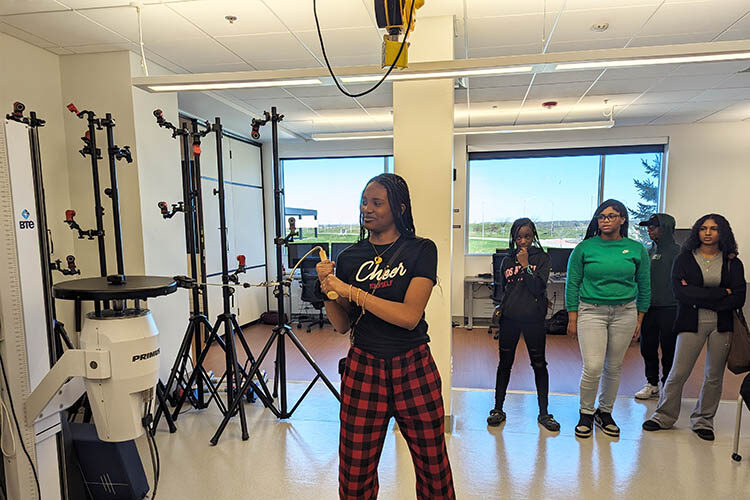
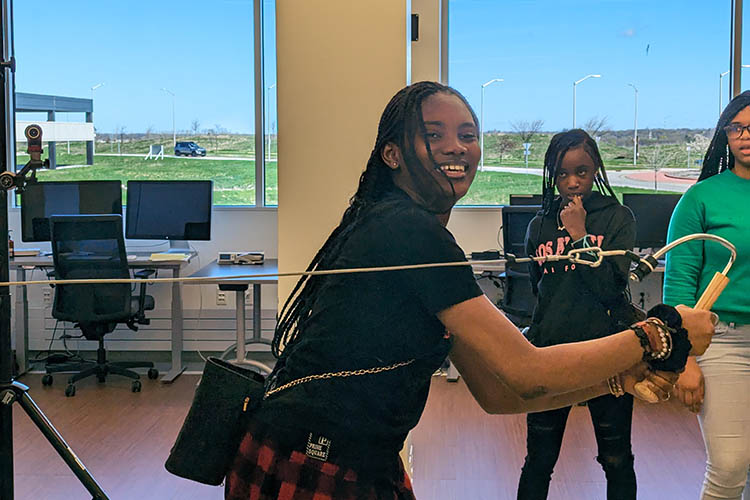
For the second year, Brooke Slavens, professor, mechanical engineering, and her lab members celebrated National Biomechanics Day, April 19, by hosting an event for 30 Milwaukee Public Schools high school students.
Participants joined in hands-on activities to explore motion analysis, strength and balance. Lab members included researcher Anthony Nguyen; Caleb Cordes, PhD student, health sciences; and Brian Patterson, master’s student, industrial engineering. Undergraduate SURF students Jake Siong, biomedical engineering, and Matthew Van De Wege, kinesiology, also assisted. (Photos by Chris Beimborn.)
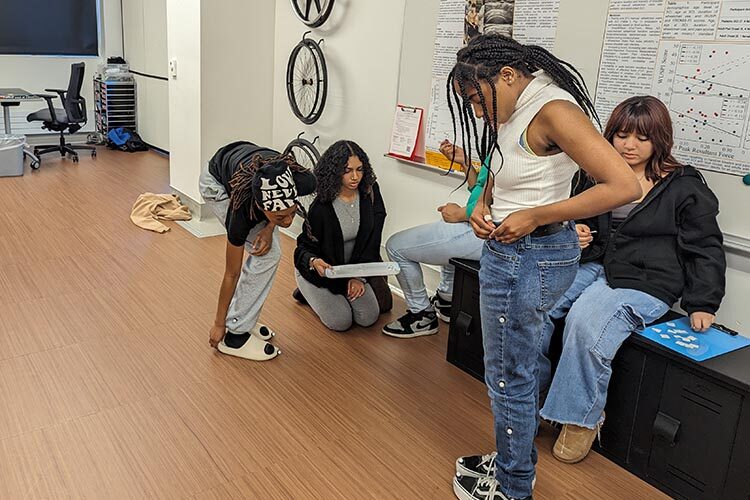
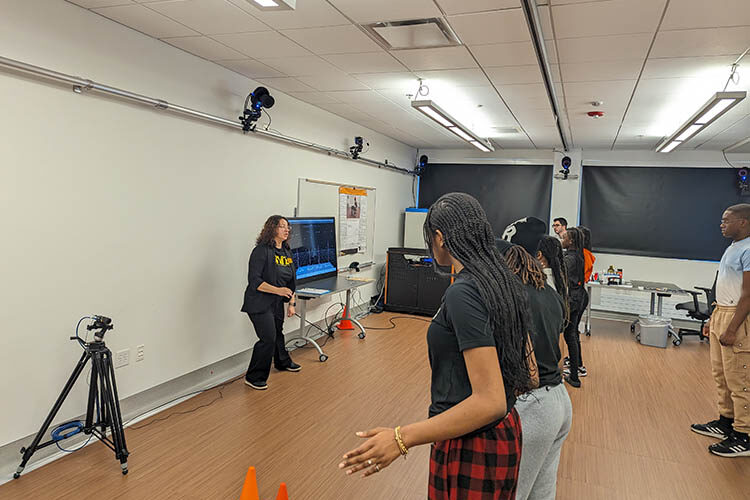
MPS high school students from Golda Meir School, who are enrolled in a Project Lead the Way class, visited Professor Brooke Slavens’ Mobility Lab at the Innovation Accelerator building.MPS students attach small reflective markers to their clothing for one demonstration. The markers show up on the computer screen at particular landmarks on the body.Brooke Slavens (left) leads the group through movements that the computer program tracks by picking up on the location of the reflective markers on their clothes. Using this, the group could compare different walking and jumping patterns. Lab member Brian Patterson (left) explains BTE Primus RS equipment, a rehabilitation machine that uses a gear system to emulate resistance. Here, the BTE is employed to look at the power generated by a participant’s baseball swing. The green bar on the screen indicates the power output behind the swing.A high school student comes “up to bat” using the BTE Primus RS equipment. A high school student comes “up to bat” using the BTE Primus RS equipment.