Theatre student takes neurodiversity research to national conference

Theatre student Emily Lappano

Peck School of the Arts students are taught the importance of research in the arts. As an arts school within a leading research university, nearly all the art that students create comes as the result of thorough research.

Elizabeth Lappano, a junior studying Theatre Production, has taken her ongoing research project on equity and inclusion in the arts to great heights. Currently focused on aspects of neurodivergence, Lappano will present her findings at the National Conference on Undergraduate Research (NCUR) 2025 in Pittsburgh this April. This is the second consecutive year that Lappano’s research was accepted for the conference.

Lappano’s project

Neurodivergence has surrounded Lappano her whole life, as she “grew up in a community of disability.” Lappano has since been diagnosed on the neurodivergence spectrum, fueling her desire to pursue a project about neurodivergence in the performing arts.

“Neurodivergence is a spectrum where everybody has their own abilities and setbacks,” said Lappano. “It’s understanding that there are people similar to you. While you’re going to have your differences, you’re not alone in what you’re going through.”

Lappano’s project, “Neurodivergence in the Arts: How A Neurodivergent Brain Creates, Performs, and Designs,” includes research on famous artists who identify as Neurodivergent and their struggles and triumphs with the diagnosis. The project also interviews current PSOA students, including actors in an upcoming production.

“This project is trying to identify successful neurodivergent artists so people can feel that they are not the only ones suffering with the problems that can come with neurodivergence,” said Lappano.

This project aims to explore the ways artists create, perform, and design their work, investigating the relationship between certain functions of the brain and how those functions affect artistic expression.

Lappano, wearing a pink blazer, poses infront of a presentation that says, "Inclusivity and Accessibility in Theatre."
Lappano at the National Conference on Undergraduate Research in 2024 | Submitted photo

Lappano has not only collaborated with her PSOA student peers but has worked with UWM’s Accessibility Resource Center and City University of New York (CUNY) Applied Theatre students who are researching how to properly facilitate theatre with neurodivergent students.

The project has been supported by Lappano’s mentor, Ralph Janes (Teaching Faculty III, Theatre Education & Directing), who has been working to improve accessibility and inclusivity in theatre for several years.

Lappano presented work at NCUR last year, focusing on visually impaired patrons’ experience in the performing arts. Returning to the conference is important to Lappano’s desire to spread the message of improving inclusivity in the arts.

“I think it’s such an important message that needs to be talked about,” said Lappano. “My experience isn’t going to be everyone’s experience, but I’m excited to talk about my experience and what other students have gone through.”

Research is essential to the arts

Throughout her time at PSOA, Lappano has been a strong example of how research is essential to the arts.

“Arts as we know it is often visual or performance-oriented,” said Lappano. “All the things that go on behind the scenes are built on research. Research allows us to evolve our pieces. It allows us to expand what we’re working on and make it deeper.”

Lappano will use her research in the theatre department’s production of “The Curious Incident of the Dog in the Night-Time,” which centers on a character who appears to be neurodivergent. Lappano is responsible for the dramaturgy for the cast so they can approach this story with empathy and understanding. Plans are also underway for a display of Lappano’s research on famous neurodivergent artists and interviews with students and faculty who identify as neurodivergent or have worked closely with students on the spectrum.

Throughout her extensive research, Lappano credits faculty members Ralph Janes, Robin Mello (Professor, Theatre), Christopher Kurtz (Teaching Faculty II, Scenic Production), and Steve White (Associate Professor, Design & Production) for being helpful and supportive resources.

“My professors are some of the most accepting and open people I’ve ever met,” said Lappano. “They truly want to see their students succeed in any way possible… That support in Peck is so important because it helps you remember you’re not the only person fighting to succeed.”

As for Lappano’s project, she described that she does not see an endpoint. Instead, she hopes to continue her research to ensure that the arts change in tandem with the evolution of society’s understanding of neurodiversity.

“Our approach to inclusivity and accessibility needs to evolve over time,” said Lappano. “There are goals we can meet along the way, but there’s never that finish line that we can cross because we have to constantly change with our ever-changing world.”


Story by Jason McCullum ’25
UWM Alumni Association honors PSOA alums for lifetime and early career achievements

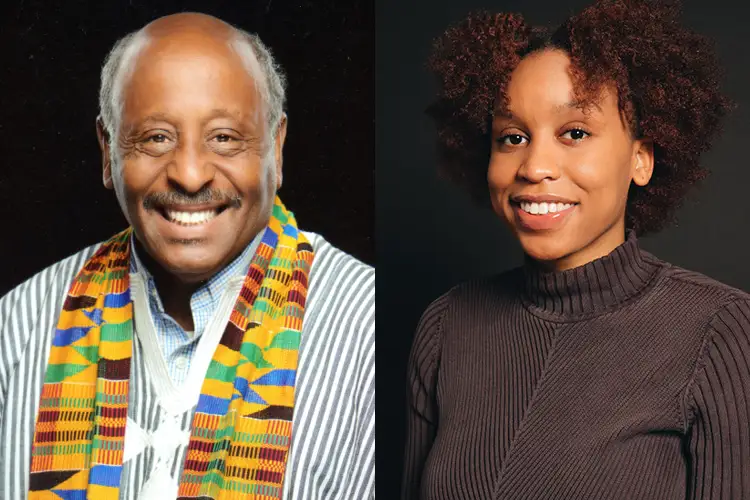
Side by side Head shots of Clayborn Benson and Victoria (Tori) Isaac.

Clayborn Benson (BFA 1987, Film; MA 2024, Public History) was recently honored with the Lifetime Achievement Award by the UWM Alumni Association. Victoria (Tori) Isaac (BA 2021, Dance and Sociology; MA 2023, Sociology) received the Graduate of the Last Decade (GOLD) Award.

Clayborn Benson ’87, ’24

Clayborn is an award-winning broadcast journalist, historian and community leader. After 39 years with Milwaukee’s WTMJ-TV as a photographer, editor and producer, he retired in 2007 to focus on his second career as founder and director of the Wisconsin Black Historical Society/Museum.

Benson, dressed in a suit, poses next to Dick Blau, whom has his arm around Benson/
Clayborn Benson, right, poses with Professor Emeritus of Film Dick Blau at the UWM Alumni Awards Evening. Benson earned the Lifetime Achievement Award and Blau was his nominator. | Photo by Elora Hennessey

Clayborn produced documentary series, including “Black Communities,” during his TV career and continues to tell the story of the Black legacy in Wisconsin as one of the state’s most influential voices. He serves on the board of the Milwaukee County Historical Society and the State Historical Society of Wisconsin’s Historical Records Advisory Board. He also serves on the City of Milwaukee Street and Building Renaming Committee.

He is an emeritus member of UWM’s Alumni Association board and a past president of the Association of African American Alumni. Clayborn’s many awards include the Living Legacy Award from the city of Milwaukee, an Emmy-Silver Circle Award from the National Academy of Television Arts and Sciences regional chapter, the Hall of Fame Award from the Milwaukee Press Club and the Key to the City Award from former Milwaukee Mayor Tom Barrett. 

Victoria (Tori) Isaac

Isaac is an accomplished dancer, educator, and choreographer at Turning Point Dance Studio in Elmwood Park, Illinois. Her interests in dance and sociology developed as an undergraduate student at UWM.

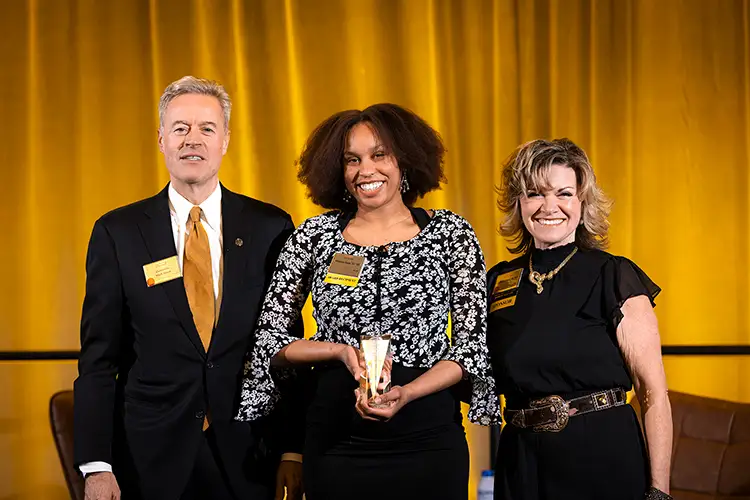
Victoria received her award at the UWM Alumni Awards Evening, Friday, Feb. 21, 2025, at the Pfister Hotel in Milwaukee.
Victoria (Tori) Isaac, center, received her GOLD Award at the UWM Alumni Awards Evening. She is seen here with Chancellor Mark Mone and Alumni Board Chair Michelle Putz. | Photo by Elora Hennessey

During her time at UWM, Isaac participated in the Ronald E. McNair Postbaccalaureate Achievement Program, a program aimed at increasing the number of underrepresented students pursuing graduate studies.

This has led her to pursue a doctorate at the University of Illinois Chicago (UIC), where she explores the Black community, education, and religion. Her work in the Chicago area explores the intersection between creative expression and community building.

Isaac performed and taught dance in Milwaukee for many years, focusing on hip-hop, tap, contemporary, and improvisation, including at Danceworks MKE and Signature Dance Company, as well as a lecturer at PSOA. She also collaborated with Maria Gillespie (Professor and Graduate Program Representative, Dance) to develop a movement education program for incarcerated youth.


UWM’s Alumni Awards reflect on the contributions and accomplishments made by the most exceptional UWM alums.

“The UWM Alumni Association is privileged to represent over 207,000 Panther alumni living in 110 countries around the world,” said Board Chair Michelle Putz in the UWM Alumni Awards Evening program booklet. “Our alumni make a difference in their communities both near and far, though we feel especially fortunate that more than 80% of graduates from the last decade have chosen to remain in the state of Wisconsin.”

Benson and Isaac were honored alongside other award recipients at the UWM Alumni Awards Evening at the Pfister Hotel in February 2025. Learn more about the UWM Alumni Awards on the University Advancement website.

Master of Music student takes First Prize at Columbus Guitar Symposium

Master of Music student Alberto Daniel Quintanilla recently won First Prize at the prestigious Columbus Guitar Symposium.

Quintanilla’s victory helps cement PSOA’s reputation as a leader in classical guitar education, as the Columbus Guitar Symposium is considered a “proving ground for the finest young guitarists,” according to Professor René Izquierdo. This achievement highlights both the excellence of UWM’s classical guitar education and Quintanilla’s exceptional artistry.

Three PSOA alums receive 2025 Nohl Fellowships 

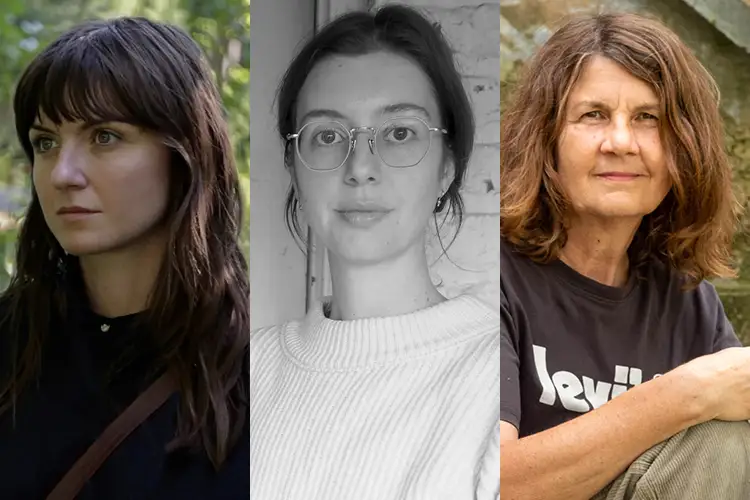
Sarah Ballard, Alyx Christensen and Michelle Grabner

The Peck School of the Arts is once again well represented among this year’s Mary L. Nohl Fund Fellowships, with alum Michelle Grabner (BFA 1984; MA 1987) and alum/lecturer Sarah Ballard (MFA 2024, Cinematic Arts) receiving fellowships. Alyx Christensen (BA 2015, Art), as part of the artist collective Open Kitchen, also received a fellowship.

The Greater Milwaukee Foundation’s Mary L. Nohl Fund Fellowships for Individual Artists program awards funds for artists across a variety of visual arts fields. These funds aim to help artists create or finish work in the greater Milwaukee area.

For this year’s round of fellowships, Grabner was one of two recipients in the Established Artists category receiving a $20,000 fellowship. Ballard and Open Kitchen were among the three recipients in the Emerging Artists category receiving a $10,000 fellowship.

“The Nohl fellowship supports artists who have dedicated their lives to experimentation and the artistic imagination contributing to cultural discourse both locally and at large,” Grabner said.

Grabner has been a major name in both Wisconsin and American art for decades. She specializes in painting, ceramics, and cast metal.

“For 40 years, Grabner’s work has rearticulated familiar patterns and commonplace formal arrangements,” the Nohl jurors wrote, as reported in the Milwaukee Journal Sentinel.

When asked about her work and the award, Grabner said she believes the Nohl Fund jurors “recognized [her] commitment to ideas and to experimentation” throughout her impressive and diverse body of work.

The Mary L. Nohl Fund seeks to amplify the work of underrepresented communities, a mission that resonates with Ballard.

“The fund’s mission reminds me of the importance of uncovering these overlooked stories and the possibility of connecting them to broader, collective experiences that resonate with contemporary ‘societal illnesses,’” Ballard said.

Ballard has been immersed in the Peck School of the Arts culture for some time as both a Master’s recipient and current lecturer in the Department of Film, Video, Animation & New Genres (FVANG). Ballard said that the school’s community of artists has been a positive contributor to her work and success. 

“The support of the FVANG faculty and extended community was vital to my growth as an artist and played a significant role in my ability to apply for and receive the Nohl Fund award,” said Ballard. “The connections I’ve made here continue to inspire me and reinforce the importance of cultivating a supportive artistic community.”

Open Kitchen (OK) is a Milwaukee-based art collective founded in 2017 by Rudy Medina and Alyx Christensen with Alan Medina. Through events, installations, and a residency program, OK fosters public dialogue on food, identity, and ecology.

In 2020, OK became artists-in-residence at Lynden Sculpture Garden where they steward the Cultural Garden and Lynden Apiary, exploring methods of growing diverse foods and flora that integrate Indigenous environmental knowledge.

According to the Milwaukee Journal Sentinel, this year’s 22nd Nohl Fund competition drew 157 applicants with five individuals receiving fellowships. These five Milwaukee-based winners will be a part of a Haggerty Museum of Art exhibit in 2026.

In addition to Ballard and Grabner, two Nohl finalists also have strong PSOA connections. Assistant professor and alum Ben Balcom (MFA 2015, Performing Arts) was a finalist in the Established Artist category, while alum Michael Lagerman (MFA 2021, Art) was a finalist in the Emerging Artist category.

Sarah Ballard, Full Out, 2025 16mm > digital | 5.1 and stereo
Sarah Ballard, Full Out, 2025 | Photo via Nohl Fund
Michelle Grabner; Untitled, 2023
Michelle Grabner; Untitled, 2023 | Photo via Nohl Fund
Food assembled on a table
Open Kitchen; Milwaukee-masa-mole-mill! (Mmmm!), 2022 | Photo via Nohl Fund

Story by Jason McCullum ’25
Editor’s Note: This story has been updated to include Alyx Christensen, who as part of Open Kitchen, also received a 2025 Nohl Fellowship

MKE Film Black Lens returns with PSOA alum curating lineup

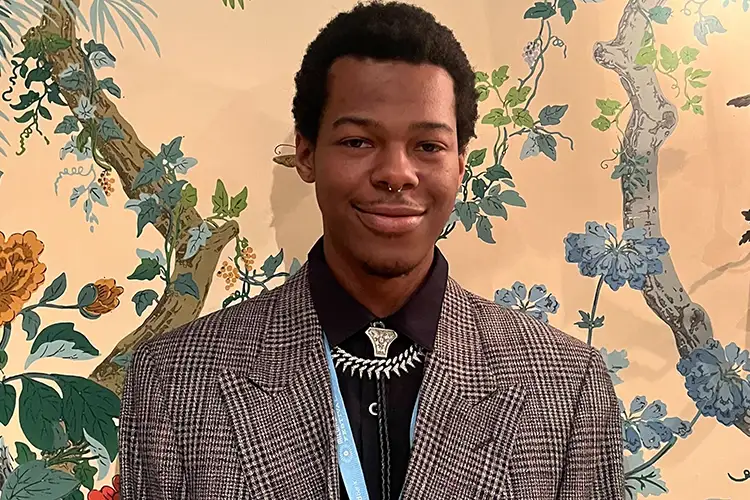
Ty Williams

Milwaukee Film’s Black Lens series is programmed this year by Peck School of the Arts alum Ty Williams (BFA 2020, Film). Williams, who is also an assistant cinema manager, has worked with MKE Film since 2019 while he was a student at UWM. Before that, Williams worked at UWM’s Union Cinema.

The ongoing series is a favorite among viewers of all backgrounds but aims to showcase diverse identities and perspectives from the Black community. 

“The major goal of Black Lens is to highlight the fact that there are so many Black stories out there,” said Williams. “There are so many Black lives who have contributed to their communities… and their stories are important and deserve highlighting.” 

Williams described that Black Lens aims to highlight Black filmmaking on a global scale, with work from Black filmmakers across America, Europe, and Africa.  

Black History Month Film  Series poster

When curating the lineup for Black Lens during Black History Month, Williams sought to select films from multiple genres, including romance, thriller, and documentary. He explains that this was done to ensure that everyone can enjoy a film this month, regardless of their genre preference. 

“I was looking at a lot of different types of films,” said Williams. “I wanted to create a group of films that are accessible to all types of people so that anybody who looks at the grouping of films has at least one thing they like.” 

This year’s lineup includes well-known films such as Do the Right Thing, Get Out, and Malcolm X. When asked about his personal favorite, Williams opted for Obsessed, a 2009 horror romance starring Beyoncé and Idris Elba. 

“I keep describing it as an elevated Hallmark movie,” said Williams. “It’s cheesy and corny, but it’s the perfect Valentine’s Day movie.” 

During Williams’ time as a PSOA student, he was involved with the Milwaukee Underground Film Festival (MUFF), where he first went through the process of curating a film festival lineup. During this time, Williams learned how to take an unbiased approach to film curation. 

“MUFF was a really good experience all around in getting to know how the film festival process works,” said Williams. “It really changed my perspective on looking at curating films as an art form, which I hadn’t previously considered.” 

As the February Black Lens lineup nears the halfway point, Williams reflected on how grateful he is that these films help bring people together. 

“The feeling of being out with people in your community and experiencing something together through the love of film is a really fun thing,” said Williams. “You get to share something with other people who you may or may not have ever thought that you would interact with.” 


To read more about Black Lens and their current Black History Month lineup, visit the Milwaukee Film website. 


Story by Jason McCullum ’25

Dance professor’s UWM-funded project featured in Milwaukee Magazine

Maria Gillespie performs in "Wild Tongue" with long-time collaborators Kevin Williamson and Nguyên Nguyên

Maria Gillespie’s (Professor, Dance; Graduate Program Representative, Dance) ongoing project “Wild Tongue,” which was funded in part by a UWM Advancing Research Creativity (ARC) Grant, was recently featured in a Milwaukee Magazine feature.

“Wild Tongue” stems from Gillespie’s decades-long collaboration and friendship with Los Angeles-based artists Nguyên Nguyên and Kevin Williamson. The ARC grant has allowed the trio to split their time between Los Angeles and Milwaukee to work on this piece.

“I moved from Los Angeles to Milwaukee in 2012,” says Gillespie in the Milwaukee Magazine feature. “There was culture shock, and there was climate shock for me. But I think more than anything it was leaving the chosen family of these two friends.”

To read more about “Wild Tongue,” visit the Milwaukee Magazine website.

To read further about Gillespie and the ARC Grant, visit the PSOA News & Stories website.

Film alum composes music for new Chicago play

Scott Cary (BFA 2014, Film) composed the music and lyrics for ‘Tales of the Ten,’ an adaptation of Boccaccio’s The Decameron. The play premiered on Feb. 11 as part of the New Works Festival at the Italian Cultural Institute of Chicago.

Cary and playwright Dan Zellner will continue to develop the play for university productions.

To read more about “Tales of the Ten,” visit the Italian Cultural Institute of Chicago website.

UWM String Academy student makes history at Bucks game

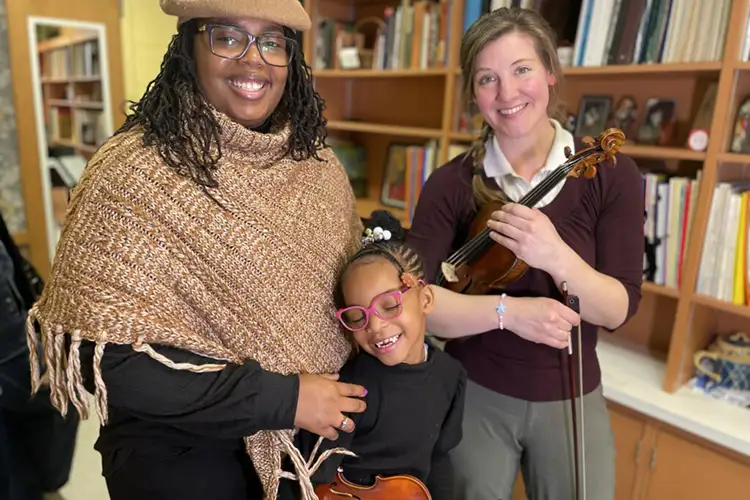
Heidi Barker - Violin Teacher UWM String Academy With Victoria and Danielle Washington

Victoria Crowley-Washington, a six-year-old violinist also known as the Wavie Princess Victoria, recently made history by becoming the youngest African American musician to perform the Black National Anthem at a Milwaukee Bucks Game.

“I get to inspire other people to play the violin—young people, grown-ups, kids, babies—all kinds!” Victoria said in a TMJ4 interview.

Crowley-Washington has only been playing violin for two years, studying with Heidi Barker (Lecturer, Pre-College Violin and Viola) at UWM’s String Academy.

“I think excitement is my main feeling about it,” Barker told TMJ4. “I’m so thrilled for her, thrilled that people get to hear her hard work, her music—just thrilled to be part of it myself.”

To watch the segment and learn more, visit TMJ4.

Art alum’s life and jewelry featured in MKE Lifestyle

Basha Harris

Basha Harris (BFA 2016, Art) was recently in an MKE Lifestyle feature that discussed her jewelry work showcased in the John Michael Kohler Art Center’s museum shop in Sheboygan.

The feature details Harris’ work and life that led her to Milwaukee, including a stint where she worked out of New York City.

“I worked at a jewelry studio that introduced me to the jewelry district there, and showed me all these pockets of industry knowledge about gem jewelers, stonecutters, casters, things that made me feel like making jewelry full time is possible,” says Harris in the MKE Lifestyle article. “I worked for an illustrator who wanted to make and sell jewelry inspired by her illustrations. She needed lots of help with construction, so I was doing all that for her.”

To read more about Basha Harris’ work, visit MKE Lifestyle.

How the Experimental Tuesdays lineup stays fresh after 20 years

Students attend Experimental Tuesdays

As the Spring semester rolls on at PSOA, so does the latest run of Experimental Tuesdays, a free weekly screening series that showcases artist-made films and videos.

Founded by the late Carl Bogner, Experimental Tuesdays has been hosted by the Department of Film, Video, Animation, and New Genres in collaboration with UWM Union Cinema for more than 20 years, running throughout both the Fall and Spring semesters.

Experimental Tuesdays is programmed by a committee made up of FVANG faculty members with participation from adjunct faculty and academic staff. Ben Balcom (Assistant Professor, FVANG) is at the helm. Balcom believes the series is a strong reflection of the films that are most often analyzed by FVANG students.

“The history of our department is very intimately entwined with the history of experimental film,” said Balcom, adding that the program strives to “challenge the conventions of mainstream commercial narrative cinema.”

When it comes to curating the lineup for Experimental Tuesdays, the program mixes contemporary work alongside repertory work.

“What we’re attempting to do is bring a handful of artists that represent a provisional portrait of the landscape of contemporary film,” said Balcom. “It’s really about what we as a committee feel like is possible… It’s sort of unpredictable.”

Ben Balcom, wearing blue jeans and a green, button-up shirt, smileas while sitting in the Union Cinema.
Ben Balcom | Photo by Cameron Wise (BFA Film)

Each Experimental Tuesdays’ lineup includes work from the Cinema Arts Archive, UWM’s 400+ film catalog made up of predominantly artist-made experimental films on 16mm.

Many of the chosen films are more historical. However, Balcom notes that the films screened are carefully selected to ensure that students develop an understanding of both past and modern films.

“We show a balanced selection of contemporary work and historical works from our UWM Cinema Arts Archive as a way to offer context for the more contemporary and emerging artists that we’re showing,” said Balcom.

The wide selection of films screened at Experimental Tuesdays allows students to express a range of thoughts about the work being shown.

An example of this that stood out to Balcom was screening the film Ten Skies by James Benning, a 100-minute movie made up of 10 uninterrupted shots of the sky at different locations and times. While Balcom describes this movie as “infamously difficult,” he observed students taking a lot out of the viewing experience.

“What was most rewarding is hearing how many students spoke to their feelings for the film changing while it unfolded and how many felt that they understood something new and unique about the power of cinema after seeing something as novel as that,” said Balcom.

Experimental Tuesdays also features several guest speakers each semester, with this semester including renowned film directors Peter Rose and Alee Peoples, animator James Mercer, and many others.

Milwaukee’s renowned film community is heavily built on creating independent work that allows filmmakers to flex their talents and creativity. Because of this, Experimental Tuesdays serves as a reflection of what is possible for UWM film students as artists beyond the industry, with the series seeking to expand filmmakers’ horizons.

“What I hope students experience is that Experimental Tuesdays is known by people all across the city,” said Balcom. “I would say this is one of the pillars of the Milwaukee film community.”


Learn more about the series and its current lineup on the Experimental Tuesday webpage.


Story by Jason McCullum ’25

Film alum’s directorial debut now available to stream

A still from All That Glitters

Noah Meister’s (BFA 2021, Film) directorial debut, “All That Glitters,” is now able to stream, as featured in an article from The Verona Press.

“All That Glitters” is described as a 75-minute crime drama that follows a high school student “going through the motions” of life that leads him to a substance-fueled world.

The article discusses Meister’s inspiration from acclaimed director Sam Raimi when making his first feature film.

“I always found his story really inspiring, because his first movie was made on this shoestring budget with a bunch of friends,” Meister explained in his Verona Press feature. 

To read more about the production and creation of “All That Glitters,” visit The Verona Press.

Sculpture alum involved in ‘greatest snow on earth’

Photo from Winterfest

Mike Martino (BFA 1977, Art: Sculpture) is involved in the 30th annual Winterfest, which features complex snow sculptures that serve as the festival’s centerpiece. These sculptures are being built in Lake Geneva.

Martino is competing on one of the Wisconsin teams that are sculpting a piece called “Inner Child.” According to a Journal Times article, the inspiration for “Inner Child” comes from Martino and his team’s early childhood experiences: “some are comforting; some are traumatic.”

Read more about Martino and the Winterfest competition on the Journal Times.

Students take fiber art’s resurgence into a fine art context in current exhibition

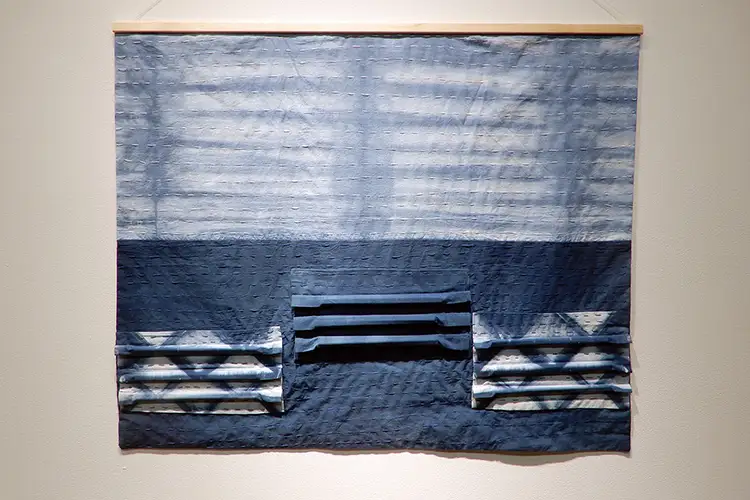
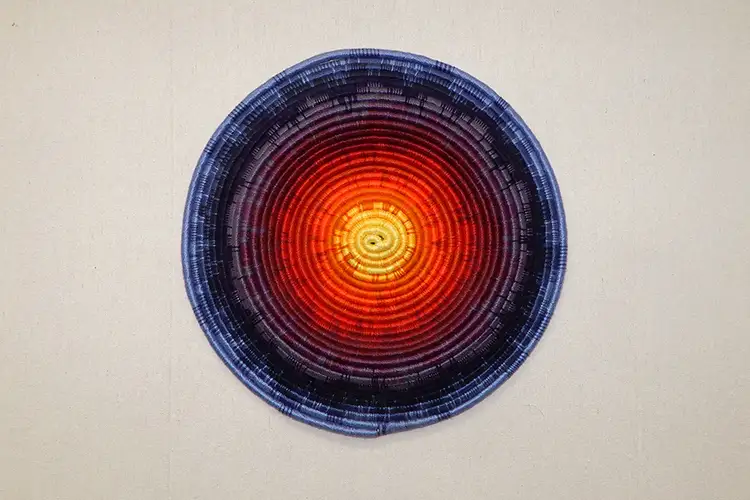
Gallery display with three artworks: a branch‑like sculpture on a pedestal, a circular woven piece on the wall, and a blue textile hanging.

The Department of Art & Design is currently hosting Fiber//Form, a two-week-long exhibition of artwork that students have made in fiber courses at PSOA. Over thirty artists are represented in the show.

The unfamiliar art of fibers

Fiber art, such as knitting and crocheting, has experienced a resurgence in popularity in recent years. However, many are unaware of how fiber art fits into the professional art world. Fiber//Form is a prime example of how PSOA students are elevating the discipline into a fine art context.

“I think fibers often get viewed mainly as a craft and less so as an artistic form,” said Bernadette Dawson, a junior. “You don’t see a lot of it in art museums and whatnot, so it may not be a discipline that you think about when coming into art school.”

Dawson primarily focuses on 3D art such as sculpting, woodworking, and welding, and was drawn to take Introduction to Fibers (ART 231) to gain even more experience in art that requires a physical, hands-on approach.

Two of Dawson’s pieces are displayed at Fiber//Form, including an intimate coiling project that represents Dawson’s life, focusing on her relationship with her daughter. She described how working with Professor Kyoung Ae Cho (Professor, Fibers) helped her create the project.

“Kyoung Ae helps you think holistically about your project in relationship to fibers,” said Dawson.“She does a really great job of getting you to think outside the box.”

Students showcasing work at Fiber//Form utilize fiber classes to integrate other aspects of their artistic approach into fiber art.

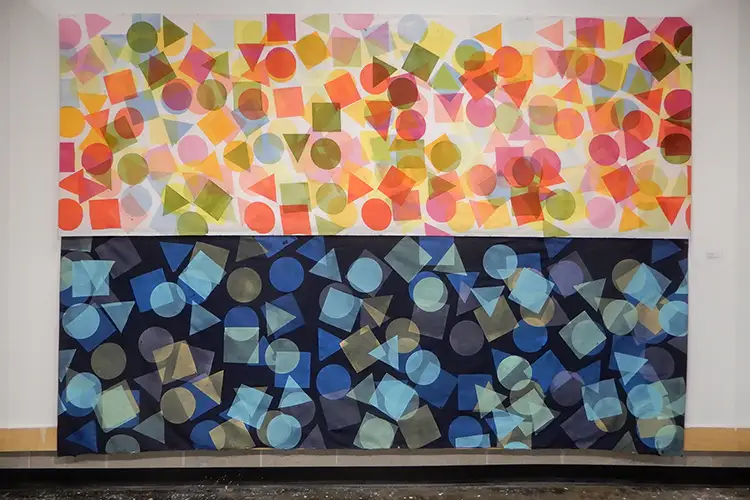
Jessica Isaacs’ piece “Inversions” studies color theory through two large fabric panels. Isaacs, a senior whose primary discipline is fibers, describes how the Peck School has been encouraging when it comes to mixing fiber art with other disciplines that she is interested in.

“If I’m taking classes outside of fibers, I’m always encouraged to mix my work in fibers with other forms of art,” said Isaacs. “I think there’s curiosity that people have about what you can actually do with fiber art.”

Isaacs came to PSOA not knowing that fiber art was something she could focus on as an major, deciding to do so because of her 20+ year passion for fiber art. This passion is partially influenced by Isaacs’ ability to stay busy and active through creating art.

“I think a lot of people use [fibers] to keep your hands busy while letting your mind be free to do other things,” said Isaacs.

This is the case for many students who pursue fibers at PSOA.

Ari St. Germaine, a senior, started crocheting two years ago. Her positive experience with the art form led her to pursue fiber art at the Peck School, due in part to its ability to relieve stress.

“I feel like it’s more meditative, which separates itself from other art programs,” said St. Germaine.

The community of fiber art

Fiber art’s niche at PSOA has led to a strong community of artists pursuing the discipline. Most fibers-based students use the fiber studio to access equipment. St. Germaine describes how positive this has been in allowing herself and others to intermingle.

“It helps build community,” said St. Germaine. “You get to see what other people are working on and ask them about their process.”

Esperanza Reyes, a junior, also felt inspired by interacting with students in the fibers studio.

“I was super intimidated by it,” said Reyes. “But being in the room was very inspirational… We were all very new to the material and all encouraged each other to make something outside of our comfort zone.”

Reyes went into the Introduction to Fibers course with minimal experience in fiber art. However, Reyes believes that what makes fiber art special is how accessible it can be, whether or not someone considers themselves an artist.

“At the end of the day, you are making art,” said Reyes. “It doesn’t matter how many more skills you have than someone who’s doing something smaller or more decorative. It’s all still art.”


Fiber//Form is on view Wednesday-Saturday until February 14 in Kenilworth Square East. For more information, visit the PSOA Events Calendar.

Image of Fiber work from Bernadette Dawson
Bernadette Dawson, Untitled, 2024 Hand dyed cotton, wood, plastic straw, thread
Fiber work from Fiber//Form
Jessica Isaacs, “Inversion,” 2024, Hand dyed and screen-printed cotton, dye, pigment
Fiber work from Fiber//Form
Bernadette Dawson, “Specimen of Word Exercises,” 2024, Cotton yarn, coiling cord, wood, glass, metal
Fiber work from Fiber//Form
Esperanza Reyes, “Temperature,” 2024, Cotton yarn, coiling cord
Fiber work from Fiber//Form
Ari St. Germaine, “Molly,” 2024, Screen printed and dyed cotton, ceramic, thread

Story by Jason McCullum ’25

American Theatre magazine features Alvaro Saar Rios and his latest play

Headshot of Alvaro Saar Rios

Alvaro Saar Rios (Associate Professor, Playwriting; Area Head, Theatre Practices) is premiering his latest play, “Quetzali and the Comic Book Queen vs. the Alebrije of Darkness: Live in the School Cafeteria” at Kentucky’s Lexington Children’s Theatre. American Theatre magazine profiled the work.

According to the American Theatre article, “Quetzali” is part of the national TYA BIPOC Superhero Project, a Theatre for Young Audiences/USA effort aiming to connect BIPOC playwrights with TYA theatres. The national initiative matched 20 playwrights of color with 24 U.S. theatres to commission plays featuring superheroes of color.

Rios’s latest work follows a teenager who notices a Quetzal feather emerging from her arm, leading her to discover secrets and fight evil. This play draws on cultural influences from Greek mythology, according to Rios.

Read the full article by Jerald Raymond Pierce on American Theatre.

UWM alums to premiere documentary at SXSW festival 

Artwork from the film

UWM alums TW Hansen (BFA 2003, Film) and Christopher Thompson (BFA 2006, Film) are part of the team behind Now! More! Yes!, a documentary that follows local legend TW Hansen. The film is set to premiere at the South by Southwest Film Festival this coming March. 

In a Milwaukee Record article written by Matt Wild, Now! More! Yes!, Wild describes the film’s subject, Hansen, who is well known in the Milwaukee area for the many hats he wears, including used car salesman, director, filmmaker, musician, and landlord. The zany comedy was shot over the course of three years by director Max Hey and is a love letter to Milwaukee and Milwaukeeans.  

“The story is about a legally blind used car salesman who drunkenly purchases an ambulance online with his boss’s credit card,” said Hey. 

To read the full article, visit Milwaukee Record.