A metal bridge, automotive or airplane component may look perfectly solid on the outside. But that metal is made up of tiny crystals the size of blood cells. How those crystals fit together can determine how a piece of metal responds to stress.
Understanding those interactions could help explain one of the most costly problems in engineering: metal fatigue. It’s a problem costing hundreds of billions of dollars a year.
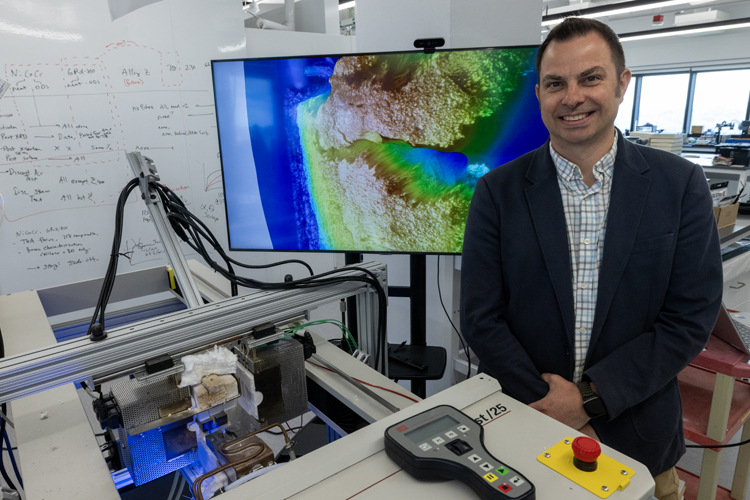
William Musinski, UWM assistant professor of mechanical engineering and materials science & engineering, is working to understand those issues.
Musinski has received a five-year, $600,000 Early CAREER award from the National Science Foundation to investigate how and why tiny cracks form inside metals – and how those cracks eventually grow large enough to cause a part to fail.
Read more about Musinski’s work – including how he uses extremely powerful X-rays produced by synchrotrons to peer inside metal – on the webpage of UWM’s College of Engineering & Applied Science.


