Water & Environment

Microbiologist leads Lake Michigan’s cleanup crew
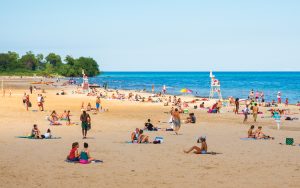
Microbiologist Sandra McLellan is reshaping Milwaukee’s relationship with water by making the city’s beaches popular again and cleaning up the local water supply.
Interested in local food? Check out fish farming
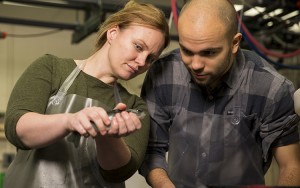
The 1-year-old aquaculture certificate program at UWM’s School of Freshwater Sciences trains graduate and undergraduate students in urban fish farming.
UWM brings science (and zebrafish!) to Wisconsin high schools
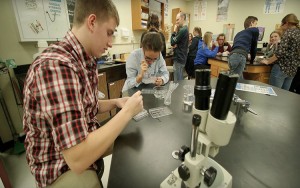
For 20 years, David Petering’s goal has been to help high school students understand science and technology – and have them ready for college research labs.
UWM scientist develops new way to find age of drinking water
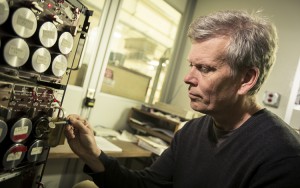
A UWM scientist can determine the age of drinking water in distribution pipes by measuring “leftovers” from 1950s atomic weapons testing. The method could help improve water quality at the tap.
UWM’s green roofs provide important habitat for bees

Research done by Conservation and Environmental Science students shows UWM’s green roofs provide important habitat for bees.
UWM provides a tasty treat for fish-eating zoo animals: live prey
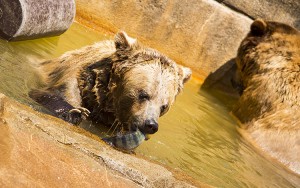
Fish-eating animals at the Milwaukee County Zoo now get an occasional treat, compliments of researchers at the University of Wisconsin-Milwaukee. The animals can hunt in their enclosures for live fish raised as part of aquaculture research at the School of Freshwater Sciences.
New online tracker allows you to watch spring start
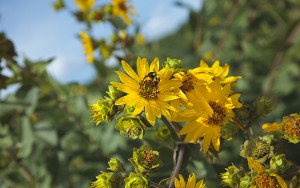
Mark D. Schwartz, a distinguished professor of geography, developed the spring indices, which measure relationships between temperature and plant growth.
Research partners work toward a cleaner South Shore
All too often, a day at the beach becomes a risky activity when advisories are issued because of elevated bacteria levels.
UWM strategizes climate change policy for the Great Lakes
UWM’s Center for Water Policy convened a group of nationally renowned experts from the Great Lakes region.
UWM sturgeon for the Shedd
UWM supplied the Shedd Aquarium with the biological equivalent of 135 million years of Great Lakes ecosystem history in the form of 14 lake sturgeon.