UWM research could help electric cars beat the cold
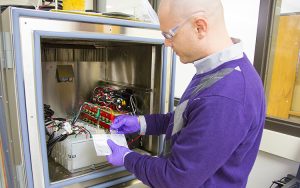
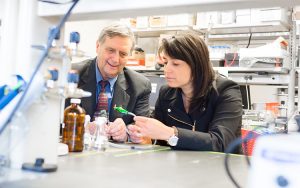
Electric cars are wonders of whiz-bang technology, but they have an Achilles heel – their lithium-ion batteries are less efficient in cold weather. Researchers at UWM have come up with a solution.
News from the University of Wisconsin-Milwaukee
Electric cars are wonders of whiz-bang technology, but they have an Achilles heel – their lithium-ion batteries are less efficient in cold weather. Researchers at UWM have come up with a solution.
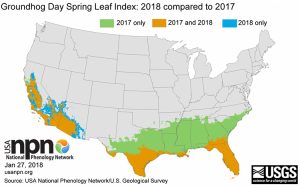
Who needs Punxsutawney Phil? A new forecasting tool created with models built by UWM climatologist Mark Schwartz just may put the spring-predicting groundhog, who may or may not cast his shadow on Feb. 2, out of work.
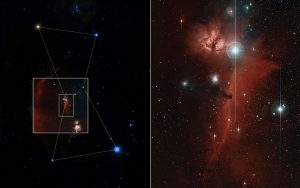
The LIGO observations of gravitational wave over the past two years were groundbreaking. Now, UWM astronomers plan to build off that work by employing a new tool to decode more mysteries of the sky.
A water sensor developed by an entrepreneur and the manager UWM’s Water Technology Accelerator is a finalist in a NASA competition that seeks to spur creation of new technology. The sensors could have application in space as well as on Earth.
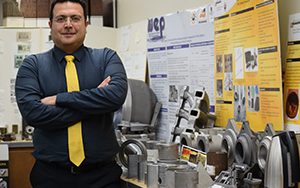
“Tribology and Applications of Self-Lubricating Materials” – written by Omrani and co-authored by Pradeep Rohatgi, UWM distinguished professor, and Pradeep L. Menezes – was published last month by CRC Press.
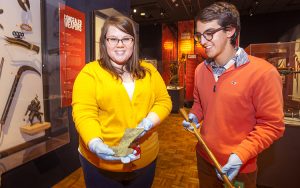
From the New Zealand wahaika to the Aztec macuahuitl, weapons have been part of human culture across the globe and throughout history. An exhibit at the Milwaukee Public Museum explores that, and UWM students and alums were integral in creating it.
A nationally recognized leader on aging issues, Stephanie Stein received the 2017 UWM distinguished alumni achievement award. Stein was the main designer of Family Care, a pioneering long-term care program piloted in Milwaukee County and now emulated nationwide.
UWM Engineering & Applied Science Dean Brett Peters accompanied Wisconsin Gov. Scott Walker on a trade mission to Israel last month, and they returned home with a signed letter of intent to collaborate on developing new water technology. Under the agreement, the Water Equipment and Policy Center and the Zuckerberg Institute for Water Research at […]
Chen, a distinguished professor of mechanical engineering at UWM, is among 3,300 researchers from 900 institutions who have produced a high number of papers that rank in the top 1 percent most-cited in a field over an 11-year period.
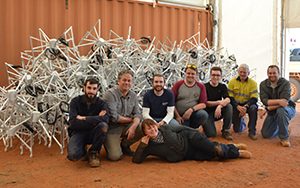
The Murchison Widefield Array recently announced the completion of an expansion that quadruples the radio observatory’s size, giving it a 10-fold increase in observing power. That’ll please a lot of folks at UWM.