TMJ4 news featured two robotic arm projects from the Rahman lab
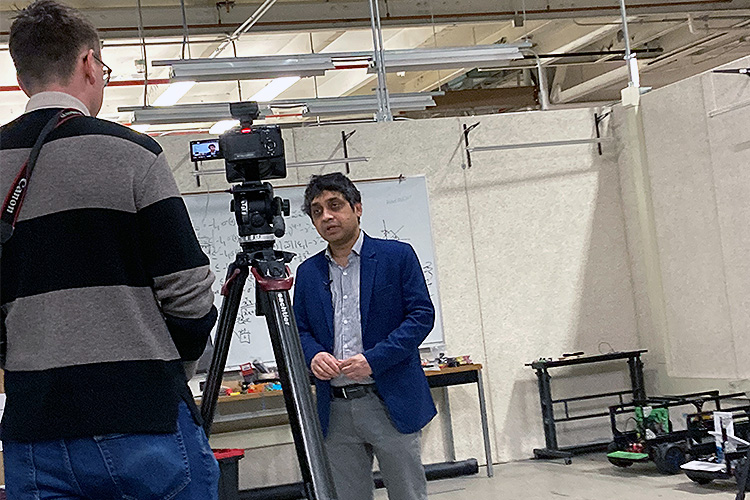
Professor Habib Rahman, mechanical and biomedical engineering, and members of his lab demonstrated two of the assistive robotic arms for a segment on TMJ4-TV news recently.
One of the arms the lab built mounts to a wheelchair, allowing the user to safely reach and retrieve objects and perform more daily living tasks without help. The other robotic arm is designed for patients who need hand and arm physical therapy. Rahman aims to commercialize the device for home use so that patients can make progress on regaining their range of motion without traveling to a clinic.
In addition to Rahman, PhD students Md Samiul Haque Sunny (bioinformatics); Md Mahafuzer Rahman Khan (mechanical engineering), and master’s student Motakabbir Hossain (computer science) showed the robots in action. Watch the segment.
Two UWM Baja cars, one banner season for engineering students
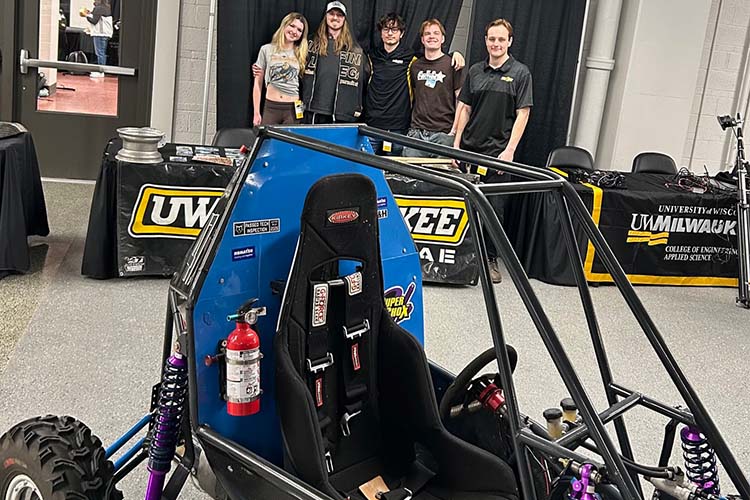
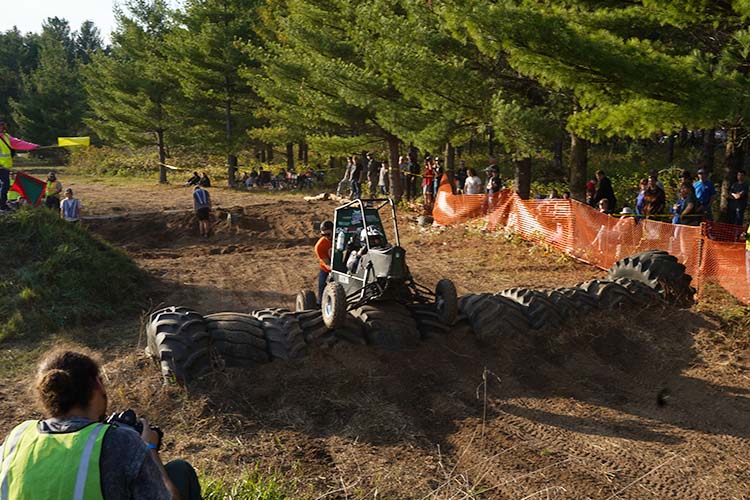
Two mud-splattered, roll-caged vehicles sit in a campus shop, looking equal parts go-kart and homemade tank. Built low and rugged, with exposed suspension and knobby tires, these Baja cars are designed for surviving hours of punishment.
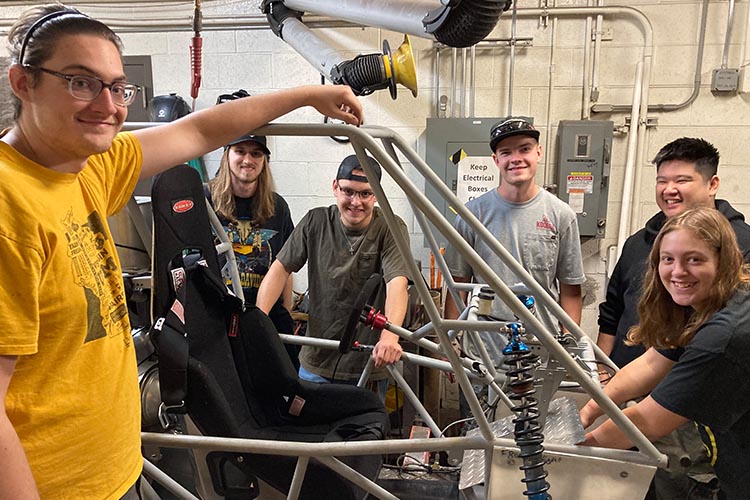
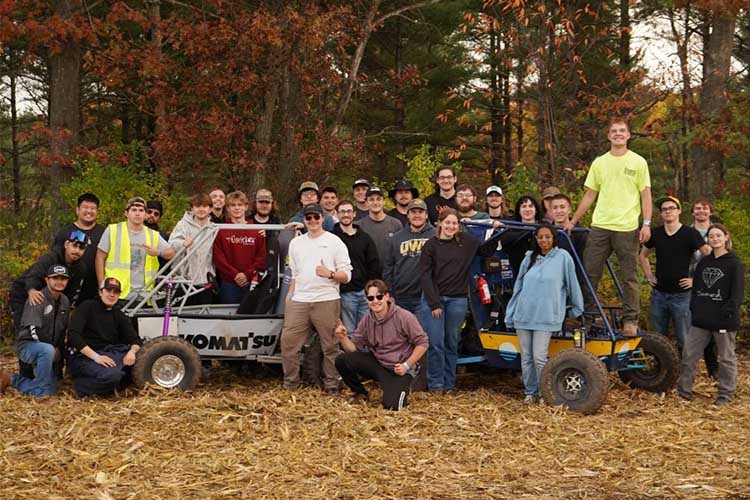
They’re also why a record number of students in the College of Engineering & Applied Science are spending nights and weekends in a garage deep inside the Northwest Quad parking structure, home to the UWM student chapter of the Society for Automotive Engineers (SAE).
Baja SAE is an intercollegiate design competition challenging students to design and build single-seat, off-road vehicles capable of endurance races.
A strong start: first and second place in regional competitions
This fall, the team placed first and second with two different vehicles in two multi-state, regional competitions – a rare accomplishment in a single year.
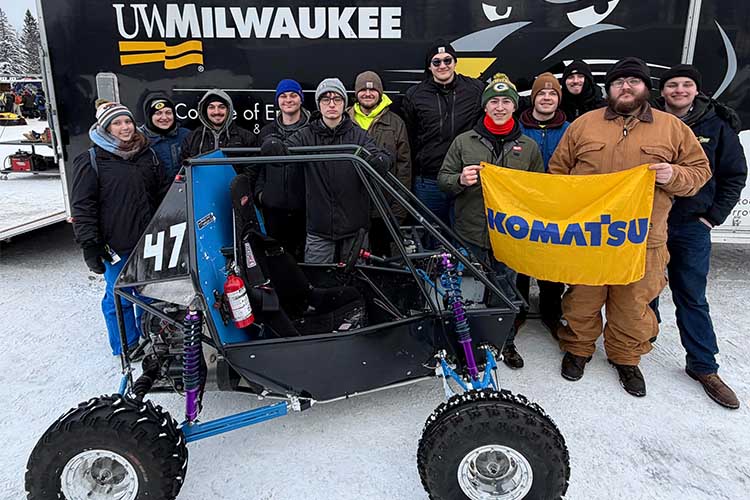
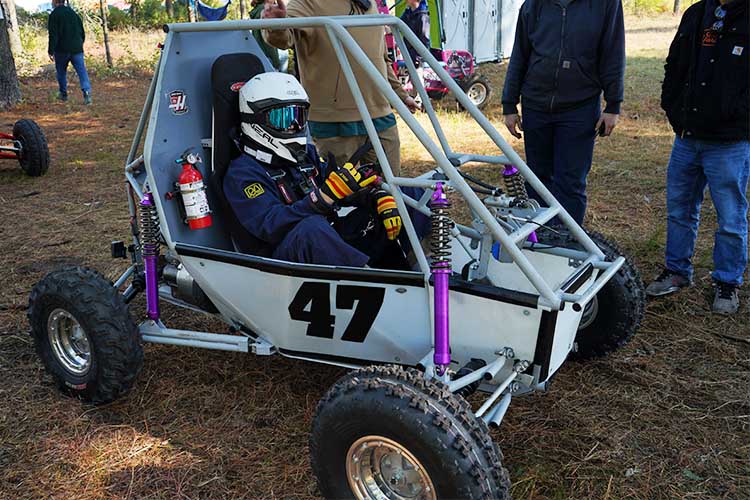
Car 46, a workhorse completed in 2020, captured first place at Backwoods Baja 2025. “We’re not building a prototype for a single exercise,” said Noah Schwebel, the club’s current president. “We’re building a well-rounded machine each time.”Members represent students from across engineering majors, not just mechanical. For example, students from electrical engineering and computer science are developing a data acquisition system.Baja Car 47, begun in 2021, is a newly finished machine sponsored by Komatsu Mining Corp., that marked a major leap forward for the org: It is their first four-wheel-drive design. It took second place at Winter Baja 2026 in Houghton, Michigan. Between races, the team reworked Car 47’s entire front suspension to improve handling and durability, greatly improving its performance on the icy track at Winter Baja 2026. Baja teams traditionally attract a lot of members and UWM’s SAE org proves the point, with more than 40 dues-paying members – the highest in the group’s recorded history, said Liam Carroll, the club’s vice president and technical director.
UWM’s SAE student organization has steadily recovered from a dip in membership during COVID to draw more than 40 dues-paying members this fall – the highest in the group’s recorded history, said junior Liam Carroll, the club’s vice president and technical director.
“Some are just car enthusiasts, but it goes much deeper than that,” Carroll said.
The season opened at Backwoods Baja, hosted by UW–Stout, that drew six teams from Wisconsin and seven from surrounding states.
The team brought two cars: No. 46, a rear-wheel-drive workhorse completed in 2020, and No. 47, a newly finished machine sponsored by Komatsu Mining Corp. Car 46 handily captured first place in the four-hour race.
The debut of car 47 wasn’t perfect, but it was promising, ranking 13th out of 30 competitors.
Car 47 marked a major leap forward. It was the team’s first four-wheel-drive design, requiring the drivetrain to run the length of the vehicle rather than stay compact in the rear.
More than 30 UWM students traveled to the competition, reflecting the club’s emphasis on participation and hands-on learning – not just podium finishes.
A second chance
The new design faced its next challenge at Winter Baja, hosted by Michigan Tech in Houghton, Michigan, attracting 19 teams, including teams from Northwestern University and the University of Michigan. Snow and ice turned the course into a traction-starved proving ground – ideal conditions for testing four-wheel drive.
Between the Backwoods and Winter Baja races, the team reworked car 47’s front suspension to improve durability and handling and installed new body panels.
The improvements paid off. Car 47 roared to a second-place finish, completing the hours-long race without a mechanical issue. Meanwhile, car 46 battled through multiple rollovers but still finished in the top 10 among 39 competitors.
Learning through revision
After each race, the students document every design decision, so lessons carry forward to the next car.
“Our strategy compared to other schools is to focus on durability above all else,” said junior Noah Schwebel, the club’s new president. “When weaknesses appear, the team responds with major structural revisions.”
Troubleshooting is central to the experience, but students are also drawn by the community, said Assistant Professor William Musinski, the group’s faculty mentor.
The group is quite interdisciplinary. Electrical engineering and computer science students are developing a data acquisition system, and leaders hope to recruit students in business, marketing, and graphic design majors to help with sponsorships and outreach.
“The student organization has been doing a tremendous job engaging new students, and they are learning from each other in ways that extend well beyond traditional classroom studies. The group also gives them the chance to share information and prepare for internship or co-op opportunities,” Musinski said.
Engineering in real time
Each new vehicle is treated as a clean-sheet design. Car 47, which started in 2021, took far longer than planned to complete.
Now, as the team begins concept work on car 48, they are reconsidering four-wheel drive. While it performed well in winter conditions, it adds weight and complexity, Schwebel said.
“Our organization’s teaching mission is very comprehensive,” Schwebel said. “Compared to other design-challenge organizations, we believe ours is closest to providing a real-world engineering experience. Our goal is to challenge members and prepare them for a professional environment.”
Along the way, students gain more than trophies. They practice cross-functional teamwork, deal with manufacturing constraints, and conduct failure analyses after races.
Many members are “motorheads at heart,” Carroll said. But the real draw isn’t just horsepower.
“It’s the chance to see their ideas survive – or fail – in the harshest environments, then come back to the shop and build something better.”
Avdeev involved in a new state initiative aimed at launching more startups
UWM’s Lubar Entrepreneurship Center, led by Ilya Avdeev, professor of mechanical engineering, and the UWM Research Foundation have received $100,000 to represent UWM on a new state-funded initiative to support high-growth startups.
The two organizations will join others in a collaborative effort called Founder Factory, designed to close critical early- and mid-stage gaps in the startup pipeline.
Founder Factory also includes the UW Center for Technology Commercialization, Milwaukee Tech Hub Coalition, and Midwest Founders Community. Together, the partners will provide an innovation bootcamp, accelerators, pitch events, matchmaking, networking, and more.
The Lubar Entrepreneurship Center will host and co-facilitate the program’s 10-week pre-accelerator that gets underway in the fall.
“Great founders don’t just need ideas – they need a coordinated system that helps them test, build, and scale,” Avdeev said. “Founder Factory brings together the training, mentorship, capital pathways, and partnerships required to move teams from concept to investment readiness.”
In total, the Founder Factory initiative is supported by a $772,000 grant from the Wisconsin Economic Development Commission through its inaugural Ignite program.
The initiative is guided by a 20-member consortium of universities, healthcare and research institutions, investors, and regional innovation organizations working to strengthen Southeast Wisconsin’s startup ecosystem.Top of Form
In addition to launching promising startups, the program’s aims in its first two years are to increase follow-on funding and commercialization, strengthen founder leadership, activate intellectual property, and build a durable, data-driven venture engine for the region, said Jessica Silvaggi, president of the UWM Research Foundation.
Slavens explains her current research project on podcast
Professor Brooke Slavens, mechanical engineering, was featured in March on CTSI Discovery Radio, a podcast that airs on 91.7 WMSE-FM in Milwaukee. In episode 142 called, “Shouldering the Load,” Slavens describes a study from her lab aimed at preserving arm health of children who use manual wheelchairs.
CTSI discovery radio is produced by the Clinical and Translational Science Institute of Southeast Wisconsin, a consortium of scientists from eight institutions in the region including UWM. CTSI works collaboratively to advance health through research. The podcast is available on SoundCloud or from WMSE-FM.
“Having healthy arms is really the key to quality of life for patients who use a wheelchair,” Slavens said. “”Because these millions of people are using manual wheelchairs in a way that’s unnatural to our arms, about 90% of them will develop shoulder pain and pathology. Our specialty is really in assessing and preventing shoulder and wrist injuries.”
Liao and Titi awarded nearly $300,000 from WisDOT to study bridge ‘scour’
Most bridge failures in the U.S. are related to water. In a process called “scour,” rushing rivers during storm events wash away the soil around bridge piers and abutments, weakening the structures from below.
Engineers use national formulas to estimate how much erosion might occur during strong river flows. But those formulas often predict deeper erosion than actually happens.
“Field measurements have shown that the formulas often overestimate scour depths, potentially leading to overdesign and unnecessary costs,” said Qian Liao, professor, civil & environmental engineering.
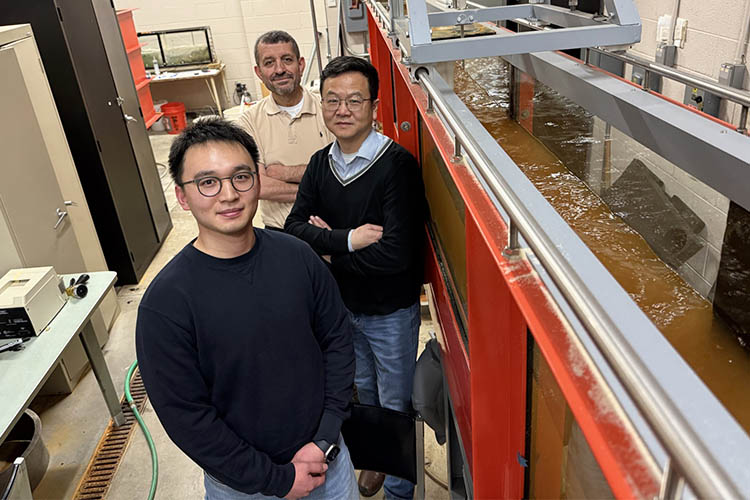
With a $299,993 grant from the Wisconsin Department of Transportation, Liao and Hani Titi, professor, civil & environmental engineering, aim to make bridges across the state safer – and potentially less expensive to maintain.
Recent historic flooding in Milwaukee
The researchers will study about 30 bridges to measure how scour behaves in Wisconsin’s rivers, many of which have sandy, shifting riverbeds.
They will also focus on devising a method to predict which bridges are most vulnerable, Liao said.
“Scour is a ‘big event’ problem, usually occurring only during extreme flooding,” he said. “We focus our research on bridges that have faced at least 70% of a 100-year flood level.”
After the record-breaking storm in Milwaukee last August, the team is currently investigating two bridge sites within Milwaukee County to capture that critical data.
Studying evidence of past events
It is challenging and dangerous to collect data during a storm event. Instead, Liao said, he and Titi will look for evidence of past scour events. These past events can be identified by measuring scour depths, collecting soil and sediment samples on the riverbed, and understanding the geometry of the bridge foundations.
Using tools such as sonar, ground-penetrating radar, and a sub-bottom profiler, researchers will look for buried evidence of past erosion and track how riverbeds change over time.
They can then compare what they observe to current national risk formulas and, with the help of machine learning, create improved prediction charts tailored specifically to Wisconsin conditions.
“Current formulas rely on a mix of physics and lab experiments that often fail to capture the complex reality of a shifting riverbed,” Liao said. “Using machine learning, we can connect measurable factors into a smart model that more accurately maps these potential erosion risks.”
The result could help engineers improve the design of bridge foundations, making the most of limited public funding without sacrificing safety.
Students and faculty hit ‘pause’ for a week of fun during CEAS E-Week
From Feb. 23–26, Engineers Week (E-Week) brought students, faculty and staff together for a welcome mid-semester break packed with food, games and Panther pride.
Hundreds of engineering and computer science students stopped by at least one event, and plenty of faculty joined the fun, swapping lectures for ladles and spreadsheets for ping-pong paddles.
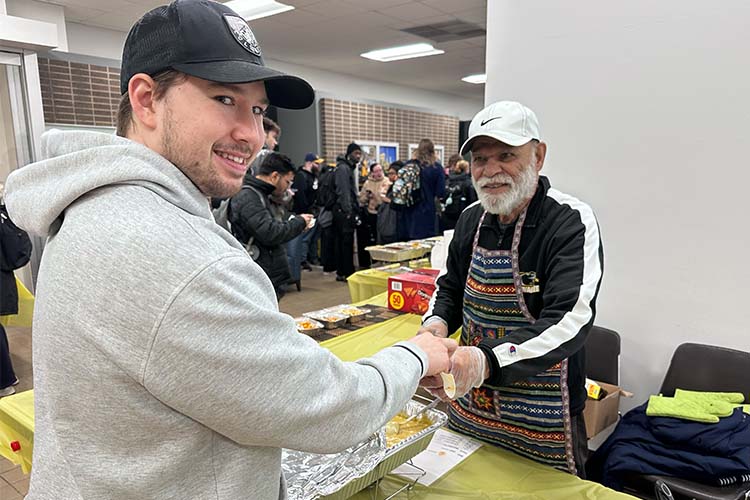
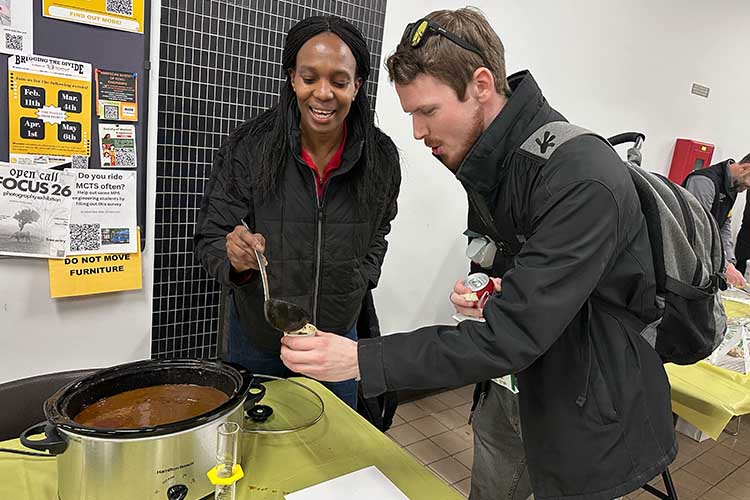
Thanks to this year’s sponsor, ATC, the week kicked off with one of the coziest traditions: the CEAS Soup & Chili Cookoff in the EMS lobby. Many faculty members served up their best recipes (along with some from Real Chili) while students cast the deciding votes. Top honors went to Iftekharuddin Khan, industrial & manufacturing engineering. Associate Professor Ben Church, and Assistant Professor Bill Musinski, both materials science & engineering, took second and third place, respectively.
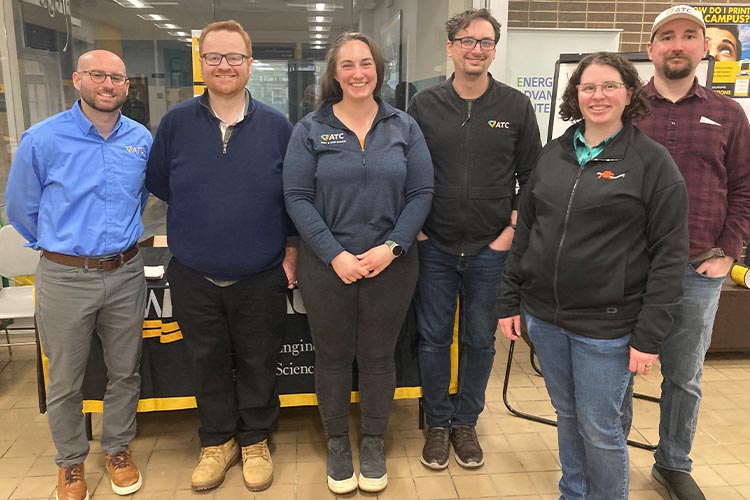
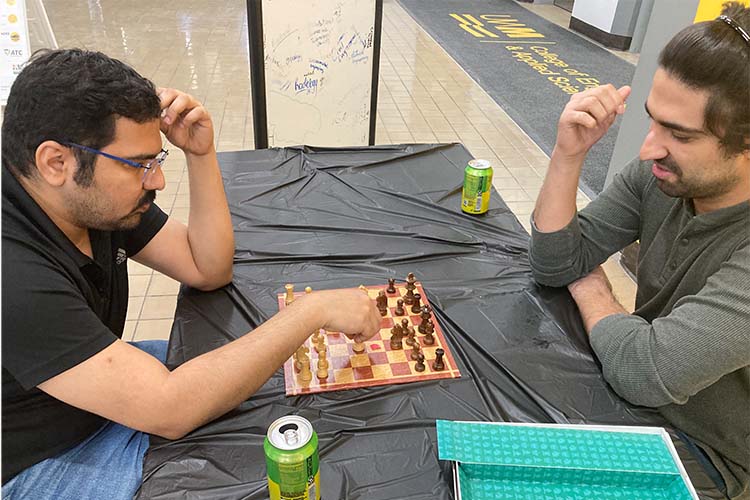
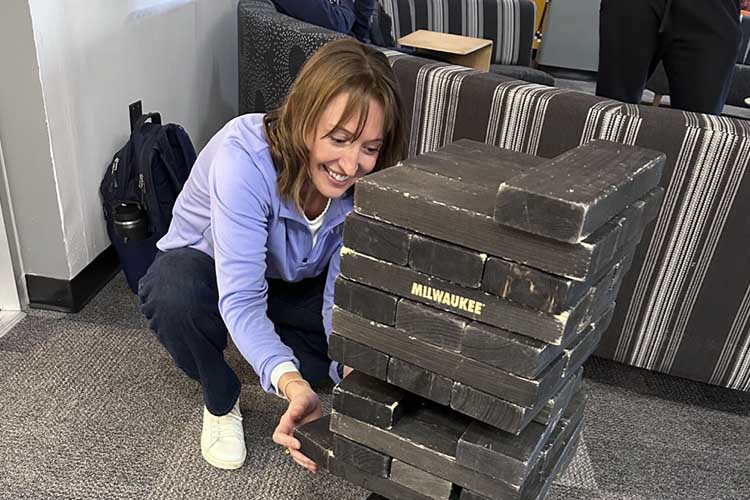
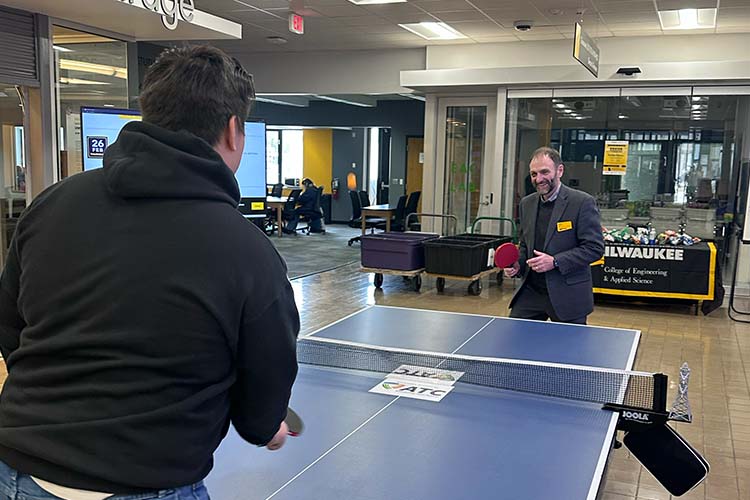
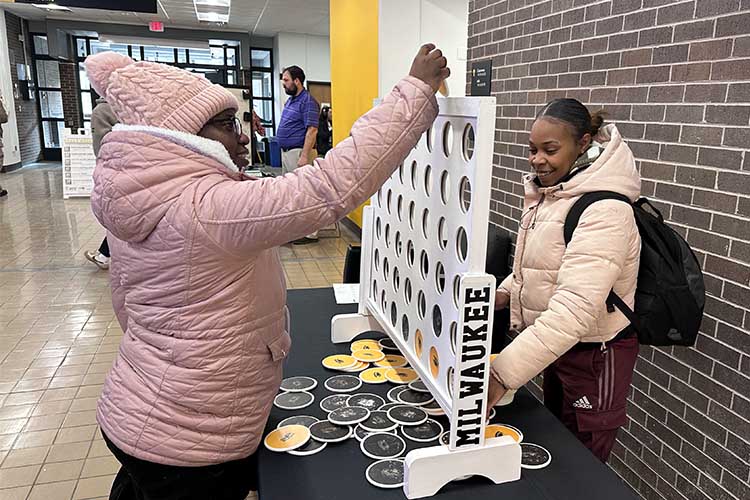
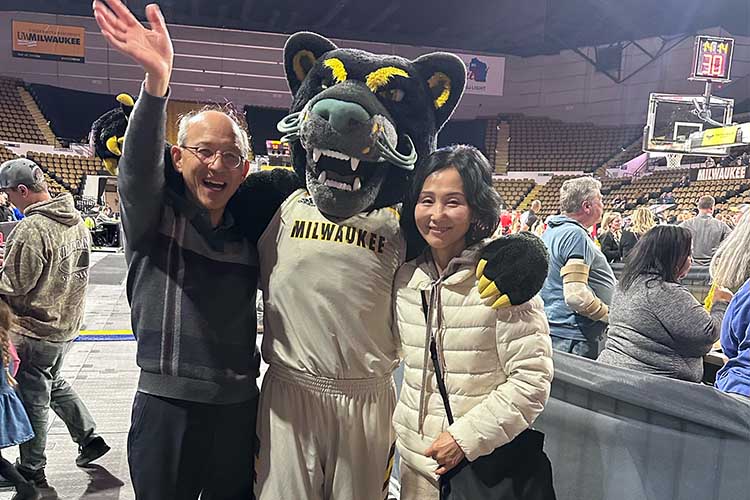
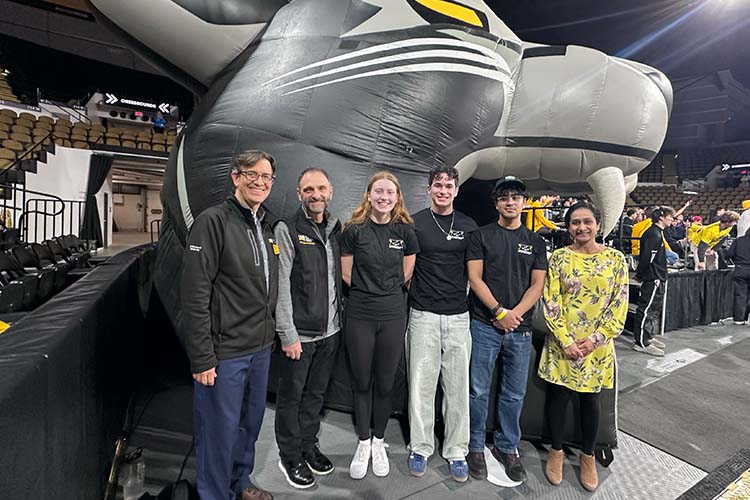
Associate Professor Ben Church came in second place in the Soup & Chili Cookoff. Representatives from ATC, which sponsored the activities, also came to play. They included (from left) Javier Martinez-Santos, Devin Renner, Amy Wilke, Corey Young, Stephanie Pierce, and Ken Mero.Associate Professor Wilkistar Otieno, left, serves a student warm chili at during E-Week’s Soup & Chili Cookoff. Engineers are thinkers. These two were in a friendly rivalry during Thursday afternoon’s games. Allie Navin with ATC coordinated the involvement of engineers from the company who showed up for Thursday’s games.Dean Brett Peters tries his luck at ping-pong with a willing opponent during Thursday’s game activities. These students challenged each other to a game of Giant Connect Six.Associate Professor Jaejin Jang, industrial & manufacturing engineering, and his guest show their Panther spirit at Wednesday’s basketball game. Those representing the college during on-court honors at Wednesday’s basketball game at Panther Arena were (from left): Associate Dean Andy Graettinger; Dean Brett Peters; undergraduates Brianna Marion Grilley, Christian Ferragut ,and Muhammad Bilal Suleman, biomedical engineering; and Assistant Professor Priya Premnath, biomedical engineering.
Tuesday’s student organization fair made it easy for students to find their people. Wednesday focused on the future, with two job fairs hosted by UWM’s Student Experience and Talent office. The college hosted a prep for the fair plus student breakfast earlier that day. That evening, the celebration moved downtown, where students, staff, alumni and industry partners came together to cheer on the Panthers men’s basketball team against Youngstown at Panther Arena.
By Thursday, the competitive spirit was in full swing as students engaged in games with each other and ATC staff. Chess matches grew intense, giant Jenga towers wobbled dramatically, ping-pong rallies sparked cheers – and pizza disappeared. Rounding out the week, CEAS students were among the many of UWM volunteers on Saturday at the STEM Expo, an event for K-12 students designed to inspire the next generation of engineers and computer scientists.
A big thank-you goes to ATC for their generous sponsorship and also to this year’s E-Week organizers – Steven Anderson, Michelle Boehm, Sean Lybeck-Smoak and Lisa McGovern – with guidance from Associate Dean Prasenjit Guptasarma.
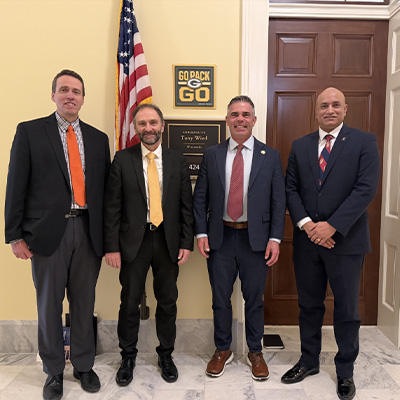
Dean Peters advocates for the college with Wisconsin legislators in Washington, D.C.
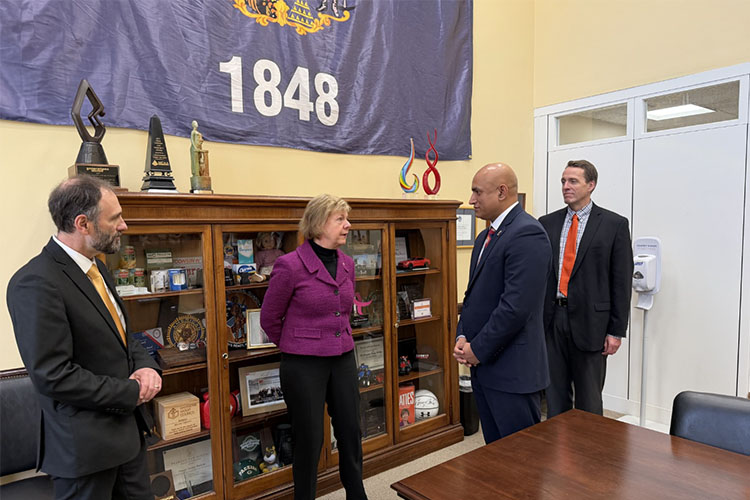
A delegation consisting of Dean Brett Peters, UWM’s Chief Government Relations Officer Keri Duce, UW-Madison Engineering Dean Devesh Ranjan and UW-Platteville Engineering Dean Philip Parker met with Wisconsin Congressional members in February.
The group promoted the universities’ educational programs, discussed the critical role of federal support, and highlighted other opportunities for investment.
Parker (from left), Peters, Rep. Tony Wied, and Ranjan
The reception from politicians was open and varied on many issues, such as public funding. While they universally acknowledged the growing demand for more engineers, Peters said, perspectives varied on how best to support universities and students.
“The Congressional delegation remains quite divided on many issues, but there is a general recognition of the importance of engineering in both research and education for the nation’s well-being and security,” Peters said.
Our college’s degree programs are highly regarded by legislators, and enthusiasm is building around expanded collaborations with technical colleges through the new Bachelor of Science in Engineering program.
There was also strong appreciation for our engagement with local industry and our research, he said.
“Connections to industry, enhancement of economic growth, and engagement of undergraduate students will all remain as competitive advantages for us,” Peters said. “It’s clear that the College of Engineering & Applied Science remains well-positioned to capitalize on research opportunities going forward, although we will need to be more precise at targeting the priorities and clearly conveying the impact of the research.”
He reported broad optimism about sustained research funding in our core strengths, including advanced manufacturing, energy, and transportation. The Wisconsin Manufacturing Summit in Green Bay planned for June was one topic discussed.
Emerging fields such as quantum science and quantum computing also generated interest, particularly as potential partnership opportunities. And artificial intelligence sparked lively conversation and a wide range of opinions, he said.
The group was in Washington, D.C. for the annual American Society for Engineering Education Public Policy Colloquium.
Among those the deans spoke with were:
Sen. Tammy Baldwin
Sen. Ron Johnson
Rep. Gwen Moore
Rep. Tony Wied
The dean’s group also attended a Wisconsin group breakfast with Rep. Mark Pocan and had lunch with staff members of Rep. Glenn Grothman, Rep. Bryan Steil, Pocan, and Wied.
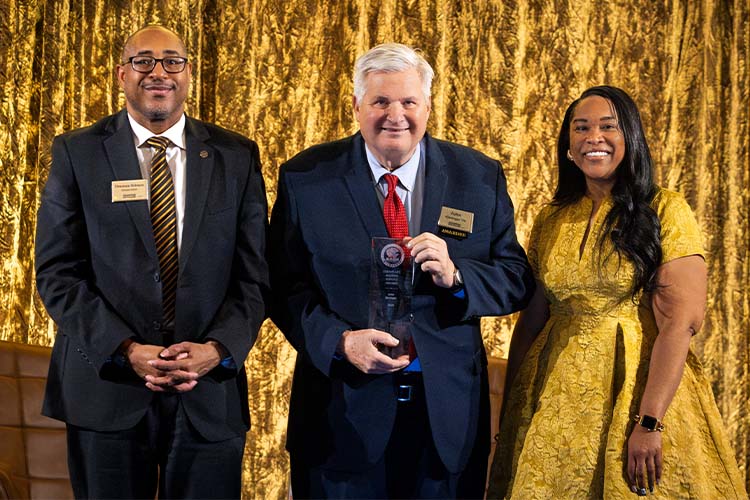
Kissinger honored for service by UWM Alumni Association
Congratulations to John Kissinger (’79 BS Civil Engineering), who was honored with the Exemplary Alumni Service Award by the UWM Alumni Association. The award was presented at an event Feb. 27.
Kissinger joined the engineering firm Graef-USA Inc., in 1984 and has been Chief Executive Officer of the company since 2012.
During his career, he has been involved in hundreds of building and infrastructure projects, including the Milwaukee Art Museum addition, the Wisconsin (Baird) Center and the Lambeau Field renovation.
His extensive community service includes serving on the Employ Milwaukee board, as well as the boards of the UW-Milwaukee Foundation and the United Way of Greater Milwaukee and Waukesha County.
Last year he was named to the Milwaukee Business Journal’s Power Players list.
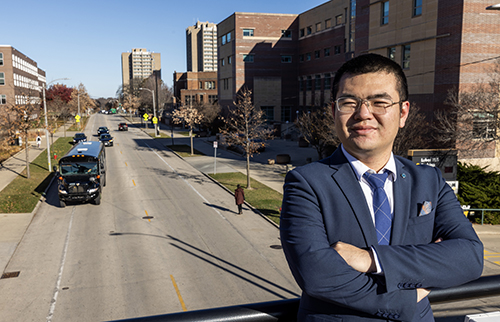
Shi recognized as a ‘rising star’ by the ITE Wisconsin section
Xiaowei (Tom) Shi, assistant professor, civil & environmental engineering, was recognized with the Ken Voigt Rising Star Award by the Institute of Transportation Engineers Wisconsin Section.
The award will be presented at the next section meeting on March 5 at the UWM Student Union.
The Ken Voigt Rising Star Award recognizes the achievements of a transportation professional 35 years or younger as of Jan. 1 of the award year. Applicants are evaluated based on project experience, leadership, passion for the profession, and testimonials from their peers.
This award honors Ken Voigt (’74 MS Engineering), a former ITE Wisconsin and ITE International president with more than 50 years of experience in the field.
Award recipients will automatically be considered for the ITE Great Lakes District for the District’s Rising Star Award and will receive a travel stipend to attend the ITE Annual Meeting in Detroit.
ITE student organization makes a campus impact
Congratulations to the Institute of Transportation Engineers, UWM student organization, which was one of the three campus groups honored with the “Emerging Student Organization Award” at the 2025 UWM Student Excellence Awards.
Accepting the award on behalf of the organization were president Ogunniyi (Emmanuel) Olanrewaju and vice president Joely Overstreet. Assistant Professor Tom Shi is the advisor.
The winning organizations were chosen from a total of 17 nominations.
Awards are given in 13 categories. The “Emerging Student Organization Award” honors recently established organizations that has made a notable impact in its first four semesters.
The Student Excellence Awards is an annual celebration of outstanding contributions to the campus community. This event honors the dedication, leadership, and impact of individuals and groups who inspire positive change, foster inclusion, and enhance the student experience. The other winners in this category were the UWM Data Science Club and Mycological Society of UWM.