WEDC awards Amano $250K to ID best renewable energy recovering technologies for Wisconsin manufacturers
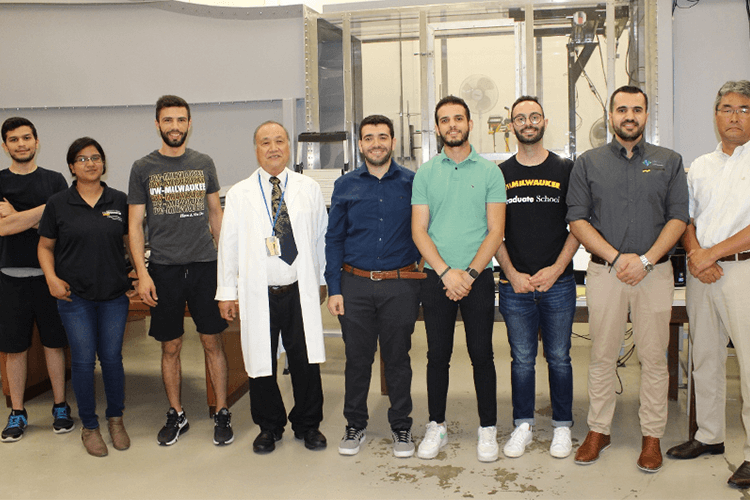
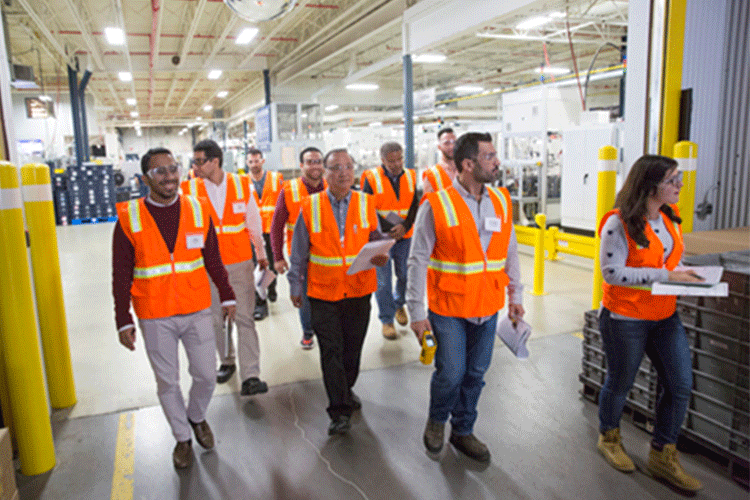
Ryo Amano, professor of mechanical engineering and Richard and Joanne Grigg Faculty Fellow, was awarded $250,000 from the Wisconsin Economic Development Corp toward a three-year, $375,000 project to identify and generate new technologies to recommend to Wisconsin manufacturing industries and energy utility treatment facilities. He and his UWM team (pictured) will partner with several energy advisory sectors in the state.
Amano says the team will study efficient, renewable energy recovering technologies (wind, solar, biomass, hydropower, and hybrids) and the manufacturing skillsets needed to produce them.
“The study will extend to include better buildings and manufacturing plants, and green and clean energy systems,” he says. “Our goal is to significantly contribute to Wisconsin industries by helping them make drastic improvements in their manufacturing technologies.”
The team will study emerging technologies
The team will study several emerging technologies including the following: phase change material (PCM) for thermal management; heat pumps for manufacturing processes; combined heat and power (CHP); concentrating solar power for manufacturing; and cybersecurity technologies.
“All these are energy efficient and promising for different situations,” Amano says.
Ultra-efficient heat pumps, for example, could use electricity to transfer heat from one space to another and could be suitable for certain industrial processes, Amano says.
The team also will explore battery-powered stationary energy systems that generate, store, and convert energy. “This system can store energy, including solar energy, and deliver smooth and predictable power for send the power to the grid,” Amano explains. This technology could be particularly useful in instances of power outage situations and as an auxiliary power source.
First full-ride Nadella scholarships awarded at UWM
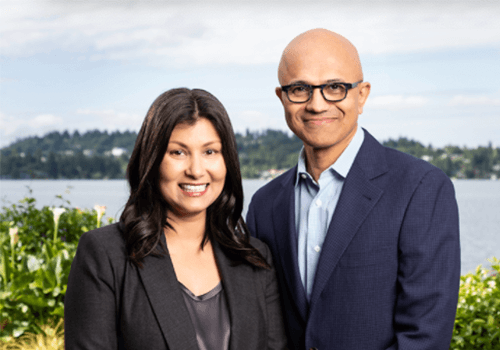
Nine recent graduates from Milwaukee high schools are the first to be awarded full-ride scholarships to UW-Milwaukee to study computer science, data science and information technology funded through a gift from UWM alumnus and Microsoft Chairman and CEO Satya Nadella and his wife, Anu Nadella (pictured).
The Anu and Satya Nadella Scholarships are specifically for students who graduate from Milwaukee high schools. They provide financial and academic support, and cover tuition, fees, room and board for up to five years.
Satya Nadella (’90 MS Computer Science) is a UWM alumnus.
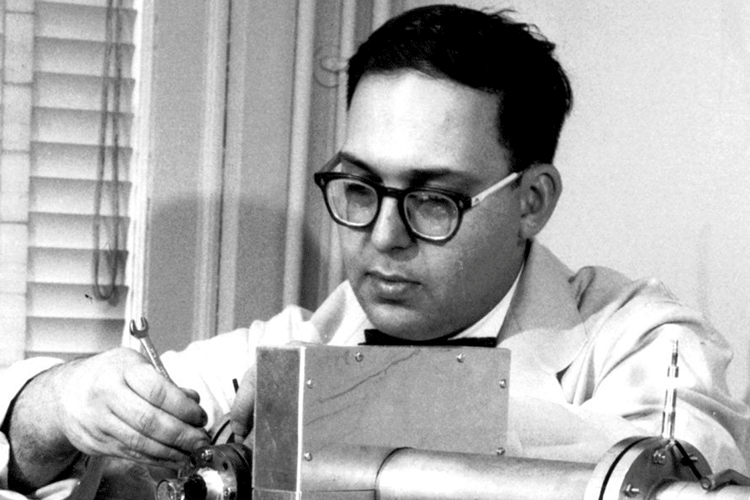
Leonard (“Len”) Levine, professor emeritus, electrical engineering and computer science, passed away peacefully on May 25 at the age of 89.
Levine’s contributions to UWM and its College of Engineering & Applied Science were enormous during his more than 30 years of service to the institution. He is remembered by colleagues and former students not only for his key roles in helping UWM reconfigure to meet the rapidly changing needs of the Milwaukee community—he was instrumental in developing its now thriving Computer Science program—but for his extraordinary humor and dedication to students.
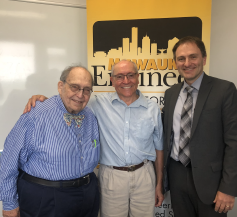
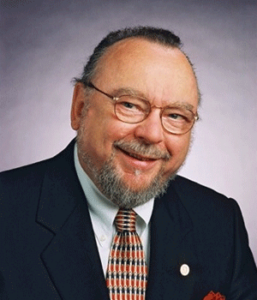
Len Levine, former student Ken Alix and Brett Peters, dean, UWM College of Engineering & Applied Science
“I will always remain grateful for his guidance and the inspiring example he set as an educator,” said Ken Alix, ’78 MS Electrical Engineering. (Alix retired from Intel Corporation, where for 23 years he worked as a senior process integration engineer in semiconductor manufacturing and technology transfer.) In 2019, Alix created the Dr. Leonard Levine Scholarship in honor of his college advisor.
One of first people to know computer language and its potential impact on work
Levine grew up in New York City and received his bachelor’s degree in physics from Queens College and PhD in physics from Syracuse University. In a ballroom dancing class, he met Marilyn (1933 – 2010), the love of his life, knowing after just one dance that he would marry her.
After graduation, he was employed by Sperry Gyroscope and Honeywell Aerospace, outside of Minneapolis, where he worked on vacuum science and on one of the world’s first computers, a machine that nearly filled an entire room. He was one of the early people to use programming languages in research and to realize their potential impact on science, engineering, and society.
These experiences made Levine a powerful asset to UWM when he came to campus in the late ’60s, a time during which the young university was developing its engineering and computer science programs.
Service to students and UWM was “of the highest order”
At UWM, Levine helped develop and grow the Computer Science program and became an admired teacher and mentor to the many TA’s he supervised.
For many years, he served as the director of the university’s Computer Center and oversaw the development of the emerging computing resources for the entire campus.
He was also active in numerous campuswide committees and was a member of the Faculty Senate.
“Across campus, Len was a highly visible member of the College of Engineering & Applied Science, and his contributions were much valued,” said K Vairavan, professor emeritus, electrical engineering and computer science. “His service to the students and institution was of the highest order. He was a great colleague and will be deeply missed by those of us who had the pleasure to work with him and call him a friend.”
Service continued after retirement
Even after he retired in December of 1999, Levine continued to support those who wanted to learn.
In the community, he ran a weekly workshop for older adults at the Shorewood Senior Resource Center called If it Goes Beep, a free discussion on computers, digital cameras, telephones other technological devices.
At UWM, his support took the form of student scholarships designed to elevate the community by providing students with opportunities and affording them more study time.
He and his wife, Marilyn Levine (’82 PhD Urban Education), created two scholarships for undergraduates.
After Marilyn passed away, Levine established the Levine Science Fellowship Fund for graduate students.
When asked why he created scholarship funds, Len said he was motivated by rising tuition costs and the fact that college students were graduating with debt. During his own undergraduate years, he recalled, he was able to devote himself to his education, studying at the counter of his family’s candy store in New York City.
“My goal is to create the time a student needs to devote to their studies and get the best education they can,” he said at the time.
Renewable energy expert Deyang Qu named UWM Distinguished Professor
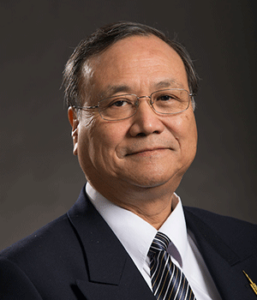
Deyang Qu, an internationally recognized energy-storage and renewable energy expert, was named a UWM Distinguished Professor in May. Qu is a Johnson Controls Endowed Professorship in Energy Storage Research and is chair of the Department of Mechanical Engineering in UWM’s College of Engineering & Applied Science.
At the pinnacle of their careers, UWM Distinguished Professors have had significant impact on their fields of study. With remarkable productivity, international reputations, and glowing testimonials from peers, they continue to make significant scholarly contributions to their disciplines.
Qu has made extraordinary contributions to the electrochemistry and electrochemical engineering of next-generation batteries, including long-lasting lithium-ion, Li-Air and Li-sulfur batteries and capacitators such as those used in electric vehicles.
In layman’s terms, he explains that he applies his knowledge of chemistry and technology to advance electrification, which in turn burns less fossil fuel.
“If I can contribute to new battery technology by helping to create a battery that lasts significantly longer, that would be like hitting a home run,” he said. “Doing research that plays a part in turning around global warming became my passion.”
$10.4 million in funded research aimed at developing next-generation batteries
Since Qu joined UWM in 2015, his cutting-edge research has attracted nearly $10.4 million of grants from the National Science Foundation, the U.S. Department of Energy and Johnson Controls (now Clarios) and other industries including MilliporeSigma.
His research helped develop batteries that supported the then-emerging start-stop technology, which reduces vehicle fuel consumption and carbon dioxide emissions by about 5 percent.
Supported by the U.S. Department of Energy, Qu has been engaging in the fundamental research of next-generation batteries for decades. Most recently, the department—through a subcontract from Pacific Northwest National Laboratory—awarded him a five-year, $650,000 grant to continue his successful three-year, $1.25 million contract to research solid-state Li batteries.
In 2020, Qu was listed in a ranking of the top 2% of scientists in the world in a study by Stanford University, which identified top scholars by considering how often their work has been cited over the course of their careers.
Qu is one of two active faculty members from the College of Engineering & Applied Science who have been named UWM Distinguished Professors; he is joined by Materials Science Professor Pradeep Rohatgi, whose research has had a profounds impact on cast metal matric composites.
UWM and Badger Technology receive Air Force renewable energy contract
Badger Technology Group and the UW-Milwaukee College of Engineering & Applied Science have received a contract from the United States Air Force Research Lab to produce, integrate and test a hybrid energy storage system at the Ellsworth Air Force Base in South Dakota.
This project supports the Department of Defense’s focus on energy resiliency through the increased use of renewable energy.
Badger Technology is supported in this program by the UWM College of Engineering & Applied Science Energy Advancement Center and the Center for Sustainable Electrical Energy Systems.
Donor spotlight: Robert T. Balmer, family, friends, students and colleagues
Thank you to Robert T. Balmer, professor emeritus, mechanical engineering, and his family, friends, students and colleagues who together established the Dr. Robert T. Balmer Mechanical Engineering Scholarship for students enrolled in a program leading to a degree in mechanical engineering.
Balmer –a lover of culture, technology, history and philosophy– received the College of Engineering & Applied Science Outstanding Instructor Award three times— 1971, 1972 and 1988.
He joined the college in 1969, after a year as a NATO visiting professor at the University of Naples in Italy. At UWM, he established himself as an immensely popular instructor.
With a small grant from UWM he had made period-correct costumes; he then gave lectures dressed as historical figures famous for their contributions to astronomy, mathematics and engineering, including Galileo Galilei, Sir Isaac Newton, Daniel Bernoulli and Lord Kelvin.
Over the years he co-taught courses on culture and technology in UWM’s departments of Philosophy and History, and he participated in the UWM Mortar Board Last Lecture Series providing insight into various socially taboo technologies.
After 30 years of service to UWM, Balmer accepted a position at Union College, in Schenectady NY, as dean of engineering and computer science. He returned to UWM after his retirement and has taught mechanical engineering courses since 2005.
Industrial experience, research
Balmer is the author of more than 100 articles on a variety of engineering topics, has published three engineering textbooks, and holds a US patent on a chemical-to-mechanical energy converter. He holds four academic degrees: a PhD in mechanical engineering from the University of Virginia, an MSE in mechanical engineering from the University of Michigan, a BSE mathematics and a BSE in mechanical engineering.
Outside of academia, he has worked for the Westinghouse Bettis Atomic Power Laboratory’s Nuclear Reactors Division, helping to develop the replacement nuclear core for the USS Enterprise, and the DuPont de Nemours, Inc.
Now at UWM, he is currently carrying out both theoretical and experimental research in a nonequilibrium thermodynamic phenomenon called “viscoelectric effect” that results from electrostatic generation in moving dielectric fluids.
If you would like to contribute to the Dr. Robert T. Balmer Mechanical Engineering Scholarship fund, please contact Jean Opitz, development director for the College of Engineering & Applied Science, at opitz@uwm.edu, or click here.
UWM offers new certificate in AI and machine learning
In response to the booming demand for workers skilled in artificial intelligence and machine learning, UWM’s College of Engineering & Applied Science worked with industry leaders to create a new graduate certificate.
The Artificial Intelligence and Machine Learning graduate certificate is a 15-credit curriculum geared for working professionals. It can be completed in one year and is offered in-person, online, or a combination.
“Many, if not all, sectors of the economy now need workers with relatively deep knowledge and advanced skills in artificial intelligence and machine learning,” says Susan McRoy, professor and chair of UWM’s Department of Computer Science. The global artificial intelligence market was estimated at $62.35 billion in 2020 and is expected to expand at a compound annual growth rate of 40.2% from 2021 to 2028, according to Grand View Research.
The certificate is open to those with undergraduate degrees that require academic preparation in math and programming, including science, engineering, computer science, economic and finance. Applicants with other degrees will be considered via holistic assessment of their academic record and professional experience.
The certificate can be completed online for $14,000 or less, or can be taken in person, where regular in-state/out-of-state tuition rates apply.
Anu and Satya Nadella Scholarships to increase diversity in tech education
The University of Wisconsin-Milwaukee is offering multiple full-ride scholarships for incoming freshmen from Milwaukee high schools in Fall 2022. The Anu and Satya Nadella Scholarships, for students who are pursuing degrees in computer science, computer engineering, data science and information technology, are part of a $2 million gift from UWM alumnus and Microsoft Chairman and CEO Satya Nadella and Anu Nadella. The Nadellas seek to help create new opportunities for students from Milwaukee’s marginalized and underserved communities. Learn more.
Donor spotlight: civil engineering alumnus Lawrence Sivak
Thank you to Lawrence E. Sivak (’71 BS Civil Engineering) for his generous support of UWM’s College of Engineering & Applied Science and the UWM Foundation. His donation was part of the college’s New Frontiers in Research campaign, which seeks to raise $5 million so students can learn from the best and brightest faculty and engage in world-changing research.
The newly established Lawrence E. Sivak ’71 Professorship in Engineering Fund will support two professorships within the college, at least one of which will be awarded to a civil engineering researcher.
The Lawrence E. Sivak ’71 Research Development Award, also new, will provide financial support to the college’s faculty members for research and/or teaching.
“My UWM faculty gave me the tools to impact infrastructure critical to people’s lives, and for over 40 years I made a lot of waves around water,” Larry said. “By supporting an engineering professorship, I’m able to make an even bigger splash, as I double the impact of my gift, funding important next-generation research while also supporting the people who are training and inspiring tomorrow’s engineers.”
About Sivak
Larry held many key positions in civil engineering during his 40-year career, retiring in 2014 as vice president of Arcadis.
With the U.S. Army Corps of Engineers, he addressed harbor maintenance and flood control.
He worked for CH2M Hill on the Milwaukee Water Pollution Abatement Program, where he was a senior project manager responsible for upgrades to the Jones Island and South Shore Wastewater Treatment plants.
Working for Arcadis, he was a construction manager of the Virginia Initiative Plant Nutrient Reduction Improvements (a national leader in wastewater treatment), played a key role in constructing a new water treatment plant and distribution system for Henrico County (Virginia), and worked on the construction or a $28 million groundwater treatment plant in western Virginia.
Larry lives in Florida with his wife, Vivienne.
UWM gets major clean-energy grant from DOE
UWM engineering students & faculty, and Wisconsin manufacturers to gain from U.S. Department of Energy Department’s unprecedented funding
UWM engineering faculty and students, Wisconsin manufacturers and the Wisconsin environment stand to benefit from a record-breaking investment by the U.S. Department of Energy to help remove barriers to decarbonization in the manufacturing sector. In July, the DOE committed $60 million over the next five years to its 32 university-based Industrial Assessment Centers (IACs) nationwide.
UWM, which operates Wisconsin’s only IAC, will receive an unprecedented grant from the Department of Energy, in addition to funds from industrial partners and the Wisconsin Focus on Energy Program. The investment is part of the Biden Administration’s goal for the U.S. to achieve a clean energy economy.
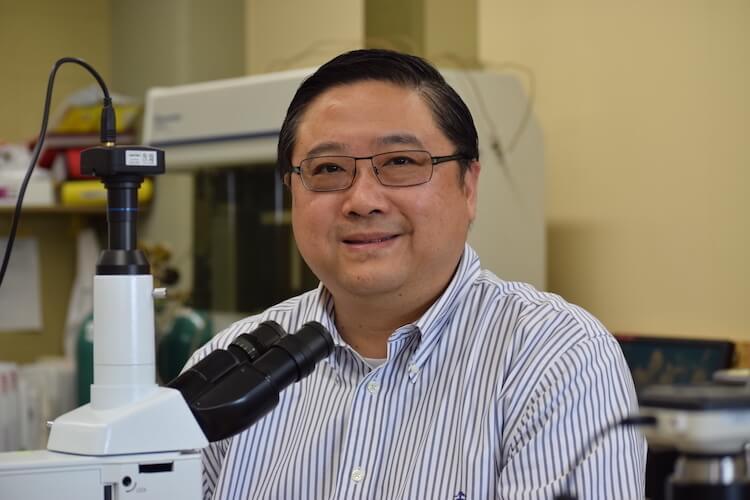
Under the direction of Ryo Amano (pictured), professor, mechanical engineering, the IAC at UWM has provided in-depth, free energy assessments to more than 600 small- and medium-sized manufacturers and utilities—about 20 per year. On average, they received energy-consumption recommendations to save about $150,000 (15 percent) per facility annually, higher than the national IAC average of $130,000.
This unprecedented round of DOE funding will strengthen the impact of the nation’s energy systems. In addition to recommending strategies related to energy, the centers will broaden their focus to include enhancing decarbonization, electrification, cybersecurity, smart manufacturing, promoting resiliency planning, and increasing the number of businesses served in underrepresented communities.
America’s “best and brightest” students helping manufacturers save energy
“America’s best and brightest university students are successfully helping local manufacturers reduce pollution, save energy, and cut their electricity bills,” said Secretary of Energy Jennifer M. Granholm, in a DOE press release.
The DOE’s support will help ensure that UWM can train energy engineering students in emerging technologies in the field.
Which Wisconsin manufacturers will benefit from DOE funding
The DOE’s funding also means Wisconsin small- and medium-sized industries, and those located in disadvantaged communities, will receive a substantial economic impact for the next five years, says Amano.
For all clients, Amano says, the program identifies opportunities for optimizing energy efficiency and environmental performance and promotes emerging concepts and technologies, research and development for renewable and alternate supply heat/power for energy-intensive manufacturers and wastewater treatment facilities.
On average, companies implement around 40% of the Industrial Assessment Center’s recommendations, he says, and break even on their investments in two years.
Amano will conduct overall industrial assessments for energy savings, water and wastewater treatment. Smart manufacturing assessments will be conducted by Wilkistar Otieno, associate professor and department chair, industrial & manufacturing engineering. Energy assessments within the foundry industry will be led by Pradeep Rohatgi, State of Wisconsin and UWM Distinguished Professor, materials science & engineering, and director of the UWM Center for Composite Materials.
Thank you to the Wisconsin partners who made this possible
Amano has established an outstanding reputation internationally for his energy research. In Wisconsin, he has developed partnerships with government agencies, industrial entities, non-profit organizations, and other academic institutions, which act as satellite centers.
At every step, U.S. Senator Tammy Baldwin and Wisconsin Governor Tony Evers have strongly supported the IAC and its mission, Amano says.
Government partners include:
Wisconsin Government Office of Sustainability and Clean Energy
City of Milwaukee’s Environmental Collaboration Office