Engineering MS: Mechanical Engineering MS
The mechanical engineering master’s degree program offers a focused learning environment that will deepen your understanding of core mechanical engineering principles and allow you to explore advanced topics with faculty who are pursuing ambitious and high impact research.
An MS degree can also increase your competitiveness in the job market, opening doors to leadership roles and higher-paying positions within the mechanical engineering field.
Master’s students in mechanical engineering can specialize in various areas, such as renewable energy, robotics, battery technology, optics, biomechanics, tribology, water filtration, sensors, composite materials, or HVAC engineering.
Program Type
Master’s
Program Format
On Campus
Industrial Assessment Center (IAC)
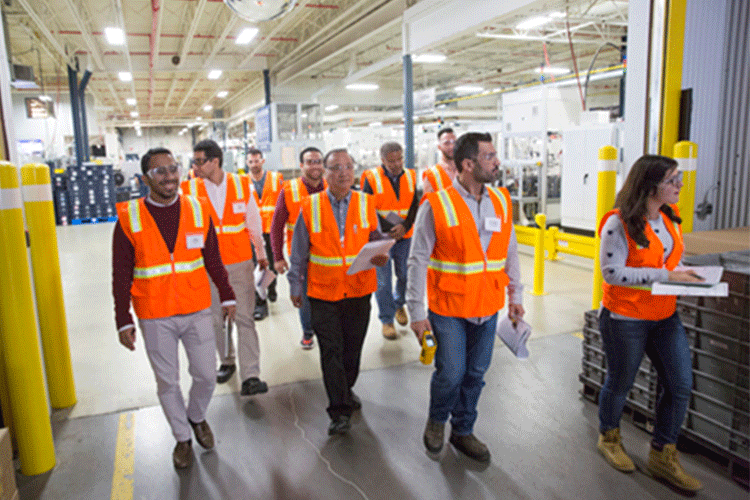
Mechanical engineering faculty and graduate student researchers from UWM’s Department of Energy (DOE) funded IAC have helped over 600 Wisconsin manufacturers to increase productivity and competitiveness by reducing energy and water consumption, enhancing cybersecurity, and adopting smart manufacturing technology. See more detail about the IAC is working on at this link.
Flexibility to achieve your specific goals
The mechanical engineering master’s degree at UWM is designed for both working professionals and aspiring researchers to achieve their respective goals. Students may choose either a thesis (30 credits) or a non-thesis option (31 credits) depending on their career objectives.
As a top R1 research university we strongly believe in critical thinking and the courage to ask bold questions, so we encourage students to pursue the development of a thesis. However, if you have prior engineering or scientific work experience and are seeking an MS for professional advancement, the non-thesis option is a great alternative that requires additional coursework in lieu of a thesis.
The MS in Engineering does not require a rigid set of courses, giving you the flexibility to design a program of study to be compatible with your interests and career objectives. This feature also makes the MS a solid stepping stone for doctoral level study. Please see the academic catalog for specific requirements.
Most students choose to incorporate Teaching Assistantships (TAs) or Research Assistantships (RAs) during their graduate study which helps to fund their education while also building leadership skills. Assistantship decisions are made by the academic departments only after an applicant has been accepted into the program.
More Information
Contact the College of Engineering & Applied Science Graduate Programs Office.
Research Labs for MS Mechanical Engineering
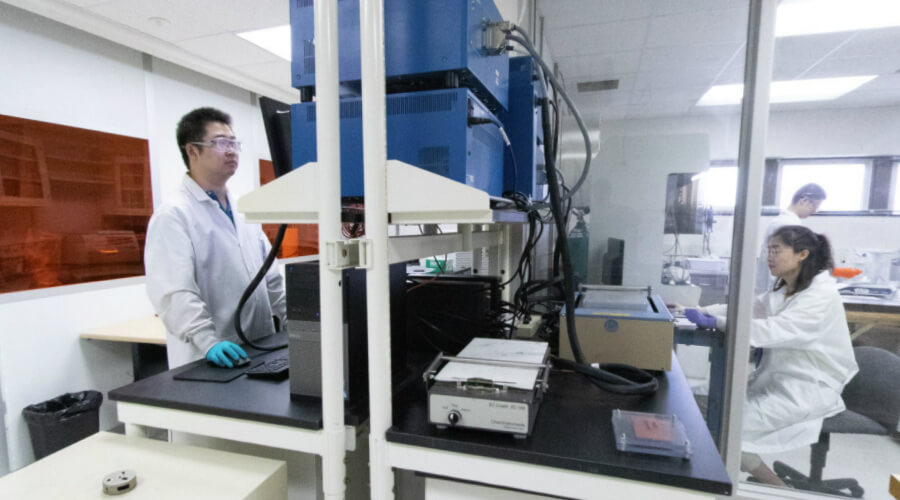
We’re a top tier R1 research university and our mechanical engineering master’s students have the opportunity to work with engineering faculty engaged in cutting-edge research around batteries, energy, optics, rehab robotics, sensors and tribology.
- The team at the Center for Sustainable Electrical Energy Systems (SEES), led by Rob Cuzner, are exploring methods to make electric power systems more sustainable, cost-effective, and secure through research on energy storage, microgrid systems, and renewable energy sources.
- The Connected Systems Institute (CSI), led by Joe Hamann, accelerates innovation by bringing together industry and academic researcher to facilitate digital transformation for small and medium-sized manufacturers, ultimately developing an educational curriculum to better prepare the workforce of the future.
- In the Energy Storage Research Laboratory, led by Deyang Qu, the focus is on fundamental electrochemical research, seeking new materials and understanding reaction mechanisms in the areas of renewable energy, sensor and water treatment.
- The mission of GRid-connected Advanced Power Electrical Systems (GRAPES), led by Rob Cuzner, is to accelerate the adoption and insertion of power electronics into the grid in order to improve system stability, flexibility, robustness, and economy.
- The Industrial Training and Assessment Center (ITAC), led by Ryo Amano, is a Department of Energy program dedicated to helping small and medium-sized manufacturers and wastewater treatment plants minimize their energy costs through efficient use of resources
- The Machine Shop, led by Michael Brown, is a hands-on facility with state-of-the-art manual and computer-assisted equipment and machine tools used by faculty, students, and members of industry.
- The mission of the Movement Analysis for Biomedical Innovation & Technology (Mobility) Laboratory, led by Brooke Slavens, is to advance quantitative rehabilitation research for improving health and function of persons with disabilities.
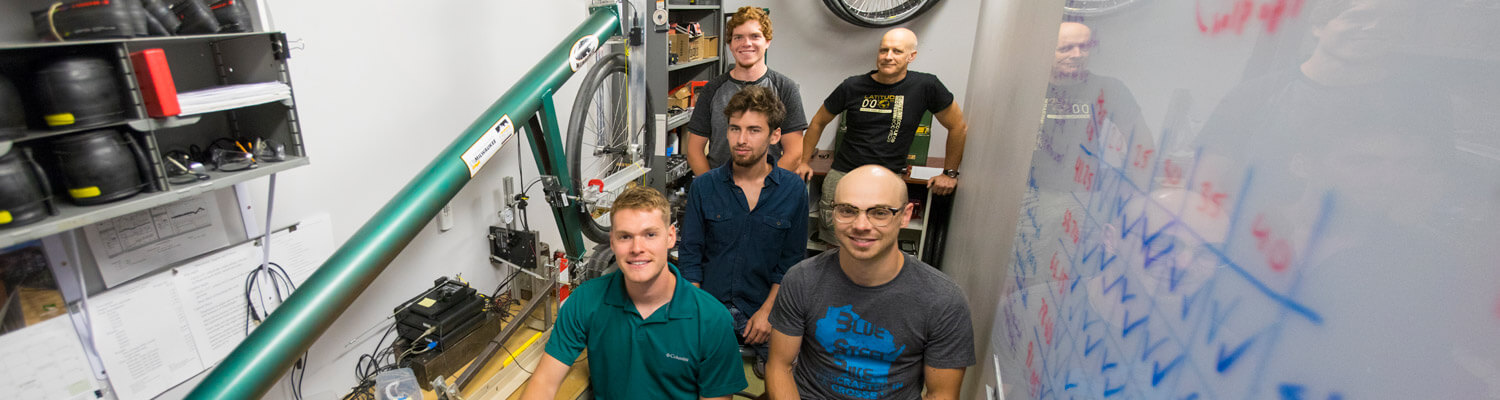
- The Bicycle and Motorcycle Engineering Research Laboratory, led by Andrew Dressel, helps manufacturers around the world to make their two and three-wheeled vehicles safer and more efficient. They offer students the opportunity to collaborate with manufacturers in designing and building test equipment, collecting and analyzing data, formulating mathematical models, and building prototypes.
Our college has a wide range of faculty-led labs that perform cutting edge research.
Faculty
- Professor, Mechanical Engineering
- Director, Industrial Assessment Center (IAC)
- amano@uwm.edu
- 414-229-2345
- University Services and Research 201L

- Professor, Mechanical Engineering
- bsra@uwm.edu
- 414-229-6916
- Engineering & Mathematical Sciences 990B

- Professor, Mechanical Engineering
- Director, Lubar Entrepreneurship Center (LEC)
- Co-Founder and Executive Director, UWM Student Startup Challenge
- Director (PI), Milwaukee Regional Energy Education Initiative
- avdeev@uwm.edu
- 414-229-6949
- Engineering & Mathematical Sciences 1181
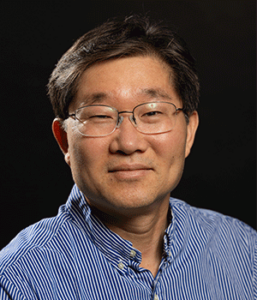
- Associate Professor, Mechanical Engineering
- wjchang@uwm.edu
- 414-229-6614
- Engineering & Mathematical Sciences 1113
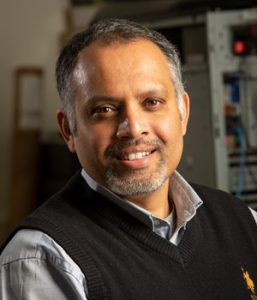
- Richard and Joanne Grigg Professorship
- Associate Professor, Mechanical Engineering
- dsouza@uwm.edu
- 414-229-6952
- Engineering & Mathematical Sciences E326

- CEAS Lab Manager
- Lab Manager, Makerspace
- judes@uwm.edu
- 414-229-5192
- Engineering & Mathematical Sciences W149

- Teaching Faculty II, Mechanical Engineering Department
- lim7@uwm.edu
- 414-977-7682
- Engineering & Mathematical Sciences Building W350
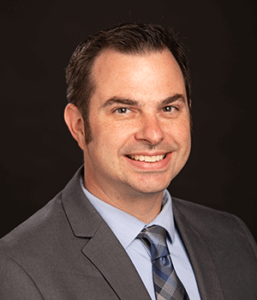
- Assistant Professor, Mechanical Engineering and Materials Science & Engineering
- musinski@uwm.edu
- Engineering and Mathematical Sciences EMS 910D
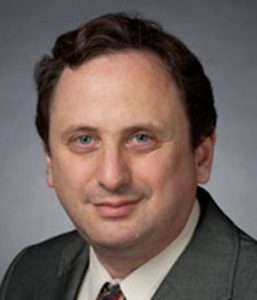
- Professor, Mechanical Engineering
- nosonovs@uwm.edu
- 414-229-2816
- Engineering and Mathematical Sciences 1125
- Professor, Mechanical Engineering
- krishna@uwm.edu
- 414-229-6535
- Northwest Quadrant 4521 SFS 3021
- Johnson Controls Endowed Professor in Energy Storage Research
- Department Chair, Biomedical Engineering
- UWM Distinguished Professor, Mechanical Engineering
- qud@uwm.edu
- 414-251-5817
- Engineering and Mathematical Sciences E308
- Richard and Joanne Grigg Professorship
- Professor and Department Chair, Mechanical Engineering
- Affiliate Professor, Computer Science and Biomedical Engineering
- Switzer Research Distinguished Fellow
- rahmanmh@uwm.edu
- 414-251-8406
- University Services & Research Building (USRB) 201D

- Professor, Mechanical Engineering
- Secretary of the University
- reisel@uwm.edu
- 414-229-4671
- Engineering and Mathematical Sciences 1213| LUB 451
- Distinguished Professor, Materials Science and Engineering Department
- Distinguished Professor, Biomedical Engineering
- Distinguished Professor, Mechanical Engineering
- Director, Center for Advanced Manufacture of Materials
- prohatgi@uwm.edu
- Engineering and Mathematical Sciences 574

- Alan D. Kulwicki '77 Faculty Fellowship
- Associate Professor, Mechanical Engineering
- Founder, Advanced Structures Laboratory
- salowitz@uwm.edu
- 414-251-8030
- Engineering and Mathematical Sciences 1155

- Scientist I, Mechanical Engineering Department
- Associate Director, Mobility Lab
- paulaj@uwm.edu
- 414-251-7746
- Accelerator Building, Innovation Campus 135, Lab 140
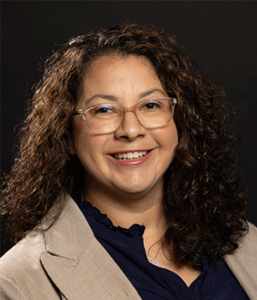
- Richard and Joanne Grigg Professor of Mechanical Engineering, EMS Office 1080
- Affiliate Faculty of Biomedical Engineering and Rehabilitation Science & Technology
- slavens@uwm.edu
- 414-229-6933
- Accelerator Building, Innovation Campus 135, Lab 140

- Professor, Mechanical Engineering
- Professor, Art & Design
- Director of Academic Engagement & Creative Impact, Lubar Entrepreneruship Center
- sternn@uwm.edu
- 414-477-9602
- Engineering and Mathematical Sciences 755
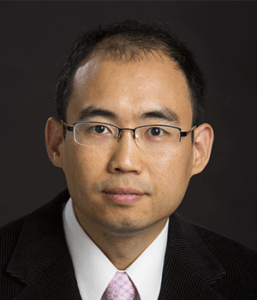
- Associate Professor, Mechanical Engineering
- Associate Professor, Biomedical Engineering
- ysung4@uwm.edu
- 414-251-8147
- Physics 333
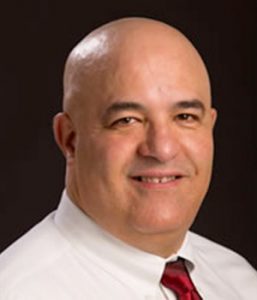
- Teaching Faculty 3, Mechanical Engineering
- yahiaoui@uwm.edu
- 414-229-7181
- Engineering & Mathematical Sciences E265
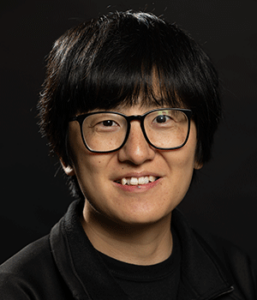
- Scientist I, Mechanical Engineering Department
- zhang389@uwm.edu
- 414-870-6401
- Engineering & Mathematical Sciences W283
- Scientist III, Mechanical Engineering Department
- zhengd@uwm.edu
- Engineering & Mathematical Sciences 810
Advising
- Advisor, Graduate Programs
- Computer Science, Electrical Engineering, Biomedical Health Informatics
- crary@uwm.edu
- 414-229-7267
- Engineering & Mathematical Sciences E387C

- Advisor, Graduate Programs
- Civil/Environmental Engineering, Mechanical Engineering, Biomedical Engineering, Industrial/Manufacturing Engineering, Materials Science & Engineering
- rpackard@uwm.edu
- 414-251-8543
- Engineering & Mathematical Sciences E387B
UWM is proud to be one of only two R1 research universities in Wisconsin. We’re also a top externally funded institution with robust opportunities for teaching and research assistantships for students who are pursuing a master’s in mechanical engineering. Partners that support our important research include:
- National Academy of Sciences, Engineering & Medicine
- National Science Foundation
- United States Department of Defense
- United States Department of Energy
- Regional businesses: Johnson Controls, Rockwell Automation, Harley Davidson, We Energies
American Institute of Aeronautics & Astronautics
AIAA is the largest aerospace professional society in the world, and its members help make the world safer, more connected, more accessible, and more prosperous.
American Society of Mechanical Engineers
ASME promotes knowledge of the theory and practice of mechanical engineering, and offers the opportunity to participate in activities that promote a professional awareness of mechanical engineering.
Prototyping Club
PC provides students the tools, knowledge, and support to develop an idea into an invention.
Society of Automotive Engineers
SAE provides members an opportunity to gain insight into the engineering profession by offering hands on engineering experience through student design competitions like the BAJA vehicle challenge, monthly meetings with engineering professionals, and local industry tours.
See our college’s Student Organization page to find more information about getting involved.