Engineering
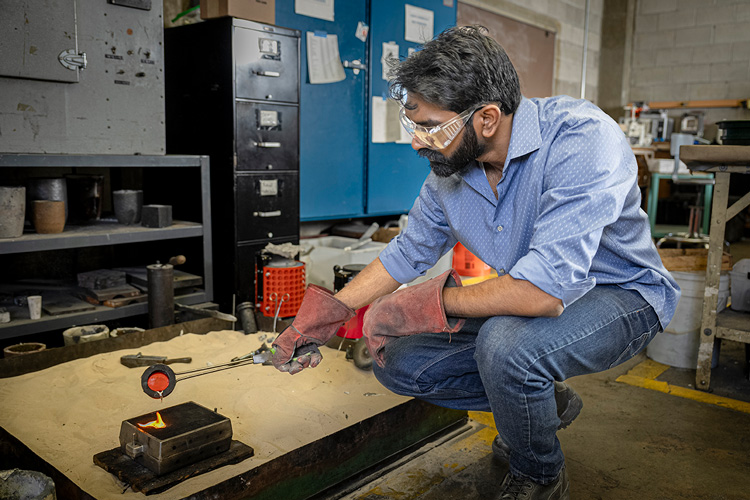
Grad student researched 1,000 schools before choosing UWM
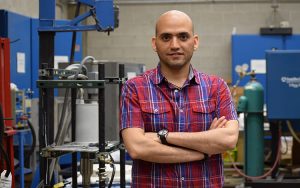
Meysam Tabandeh-Khorshid is moving on to a paid internship with Apple after earning his doctorate in materials science and engineering.
10 ways UWM engineers improved Milwaukee and the world
As the school celebrates its 50th anniversary, here are 10 ways the College of Engineering & Applied Science has made the world greener, safer and more energy-efficient.
A wrench fends off injury, feeds the economy
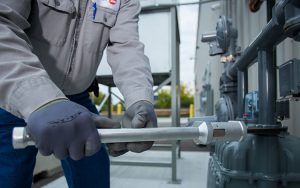
Engineering Professor Naira Campbell-Kyureghyan and her students designed a wrench that reduces injuries among gas utility workers, prompting a Wisconsin-based tool company to snap up the license and sell the product.
Metals smart enough to save gas
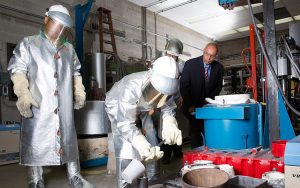
A UWM scientist invented a self-lubricating metal that increases fuel efficiency in cars, and he’s working with alumni and industry partners to bring the “super metal” to market.
Companies team up with UWM to conserve energy, cut costs
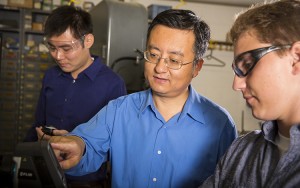
The Department of Energy-funded Industrial Assessment Center embeds UWM engineering professors and students in manufacturing plants, where they make recommendations that have helped manufacturing companies save $6.5 million to date.
Building a better way to supply energy
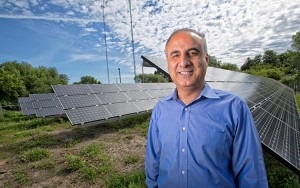
Microgrids developed by UWM engineer Adel Nasiri could make green energy more widely available and help prevent wide-spread power outages.
At long last: A concrete that’s nearly maintenance-free
Scott Muzenski, a civil engineering graduate student, had been working on a new kind of high-performance concrete.
UWM engineer does pioneer study on green manufacturing of electric car batteries
UWM researcher Chris Yingchun Yuan is investigating the environmental sustainability of the next generation of electric car batteries.
Super-surfaces suggested by nature
UWM’s Michael Nosonovsky is among those scientists who are approaching Technical problems through biomimicry – borrowing strategies from plants and animals.
UWM researchers create novel optical fibers
UWM researchers have found the first practical application of a Nobel-Prize-winning phenomenon that was proposed in 1958.