10 ways UWM engineers improved Milwaukee and the world

As the school celebrates its 50th anniversary, here are 10 ways the College of Engineering & Applied Science has made the world greener, safer and more energy-efficient.
News from the University of Wisconsin-Milwaukee
As the school celebrates its 50th anniversary, here are 10 ways the College of Engineering & Applied Science has made the world greener, safer and more energy-efficient.
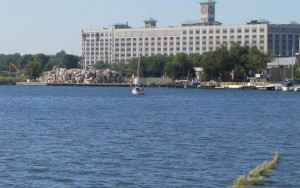
The largest grant from the Fund for Lake Michigan’s efforts to improve water quality is $190,000 to the UW-Milwaukee School of Freshwater Sciences to conduct an extensive aquatic survey of the city’s harbor. UWM will work with the Department of Natural Resources, Army Corps of Engineers, Harbor District, Inc. and other stakeholders to advance harbor […]
A UWM scientist can determine the age of drinking water in distribution pipes by measuring “leftovers” from 1950s atomic weapons testing. The method could help improve water quality at the tap.
The director of the Racine Health Department Laboratory says UWM students and grads play an important role in monitoring water quality for southeast Wisconsin residents.
A study by UWM’s Rebecca Klaper at the University of Wisconsin-Milwaukee determined exposure to the diabetes medicine metformin causes physical changes in male fish exposed to doses similar to the amount in wastewater effluent.
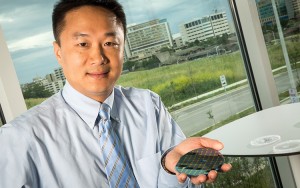
Junhong Chen, a UWM professor of mechanical and materials engineering, will use a sensor platform he created to detect water contamination to make the low-cost virus sensor.
Thanks to UWM assistant professors, athletes had access to up-to-the-minute water temperature and bacteria level measurements.
UWM researchers a have been working with the Milwaukee Health Department to study the health of Milwaukee’s beaches and the surrounding water.