How healthy is Green Bay? The mayflies know
The disappearance of the insect has robbed Lake Michigan’s Green Bay of what UWM biologist Jerry Kaster refers to as a once bustling “walleye factory.”
News from the University of Wisconsin-Milwaukee
The disappearance of the insect has robbed Lake Michigan’s Green Bay of what UWM biologist Jerry Kaster refers to as a once bustling “walleye factory.”
How does a nonprofit organization operate in a society that has different notions of what philanthropy is?
A UWM research group has identified new characteristics in a sheet of graphene layered on top of a semiconductor.
UWM Assistant Professor Michael Zimmer, his students and research have created the online multimedia trove that is “The Zuckerberg Files.”
UWM and partner institutions have landed a $25 million grant from the National Science Foundation to conduct work that could transform the study of diseases.
Helping older people who lose their jobs deal with that reality is a challenge for mental health professionals.
Ira Driscoll researches the genetic risks for diseases like Alzheimer’s and dementia, and seeks out early predictors of these disorders.
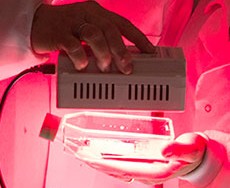
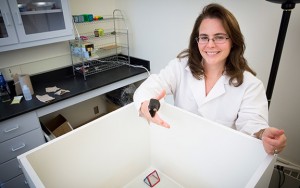
Scientists have known for years that light can heal, but they are only now uncovering exactly how it works, thanks in large part to three UWM faculty researchers.
In a new study, Karyn Frick, professor of psychology at the University of Wisconsin-Milwaukee, uncovers details about estrogen’s role in the complex cellular communication system underlying memory formation.
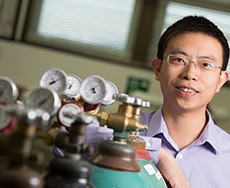
Recycling carbon dioxide into fuel would mean that fossil fuels could be used with little increase in greenhouse gas emissions.