Freshwater Sciences, MS MS
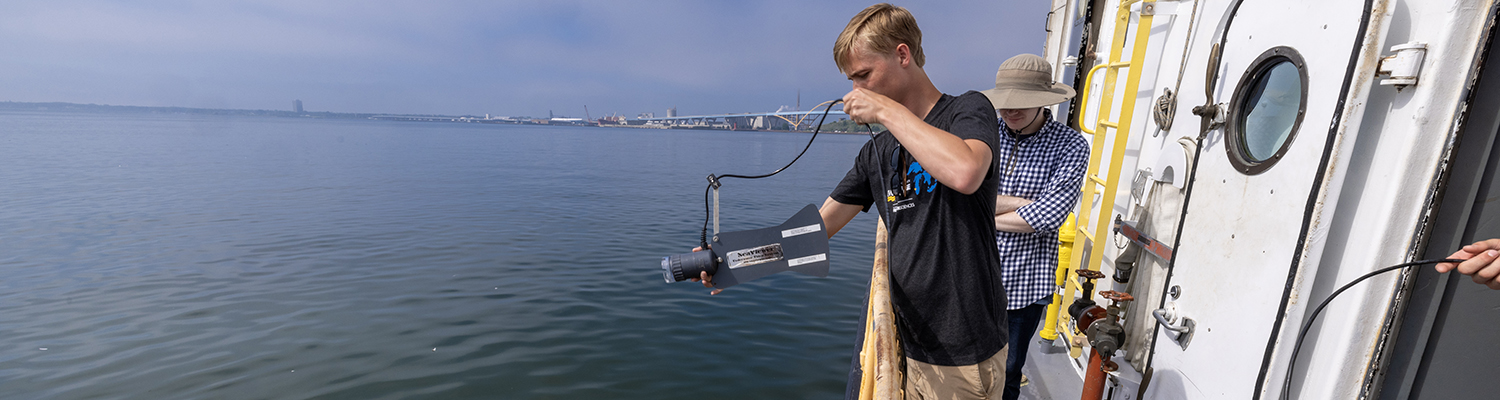
Learn how to use science to address complex environmental challenges at the nation’s only School of Freshwater Sciences. Located on the shores of Lake Michigan, our school offers a unique opportunity to study freshwater ecosystems, climate change, and weather patterns while applying science to shape policy and drive real-world solutions.
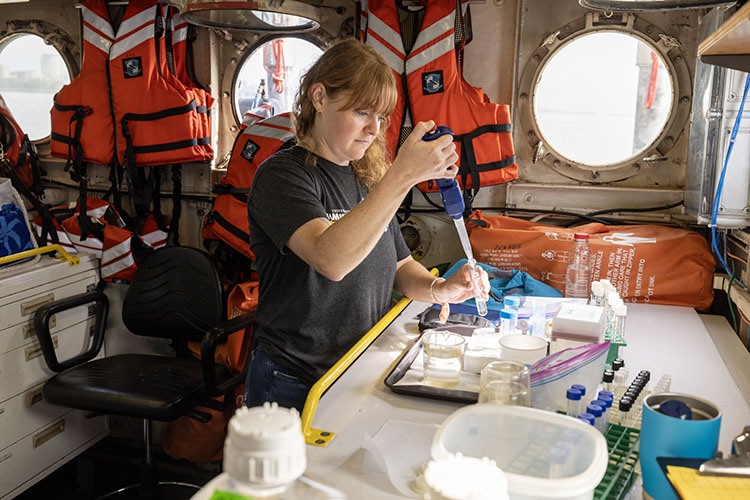
Freshwater and marine systems are deeply interconnected, making freshwater sciences an essential foundation for those interested in marine science or oceanography. Rivers, lakes, and groundwater feed the oceans, influencing coastal pollution, nutrient cycles, and ecosystem health. Climate change affects both freshwater and marine environments, emphasizing the need to study water systems from their sources to their broader environmental impacts to fully understand global water dynamics. A degree in freshwater sciences offers hands-on experience in water quality analysis, ecosystem monitoring, and policy development, equipping students with skills for careers in research, conservation, government, non-government agencies, consulting, and industry.
Program Type
Master’s
Program Format
On Campus
Hands-On Skills. Fulfilling Careers.
Curious where a degree in freshwater sciences can take you? Water is a rapidly growing global industry, and your skills will be in demand. Whether you’re interested in research, conservation, technology, policy, or public health, you’ll be ready to make an impact.
The School of Freshwater Sciences offers personalized career advising and strong connections to professionals across science, government, nonprofits, and industry. We’ve also established a group of water leaders from all sectors to advise our programs and support students—helping us meet future workforce needs and advance as a global leader in freshwater sciences.
- Aquatic Science (Professional)
- Aquatic Science (Thesis)
- Water Policy (Professional)
- Water Policy (Thesis)
Aquatic Science (Professional)
Water is one of the fastest-growing sectors of the global economy. Employers are looking for professionals who understand freshwater ecosystems and the challenges facing them. Through our MS Professional program, we are empowering students with the knowledge, skills, and experience to meet this critical demand.
The Aquatic Science Track focuses on the structure and function of freshwater ecosystems and the impacts of climate change, pollution, and invasive species on those ecosystems. Through hands-on fieldwork, lab training, and an internship, students gain practical experience in areas like fish health and management, water quality monitoring, ecosystem analysis, and environmental health. This immersive approach equips students with the skills needed to address real-world challenges in freshwater systems. Students in the professional program are not supported by assistantships.
MS Professional students prepare for a freshwater career through rigorous coursework and a 480-hour internship with a water-related organization. This combination of academic and real-world training provides our students with a competitive edge in the job market. Professional students leave the program ready to use their training in a wide variety of career paths.
Internship Requirement
The MS Professional program requires the completion of a 480-hour internship with a water-related organization of the student’s choice. Internship experiences focus on complex regional, national, and global water problems and often involve authentic, practical problems in the field.
Funding
MS Professional Students are responsible for the costs of tuition and student fees. Financial aid and scholarships are available to help cover these costs.
Application Deadlines, Admission Information, and Program Requirements are available in the UWM Catalog.
Aquatic Science (Thesis)
Freshwater ecosystems face unprecedented challenges. To meet hose challenges, we need scientists who can enhance our understanding of these ecosystems and contribute to real-world solutions. Through our MS Thesis program, we are training the next generation of freshwater scientists to do just that.
MS Thesis students design and carry out original research under the guidance of a faculty advisor. In doing so, students learn the fundamentals of research and collaborate with the School of Freshwater Sciences’ world-class faculty and scientists. Our MS Thesis students expand the overall understanding of complex freshwater ecosystems, develop innovative technologies and help shape sustainable water policies.
The Aquatic Science Track is for students interested in research, water ecology, and developing innovative solutions. The thesis track provides an interdisciplinary, research-focused education. Students work closely with faculty to conduct original research, develop new technologies, and contribute to advancing freshwater science.
Thesis Requirement
The MS Thesis program requires the completion of thesis research conducted with oversight from the student’s advisory committee. Thesis research is expected to be of a caliber sufficient for publication in a peer-reviewed journal. Satisfactory completion of the thesis, including successful defense, is required for graduation.
Funding
Thesis students require the support of a research assistantship, which provides tuition remission, a monthly stipend, and health insurance. Research assistantships are funded through project grants obtained by individual faculty members; availability varies. Before applying to the MS Thesis program, prospective students are strongly encouraged to contact faculty members they are interested in working with.
Application Deadlines, Admission Information, and Program Requirements are available in the UWM Catalog.
Water Policy (Professional)
Water is one of the fastest-growing sectors of the global economy. Employers are looking for professionals who understand freshwater ecosystems and the challenges facing them. Through our MS Professional program, we are empowering students with the knowledge, skills, and experience to meet this critical demand.
The Water Policy Track equips students with the skills needed to work in policy consulting and environmental management. Students gain real-world experience through a practicum in water policy and an internship. Students in the professional program are not supported by assistantships.
MS Professional students prepare for a freshwater career through rigorous coursework and a 480-hour internship with a water-related organization. This combination of academic and real-world training provides our students with a competitive edge in the job market. Professional students leave the program ready to use their training in a wide variety of career paths.
Internship Requirement
The MS Professional program requires the completion of a 480-hour internship with a water-related organization of the student’s choice. Internship experiences focus on complex regional, national, and global water problems and often involve authentic, practical problems in the field.
Funding
MS Professional Students are responsible for the costs of tuition and student fees. Financial aid and scholarships are available to help cover these costs.
Application Deadlines, Admission Information, and Program Requirements are available in the UWM Catalog.
Water Policy (Thesis)
Freshwater ecosystems face unprecedented challenges. To meet hose challenges, we need scientists who can enhance our understanding of these ecosystems and contribute to real-world solutions. Through our MS Thesis program, we are training the next generation of freshwater scientists to do just that.
MS Thesis students design and carry out original research under the guidance of a faculty advisor. In doing so, students learn the fundamentals of research and collaborate with the School of Freshwater Sciences’ world-class faculty and scientists. Our MS Thesis students expand the overall understanding of complex freshwater ecosystems, develop innovative technologies and help shape sustainable water policies.
The Water Policy Track is for those interested in water economics and policy, the thesis track offers an interdisciplinary approach, preparing students for careers in research, industry, or further PhD studies. Students will work with experts to conduct original research and develop impactful water policies.
Thesis Requirement
The MS Thesis program requires the completion of thesis research conducted with oversight from the student’s advisory committee. Thesis research is expected to be of a caliber sufficient for publication in a peer-reviewed journal. Satisfactory completion of the thesis, including successful defense, is required for graduation.
Funding
Thesis students require the support of a research assistantship, which provides tuition remission, a monthly stipend, and health insurance. Research assistantships are funded through project grants obtained by individual faculty members; availability varies. Before applying to the MS Thesis program, prospective students are strongly encouraged to contact faculty members they are interested in working with.
Application Deadlines, Admission Information, and Program Requirements are available in the UWM Catalog.