Fleet and Facilities
For more than 50 years, we’ve maintained the largest academic research institute on the Great Lakes.
Our Milwaukee Inner Harbor facility is perfect for studying the largest freshwater ecosystem. The aquaculture center includes teaching labs for aquaculture and aquaponics. Here, we prepare the next generation of sustainable fish farmers. Our marine operations building also hosts a large fleet of vessels for research.
Request Vessel Use
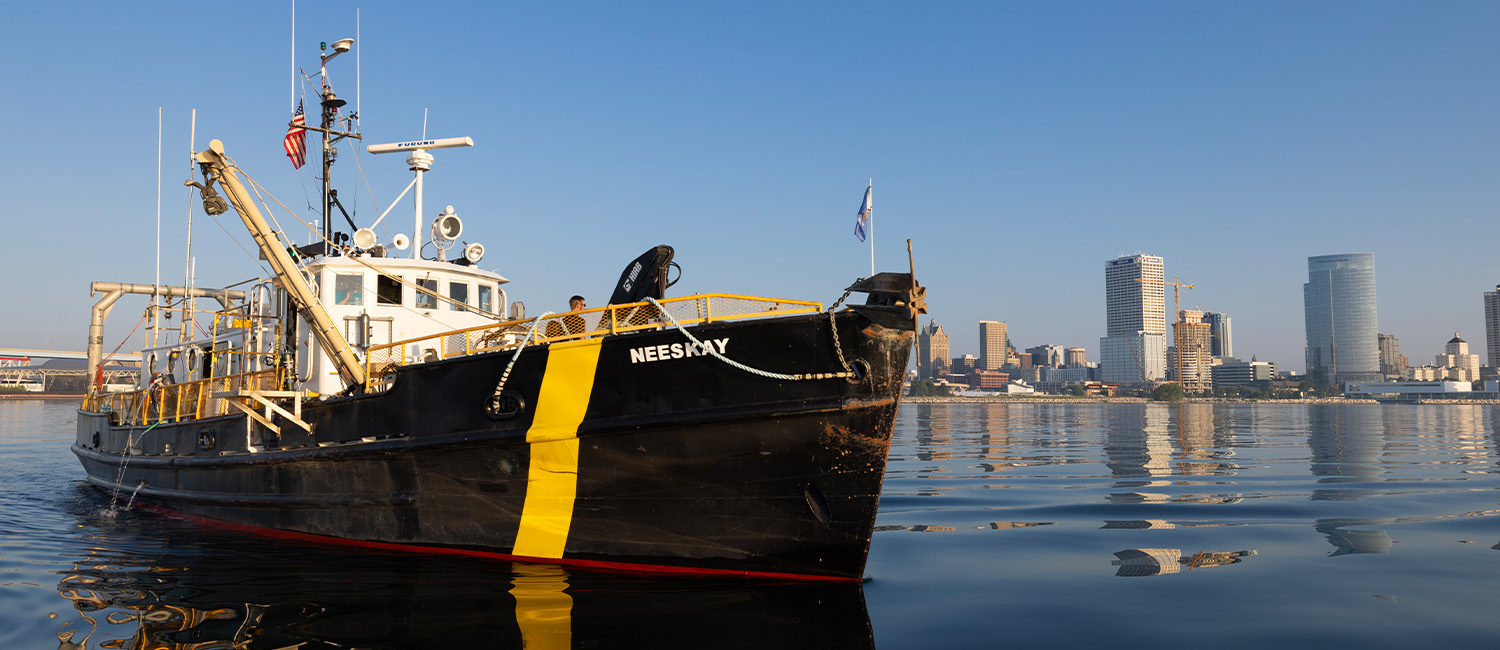
The R/V Neeskay is available to scientists and researchers wishing to study Lake Michigan.
Fleet Research Vessels
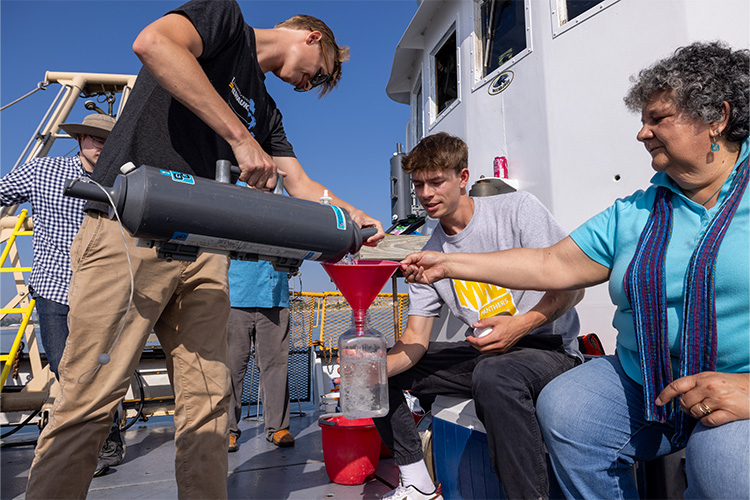
When it’s time to explore Lake Michigan and nearby waters, students, faculty, and scientists have many tools to choose from. This includes our main research vessel, the R/V Neeskay. It also includes smaller boats and remotely operated underwater vehicles.
We are also raising funds to create the most advanced vessel for the Great Lakes. The R/V Maggi Sue will be the most cutting-edge research vessel on the Great Lakes when it’s finished.
Facilities, Equipment and Labs
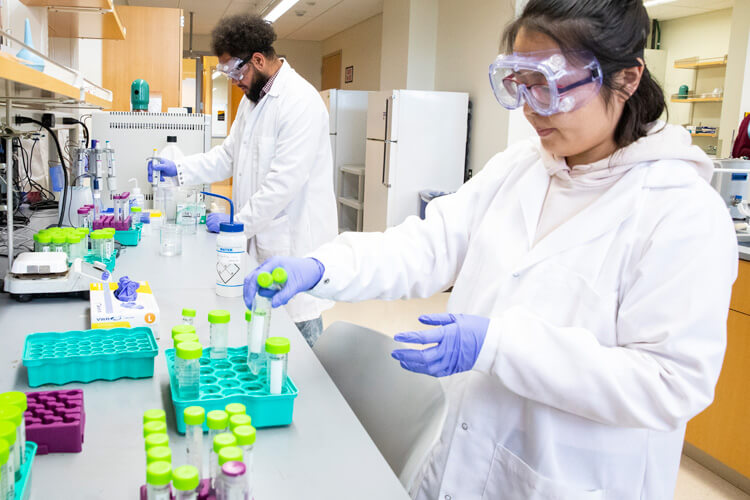
Our research building houses state-of-the-art facilities, including biosecure and quarantine labs for studying aquatic species; a pathogen testing facility; the scenic Harborview Conference Room; and multiple research centers. The School of Freshwater Sciences also operates three seasonal environmental monitoring buoys in Lake Michigan as part of the Great Lakes Observing System.
Great Lakes Observing System
The School of Freshwater Sciences operates three seasonal monitoring buoys in Lake Michigan and Green Bay as part of the Great Lakes Observing System (GLOS). These buoys collect real-time data on weather, waves, currents, and water quality—including temperature, oxygen, pH, and more.
We partner with the National Marine Sanctuaries, Fox-Wolf Watershed Alliance, the National Park Service, and others to expand monitoring across key sites, including Green Bay, Sleeping Bear Dunes, and the Apostle Islands.


Partnering on Lake Michigan
We share our research facilities with several partners on-site. The fisheries division at the Wisconsin Department of Natural Resources teams up with our faculty. They aim to preserve and manage fish populations in the Great Lakes. The United States Department of Agriculture has a unit at the Great Lakes Aquaculture Center. This unit is part of its Agricultural Research Service. This partnership helps us develop advanced aquaculture technologies.
The Lake Guardian, the largest research vessel on the Great Lakes, is part of the U.S. Environmental Protection Agency fleet. It uses our facility as its home port. The Southeast Wisconsin Watershed Trust and Milwaukee Riverkeeper also have offices at our school. Additionally, a Wisconsin Sea Grant economist has an office in the building.