Greetings, BugFans,
Time to chip away at the BugLady’s giant collection of insect articles. Note that most of them are from various (free) on-line reports put out by the Smithsonian.
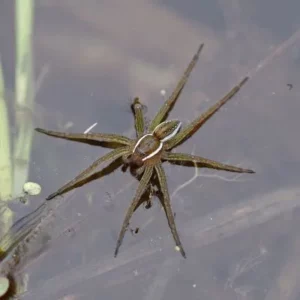
Spiders – We have semi-aquatic spiders around here, too. Most, like the Six-spotted fishing spider are in the nursery web spider family.

Tool-Using Spiders – Scientists get all excited when a new tool-using behavior is discovered in a mammal or bird. Invertebrates use tools, too, like wasps that use small sticks to help excavate nest tunnels in soil, tree crickets that take advantage of curved leaves to amplify their calls, ants that soak up liquids with bits of absorbent materials to make it easier to carry the liquids back to their nests, and some beetle larvae that build a fecal shield for protection. There’s been a good deal of discussion among scientists about what constitutes a “tool,” and some (but not all) of those definitions have included the use of other organisms. View a spider that uses a firefly.
Alien Hornets – Not much in the news this year about the Asian murder/Northern giant hornet – the folks in the Pacific Northwest are cautiously optimistic that they’ve found all the nests. Just when you thought it was safe to get back into the water (metaphorically speaking), along comes the Yellow-legged hornet, on the opposite coast.
Entomophagy (the art and science of eating insects) is gaining in popularity here, but it’s traditionally been a feature of other cuisines. Singapore approved 16 insect species for food.
Buzzing Butterflies – bumble bees are famous for “buzz pollination” – causing flowers to release their protein-rich pollen by grabbing the flower parts that produce pollen (anthers) with their mandibles, disengaging their flight muscles, and vibrating their thoracic muscles mightily. The result is not flight, but movement/shaking of the pollen-holding structures that causes pollen to rain down onto the bee. They are aided in this by the electric charges that build up on their bodies as they fly and that attract pollen. Can butterflies do this?
Ants – Some ants produce their own pharmaceuticals.
Climate Change – WHAT COULD POSSIBLY GO WRONG?
Up Close And Personal – As seasoned BugFans know, the BugLady is a big fan of macro/extreme macro/scanning electron microscope (SEM) photography. Enjoy!
The BugLady