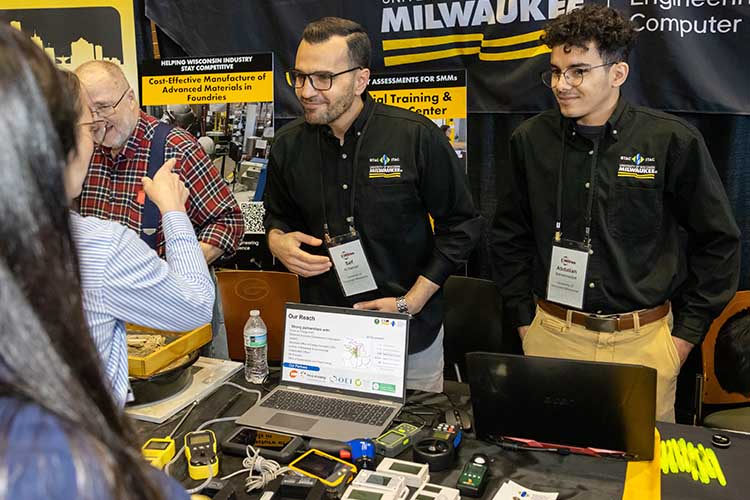
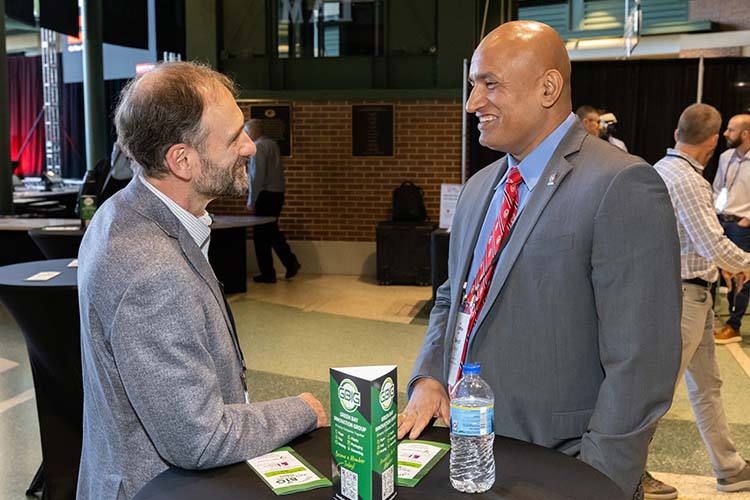
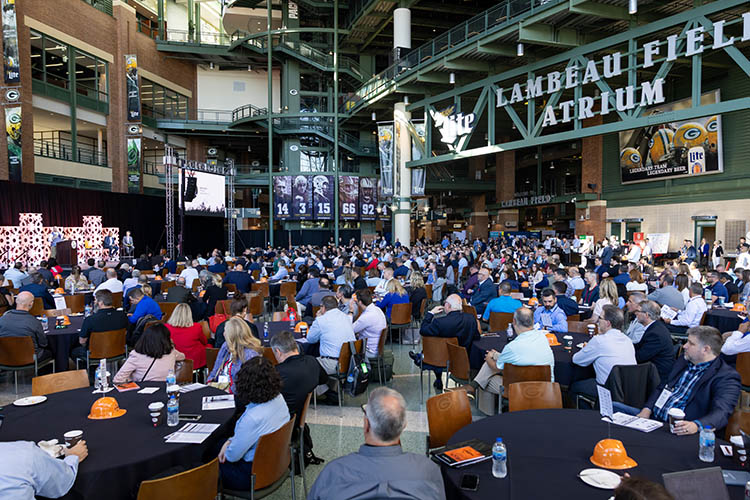
Over 700 industry leaders, educators, researchers, and policymakers recently gathered for an inaugural manufacturing summit focused on strengthening Wisconsin’s position as a national manufacturing leader, leveraging rapidly evolving technologies like AI, digital twins, and smart automation, and autonomous manufacturing.
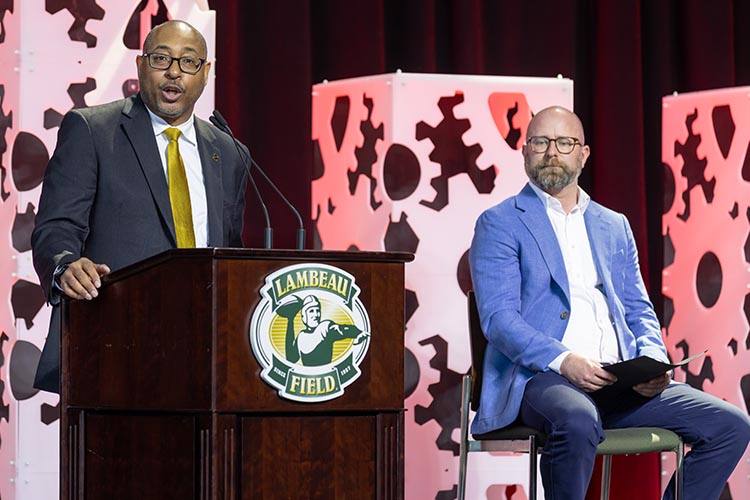
As a co-sponsor of the Wisconsin Drives Manufacturing Summit, UWM played a key role in bringing together stakeholders at Green Bay’s Lambeau Field to identify a statewide strategy for the transformation of manufacturing. UWM Chancellor Thomas Gibson opened the event, emphasizing the importance of collaboration as the next step for transforming the industry.
“Events like this are critical to driving economic growth, advancing technology adoption, and building the skilled workforce our state depends on,” Gibson told the crowd.
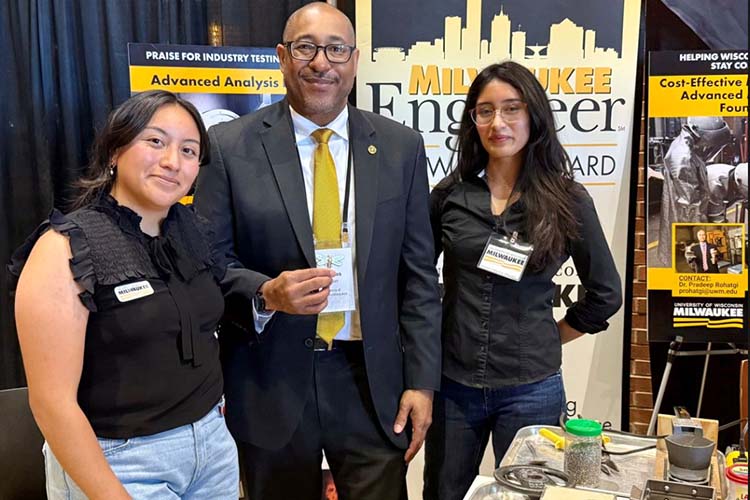
The opening-day “Innovation Showcase” featured UWM’s Connected Systems Institute (CSI), a nine-year-old hub created with Rockwell Automation, Microsoft, and the Wisconsin Economic Development Corporation. The institute fosters collaboration between researchers, students, and industry partners to enable development and advancement of the future manufacturing workforce.
Getting everyone on the same page
The CSI increased its impact with last year’s opening of the Microsoft AI Co-Innovation Lab, a project supported through Microsoft’s $3.3 billion investment in southeast Wisconsin which also funded Titletown Tech. The lab is Microsoft’s first manufacturing-focused artificial intelligence lab designed to help manufacturers explore and implement AI solutions. So far, 50 companies have brought projects to the Co-Innovation Lab.
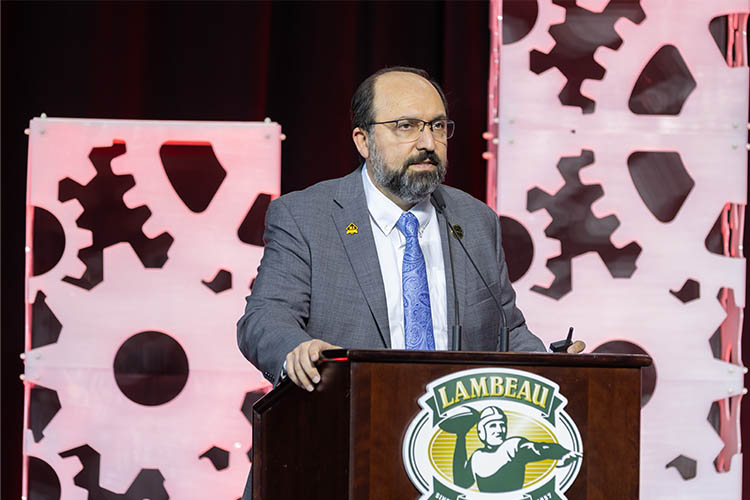
“We’re eager to continue to help lead this group, along with our other UW campuses and the CSI, not only to provide advanced talent, but also to examine how each of us fits into the bigger picture,” said Brett Peters, dean of the UWM College of Engineering & Applied Science. “Broadening and activating our network of allies will be essential if we hope to boost Wisconsin from its current second place ranking in U.S. manufacturing.”
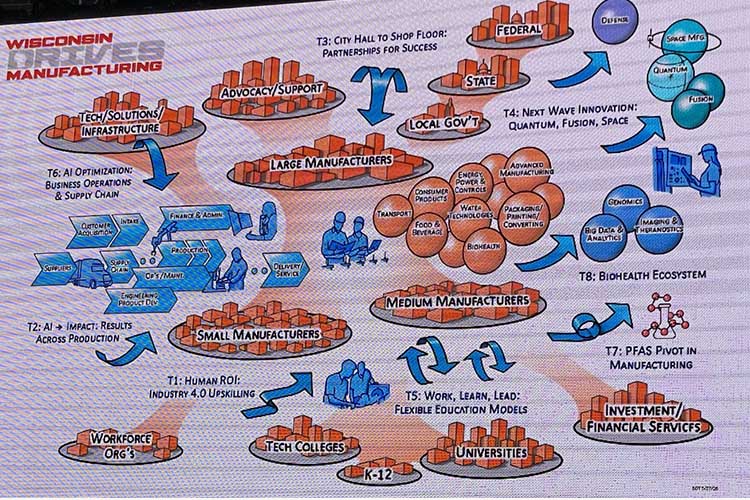
Advanced technologies affecting manufacturing are the same ones that can reimagine the operations of companies in a vast array of fields, from biohealth and transportation to packaging and fusion energy, he added.
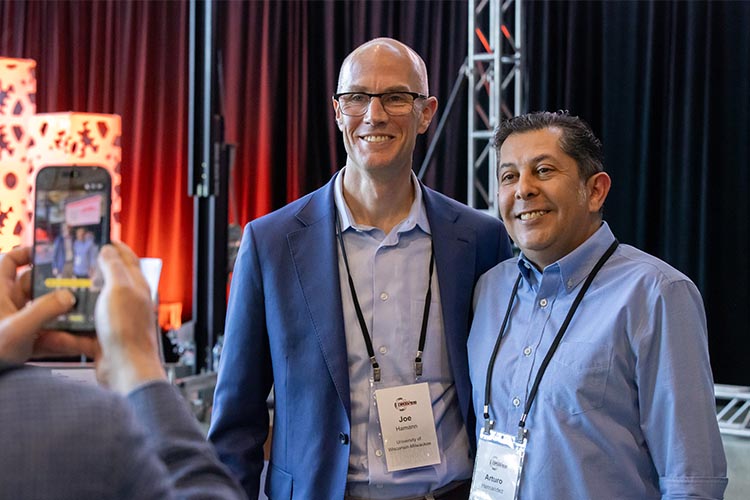
“What the Wisconsin Drives Manufacturing revealed is that most of us are fighting the same battles — we just hadn’t been in the same room,” said Arturo Hernandez, vice president and general manager of Zurn-Elkay and a member of the Industrial Advisory Board for the event. “No one is coming to rescue Wisconsin manufacturing — it’s on us. And partnerships like this show we’re more than capable of shaping what comes next.”
Next steps
Summit leadership team, including representatives from UWM, identified more than 20 follow-up actions to advance manufacturing competitiveness in Wisconsin, said Joseph Hamann, executive director of the CSI.
“Over the next 90 to 180 days, our focus will be translating these actions into tangible outcomes that enable strengthened workforce pipelines and accelerated adoption of advanced manufacturing technologies,” Hamann said. “In parallel, we will work with partners across the state to shape the next iteration of the summit in 2027, informed by progress and priorities emerging from this work.”
On the education side, UWM already has joined forces with six technical colleges to put in place more efficient pathways from the classroom to careers and designed a new engineering major that makes it possible for transfer students from technical colleges to complete an interdisciplinary bachelor’s degree in less time.
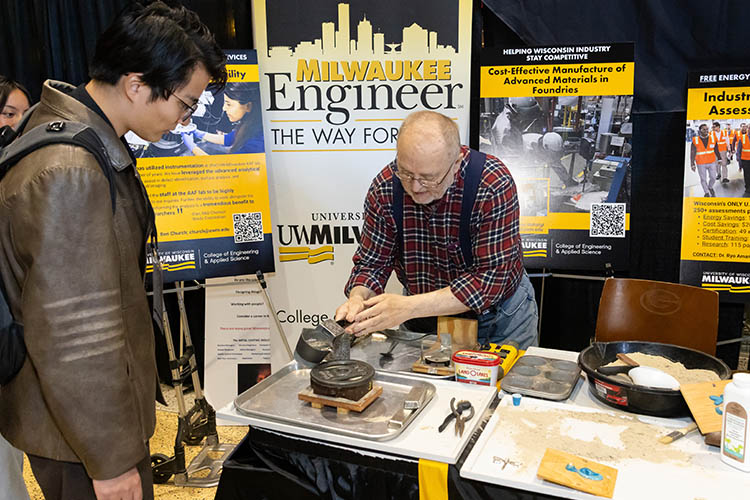
Some of the college’s faculty and students highlighted their work at the summit, ranging from next-gen semiconductor chip research and advanced materials to AI-driven robotics and federally supported energy assessments for small and medium-sized manufacturers.