Meet the wireless-sensing expert now leading UWM’s research mission

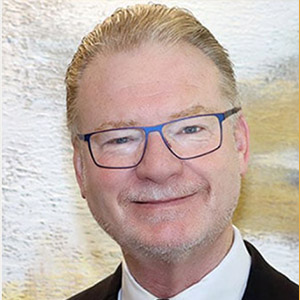
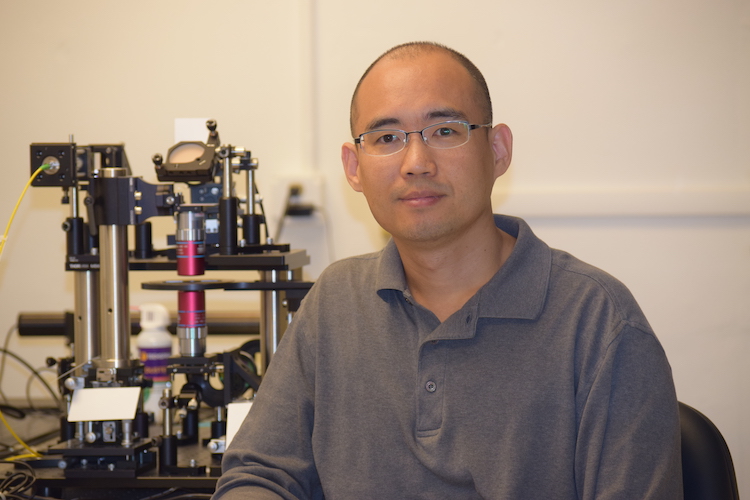
Ali Abedi, UWM’s new Vice Provost for Research, stepped into the role in June and will help steer the future of UWM’s research enterprise while helping faculty find and fund impactful work. His faculty home is in the Electrical Engineering department in the College of Engineering & Applied Science.

Headshot of a middle aged man with dark, thinning hair and glasses.
Ali Abedi

Abedi joins UWM from the University of Maine, where he served as Associate Vice President for Research and was a professor of electrical and computer engineering. Over his 29 years in academia and industry, he’s helped secure more than $43 million in research funding as a principal or co-investigator, with individual awards as large as $20 million from agencies like NASA, NIH, and NSF.

His own research focuses on wireless sensing – technology that gathers information in one place, sends it elsewhere, and uses it to make decisions. He’s led projects in wireless communications and sensor networks with applications ranging from environmental and structural monitoring to space exploration and biomedical devices.

While currently not conducting research in his own lab, he said he is eager to collaborate with others in looking for creative ways to apply wireless sensing concepts to new fields. Laura Otto sat down with him for an interesting conversation.

Why did you want to come to Milwaukee at this moment in higher education?

Everybody said this is the worst time to start a job like this because of all the federal changes. But if I’m going to challenge myself, this might be actually a good time because I think I have some experience that can help faculty. At the same time, there are a lot of compliance issues and federal challenges, so I aim to work as a team to overcome some of these. I think there’s so much potential to move forward here at UWM.

How can we do the same amount of research with fewer resources?

I view my role here at the research office as the convener of people.

We need to convince industry and provide a process for them so they will see us as the best place for them to do their R&D. So that’s one of my goals – to try to work with the engineering, sciences, and other programs to bring in the local industry to us. With [a centralized] approach, if one person leaves the team, the relationship with the company doesn’t crumble.

“We need to convince industry and provide a process for them so they will see us as the best place for them to do their R&D. So that’s one of my goals – to try to work with the engineering, sciences, and other programs to bring in the local industry to us. With [a centralized] approach, if one person leaves the team, the relationship with the company doesn’t crumble.”

Engineering is definitely one of the big players in this area, but we also need to think about teams working together across disciplines rather than a single investigator.

Why is the cross-disciplinary aspect important?

I’ve already identified several of faculty members who are doing very amazing things in a variety of areas. Now they need to go to the next level.

Building interdisciplinary teamshelps faculty members use their knowledge in ways they might not have thought of working alone. Often those topics that they have already spent research time on have different applications in another field.

Today’s problems are so complex we really need to build teams of faculty from multiple colleges, multiple research centers, and work with multiple companies. We need to connect all of these things in a shareable way. It’s a model that federal agencies advocate.

Others have tried to do this, but the university’s financial model makes it challenging.

Yes, but if you keep doing what you’ve always done, you cannot expect different results. 

UWM uses a unique model, which returns 80% of the indirect costs for the research to the host college. But very few institutions are using this approach.

Instead, we should keep a portion of that centrally to be able to support faculty who collaborate across colleges.

The programs we put together in Maine offered more money to projects that included two or three faculty from multiple colleges. The intent was the collaboration would bring in follow-on money. Then, part of the growing proceeds would go back to the campus.

The resources will come if we show improvement. I’m sure the Board of Regents will look at us very differently if they see there’s a culture change here in terms of productivity.

Interdisciplinary also is popular with students, correct?

Yes, and it also helps with the retention.  I used to run the undergraduate research center at my previous institution for many years. Right before accepting this job, we had finished the tracking of 500 students over the years.

We found that those who went through a research experience – almost over 98% of them – graduated with a degree. But for those who did not have the research experience, the retention rate was 60%.

It mirrors other studies on the topic which determined that, as soon as students come and work with a faculty member, no matter in what discipline, it gives them a sense of belonging to the university, helps them feel that people rely on them, and that their role on a research team makes them more motivated in their studies.

“Dr. Abedi brings a collaborative perspective to an all-campus research agenda,” said Andy Graettinger, associate dean for research in the college. “Our college stands to benefit greatly as we weave our faculty’s engineering and computer science expertise across campus under his guidance.”   

Two startups from the college earn Bridge Grant funding

A man sitting next to a wheelchair with a robotic arm. He's looking at the camera.

Two faculty members from the College of Engineering & Applied Science recently received Bridge Grants from the UWM Research Foundation to advance their startup companies.

Launched in 2021, the Research Foundation Bridge Grant Program helps high-potential UWM startups overcome early funding gaps and accelerate their growth. Bridge Grants are supported by a Wisconsin Economic Development Corporation Capital Catalyst grant and donors Dennis and Sue Webb, and Chris and Karl Fiasca.

RoboHeal Innovations

Habib Rahman, professor and chair, mechanical engineering

This startup is helping powered wheelchair users regain independence with its robotic assistive arm, designed to support daily tasks like eating and opening doors. Developed at UWM’s BioRobotics Lab, the arm uses intuitive controls, such as eye-gaze and chin-operated joysticks.

Intelligent Composites

Pradeep Rohatgi, professor, materials science & engineering

Intelligent Composites is improving drone engine performance with ultra-light, high-strength, self-lubricating aluminum composites. The drone’s cylinder liners, made of self-lubricating and lightweight composites, boost fuel efficiency, reduce oil consumption, reduce emissions, and extend range. The company is now developing advanced liners for compressors, small engines, and generators, in addition to drones.

Wind energy researcher wins the 2025 ASME Turbo Expo Early Career Engineer Award

two men looking at the camera and holding an award certificate

Saif Al Hamad (’24 PhD, mechanical engineering), a research associate in the UWM Wind Tunnel Facility, has been named a recipient of the 2025 ASME Turbo Expo Early Career Engineer (TEECE) Award, a prestigious honor presented by the American Society of Mechanical Engineers’ International Gas Turbine Institute (IGTI).

This award recognizes outstanding early-career professionals in the field of turbomachinery who have demonstrated excellence in research and are actively contributing to advancements in energy systems. Only 20 engineers worldwide were selected for the 2025 cohort.

Al Hamad, who also is assistant director at the U.S. DOE Industrial Training and Assessment Center, presented his work on how new blade shapes work together with the air to make small wind turbines more efficient. By designing better blade shapes and understanding how air interacts with them, engineers can make wind turbines that produce more power, even at small sizes.

The TEECE Award supports recipients by providing registration and travel to the ASME Turbo Expo conference recently held in Memphis, Tenn. The award is open to engineers who are within five years of earning their most recent degree in a turbomachinery-related discipline.

Three UWM doctoral students also presented at the same conference, Kada Kada, Areej Khalil, and Md Tarif Raihan. All are advised by Ryo Amano, Kulwicki Fellow Professor.

Rammer cohosts the Philippines’ only motion analysis lab benefiting children

A group of people stand behind a male youth in a wheelchair. All are looking at the camera.

While Jacob Rammer was still a PhD student, he and his advisor built a human motion analysis lab on a shoestring budget – using off-the-shelf parts instead of expensive commercial systems. Their goal? To provide functional, affordable technology to hospitals in countries where standard labs like those in the U.S. are out of reach.

That scrappy effort eventually blossomed into a powerful partnership. Thanks to a connection with a post-doctoral researcher from the Philippines, Rammer and his advisor formed ties with clinicians at the University of the Philippines-Manila and the Philippine General Hospital.

The impact has been significant.

The Philippines stretches across 2,000 inhabited islands; Philippine General in Manila is the only place in the nation where children with mobility issues – caused by conditions like cerebral palsy, brittle bone disease, and cancer – can receive specialized orthopedic care.

An man wearing a mask places reflective tags on the legs of a child with a walking disability.
Rammer places reflective markers and knee alignment devices on the patient to identify key anatomical landmarks in movement tracking. Rammer is introducing a prototype smartphone app to collect data in real-world settings. (Photos used with permission from Philippine General Hospital.)

What is human motion analysis? “Think of a room fitted with cameras around the perimeter,” explained Rammer, now an assistant professor of biomedical engineering. “We place reflective markers on the patient’s body, and a computer translates their movement into precise data that shows us how they walk or move.”

What began as a low-cost lab experiment has a service record of 4,000 patients. Today, the collaboration also includes research, offering Rammer’s lab a rare opportunity to study diverse, often underrepresented conditions.

What engineering researchers offer

“Most of our patients have cerebral palsy, a disease that can vary significantly from child to child,” Rammer said. “This kind of technology really helps clinicians figure out what’s working, and what’s not.”

The exacting data the lab provides is vital for pediatric patients, especially those going into or recovering from surgery. Many use braces, orthotics, or wheelchairs and it’s crucial for doctors to know how they’re progressing after they go home.

“After surgery, parents naturally want to be protective,” Rammer said. “But for bones to heal and grow properly, kids need physical stress. The challenge is striking a balance – encouraging safe activity without putting them at risk.”

To help maintain that balance, Rammer and his students developed a smartphone app that tracks patients’ movement and activity levels. It allows clinicians to stay connected between visits – and gives them insight into how recovery is going at home.

From Milwaukee to Manila: student involvement

The app supports comprehensive gait analysis and collects daily movement data – offering a fuller picture of long-term mobility during rehabilitation. Eventually, Rammer hopes to automate the system using AI, giving doctors a dashboard view of any issues in real time.
“Right now, we’re pulling the data manually and recording it on Excel sheets,” he said. “But soon, clinicians could get immediate updates and alerts about mobility problems without having to dig through files.”

Rammer hasn’t yet taken students with him to the Philippines (though a study abroad course is in the works). Still, they’re deeply involved. Undergraduate students in his lab help process the data and learn how to draw conclusions. They’re also collaborating with master’s students in bioinformatics to develop the app’s backend and data tools.

And because the work often requires custom solutions, students are involved in building both software and physical devices. “Every research project leads us to invent something – whether it’s a tool, a sensor, or a program,” he said

For Rammer, the partnership fills a major research gap.

“Milwaukee isn’t a huge city, and it’s really difficult to find large patient populations with the specific conditions I study,” he said. “But in Manila, I have access to every child with brittle bone disease in a country of more than 100 million people. It’s a truly unique opportunity.”

See more photos here.

Design funding awarded for future Engineering & Neuroscience Project

illustration of possible renovation of CEAS lobby could look

Nearly $7 million has been designated to begin the design phase of the Engineering & Neuroscience Project, which includes the renovation of the Engineering & Mathematical Sciences (EMS) Building to include more open, collaborative and student-focused engineering and computer science spaces, particularly on the first through third floors.

The funding was recently approved in the 2025-2027 Wisconsin capital budget.

The full project will involve the relocation of the UWM Planetarium, the demolition of the outdated Physics Building, and the construction of a new shared STEM facility to house additional Engineering and Psychology/Neuroscience facilities.

This design funding will position the campus to advocate for construction funding in the 27-29 state capital budget.

“Now that the UWM Health Sciences Renovation project is approved for construction, the Engineering and Neuroscience project rises as UWM’s top building priority,” said Andy Graettinger, associate dean for research in the College of Engineering & Applied Science.

“When completed, the project will put our college in a position to attract more students and better serve the state’s technologically advanced workforce needs.”

More than 80% of UWM’s graduates remain in Wisconsin to live and work. Graduates of the college are in high demand across Wisconsin and beyond.

Biomedical engineering, including advanced imaging research being performed in the college, will benefit from closer interactions with neuroscience researchers in this new facility.

The design will propose the renovation of teaching laboratories in the first three floors of the EMS building, which was opened in 1970, to be refreshed in the style of the 2023 renovation of the building’s 9th and 10th floor labs, a transformation that came in under budget and with strong community approval.

Learn more.

Civil engineering student and his startup get exposure in Milwaukee Magazine

Milwaukee Magazine picked up a story featuring PhD student Joel Roberts, civil & environmental engineering, that first appeared on the UWM REPORT and then on the UWS News Service on July 14. Roberts has turned a traffic data analytics platform he created into a new startup company. Read it here.

Navy dignitary’s visit spotlights Cuzner’s lab and attracts news media

A Naval officer and a man in a suit speak to news media

As part of Navy Week in Milwaukee in July, Rear Admiral Matthew Pottenburgh, stopped at the USR building for a short tour of the Rob Cuzner’s lab. Cuzner, professor, electrical engineering, has about $3 million in active grants from the Office of Naval Research and Naval Sea Command to find the right architecture for energy systems for electric ships. A group of media also showed up to tag along and hear what the admiral had to say about UWM’s energy research.

“There’s really not a naval ship that doesn’t have some kind of equipment on them that are specifically related to shipboard electrification,” Pottenburgh said. “And that research begins right here at the University of Wisconsin in Milwaukee.”

View the coverage:

WISN 12 News

TMJ4 News

CBS 58 News

WisPolitics.com

Students fire up their curiosity at “Foundry in a Box” workshop

a group of high school students work on a project

Molten metal, custom keychains, and hands-on science. That’s what greeted ten high school students from the TRIO and UWM Precollege Program when they stepped into UWM’s Foundry Lab on July 10 for this summer’s second “Foundry in a Box” event.

Hosted by the UWM College of Engineering & Applied Science, the workshop turns complex concepts into tangible fun – offering a deep dive into the world of metal casting.

Students kicked things off with a brief but engaging lesson from Pradeep Rohatgi, UWM’s Foundry Educational Foundation (FEF) Key Professor, who walked them through how casting has helped shape modern life.

He also spotlighted impressive achievements of UWM Foundry Lab students, who present at national conferences, and have access to scholarships, paid internships, and paid undergraduate research.

a older man and younger man show off a metal souvenir.
Professor Pradeep Rohatgi, materials science & engineering (left) and a workshop participant display a cast metal Panther paw.
a young man with dreds holds a metal souvenir
A workshop participant holds a starfish souvenir he made with tin.
a group shot of people in a foundry lab
A group of participants and mentors enjoy the workshop.

Then students rolled up their sleeves and packed sand molds for personalized metal castings. With help from UWM student volunteers, they watched molten tin poured into molds, then took home the shiny results: their own handcrafted keychains and accessories.

Incoming engineering student Katin Ekins shared how attending a Foundry in a Box session helped shape her path to UWM.

The event sparked plenty of questions – and inspiration – as students explored the possibilities of engineering and the foundry industry. A UWM video crew was also on hand to capture the lab’s outreach on film.

Each year, UWM hosts multiple Foundry in a Box events for middle and high school students and their teachers.

UWM has been an FEF school since 1996. Over the years, FEF support has fueled scholarships, upgraded lab facilities, and expanded student research – helping prepare the next generation of Wisconsin’s foundry professionals.

Naval dignitary visits Cuzner’s lab for Navy Week in Milwaukee

Three men, one in Naval uniform on left, tour an electrical engineering lab and examine a computer program on a large screen

As part of Navy Week in Milwaukee, U.S. Navy Rear Admiral Matthew Pottenburgh, made a stop on Wednesday to the college’s Center for Sustainable Electrical Energy Systems to highlight the Navy’s partnership with UWM on research to advance all-electric ships.

The Navy has funded a large portion of UWM research on electric ships – work that will contribute to a more reliable U.S. electrical grid for everyone, said Rob Cuzner, professor of electrical engineering and center director.

He hosted a tour of the center for Pottenburghcommander of the U.S. Naval Service Training Command, UWM Provost Andrew Daire, UWM Vice Provost for Research Ali Abedi and Andy Graettinger, associate dean for research at the College of Engineering & Applied Science.

“There’s really not a naval ship that doesn’t have some kind of equipment on them that are specifically related to shipboard electrification,” Pottenburgh said. “And that research begins right here at the University of Wisconsin in Milwaukee.”

Devices for electric ships could curb outages on land and sea

The U.S. Navy wants to move to smaller, all-electric ships because they are more efficient, pollute less and require less maintenance than traditional ships. Shipboard energy systems, when they are out of port, must provide their own power generation. Battery energy storage and unique power and energy conversion and delivery equipment mitigate the possibility of power outages to critical parts of the ship.

Cuzner specializes in devices and components that make up the unique power energy conversion and delivery equipment on ship. The technology that enables all of this is power electronics. Advances in power semiconductors and their application to circuits and devices make it possible to install equipment into electric ships having a smaller footprint.

“What makes UWM unique is our connection to local industry partners who manufacture this equipment and our ability to develop and test this equipment,” Cuzner said. “We can literally scale up systems in size and scope to the level needed to power a ship or any installation.”

As a result, the researchers are gaining insights that not only aid engineers in the design and integration of equipment for ships but also how to help industry partners apply the same technologies needed to modernize the aging on-land electrical grid in the face of rising demand.

Cuzner has been involved in the Navy’s quest for next-generation, all-electric ships for the last decade through UWM’s Center for Sustainable Electrical Energy Systems. His lab’s current funding from the Office of Naval Research and Naval Sea Command stands at $3 million.

What are power electronics?

Electrical systems involve more than power plants generating the current. Energy needs to be stored for use later and distributed to where it’s needed. The current also must be controlled and managed. The voltage must be stepped up or down or modified to be compatible with the existing grid.

The power electronics-based systems that Cuzner is researching and testing accomplish these tasks. They are needed to make the on-land grid “smart,” where all parts of the system communicate in real time, and to integrate renewables sources into the grid.

The lab works with nearly 20 companies, such as Leonardo DRS, Eaton, Rehlko and Watt-EV, to bring these devices to the market for a wide range of applications. Many of those companies hire UWM graduates.

UWM is Wisconsin’s top destination campus for student veterans and the goal of Navy Week activities is to celebrate the military branch’s 250th birthday.

Teens get a taste of college – and more – in Design & Build Camp

two male teens working with craft materials

This summer, a group of high school students from Milwaukee Public Schools got a sneak peek at college life – and had a blast doing it – thanks to the “UWM Design & Build Camp” for two weeks in June.

Open to MPS juniors and seniors, the two-week camp gave 19 students a chance to explore engineering and architecture by redesigning Kilbourn Reservoir Park (near 2230 N. Bremen St.). Their mission? Make the park more fun and inviting, especially as Milwaukee gets ready to open its first permanent chess park.

Two young men using CAD on a computer
Participants got experience using CAD programs to design the outdoor furniture they need for the park.
one young man teahing another young man on a power saw.
Campers learn to use a variety of power tools to build furniture.
aerial view of a group of teens handling wood planks
Painting and cutting the materials for the furniture building activity.
Two teen girls working with power tools.
Team work brought everything together. Campers came from eight differnt MPS schools.
A group of teens use maps and tracing paper
Campers convened at the architecture and engineering firm EUA to work on the site plan.
A group of people inspect wooden tables that they made.
A group proudly displays their finished product.
A group of teens giving an outdoor presentation against blue sunny skies.
Groups of campers presented what they learned to park stakeholders.
A wide shot of a city park with new tables and few trees.
Phase I of the city’s first permanent chess park is completed.

Campers met with neighbors, brainstormed ideas, and even built outdoor furniture, said Christine Beimborn, STEM-outreach coordinator in the college. They visited the architecture and engineering firm EUA to sketch out plans before pitching their ideas to city leaders. Their designs included such features as:

  • Shade structures and new trails
  • Statues that teach people how to play chess
  • A way for park visitors to check out chess sets
  • Which trees to plant for beauty and shade

Not just skill-building

But it wasn’t just about sawdust and sketches – it was also a head start on college. Sarah Blackowski, assistant professor, civil & environmental engineering, structured the camp so that the skills taught satisfied the requirements of UWM’s civil engineering 150 course. So, the campers earned college credit for free through the M3 general dual enrollment pathway.

Students were also paid a stipend for attending the camp, thanks to the nonprofit Employ Milwaukee. It was a way to make it easier for students who often have to choose between participating in career and college exploration and working a summer job, Beimborn said.

“This camp is just one way that high school students can build their skills, explore the professions and even complete college credit before they actually begin their college freshman years,” she said. “We’ve always had restrictive prerequisites for our courses. Now, many of those have been lifted.”

Additional support for the camp came from the MPS Foundation and the Nadella Scholars Program at UWM, funded by Microsoft Chairman and CEO Satya Nadella (MS ’90) and his wife, Anupama Nadella.

Want to start your college journey early? Check out other programs here. Check out this article in the Daily Reporter and this report on CBS 58 News.