Remembering Tarun Naik

Tarun Naik, professor emeritus, civil and environmental engineering, passed away on Jan. 29, 2024 at his home in Wauwatosa.

His area of expertise was in recycling of industrial waste materials into products, especially concrete.

As founder and director of the Center for By-Products Utilization in the College of Engineering & Applied Science, he worked with partners, such as We Energies, to make power-plant fly ash available to industry for concrete production. Naik’s research helped to demonstrate how fly ash could be used in place of cement to drastically cut the greenhouse gas emissions.

“Professor Naik was a hands-on researcher who worked at the ready mixed concrete companies, precast plants, foundries, paper mills and more to find the best way to match their by-products to improve products or even create new products,” said Bruce Ramme, adjunct professor. “There were hundreds of UWM students involved in the research and thousands of technical papers inspired by Professor Naik’s leadership and work.”

Naik was Ramme’s thesis adviser in 1980 when Ramme was completing his master’s degree at UWM.  

Born India, Naik completed his bachelor’s degree in civil engineering before immigrating to the U.S. He earned his master’s and doctoral degrees at the UW-Madison and joined the UWM faculty in the 1970s. He retired in 2012.

Visitation and gathering will be held on Monday, Feb. 5, from 10 a.m. to 11:30 a.m. at Schmidt & Bartelt Funeral Home, 10121 W. North Avenue, Wauwatosa.

Dabagh lands $542,000 NSF Early CAREER Award for modeling virtual tumor tissues

women standing in front with several people in background

Cancerous tumors don’t happen in a vacuum. They develop in a cellular soup that can contribute to the disease’s progression.

Mahsa Dabagh, assistant professor of biomedical engineering, knows this first-hand. Her specialty is computational modeling of how cells and organelles inside of cells sense and respond to changes in their surroundings.

Instead of relying on animal models to probe the micro-environment of cancer, Dabagh is building a virtual model of a real human tumor, using data that characterizes the tissue on a molecular level. Tracking cellular changes of the tissue would provide the biomarkers that could reveal the stage of the cancer – or even predict if the tissue in question is likely to turn malignant or metastasize, she said.

The research is funded by a Faculty Early Career Development (CAREER) award just announced by the National Science Foundation. Dabagh will use the five-year $542,000 grant to construct the model and apply it to a prevalent type of pancreatic tumor, known as pancreatic ductal adenocarcinoma.

Patients with pancreatic cancer often don’t have physical symptoms, like pain, until the disease in its late stages or has spread to other places in the body.  

“If we understand the cellular mechanisms of malignancy, and we track those, then we are in good place for prevention and treatment,” Dabagh said. “I believe this model will be very helpful in increasing earlier and more accurate cancer diagnoses.”

CAREER awards are the NSF’s most prestigious grants for early career researchers. They support the professional development of teacher-scholars who are most likely to become the academic leaders of this century.

For this project, she will take a comparative approach, modeling healthy tissue and diseased tissue to find the differences.  

“Cancer cells move around to find the best place to grow,” Dabagh said. “Once we have a view of the changing composition, then we work backwards to find the biomarkers.”

Using atomic force microscopy to measure molecular forces in 3D, Dabagh and her lab members will determine biomechanical properties of different tissues and then feed that into the computational model. With cancer, for example, different levels of tissue stiffness signal malignancy or progressive malignancy, she said.

“We would also look for a vascular network starting to form around the tissue because blood vessels are needed for cancer to grow,” she said. 

Another feature the team will track is the level of collagen fiber, a common fibrous protein in the body that provides structure to tissues. With pancreatic cancer, collagen fiber builds up, forming a thick layer of scar tissue around the tumor and blocking drugs from reaching the cancer cells.

A unique aspect of the model is that it can be personalized for individual patients by using their particular biological data.

Because the model will replicate the complexity and heterogeneity of an actual human tumor, it could also be modified to use in revealing the progression of other diseases, such as atherosclerotic cardiovascular diseases, healing of chronic wounds and the spread of viruses. It also has promise as a platform to safely evaluate new drugs and treatments.

Liao talks about new opportunity for WEP on WUWM

Qian Liao, professor, civil and environmental engineering, talked about UWM’s part in the new National Science Foundation-funded Great Lakes Water Innovation Engine based in Chicago that will pull in expertise from the region to help create water technology to stimulate jobs and protect the Great Lakes. The Water Equipment and Policy Center, a university-industry research collaboration that Liao directs, is one of dozens of regional partners involved.

The Water Equipment and Policy Center (WEP) brings expertise at both UWM and Marquette University together with industry partners to create new devices, novel materials and innovative systems that will help the world manage its stressed water resources.

The new Great Lakes Water Innovation Engine will provide new funding opportunities for collaborative research in water technology, while attracting more diverse talent to STEM fields. Listen

18 CEAS student athletes named to Fall 2023 Horizon League Honor Roll

Some all 2023 Horizon League Honor Students

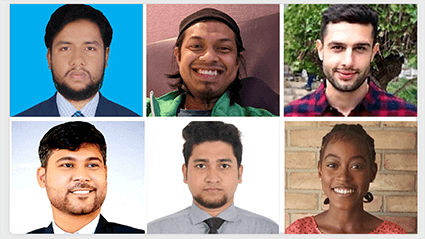
Congratulations to the 18 students from our college who were among the 151 UWM student athletes on the 2023 Horizon League Fall Academic Honor Roll. Each has earned at least a 3.2 GPA in engineering or computer science while participating in at least one collegiate-level sport during the most recent season. Our students represented nine different sports last semester.

It takes a special kind of student to make this happen. These high-achieving students know how to balance the demands of the classroom and team sports and we are proud of their commitment to hard work, time management, athleticism, and academics. Congratulations!

Baseball

Women’s Basketball

  • Anna Lutz, R-So., Mechanical Engineering & Physics

Men’s Soccer

Women’s Soccer

Men’s Swim & Dive

Women’s Swim & Dive

Men’s Track & Field/Cross Country

Women’s Track & Field/Cross Country

Women’s Volleyball

College’s new research spaces featured on Spectrum News

young women working on equipment

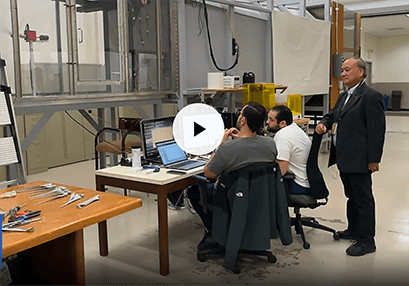
Spectrum News recently visited the college’s newly renovated research spaces on the ninth and tenth floors of EMS and met some of the people working there. The story quotes Andy Graettinger, associate dean for research, and Jerald Thomas, assistant professor, computer science.

But a large piece of the broadcast featured students.

Zhiqin Qiang, a doctoral student in assistant professor Xiaoli Ma’s materials science and engineering lab, talked about isolating the toxic substance PFAS using membrane technology created in the lab. Graduate students Ho-Kuan Yu and Rahul Sampat Khandge also appeared in the segment. Alec Brookens, an undergraduate working with Thomas, described research that could advance the use of virtual reality for industrial and other uses. Graduate students, including Zarif Ishrak, from the lab of Mohammad Habib Rahman, associate professor, mechanical engineering, were also shown, demonstrating their robotic arm.

Spectrum News is a statewide media outlet available to subscribers of Spectrum television and internet services. Watch

Amano awarded $975,000 to expand expertise in clean-energy workforce development

group of people touring a factory to assess industrial and systems engineering processes

The College of Engineering & Applied Science is among 10 colleges and universities across the U.S. funded by the U.S. Department of Energy to launch a Building Training and Assessment Center (BTAC), in which technical college students will learn to identify ways to reduce carbon emissions and conserve energy in industrial facilities and commercial buildings.

Led by Ryo Amano, professor and Richard and Joanne Grigg Faculty Fellow in mechanical engineering, UWM’s BTAC will work with five Wisconsin technical colleges and state agencies to facilitate the energy assessments. These will help mainly disadvantaged communities save money and energy while training students for clean energy careers that don’t require a four-year degree.

Most of UWM’s funding, $900,000, comes from the Bipartisan Infrastructure Law through the DOE. An additional $75,000 was given by Focus on Energy, a consortium of utilities in Wisconsin that educates the public about energy conservation and renewables.  

BTAC funding also expands the existing network of DOE-supported Industrial Assessment Centers (IAC) from 37 to 54. IACs operate at four-year colleges and universities, using students to conduct free evaluations of manufacturers and utilities to help them save money and energy and reduce their carbon footprint.

UWM has operated the only DOE Industrial Assessment Center in Wisconsin for the last 28 years. Because the assessments are carried out by UWM students, the IAC trains the next generation of energy-engineering professionals. UWM’s IAC completes about 20 assessments a year.  

The new BTAC sites will extend the services to build a clean energy workforce at technical colleges and provide assessments that serve disadvantaged communities.

“We were selected because the college has a long and successful history as a DOE Industrial Assessment Center, where many talented students become well-qualified to conduct energy assessments at a nearly professional level,” said Amano.

He will oversee training at five junior or technical colleges in Wisconsin – Milwaukee Area Technical College, Madison College, Southwest Technical College, Northeast Technical College, and Lac Courte Oreilles Ojibwe University, a tribal college in Hayward. He also will work with a long list of state and regional partners to identify commercial and institutional buildings that could benefit from energy assessments.

“This center will collaborate with energy offices in state government, non-profit organizations, and energy stakeholders throughout Wisconsin and other neighboring states to work on greenhouse gas reduction,” Amano said.

Other partners include Wisconsin Office of Sustainability and Clean Energy, American Indian Chamber of Commerce-Wisconsin, Leidos, Wisconsin Association of Energy Engineers and Midwest Energy Efficiency Alliance.

Welcome Feng Guo, researcher in technologies to electrify transportation

The college welcomes Feng Guo, an assistant professor in the Department of Electrical Engineering, who also is a new member of the Center for Sustainable Electrical Energy Systems.

Guo specializes in high-efficiency and high-power-density multilevel converters, fast-charging technology, high-speed motor drives – technologies needed for electrified transportation applications.

Air travel, for example, uses conventional fossil fuel, hampering efforts to reduce greenhouse gas emissions that cause climate change and nitrogen oxide emissions that threaten air quality. Electric aircraft could offer a cleaner alternative to help net-zero carbon emissions by 2050, Guo said. Renewable sources of power, such as hydrogen and biomass fuel-cell batteries, can feed the high-efficiency and high-power-density motor drives that enable electric propulsion powertrains.

Guo also will focus on a major obstacle with electric vehicles – the time it takes to charge them. One of the bottlenecks that limit charging capabilities is input voltage, he said. Today’s EV batteries are usually 400-volt systems. Moving to an 800-volt system would provide quicker charging, increased efficiency and better performance, but there are myriad challenges to overcome.

Guo is working on a different solution. By using the modular architecture of wideband-gap-based power converters, the current flowing into the battery pack will be increased, enabling a higher input power.

“All those developments rely heavily on state-of-the-art design, prototyping, and implementation of power electronics converters as key enablers,” he said, “together with intelligent control systems.”

At the Center for Sustainable Electrical Energy Systems, Guo fills a gap in controls, hardware and firmware design for power electronic converters, said Rob Cuzner, director and associate professor of electrical engineering.

“He also brings a background and interest in motor drives, EV charging systems and power converters design for battery storage, solar cells and wind energy,” Cuzner said. “Now that Feng is part of the center, we are able to cover research in every area – from the utility grid to distribution to the power electronics that directly interface loads and sources to the grid.”

Guo received his master’s degree in electrical engineering from Northeastern University, Shenyang, China, and his PhD in electrical and electronics engineering from the University of Nottingham, U.K., where he worked in the Power Electronics, Machines and Control Research Group. Most recently he was a postdoctoral research fellow at the Power Electronic Systems Laboratory at the University of Arkansas.

Guo was the recipient of the 2022 Transactions Second Place Prize Paper Award from the IEEE Industry Applications Society. He is an associate editor of the IEEE Transactions on Industry Applications and IEEE Open Journal of Industry Applications.

Guo’s office is at the USR building, room 201P. His email is guof@uwm.edu.

Two faculty members giving UWM’s Science Bag shows this semester

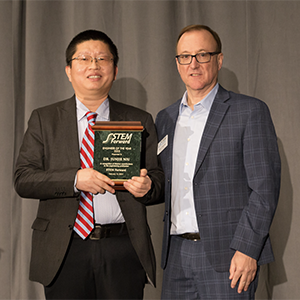
Junjie Niu and Prasenjit Guptasarma will each present a show for UWM’s Science Bag series, a live show for older kids and adults that gets into the popular science behind everyday life. In February, Niu, associate professor, materials science & engineering, tackles the topic of energy in his show, “Lithium-Ion Batteries: Making Mobile Magnificent.” In March, don’t miss Guptasarma, associate dean, when he asked the question of the year, “Artificial Intelligence: Friend or Foe?”

Niu will introduce the principles of how li-ion batteries store electric energy and how to improve the energy density of the battery by designing better parts – the electrode materials and electrolyte. He will answer questions like: How can a battery power your cell phone for a week? How can scientists extend the distance an electric car can travel before it needs to be charged? What happens to the battery’s performance in very cold weather?

Niu’s show runs Fri., Feb. 9 at 6 p.m.; Fri., Feb. 16 at 1 p.m.; and Sun., Feb. 18 at 3 p.m.

In his show, Guptasarma will explore the history, basic principles and potential future directions of AI, which has a real potential of becoming almost human. Since AI has the capacity to learn both the best and the worst of human behavior, how we can we bolster the technology’s beneficial uses and minimize the harmful ones? How might it affect human beings today, and in subsequent generations? 

Guptasarma’s show runs on Fri., March 1 at 6 p.m.; Fri., March 8 at 1 p.m.; and Sun., March 10 at 3 p.m.

All shows are free and held in Lapham Hall, 3209 North Maryland Ave., Room N103. See all the details here.

Engineering firm GRAEF promotes two UWM alums to leadership roles

Two alumni from the college have been promoted to leadership roles at GRAEF – a Milwaukee-based engineering, planning and design firm – in the company’s structural engineering arm.

Steve Rech (’00 MS and ’98 BS, Civil Engineering) serves as the firm’s director of structural engineering. Kyle Poklar (’15 MS Civil Engineering) was named as structural practice area leader.

After nearly 25 years of contributions as an exceptional engineer, Rech leads the development of structural technical and quality standards and processes and oversee structural projects firm-wide.

Rech brings a visionary approach to this new position. He started at GRAEF in 2000 and began to lead the Milwaukee structural group in 2017. A principal of the firm, he has worked on some of GRAEF’s top projects, including the Baird Center expansion, Komatsu South Harbor Campus, Fincantieri Marinette Marine and more.

Poklar has exhibited technical expertise and a keen understanding of the industry’s landscape. As GRAEF’s structural practice area leader, Poklar oversees the Milwaukee structural group and continues to provide expertise to our clients.

Poklar has worked on GRAEF projects, such as the Milwaukee School of Engineering Viets Tower, Marquette University College of Business Administration, Komatsu South Harbor Campus and more. He also is leading the structural team on Milwaukee’s Iron District Development, coming soon to downtown.

Poklar, an associate of the firm, began his career at GRAEF as a college intern in 2013.

GRAEF is led by another alum, president and CEO John Kissinger (’79 BS Civil Engineering). With a legacy of more than 60 years in structural expertise, GRAEF designs across a spectrum of dynamic markets, such as industrial, healthcare, commercial, residential, retail and sports centers.

Computer science student develops a manufacturing chatbot with Microsoft support

two men looking at factory testbed

Shamar Webster, a recent master’s degree graduate in computer science, co-created a factory-specific chatbox that allows workers at manufacturing plants to use natural language to interact with the production line and receive immediate answers to questions.

Webster worked with Microsoft’s chief AI officer at UWM’s Connected Systems Institute after getting the idea when ChatGPT was made public a year ago. The tool could help smaller companies more easily transition into next-generation manufacturing.

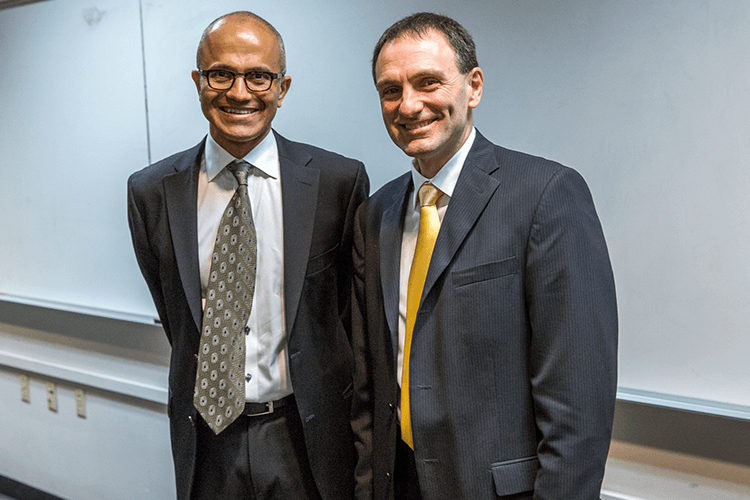
The chatbox was completed just as Microsoft, led by UWM alum and Satya Nadella (‘90 computer science), announced its second gift to support CSI – bringing the company’s total support to $2.7 million.

Read more about the manufacturing chatbox.

Read more about Microsoft’s recent gift to UWM’s CSI.