Best Senior Design Projects
One winning team from each department was recognized at the Order of the Engineer ceremony on Saturday, May 17, 2025.
Click on each project below to see objective, team members, advisor(s), and presentation dates/times.

Program Sponsor

Biomedical Engineering
Presentations: Thursday, May 1 from 5:30-7 pm in EMS 250


Intravitreal Anti-VEGF Auto Injector Device
Objective: To design and develop a preliminary model of an intravitreal anti-VEGF auto-injector device to improve efficiency and consistency in retinal injections. The device should integrate a built-in needle and measuring mechanism to ensure accurate pars plana injection. Deliverables include 2D and 3D models, manufactured components, and a functional prototype for pilot testing.
Team Members:
- Greta Boehm
- Devin Ducharme
- Ben Grahovac
- Matthew Pabelick
- Mona Said
Advisors:
- Mohamed Yahiaoui, Senior Lecturer, Mechanical Engineering

Presentation: Thursday, May 1 from 5:30-6:15 pm in EMS 250
Project Findings:
Our senior design project focused on creating a safe and easy-to-use device that helps doctors give eye injections more consistently.
We designed a handheld tool that uses a spring to automatically pull the needle back after the injection, reducing the chance of injury or error. The device has two buttons: one inserts the needle, and the other delivers the medicine. A viewing window lets the user see that the medicine has been given, and a side latch keeps everything in place until the injection is complete.
Our design aims to make eye injections safer, faster, and more comfortable for both doctors and patients.

Trigger Signal Generator for Cardiac 3D Mapping Applications
Objective: To design a compact, precise trigger signal generator for cardiac 3D mapping applications. The device must generate adjustable electrical pulses (10–500 ms intervals), integrate with commercial cardiac mapping systems, ensure signal stability, and include a user-friendly interface. Deliverables include a working prototype, technical documentation, and testing protocols.
Team Members:
- Alec Kaufmann
- Nina Marchigiani
- Nathaniel Sovitzky
- Abhi Roop Reddy Tokala
Advisors:
- Mohamed Yahiaoui, Senior Lecturer, Mechanical Engineering

Presentation: Thursday, May 1 from 6:15-7 pm in EMS 250
Civil & Environmental Engineering


JES^2
Objective: Our project goal is to design a mixed use parking garage with commercial space in the Summerfest area that can help minimize wasted space in the Third Ward.
Our design is based off future potential development due to the relocation of Interstate 794, in line with the WisDOT Improvement Plan #5. We are hoping to help alleviate traffic in the area as well with our design.
Team Members:
- Jameson Kraus
- Evan Marrs
- Sam Rife
- Sam Wittmershaus
Advisors: Sarah Blackowski and Clayton Cloutier, Civil & Environmental Engineering

ADJD Consultants, Inc
Objective: TBD
Team Members:
- James Blodgett
- Daniayelah Chris
- Adrianna Garza
- Dan Groskopf
Advisors: Sarah Blackowski and Clayton Cloutier, Civil & Environmental Engineering
21st Century Streets, Inc.
Objective: Our Senior Design Project aims to make the intersection of Lincoln Memorial Drive and Clybourn Street in Milwaukee safer and easier to use for drivers, bikers, and pedestrians. We are using real maps and data to create a new layout that improves how traffic moves and makes the area more accessible for everyone.
Team Members:
- Arshdeep Chahal
- Joseph Jutley
- Ryder Weisensel
- Nathaniel Wurzer
Advisors: Sarah Blackowski and Clayton Cloutier, Civil & Environmental Engineering

PRISM Engineering
Objective: The project aims to redesign Clybourn Street into a fully bi-directional road to handle increased traffic from the I-794 downsizing. It includes bioswales and upgraded stormwater infrastructure to protect nearby Lake Michigan.
This sustainable approach sets a precedent for future urban development and green infrastructure in Milwaukee.
Team Members:
- Gianfranco Firripalid
- Mary Schmidbauer
- Jeanette Valles
- Jacob Westall
Advisors: Sarah Blackowski and Clayton Cloutier, Civil & Environmental Engineering

Specter Structural
Team Members:
- Jose Brito
- Jack Clearwater
- Amer Mousa
- Katie Rohner
Advisors: Sarah Blackowski and Clayton Cloutier, Civil & Environmental Engineering
Computer Science
Presentations: Friday, May 2 from 11:30 am -12:45 pm in KIRC 1150 (ALC)
Event Radar
Objective: The goal is to create a centralized platform that enables users to discover live events within their desired area, with real-time updates to ensure up-to-date information. The website will consolidate event data from various sources, providing a comprehensive view of event details in one place. The platform will offer all the essential information needed for effective event planning!
Team Members:
- Benjamin Hackbart
- Jannatul Hakim
- Annalise Harms
- Jonny Leston
- Carolyn Vang
Advisor: Ayesha Nipu, Computer Science

Findings:
Event Radar is a web application designed for organizations and individuals that want to create, view, and manage events. A common challenge that individuals experience is searching for events but information of these events are scattered across various sources. Therefore, it is difficult to create a plan conveniently. Event Radar addresses this issue by offering features that are beneficial to organizations, event planners, and event attendees.
During the development of Event Radar, there was various challenges related to event planning and convenience. Therefore, the application was designed with features that address those inconveniences and other needs. Event Radar provides features for attendees such as viewing available events on a map, adding events to a plan, checking a 3-day weather forecast, and discovering other non-event attractions to visit. Organizers and planners are referred to as event managers. They can easily create and promote their events through Event Radar. Event managers are screened to ensure that quality events are listed. By having an application with these features, it makes it convenient to participate and plan events. Event Radar is an application that involves event discovery, event planning, and management for the users and organizers.
Food Delivery App
Objective: The goal is to Improve on the current food delivery system by prioritizing the driver that picks up the order.
Team Members:
- Israel Monjolaoluwa Adigun
- Enrique Perez
- Kevin R Santamaria
- George Widemann
Advisor: Ayesha Nipu, Computer Science
Campus Navigation App
Objective: Our Campus Navigation App is an innovative application designed to alleviate the stress and anxiety associated with navigating the University of Wisconsin-Milwaukee campus.
Its standout feature is advanced indoor navigation, setting it apart from other navigation solutions. This capability provides precise turn-by-turn directions within campus buildings, helping students and faculty navigate complex structures with ease.
The app offers seamless transitions between outdoor and indoor spaces, real-time location tracking, and a comprehensive search function for finding specific rooms, offices, amenities, and services. Additionally, it includes accessibility features like wheelchair-accessible routes.
By leveraging this comprehensive navigation solution, users can confidently explore the UWM campus, focusing on their academic pursuits rather than worrying about getting lost.
Team Members:
- Jia Chen
- David Doyle
- Mouhameth Fall
- Sana Sees
- Colin Young
Advisor: Ayesha Nipu, Computer Science

Our Indoor navigation app tackles the issue of navigating large campuses and complexes. It offers intuitive room to room navigation, a robust search feature, and bookmarking for quick route lookups.
Key challenges included secure authentication, solved with magic links, using uwm.edu emails, and meticulous indoor mapping data entry using JOSM. We also adapted an open-source navigation library for real-time routing. Early user feedback from 15 users is positive, highlighting improved wayfinding.
This project has been a tremendous learning experience for our team, giving us firsthand insight into the complexities of large-scale software development. Future enhancements include automatic floor switching, dynamic route visualization, and multi-stop routing. Our app addresses a crucial need and promises to enhance campus navigation.
MIPS Simulator
Objective: Our project goal is to simplify and modernize how University of Wisconsin-Milwaukee students learn MIPS assembly in the Computer Architecture course. Through a user-friendly web interface, designed with students in mind, we will enhance learning of the course content. Developed in collaboration with Professor Thomas, our simulator will become an effective educational tool.
Team Members:
- Alec Brookens
- Arman Bunic-Duratovic
- Javier Juarez
- Bleon Muqaj
- Andrew Olsen
- Anthony Velez
Advisor: Ayesha Nipu, Computer Science
Our project is a web-based MIPS Emulator designed to help students learn assembly language more intuitively. Existing tools are outdated, require installation, and lack modern educational features. We created a browser-enabled emulator that allows students to write, assemble, and run MIPS code without any installation.
Our solution includes key features such as syntax highlighting in the editor, console output, register and memory displays, step-by-step execution, and breakpoints. We also added a built-in MIPS instruction manual pop-out, making it easy for students to reference as they write code. This helps make MIPS assembly more approachable for beginners.
We utilized WebAssembly for the core simulation logic and connected it to a modern front-end interface, without modifying the backend provided by Professor Thomas.
As a result, our project offers a student first, easy-to-use platform that simplifies learning and improves upon existing MIPS tools.
Air Monitoring Interface (A.M.I.)
Objective: Our goal is to create a beautiful, simple and intuitive weather and air quality monitoring website. With the rising need for reliable and affordable air monitoring, we think our project will help fill that need.
Team Members:
- Taiwo Abe
- Collin Brey
- Yen Lin Chang
- Carson K. Lisowe
- Matt Maijala
- Yu Erh Pan
Advisor: Ayesha Nipu, Computer Science

This project our team tackled a complicated relationship between hardware and software. Our design was the same concept from the planning days, with our sensors being designed for hyper-local use and the software being able to keep up and display content seamlessly. Our project uses sensors connected to a mini-computer to display readings on things like air quality index and particulate matter in an indoor setting. This data is then transferred to our website where it is gathered into graphs and easy-to-read data points.
The intention is that the data can be monitored at all times, therefore all of our graphs are set to update every 5 seconds. Another draw to our project is the integrated chat-bot feature which allows the user to request certain information from the database on the fly. The system in place is designed to listen for certain words and be able to respond to them accordingly. This has also been modified to include an large language model of Deepseek, so users can place their own key into the site and have access to a fully cloud-based ChatGPT equivalent. Users can then either monitor there fast-updating data or export it to share however they please.
Overall our group was able to showcase all of our skills and understanding of the topic of computer science. We were able to display the knowledge we have on front-end, back-end, and hardware development in a neat and orderly package.
Electrical Engineering
Presentations: Friday, May 9 in EMS 237 from 8 am – 3:30 pm

Advanced Indoor Air Quality Monitor
Objective:
The purpose of this product is to ensure the air quality of an indoor space remains safe.
Team Members:
- Trevor Block
- Audrey Faison
- Stone Mahan
- Colton Smith
- Jack Wolak
Advisor: Jeff Kautzer and William Dussault, UWM CEAS Electrical Engineering

Presentations: TBD
Major Features:
- High resolution CO2 measurements
- High resolution TVOC measurements
- Disable sensing if the ambient temperature reaches 50˚C
Intended Market:
- US market
Cost:
- Sales Price: $160
- Component Cost: $100
- Assembly & Test Costs: $10
Environment:
- Indoor
- Operating Temp Range: 10°C to 45°C
- Operating Humidity Range: 0% to 100%
Power Input:
- Battery Power: D-size Li-SOCI2 19Ah
- Nominal voltage: 3.3-5V
- Max Amps: 500mA
Major Functions:
- Temperature Sensor: -20C to 85C with ± 1C accuracy
- VOC Sensor: Concentration sensor with %5 Accuracy
- CO2 Sensor: Concentration sensor with ±0.5 (0.2 – 2.0) vol% accuracy
- HCHO Sensor: 0to1,000PPB with± 20 PPBAccuracy
- Functions: On, Off, Sleep, VOC’s Sensor, CO2 Sensor, HCHO Sensor, Temperature Sensor, Humidity Sensor
Bicycle Computer
Objective:
To provide cyclists in North America with a highly accurate and reliable performance monitor and safety device.
Team Members:
- Brandon Largin
- Ting An Lu
- Wei Chun Wang
- Tzu Yun Yen
Advisor: Jeff Kautzer and William Dussault, UWM CEAS Electrical Engineering

Presentations: TBD
Major Features:
- 1200 lumen headlights lights, front and rear directional indicators, and brake lights to improve road safety.
- Bluetooth connection to Smart Phone for, GPS orientation, position, and gyroscopic slope monitoring.
- Anti-theft alarm system
- Native speed, distance, and pedal-cadance sensors
Intended Market:
- North America
Cost:
- Sales Price: $120
- Component Cost: $60
- Assembly & Test Costs: $10
Environment:
- Indoor & outdoor
- Operating Temp Range: 5°C to 50°C
- Operating Humidity Range: 0% to 100%
Power Input:
- AC Power for Charger: Nominal 120 Vac @ 0.1 Amps
- Battery Power: 12V @8Ah, providing 8 hours of use on high power or 16 hrs on half power
Major Functions:
- Function: Headlights On or Off,Breaking and Directional indicators, Data Display, anti-theft alarm.
- Quantities Measured: Speed, Cadence, Distance, Slope, Position,& Direction
- Speed: Range: 0 to 100 km/h, Accuracy +/-0.5 kmph, Resolution: 0.1km/h
- Cadence: Range: 0 to 150 Rpm, Accuracy +/- 0.5% Resolution: 1 rpm
- Distance: Range 0 to 999 km, Accuracy +/- .5% Resolution .01 Km
- Slope, Position, and Orientation: Accuracy and Range Dependent on Phone specs. Resolution of 0.1 Degree for slope and Orientation, and 0.00001-degree Longitude and Latitude
- Major Interfaces, User Controls & Displays : Direction switches, Power button, LCD, Bluetooth sync.
Bluetooth Stereo Amplifier
Team Members:
- Geng Ruei Chang
- Yi Lun Chien
- Jui Pin Lee
- Yi Wen Su
Advisor: Jeff Kautzer and William Dussault, UWM CEAS Electrical Engineering

Major Features:
- Bluetooth 5.0 Receiver.
- Independent Left-Right Channel Controls.
- Battery/AC Operation.
- Auto Shut Off (5 minutes of inactivity).
- 10m Bluetooth Range.
- 5W output per channel.
- 120VDC Power Input.
Intended Market:
- US market
Cost:
- Sales Price: $300
- Component Cost: $250
- Assembly & Test Costs: $10
Environment:
- Indoor
- Operating Temp Range: 0°C to 70°C
- Operating Humidity Range: 10% to 100%
Power Input:
- AC Power: Nom120 Vac, 10 Amps Max Current
- Battery Power: Nom3.65V, 7.8 Amps per hour Max Current
- Type-Size: Li-ion battery
Major Functions:
- Quantities Measured – For Each:
- Volume: Range: 0 to 100, Max Error:+/- 0.5, Resolution:1
- Balance: Range: -10 to 10, Max Error:+/- 0.5, Resolution: 0.1
- Bass: Range: -10 to 10, Max Error:+/- 0.5, Resolution: 0.1
- Major Interfaces, User Controls & Displays:
- Interfaces: Bluetooth, USB
- User control: Volume knobs, on/off switch
- Displays: Screen
- Additional: Remote control
Greenhouse Plant Caring System
Objectives:
- Monitor and control humidity, temperature, light, and soil moisture
- Greenhouse temperature regulation
- User-configurable lighting and watering schedule
Team Members:
- Yu Chen Chang
- Ding Yang Lin
- Je Nong Lin
- Chih An Tseng
- Kai Yuan Wei
Advisor: Jeff Kautzer and William Dussault, UWM CEAS Electrical Engineering

Major Features:
- Air Quality Sensing
- Watering System
- Greenhouse Temperature Control
- Environmental Monitoring
- User Configurability
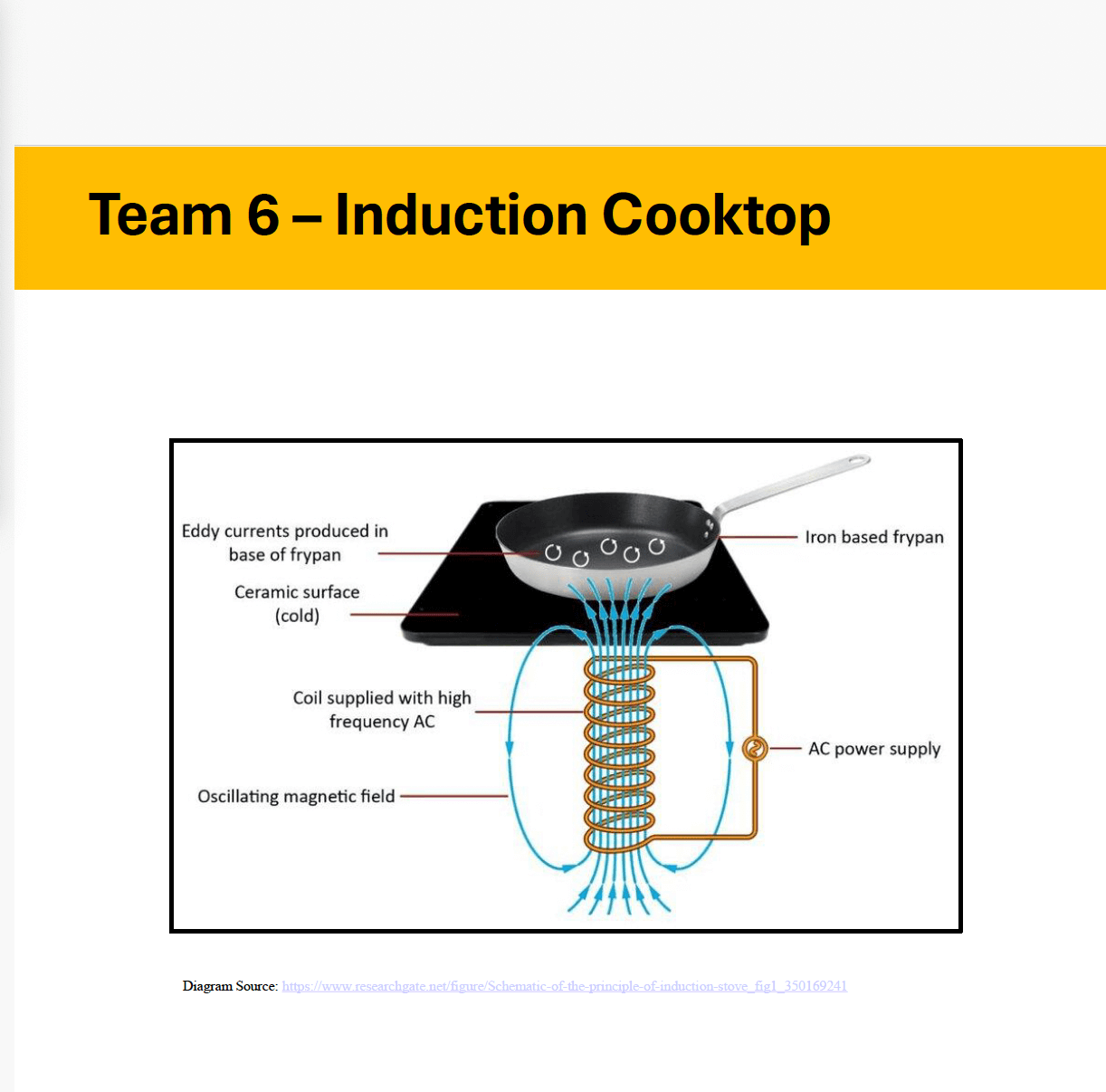
Induction Cooktop
Objective:
Create a safe, efficient, and consumer friendly cooktop.
Intended application:
Make cooking convenient and faster than conventional ovens.
Team Members:
- Antonio Acevedo
- Faiza Hope
- Brian Liebau
- Ben Miller
- Neng Thao
- Jadyn Voung
Advisor: Jeff Kautzer and William Dussault, UWM CEAS Electrical Engineering

Major Features:
- Ten different power-level modes, ranging from 0-9 (higher=greater heating generation)
- Water resistant IP X3
- Two buttons, dial (rotatory encoder) and LCD display interface
- Weight sensors to increase safety when cooking.
- Coil temperature sensor, magnetic field sensor, and current monitor for safety
Intended Market:
- North American consumer households
Cost:
- MSRP – starting at $120
Environment:
- Intended for indoor usage, splash-proof
- Operating Temperatures between 10 – 45°C
- Operating Humidity Ranges 0 – 100 %
Power Input:
- Operating input voltage 102 – 132 V AC
- Operating input currentUp to 11 A V AC
- Operating input frequency 57 – 63 Hz
Major Functions:
- Energy Conversion efficiency greater than 80%
- Power delivery accuracy within 5%
- Modes/Function 10 power modes: 0(OFF) – 9(MAX)
Major Risks:
- Rectification and/or Inversion power systems fail, causing excessive line current, heat production, or electrical shock hazards
- Inaccurate magnetic field strengths could damage the cooktop, surrounding objects, or user especially if much too strong
- Overheating coils could become a fire hazard
Interfaces, User Controls, & Displays:
- LCD Display
- Two push button switches and one rotary encoder
Magnetic Field Immunity Test System
Objective:
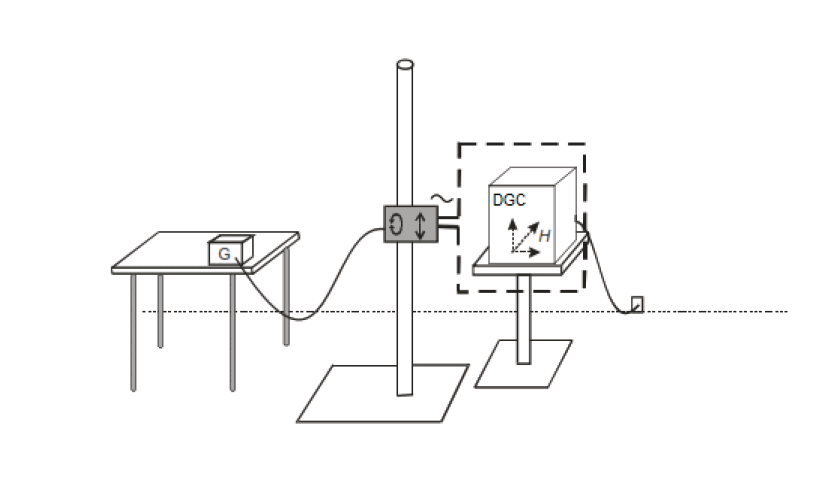
Create a Helmholtz coil to induce a controlled magnetic field onto medical equipment for EMC testing.
Team Members:
- Erik Anderson
- Evan Bartelsen
- Nathaniel Monty
- Lucas Ricker
- Clayton Schave
Advisor: Jeff Kautzer and William Dussault, UWM CEAS Electrical Engineering
Industry Mentor: TBD


Major Features:
- User-friendly control panel
- Hall-effect sensors to control accuracy of magnetic field strength
- Self-grounding protection
- Ability to rotate and move on a linear rails
Tech Specifications:
- Coil is square 1×1 meter
- Can handle up to 25A
- 120V 50-60hz power source
- 5VDC controller
Key Requirements:
- Complying with standard IEC6100-4-8
- Powered by 120V @ 50/60 Hz (NEMA 5-20R)
- Adjustable field strength with an adjustable AC current source
- User-friendly interface with touchscreen display
- Test up to 1m x 1m x 1m
- Emergency stop and safety
- Compact unified control and power cabinet
- Power efficiency exceeding minimum standards
- Humidity and temperature detection and reporting
- Shielded according to EMC requirements
Industrial Engineering

Multi-Building Material Flow Analysis
Objective: To analyze the material flow and potential bottlenecks and risks for moving the packaging and shipping departments to a building one mile away from the main campus.
Team Members:
- Eric Oberlander
- Carter Schrot
- Benny Thone
Project Advisor: Iftekharuddin Khan, Industrial & Manufacturing Engineering
Automation Feasibility for Part Protection and Quantity Verification
Objective: To determine the economic feasibility of automating aspects of Overhaul operations at Krones, including research vision system operations and cost. Recommend automation options and develop an implementation plan.
Team Members:
- Samuel Judd
- Kevin Klocko
- Junyan He
Project Advisor: Iftekharuddin Khan, Industrial & Manufacturing Engineering
Six Sigma Deburring Project
Objective: To create a standardized process for the deburring department to visually indicate key areas that may need improvement. The plan is to reduce and stabilize the quantity of defects in parts coming out of the deburring fabrication.
Team Members:
- Mustafa Ameen
- Bao Bui
- Jessica Martinez
Project Advisor: Iftekharuddin Khan, Industrial & Manufacturing Engineering
Materials Science & Engineering
Fatigue Fighters
Team Members:
- Kee Jepson
- Brett Johnson
- Katelyn O’Brien
Faculty Advisors:
- Nidal Abu-Zahra, Professor, Materials Science and Engineering
Industry Mentor: Dave Palmer, BRP Marine Division


Project Goal:
To identify the origin and cause of a catastrophic failure in a pinion gear, and make recommendations to prevent identical incidents.
Mechanical Engineering
Presentations: Tuesday, April 29 from 2:30-7:00 pm and Thursday, May 1 from 2:30-5:30 pm in EMS E250





Size 23 Stepper Motor Final Test Fixture; Dynamic Torque Test Upgrade
Objective: To enhance the NEMA 23 stepper motor test fixture by adding a dynamic torque test to meet customer specifications. Design fixturing, find cost-effective torque transducers, and improve efficiency for high-volume production.
Deliverables include CAD models, mounting plates, fixturing components, and a complete dynamic torque fixture assembly.
Team Members:
- Kat Behlke
- Paohow Lor
- Huda Mubshar
- Jordan Van Tatenhove
Project Advisor: Mohamed Yahiaoui, Senior Lecturer Mechanical Engineering
Project Presentation: Tuesday, April 29 from 2:30 – 3:15 pm in EMS E250
Crevice Corrosion in CT Detector Liquid Cooling System
Objective: To assess crevice corrosion risk in CT detector cooling path by analyzing factors like gap size, coolant composition, flow speed, and corrosion inhibitors. Explore testing methods to predict long-term performance and ensure a 30-year lifespan. If vulnerabilities are identified in the current design, develop mitigation strategies to enhance durability, optimize design, and prevent localized failures.
Team Members:
- Victor Chavez
- Daniela Gutierrez Centeno
- Nicholas Ocampo
- Carter Stommel
Project Advisor: Mohamed Yahiaoui, Senior Lecturer Mechanical Engineering
Project Presentation: Tuesday, April 29 from 3:15-4:00 pm in EMS E250
Project Findings:
GE Healthcare presented the team with a problem related to crevice corrosion, noting a lack of specific data to inform the design decisions of their engineering teams. The UWM team had taken a fresh engineering research approach to tackle the problem. The team was ultimately successful in their endeavor and collected a useful amount of data that then was analyzed and extrapolated.
The team found that the rate of corrosion in the system confirmed GE’s initial concerns when they brought the project to the team. Fortunately, the team’s data had predicted an unacceptable amount of corrosion that would compromise the quality and performance of the CT Detector Thermal Cooling System. In response, the team proposed two design recommendations using different design approaches. Which are redesigning the cooling channel and by implanting cathodic protection.
This project not only addressed a real-world engineering problem but also gave the students valuable insight into the daily responsibilities and problem-solving processes of professional engineers in industry.
Aircraft Single Lever Engine Control
Objective: To design a single-lever engine control mechanism for Deltahawk’s diesel aircraft engine, integrating power and propeller control. The design must ensure linear power adjustment, include an adjustable friction lock, and comply with FAA Part 23 and 33 regulations. Deliverables include a CAD model, motion study, functional prototype, manufacturability assessment, and test plan.
Team Members:
- Will Lewein
- Anna Lutz
- Nikola Radisavljevic
- Zach Stiewe
Project Advisor: Mohamed Yahiaoui, Senior Lecturer Mechanical Engineering

Project Presentation: Tuesday, April 29 from 4:00-4:45 pm in EMS E250
Project Findings:
TBDDesign a single-lever engine control mechanism for Deltahawk’s diesel aircraft engine, integrating power and propeller control. The design must ensure linear power adjustment, include an adjustable friction lock, and comply with FAA Part 23 and 33 regulations.
Deliverables include a CAD model, motion study, functional prototype, manufacturability assessment, and test plan.
Ingress Protection for Bearings in Drywall Cutting Application
Objective: To develop an effective ingress protection solution for a high-speed (28,000 RPM) bearing used in drywall cutting applications. The design must prevent dry wall dust from entering the bearing while maintaining tool performance. The solution should be compatible with the new brushless motor model. Deliverable includes a completed prototype design.
Team Members:
- Brady Bosacki
- Will Handziak
- Wei Si Huang
- Oleg Melnyk
- Nathan Theama
Project Advisor: Mohamed Yahiaoui, Senior Lecturer Mechanical Engineering
Project Presentation: Tuesday, April 29 from 4:45-5:30 pm in EMS E250
Project Findings:
Our group created prototype modifications for Milwaukee Tools cut out tool by modifying the internal fan and housing to show a proof of concept to prevent dry wall dust from entering the front bearing causing the tool to seize/fail.
Bushing Installation Automation
Objective: To enhance the safety, quality, and efficiency of the bushing installation process for aircraft fittings by automating key steps. The improved process will reduce safety risks by 50%, minimize quality defects, and decrease labor requirements by at least 50%. Deliverables include updated standard work, tooling designs, risk assessments, and cost-saving justifications.
Team Members:
- Josh Harms
- Yash Makwana
- Ben Premeau
- Gunner Zdroik
Project Advisor: Mohamed Yahiaoui, Senior Lecturer Mechanical Engineering
Project Presentation: Tuesday, April 29 from 5:30-6:15 pm in EMS E250
Vapor Smoothing Chamber
Objective: To design and develop a safe, enclosed Vapor Smoothing Chamber for 3D-printed parts, capable of accommodating parts up to 12” x 12” x 12”. The system will incorporate a controlled vapor smoothing technique, automated electronics with a timer, and safety switches.
Team Members:
- Connor Hearne
- Adam Olbrot
- Gabriel Prahl
- Cole Walker
Project Advisor: Mohamed Yahiaoui, Senior Lecturer Mechanical Engineering
Project Presentation: Tuesday, April 29 from 6:15-7:00 pm in EMS E250
Project Findings:
Design and develop a safe, enclosed Vapor Smoothing Chamber for 3D-printed parts, capable of
accommodating parts up to 12” x 12” x 12”. The system will incorporate a controlled vapor smoothing
technique, automated electronics with a timer, and safety switches.
Deliverables include a CAD design, a
functional prototype, and a final report and presentation.
Radiant Heater Cover Functional Mechanism
Objective: To redesign the radiant heater cover mechanism in the GE Giraffe OmniBed to reduce suspended mass while maintaining performance, safety, and integration with existing components.
The solution must meet GE design standards, fit within dimensional constraints, and ensure cleanability.
Deliverables include CAD drawings, a detailed design model, a bill of materials, analysis reports, and a cost analysis.
Team Members:
- Oscar Cervantes Torres
- Luke Cwidak
- Paul Langlay
- Bradley Malmquist
- Jiovanni Ortiz
Project Advisor: Mohamed Yahiaoui, Senior Lecturer Mechanical Engineering

Project Presentation: Thursday, May 1 from 2:30-3:15 pm in EMS E250
Project Findings:
This project focused on redesigning the radiant heater cover mechanism in the GE HealthCare Giraffe OmniBed, with the goal of reducing suspended mass above the infant while maintaining thermal performance. A Pugh matrix was used to evaluate design concepts including moving the heater, cooling the heater, using a static cover, and changing the heat source. The team selected a static cover design utilizing BOROFLOAT® 33 glass.
The final design was validated through ANSYS simulations and experimental testing with thermocouples and thermopiles. The findings showed reduced transmitted radiation (~63%), a significant drop in delivered heat, and noncompliance with IEC60601s temperature clause.
The project concludes with recommendations to explore alternative heaters that emit radiation at optimal wavelengths and suggests further material evaluation to improve thermal transmission and system performance.
Environmental Chamber with Liquid Nitrogen Cooling
Objective: To design and develop an environmental chamber capable of simulating extreme under-hood engine conditions, with a temperature range of -50°C to 150°C.
The system will integrate liquid nitrogen cooling and be mounted around a shaker table to replicate engine vibrations.
Deliverables include a functional prototype and 3D CAD models, leveraging components from a previous senior design project.
Team Members:
- Lucas Foszcz
- Nolan Karklus
- Bradley Poblocki
- Quinton Samsa
Project Advisor: Mohamed Yahiaoui, Senior Lecturer Mechanical Engineering
Project Presentation: Thursday, May 1 from 3:15-4:00 pm in EMS E250
Project Findings:
The project successfully resulted in the design and implementation of an in-house environmental chamber capable of reaching and maintaining the target temperature range of –40C to 120C. The system was fully integrated into HellermannTyton’s existing test enclosure and shaker table apparatus. The final assembly was installed at HellermannTyton’s facility, where it is currently operational and ready for component pre-screening.
The chamber utilizes liquid nitrogen for cooling and a heat gun for the heating. A solenoid valve is utilized to provide on-off control of the nitrogen flow. The thermal system is being controlled via dual thermostat controllers enabling basic set point temperature control. The liquid nitrogen delivery system was designed for safe and reliable operation, cryogenic fittings with fully sealed threads were utilized to withstand thermal effects and prevent leakage. The nitrogen line was routed and mounted in a way that maximizes cooling coverage without sacrificing any safety by reducing the risk of human or vibrational interference.
Prototype testing confirmed that the chamber could withstand vibration produced from the shaker table, reach and maintain both ends of the temperature range of –40C to 120C, and safely deliver flow of nitrogen to the chamber as required. All modifications and additions to the chamber were completed under budget coming in at a total of $707 staying well within the project’s budget of $1000.
Nail Insertion Force Fixture
Objective: To design and develop a standardized fixture to enable repeatable testing of nail insertion force across various wood types and test locations. The fixture must provide adequate guidance for different nail lengths and gauges. A stretch goal includes designing a reusable nail system. Deliverable is a completed prototype fixture.
Team Members:
- Riley Flasch
- Michael Hotchkiss
- Christian Kenig
- Cohen Mleziva
Project Advisor: Mohamed Yahiaoui, Senior Lecturer Mechanical Engineering
Project Presentation: Thursday, May 1 from 4:00-4:45 pm in EMS E250
Project Findings:
Our design met nearly all the functional requirements while meeting all the critical to quality objectives.
In order to meet the angled drive functional requirement, it is recommended to purchase a larger wood holder. For further protection of the compression tester guide rails could be designed to ensure the machine drives straight.
To improve test results arms should be made for each nail gauge size to have a tighter fit and less deflection. To ensure proper testing between facilities multiple reusable nails should be machined and tested at all facilities to cross-check data.
Finally, work instructions should be created for every operator to follow.
Automated insulation Cutter
Objective: To design an automated insulation cutter to improve efficiency and accuracy in the wire insulation cutting process. The system must support custom length and quantity inputs, cut two insulation materials with 0.10” precision, operate at a rate of 5 seconds per piece, and meet OSHA safety standards. Deliverables include CAD models, drawings, a functional prototype, and standard operating procedures.
Team Members:
- Andrew Hinz
- Joseph Mani
- Ali Mohammadi Seyed
- Egan Snopek
- Nicholas Stoeckel
Project Advisor: Mohamed Yahiaoui, Senior Lecturer Mechanical Engineering
Project Presentation: Thursday, May 1 from 4:45-5:30 pm in EMS E250
Become a Senior Design Project Sponsor
Contact: Mark Meier, College of Engineering & Applied Science Office of Research: meiermd@uwm.edu