Biomedical Engineering
Presentations: Wednesday, December 3, 2025 in EMS E371 from 5:15-6:45 pm


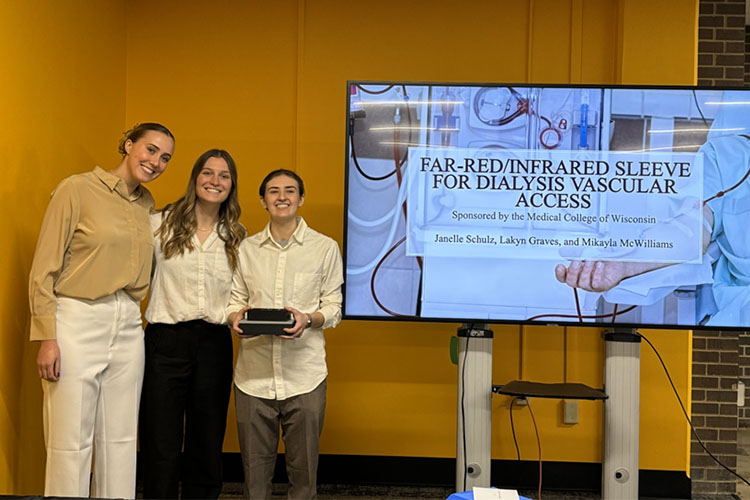
Far-Red/Infrared Sleeve for Vascular Dialysis Access
Objective: Design a wearable sleeve for dialysis vascular access that delivers pulsed far-red (670 nm) and infrared (830nm) light to reduce clotting and stenosis. The sleeve must be lightweight, washable, safe, and operate 12–18 hours per charge. Deliverables include design verification, multiple prototypes, and performance testing.
Team Members:
- Lakyn Graves
- Mikayla McWiliams
- Janelle Schultz
Advisors:
- Mohamed Yahiaoui, Senior Lecturer, Mechanical Engineering

Presentation: Wednesday, December 3 from 5:15-5:45 pm in EMS E371
Project Findings: Our Senior Design Project focused on helping dialysis patients, who often experience blood vessel damage due to repeated needle access in the same area of the arm.
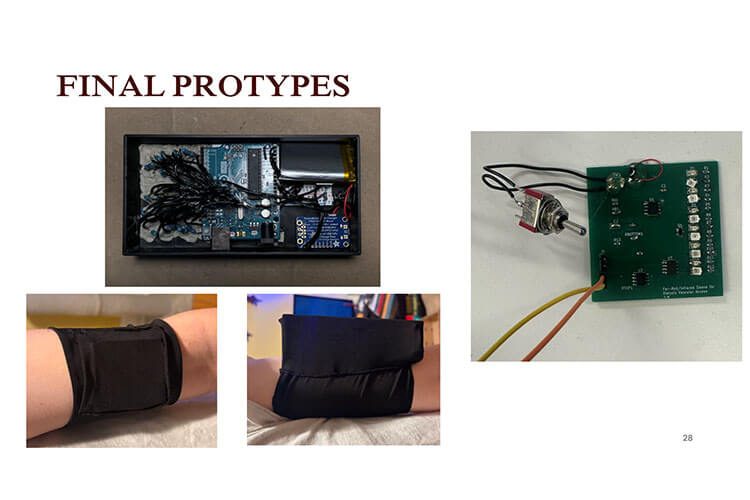
To address this issue, we created a wearable sleeve that delivers pulses of red and infrared light, which may help support healthier blood flow at the access site. We built two versions of the device:
- The first was a rechargeable Arduino-based model that worked reliably during testing. It delivers the correct pulsing light pattern, accurately monitoring temperature, and automatically shutting off if the skin became too warm.
- The second was a smaller, lighter printed circuit board (PCB) version designed to improve comfort and manufacturability. Although this PCB design performed well in computer simulations, it did not function after assembly, most likely because the very small components were difficult to solder accurately.
The sleeve itself was made from comfortable, washable fabric and passed all durability and shrinkage tests, showing it can withstand repeated machine washes.
Overall, the Arduino version successfully proved the concept, while the PCB version still holds strong potential for future development once assembly quality improves. Future enhancements could include transitioning to a flexible circuit board and further reducing the size of the electronics to make the design even more comfortable for long-term wear.
Intravitreal Anti-VEGF Auto Injector Device
Objective: Develop an intravitreal anti-VEGF auto-injector that integrates a prefilled syringe, measuring mechanism, and needle into a single sterile device. The injector must ensure safe delivery of 0.05–0.1 mL medication, improve efficiency, reduce prep steps, and enhance patient experience. Deliverable includes a preliminary life-size prototype and a reusable ‘play’ model.
Team Members:
- Pao Chang
- Jylian Jackson
- Brandon Rocole
- Allie Wesle
Advisors:
- Mohamed Yahiaoui, Senior Lecturer, Mechanical Engineering
Presentation: Wednesday, December 3 from 6:15-6:45 pm in EMS E371
Project Findings: A device for auto injection of anti-VEGF medication into the eye which has a measuring system integrated to it is feasible and may be useful for the medical industry.
Smart Bleed Patch
Objective: Develop a compact smart patch with optical sensors to detect post-op bleeding while avoiding false alarms from sweat or saline. The system must trigger audible/visual alerts within 60 seconds, run several days on battery, and meet biocompatibility and safety standards. Deliverable includes a validated prototype with
implemented sensors and alarms.
Team Members:
- Hilda Abdellatif
- Leon Vid Jednacak
- Malik Khair
- Alejandro Sevilla
Advisors:
- Mohamed Yahiaoui, Senior Lecturer, Mechanical Engineering
Presentation: Wednesday, December 3 from 5:45-6:15 pm in EMS E371
Project Findings: The Smart Bleed Patch experiment effectively showed that a small optical detecting technology can accurately identify postoperative bleeding.
The team demonstrated that the device reliably detects clinically important bleeding events, such as blood volumes of 1 mL and bleeding rates of 0.5 mL/min, by integrating a red LED light source, four phototransistors, and a spectrum optical sensor.
Testing validated accuracy and dependability by confirming quick detection within the allotted 60 seconds while preventing false alarms from perspiration, saline, or outside moisture.
Additionally, the alarm system complied with important medical equipment performance requirements. The gadget met the CTQ criteria for at least 18 hours of continuous usage with an operating battery life of about 20.5 hours under typical monitoring duty cycles, demonstrating engineering efficiency and viability.
Total anticipated manufacturing cost of $41.50, significantly below the $50 limit.
Lastly, the project’s testing and risk analysis revealed important chances for next enhancements. These include using smaller parts to reduce puck size, incorporating a customized PCB for increased compactness, extending battery life, enhancing ambient light shielding, and creating a companion smartphone app for data logging.
Civil & Environmental Engineering
Presentations: Friday, December 5 from 9 am – 12 pm in EMS 180

Transportation Group – Underwood Creek Daylighting Project
Objective: The Underwood Creek Daylighting project aims to restore a buried section of the creek to improve water quality and reduce flooding. Our team’s goal is to redesign the nearby parking lot to match the restored area by improving safety, accessibility, traffic flow, and stormwater management.
Team Members:
- Brayden Kernz
- Jessica Maurer
- Griffen May
Advisors: Sarah Blackowski and Clayton Cloutier, Civil & Environmental Engineering

Project Driver: WDNR permit condition from 2005 flood management project.
Existing Condition: 560 feet of concrete culvert enclosure, beneath a grocery store. Channel also flows against an office building.
Constraints:
- Require naturalized, fish passable channel. 1% (100-yr RI) flood flow = 830 CFS
- Minimize loss of parking space in parking lot. Businesses must still be viable after project completion.
- Construction cost <$6.5M
- (No water surface rise upstream of Watertown Plank Road)
Other Project Features:
- Trail connecting path system north and south of project area
- Pedestrian bridge over new channel
- Renovated parking lot, local drainage storm sewer system
Elm Grove Pedestrian Bridge – Underwood Creek Daylighting Project
Objective: The Elm Grove Pedestrian Bridge Project aims to create a safe and accessible connection between the town’s recreational trail and local businesses. Spanning the Underwood Creek, the bridge will provide a convenient route for pedestrians and cyclists, encouraging outdoor activity and supporting local commerce. The project enhances community connectivity while promoting safety and sustainability.
Team Members:
- Caleb Castro
- Jennifer Seerchen
- Gabrielle Spitz
Advisors: Sarah Blackowski and Clayton Cloutier, Civil & Environmental Engineering

Multimodal and Landscape Design – Underwood Creek Daylighting Project
Objective: Daylighting Underwood Creek creates space for environmental restoration, redeveloping access to local businesses, and connecting the adjacent Village path network. Integrating a safe, accessible bike and pedestrian path will enhance environmental sustainability and community utility throughout downtown Elm Grove. The development supports economic growth and encourages travel by walking and biking.
Team Members:
- Steven Walters
- Carter Schwartz
- Hallie Markovic
- Israel Gonzalez
- Murtaza Ameen
Advisors: Sarah Blackowski and Clayton Cloutier, Civil & Environmental Engineering

Gravity Flow – Elm Grove Pedestrian Bridge Project
Objective: We are redesigning the part of Underwood Creek that goes through downtown Elm Grove so that instead of being buried under a parking lot it can be open to the air. This will help with flood management, be a better environment for fish and other wildlife, and provide a green space for locals to enjoy.
Team Members:
- Dominic Friede
- Molly Hunkins
- SR Landvatter
- Cindy Rosenthal
- Sophia Thompson
Advisors: Sarah Blackowski and Clayton Cloutier, Civil & Environmental Engineering

Computer Science
Presentations: Friday, December 12 from 11 am – 1 pm in EMS 190

Open Cairn App
Objective: Open Cairn is a free and open-source, ad-free hiking app that puts user privacy and community first. It allows hikers to plan routes and navigate in real-time. Its key feature is a community-driven trail update system, where users can post and vote on hazards and conditions, ensuring information is current and reliable. All data is securely stored on a self hosted server.
Team Members:
- Felix Richard Koch
- Aaron Michael McGarry
- Etjam Andres Miller
- Tyler Scherrer
- Dennis N. Smith
Advisor: Ayesha Nipu, Computer Science
ResQ App
Objective: ResQ is a revolutionary mobile application designed to enhance emergency response in high-density venues like concerts, where timely response can mean the difference between life and death. ResQ addresses this by leveraging intuitive tools that streamline the process of seeking help. It connects users, bystanders, and responders in realtime to minimize delays, improve outcomes, and save lives.
Team Members:
- Blake Deleo
- Hanah Ligman
- Chase McClellan
- Katelyn Pomianek
- Brian Rolbiecki
Advisor: Ayesha Nipu, Computer Science

EMS Dosage Calculator App
Objective: Our goal is to create a mobile application for iOS and Android. This app will give quick access to dosage calculations for EMTs and Paramedics.
Team Members:
- Taslima Akter
- Joshua Dascoli
- Minjun Kim
- Alex Miller
Advisor: Ayesha Nipu, Computer Science
Project Findings:
Our group created a medical dosage calculator mobile application meant to give EMT’s and paramedics quick access to calculations for medical dosages no matter where they were so they could avoid errors that could be harmful to the patients, even in areas without service.
Our app lets the user go through a variety of different medicines, check for contraindications, and also lets a user set up schedules for the medicines, along with a login/logout user system.
AccessNotes App
Objective: The AccessNotes app aims to make it easier for students and teams to bridge handwritten work with digital study materials. Users can create simple shortcuts called “accesskeys,” scan them to open or create notes, and quickly find or share information. The app helps students stay organized, save time, and focus on learning and collaboration, even without internet access.
Team Members:
- Denis Gusev
- Oleksii Kondratiuk
- Lee Meh
- Matthew David Newton
- Chi Sing Thao
Advisor: Ayesha Nipu, Computer Science

Purpose:
The purpose of this project is to investigate and develop a mobile application that digitizes and indexes handwritten notes to address the persistent challenges of organization, accessibility, and searchability associated with traditional paper-based note-taking.
By enabling efficient retrieval of handwritten content, the project aims to enhance academic productivity, promote environmentally sustainable practices through reduced paper usage, and contribute to innovation in the educational technology (EdTech) sector.
Although the primary target demographic is students aged 18–30, this project seeks to generate insights and design principles that can be extended to support younger learners and lifelong learners, thereby expanding the potential impact across diverse educational and professional contexts.
Airport Escape App
Objective: Airport Escape is an app designed to help airline passengers make the most of their layovers and unexpected flight delays. Using real-time airport data, user preferences, and smart mapping, the app suggests locations and experiences within or near the airport that travelers can realistically visit during their downtime.
Team Members:
- Josiah DeYong
- John Gehringer
- Hugo Gonzalez
- Adam Lenarduzzi
- Kayindu Wimalaratn
Advisor: Ayesha Nipu, Computer Science

My Cookbook Companion App
Objective: Our goal is to develop a mobile application that streamlines recipe management, ingredient tracking, and meal planning. The application will enable users to efficiently organize their weekly meals while maintaining an up-to-date inventory of available ingredients at home. The app also features a personalized cookbook where users can save and organize their favorite recipes.
Team Members:
- Aisha Ali
- Victoria Leonard
- Nathaniel Stout
- Henry Xiong
Advisor: Ayesha Nipu, Computer Science
OverCoded App
Objective: The project seeks to redesign PAWS into a user-friendly, accessible platform by merging Navigate360’s features. Students will gain a one-stop platform for scheduling advising, managing information, and accessing campus resources.
The goal is to improve usability, streamline navigation, centralize services, and boost engagement, with success measured by UWM students’ ease of use and satisfaction.
Team Members:
- Zack Hawkins
- Zenith Le
- Ryan Nanney
- Randall Sanders
Advisor: Ayesha Nipu, Computer Science
Consume Safe App
Objective: The goal for our senior design project is to provide residents of the United States with an intelligent pantry management tool that cross references with the FDA’s recall database to provide accurate, real-time information about what is safe to consume. This keeps consumers safe and removes the hassle of manually checking your products and of sifting through misinformation in the media.
Team Members:
- Erick Rodriguez
- Khurshed Ergashbaev
- Robert McClain
- Lauren Alise Roth
- John Victory
Advisor: Ayesha Nipu, Computer Science

Fitness AtoB App
Objective: AToB meets users where they are (A) and helps define where they want to go (B). By integrating pose estimation technology, our platform delivers form correction to boost workout effectiveness and reduce injury risk. We complement this with nutrition tracking and curated recipes to support holistic wellness. Our goal is to have one app that does everything, i.e empower users anywhere anytime.
Team Members:
- Mostafa Alnahas
- Jaques Guegong
- Ahnikka Hamilton
- Alex Jones
Advisor: Ayesha Nipu, Computer Science
Electrical Engineering
Presentations: Friday, December 12, 2025 in EMS E237 beginning at 8 am
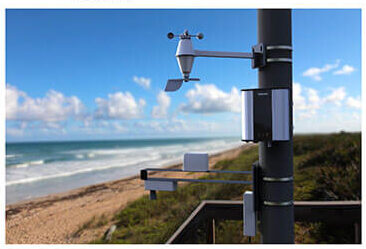
Atmospheric Conditions Monitor
Objective:
Build a device that can measure wind speed, UV index, brightness, temperature, humidity, and transmit them to a smart device.
Team Members:
- Cody Geist
- Jenna Hacker
- Austin Renard
- Ryan Smith
- Israel Urena
Advisor: Jeff Kautzer and William Dussault, UWM CEAS Electrical Engineering
Industry Mentor: TBD

Presentations: Friday, December 12, 2025 in E237
Key Features:
- Battery powered with a solar rechargeable battery and charger.
- Bluetooth connection and phone app integration.
- All-In-One Design
Key Differentiating Performances:
- Accuracy of measurements.
- Ability to send alerts to user if a measurement exceeds a threshold.
Cost:
- Sales Price: $300
- Component Cost: $100
- Assembly & Test Costs: $50
Environment:
- Outdoor, Stationary
- Operating Temp Range: -40oC to 45 oC
- Operating Humidity Range: 0 to 100%
Power Input:
- Battery Power: 7.4V Nominal @ 1 Amp, Lithium Ion, Single Cell, Rechargeable
Major Functions:
- Major Functions: On, Off, Standby, Program
- Quantities:
- Temperature Range: -40oC to 50 oC, Accuracy: +/-1.5oC, Resolution: 0.1oC
- Wind Speed Range: 0 to 60 m/s, Accuracy: 1m/s, Resolution: 0.2m/s
- Humidity Range: 0 to 100%, Accuracy: 2%, Resolution: 0.1% Barometric Pressure Range: 300 to 1200 hPa, Accuracy: +/-1 inHg, Resolution: 1/64 PA
Major Interfaces:
- Smart Device App Integration
Automated Animal Feeder
Objective:
Build a configurable automated feeder designed to dispense dry food on demand, randomized or scheduled. The system will allow remote operations with a mobile app or website that will enable users to control feeding times and food levels from anywhere. Built-in sensors will be used to track food weight to ensure efficient and reliable feeding.
Team Members:
- Ujjwal Dhungana
- Kayla Knudtson
- An Le
- Vedant Thakkar
- Kristina Van Patten
Advisor: Jeff Kautzer and William Dussault, UWM CEAS Electrical Engineering

Presentations: Friday, December 12, 2025 in E237
Intended Market:
- Designed for zoos and animal care facilities that require an automated, remote controlled feeding system for animals housed indoors.
Key Features:
- Automated and Remote Operation: Can be activated manually by users or scheduled feeding through app or website.
- Dedicated storage unit with weight and sealing sensors to ensure proper food levels and freshness.
- Indoor Use: Constructed for indoor environments to ensure consistency without weather exposure.
Cost:
- Sales Price: $500
- Component Cost: $225
- Assembly & Test Costs: $150
Environment:
- Outdoor, Stationary
- Operating Temp Range: 0 to 70 oC
- Operating Humidity Range: 10 – 55%
Power Input:
- Residential AC Power: 102 – 132 VAC @ 1 Amps Max
Major Functions:
- Major Functions:
- On/Off, Dispensing Status, Feeding cycle set-up, Weight of food, Buzzer
- Quantities:
- Product Mass – 40 kg max total weight, including food
- Power – 12W for motor, less than 1W for other components
Bluetooth to Classic Car AM Radio Converter
Objective:
Provide users with wireless Bluetooth functionality to interface with radios that do not have native Bluetooth audio support.
Team Members:
- Ramon Aguilar-Mendoza
- Logan Grotenhuis
- Jim Holtman
- Zane Hurst
- Sam Rodriguez
- Evan Wells
Advisor: Jeff Kautzer and William Dussault, UWM CEAS Electrical Engineering

Presentations: Friday, December 12, 2025 in E237
Major Features:
- Auto-scan and transmit at most available frequency within range of 530 – 1600 kHz
- Timed automatic shutoff
- Tone and volume control
Intended Market:
- Global
Cost:
- Sales Price: $19.99
- Component Cost: $15
- Assembly & Test Costs: $2
Environment:
- Indoor (inside a car)
- Operating Temp Range: -20 to 40 C
- Operating Humidity Range: 0 to 100%
Power Input:
- Car Battery DC power: 10 – 15 V DC @ 1 Amps Max
Major Functions:
- AM Tuning Range: 500–1600 kHz, ±0.5 kHz, 10k Hz steps
- Tone Control: -12 to 12 dB, ±0.5 dB, 1 dB/step
- Bluetooth Audio Streaming: Up to 10 m, 20Hz-20kH
Major Interfaces:
- Push-button Encoder
- LCD Display
Dew Point Monitor
Objective:
Build an easy and reliable indoor/outdoor dew point monitor to set and forget.
Team Members:
- Nathan Gentz
- Rory Grouse
- Luis Jaquez
- Alan Jasper
- Kevin Xiong
Advisor: Jeff Kautzer and William Dussault, UWM CEAS Electrical Engineering
Industry Mentor: TBD


Presentations: Friday, December 12, 2025 in E237
Major Features:
- Solar powered outdoor unit that doesn’t need charging
- Battery powered indoor display that can be placed anywhere
- Long connectivity range
Intended Market:
- Global
Cost:
- Sales Price: $80
- Component Cost: $40
- Assembly & Test Costs: $10
Environment:
- Sensor is outdoor weatherproof; the base station is intended to be used indoors but can be used outdoors in dry environments.
- Operating Temp Range: -30°C – 50°C
- Operating Humidity Range: 0%-100%
- Operating Pressure Range: 400-1200 hPa
Power Input:
- Outdoor Power
- Qty 2 Lithium-ion Battery Cell, Nom 3.7V, Max 1A discharge
- DC Power Input: 6V max Solar Cell, ~0.1A Max Current
Major Functions:
- AM Tuning Range: 500–1600 kHz, ±0.5 kHz, 10k Hz steps
- Tone Control: -12 to 12 dB, ±0.5 dB, 1 dB/step
- Bluetooth Audio Streaming: Up to 10 m, 20Hz-20kH
Major Interfaces:
- User Interfaces: LCD Screen, Mode Buttons, Power buttons, USB-C Charging Port
- Functions: On, Off, Low Power
- Bluetooth Range: 100 yds, up to 150yds
- Quantity: Temperature, Humidity, Pressure
- Range: -30°C – 50°C, Accuracy: ±0.3°C, Resolution: 1°C
- Range: 0% to 100%, Accuracy: ±3%, Resolution: 1%
- Range: 400 – 1200 hPa, Accuracy 50 hPa, Resolution 50 hPa
Mechanical Engineering
Presentations: Wednesday, December 3, 2025 in EMS E371 from 2:30-5:00 pm


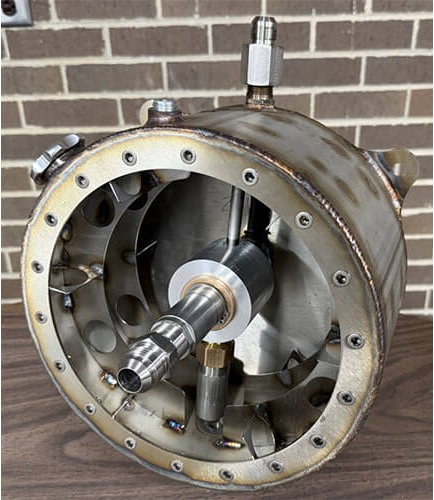
Inverted Oil Tank for Aerobatic Diesel Applications
Objective: Design a lightweight inverted oil tank for DeltaHawk’s diesel aircraft engine to ensure continuous lubrication during negative-g and inverted maneuvers. The tank must hold 6 quarts, withstand 9g forward and 6g downward loads, integrate into multiple airframes, and meet FAA part 23/33 standards.
Team Members:
- Jeremy Anstedt
- Keaton George
- Peter Hanson

Project Advisor: Mohamed Yahiaoui, Senior Lecturer Mechanical Engineering
Industry Mentor: Niklas Barrett, DeltaHawk

Project Presentation: Wednesday, December 3 from 4:30 – 5:00 pm in EMS E371
Project Findings:
The goal of this project was to design an oil tank for an airplane that is capable of performing acrobatic maneuvers. The primary requirement of this project was to be able to deliver a constant flow of oil to the plane’s engine, no matter the orientation of flight.
By complying with applicable Federal Aviation Administration requirements, as well as the sponsor’s requirements, the group was able to design a functional prototype. The prototype was a completely unique design to anything in the aviation field for this current application. The design featured an all stainless steel design, with a unique rotary pickup mechanism that would rotate inside the tank to pick up oil no matter the orientation.
The group utilized and worked closely with the UWM student machine shop to fabricate many of the custom components and learned the value of working with experienced manufacturers. Overall, the prototype successfully demonstrated the concept, and was delivered to the sponsor for field testing.
Neonatal Warmer Side Wall Design Improvement
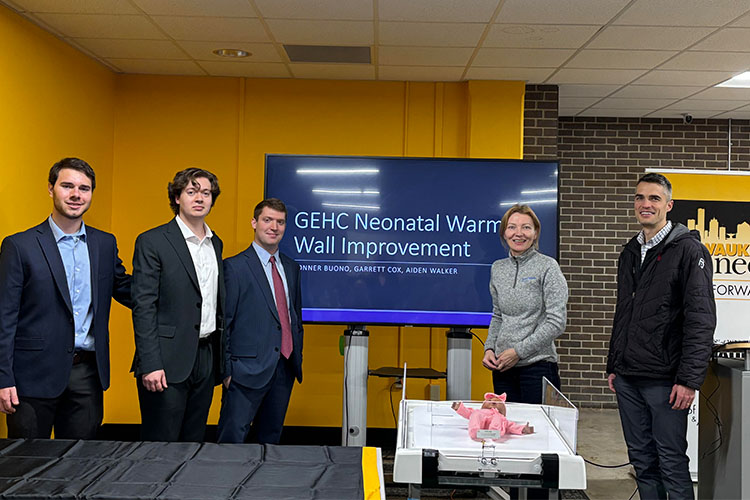
Objective: Develop an improved side wall design for GE HealthCare’s neonatal warmer. The wall must prevent latch misuse, resist patient weight forces, and maintain cleanability and biocompatibility. The design should
integrate with existing frames, remain low-cost, and meet long-term reliability standards. Deliverable includes
a functional prototype.
Team Members:
- Connor Buono
- Garrett Cox
- Aiden Walker
Project Advisor: Mohamed Yahiaoui, Senior Lecturer Mechanical Engineering and Fatemeh Mahmoudi Kouchaksaraei, UWM
Industry Advisor: Ramune Auzelyte, GE HealthCare
Project Presentation: Wednesday, December 3 from 2:30 – 3:00 pm in EMS E371
Project Findings:
The final design meets all critical to quality objectives and functional requirements, delivering a safer, more cleanable, and user-friendly update to the original system. Most importantly, the redesign successfully removes the primary misuse case of accidental opening, which was the central objective of the project.
Bonus improvements include new side grab handles for secure user support, enhanced cleanability, a hidden latch, quieter operation, and a reduced overall cost due to strategic material elimination.
Unlike the previous design, which required full disassembly for proper cleaning, the redesigned wall can now be removed with a simple upward pull, reducing cleaning time significantly.
Recommended future enhancements include:
- Adding lateral springs to control the wall’s descent and further reduce noise.
- Implementing guide pins to minimize jamming and maintain alignment over time.
- Increasing diameter of the spring pin or switching from plastic to metal for better durability.
- Increasing acrylic thickness to 10 mm to prevent bowing and improve durability.
These refinements will further strengthen reliability, safety, and usability, ensuring smooth and consistent opening and closing of the walls.
PLC Automation of Air Handlers and Flexo Printing Systems
Objective: Modernize a 1960s Faustel Flexo press by integrating PLC automation. The system will control ink station engagement, preset run modes (e.g maintenance, run, standby), escalatory alarms/machine state feedback and user-generated baselines for ink recipes. System will also integrate air handlers for drying efficiency and ventilation. Deliverables include CAD schematics, cost analysis, and a functional PLC-based prototype.
Team Members:
- Ivan Alvarez
- Lucas Gomes
- Jeffrey Roland
- Krishan Xavier
Project Advisors:
- Mohamed Yahiaoui, Senior Lecturer Mechanical Engineering
- Fatemeh Kouchaksaraei
Industry Advisor:
- Ryan Luetzow, Leutzow Industries, Inc.
Project Presentation: Wednesday, December 3 from 4:00 – 4:30 pm in EMS E371
Solar Powered Bikeshare Systems
Objective: Develop a solar-powered retrofit for Bicycle Transit Systems’ bikeshare docks to eliminate battery swaps. The design must harvest solar energy, ensure 24-hour dock operation, protect Li-ion batteries in cold conditions, and fit within existing dock dimensions. Deliverable includes a functional prototype.
Team Members:
- Grant Fisher
- Sam Kuphal
- Jurabek Trudimurotov
Project Advisors: Mohamed Yahiaoui, Senior Lecturer Mechanical Engineering and Fatemeh Mahmoudi Kouchaksaraei, Teaching Assistant
Project Presentation: Wednesday, December 3 from 3:00 – 3:30 pm in EMS E371
Project Findings:
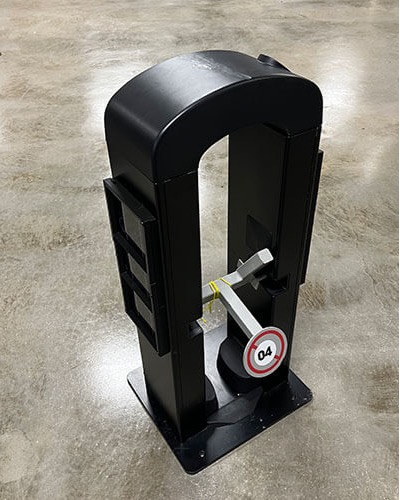
We needed to implement solar charging to Bicycle Transit Systems 3.0 bike dock to eliminate the process of battery swaps in the docks.
Welding Job Cart
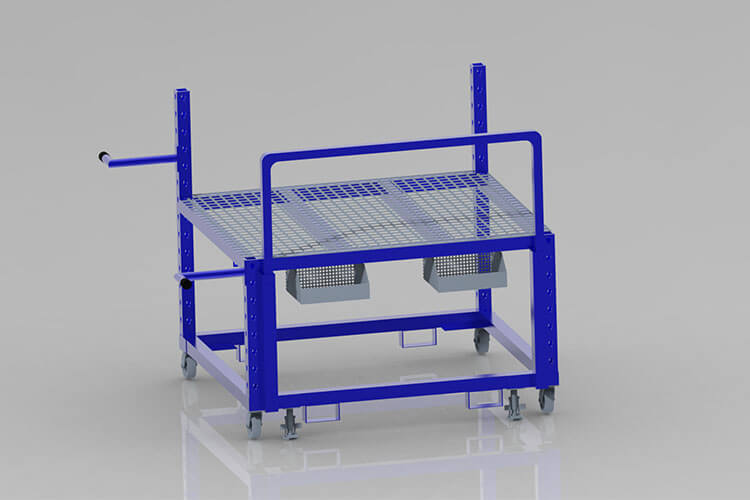
Objective: Design a lightweight welding job cart to hold channels, I-beams, and small parts for improved efficiency. The cart must fit within 6ft × 5ft × 6ft, weigh under 45 lb, include swivel locking wheels, adjustable railing, and ergonomic pull bars. Deliverable includes CAD models, time-study, and a prototype.
Team Members:
- Ross Abrams
- Theo Houck
- Richie Mathew
- Thomas Utynek

Project Advisor: Mohamed Yahiaoui, Senior Lecturer Mechanical Engineering
Industry Mentor: Luke Fuerbringer, SYSTEMS Loading Dock
Project Presentation: Wednesday, December 3 from 3:30 – 4:00 pm in EMS E371
Project Findings:
The team designed a strong, easy to use cart to help workers move large and small materials and tooling around System LLC’s manufacturing plant.
The cart features adjustable handles that cover a design standard ergonomic range. The cart also features a collapsible guard rail to ensure safety during transportation and collapses for ease of offloading.
Various calculations and simulations confirm that the cart will not break or tip over under worst case fatigue conditions. This design is compliant with all associated design standards and codes. The cart design stayed under budget in terms of manufacturing and will save time transporting materials, creating a more efficient manufacturing line for Systems LLC.
Become a Senior Design Project Sponsor
Contact: Mark Meier, College of Engineering & Applied Science Office of Research: meiermd@uwm.edu