People

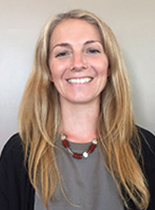
Renee Calkins

Renee Calkins

Senior Lecturer in Classics

calkinsr@uwm.edu
View Full Profile »

Elisabetta Cova

Elisabetta Cova

Associate Professor & Chair, Classics Coordinator, Ancient and Modern Languages, Literatures, and Cultures

covae@uwm.edu
View Full Profile »

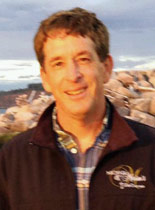
Kevin Muse

Kevin Muse

Associate Professor

kmuse@uwm.edu
View Full Profile »

Andrew Porter

Andrew Porter

Professor and Classics Coordinator

portera@uwm.edu
View Full Profile »

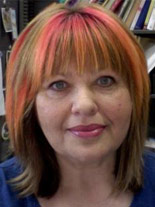
Bozena Tieszen

Bozena Tieszen

Senior Lecturer

tieszen@uwm.edu
View Full Profile »

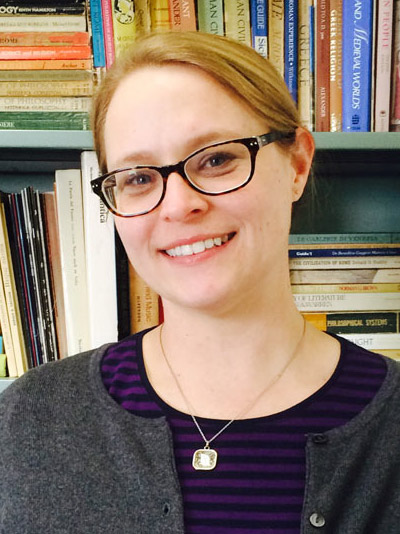
Deanna Wesolowski

Deanna Wesolowski

Senior Lecturer

dwesolow@uwm.edu
View Full Profile »

Emeriti


Richard Monti

Richard Monti

Professor Emeritus, Classics

rmonti@uwm.edu
View Full Profile »

In Memoriam


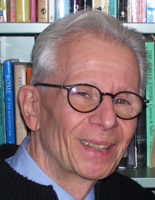
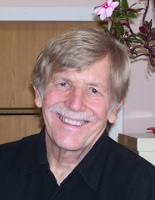
David Mulroy, 1943-2025

David D. Mulroy was born in Madison, WI. He received his AB in Classics magna cum laude from Georgetown University in 1965 and his PhD in Classics at Stanford University in 1971. He taught at Princeton University as a lecturer and assistant professor before joining the Classics faculty at the University of Wisconsin-Milwaukee in 1973. He retired as a full professor of Classics at UWM in 2012.

A guiding conviction of David’s teaching and scholarship was that the classics endure because they provide aesthetic and intellectual enjoyment. An avid softball and soccer player, David liked to say that the Greeks and Romans left us with “the greatest line-up in world literature,” and he took great pleasure throughout his career in helping students enjoy classical texts as much as he did. With remarkable energy and versatility David eventually taught nearly every course offered by the Classics program, from classical mythology to graduate courses in Greek and Latin authors, and he generously directed numerous independent studies besides.

David’s favorite approach to teaching classical authors was the Great Books seminar, in which the teacher joins the students in investigating and discussing primary texts. Rather than try to lead students to predetermined answers about what the authors were saying, David preferred posing questions that were genuinely open. He was an approachable and humane teacher who set students at ease with his low-key style and abundant sense of humor. Never afraid to share his own uncertainty or perplexity, he valued and learned from his students’ insights. He established the Certificate Program in the Study of the Liberal Arts through Great Books at UWM in 1996. In the same year he founded with Max Yela the now venerable Great Books Roundtable at Golda Meir Library, a monthly discussion group open to members of the public who share an enthusiasm for reading classic texts of all kinds, ancient and modern.

In the 1990s David began to feel that students’ grasp of sophisticated writing was in decline and suspected that the trend away from teaching formal grammar in the schools was to blame. Over the course of two years (1999-2001) he put his extensive research and thinking on the topic to the test by giving weekly tutorials in English grammar and sentence diagramming to local elementary school students. In 2003 he published The War Against Grammar, a lively and learned plea for the restoration of grammar to the curriculum that found a wide and sympathetic audience. Another focus of David’s outreach in those years was the Odyssey Project, a Bard Clemente Course in the Humanities designed to introduce low-income adults to the humanities, for which he served as course director and instructor for five semesters (2001-2003).

David was a gifted and prolific translator of Greek and Latin poetry. He undertook the challenge of making the ancient texts speak directly to modern readers in a lively and elegant contemporary idiom. His efforts resulted in a series of highly praised volumes, including Early Greek Lyric Poetry (1992); Horace’s Odes and Epodes (1994); The Complete Poetry of Catullus (2002); Sophocles’ Oedipus Rex (2011), Antigone (2013), and Oedipus at Colonus (2014); Aeschylus’ The Oresteia: Agamemnon, Libation Bearers, and The Holy Goddesses (2018); and Aristophanes’ Lysistrata (2020).

David’s contributions to classical philology were published in journals that include Transactions of the American Philological Association, Hellas, Arethusa, Classical World, Classical Bulletin, and Phoenix. He was also a frequent presenter at meetings of the American Philological Association and the Classical Association of the Middle West and South. His writings and presentations encompassed a broad range of topics in both Greek and Latin literature and expressed the same open-mindedness and independence of judgment that characterized his teaching. He was fearless in questioning some of the field’s long-held assumptions, as when he argued that Pindar had a sense of humor or that the Minos and Hipparchus are authentic dialogues of Plato intended to be read alongside the philosopher’s Laws.

Whenever we in the Classics program meet former students and friends of David’s in the community, we are reminded of the many lives he touched. He had an especially productive friendship with Milwaukee businessman and amateur classicist Richard Johnston. The two read Greek together for many years and co-authored two scholarly articles: “Simonides’ Use of the Term Tetragonos” (Arethusa, 2004) and “The Hymn to Hermes and the Athenian Altar of the Twelve Gods” (Classical World, 2009). In gratitude for David’s mentoring and friendship, Johnston generously donated funds to establish the David Mulroy Scholarship at UWM. The scholarship has been awarded annually since 2018 in support of students pursuing studies in ancient Greek culture and language. We can think of no more fitting tribute to our colleague and friend than one ensuring that enjoyment of the classics will continue.

Bruce Layman Precourt, 1956-2022

Bruce L. Precourt, former Senior Lecturer in the Classics Program in the Department of Ancient and Modern Languages, Literatures, and Cultures (formerly Foreign Languages and Literature) at the University of Wisconsin-Milwaukee, passed away on Wednesday, August 17, 2022.

Bruce graduated in 1988 from UWM with a BA in Classics and received his MA in Classical Languages & Literatures from the University of Chicago in 1990. Bruce was a Senior Lecturer in Classics at UWM from 1992-2017 where he taught Greek and Roman mythology as well as Egyptian civilization courses. Due to his expertise in Egyptian visual and material culture, he also taught Egyptian archaeology and art in the Department of Art History. Prior to his academic career, from 1980-1984, he worked for Astronomy and Odyssey magazines.

Bruce was passionate about science fiction, comic books, ancient mythology, astronomy, and fine art. He will be remembered by his colleagues and students for his deep love of the ancient Mediterranean world, his profound breadth of knowledge (which included reading ancient Egyptian hieroglyphics!), but above all his kind spirit and collegiality.


Howard James Shey, 1935-2020

The Classics Program of the Department ofAncient and Modern Languages, Literatures, and Cultures (formerly Foreign Languages and Literature) mourns the loss of Howard James Shey, Associate Professor Emeritus of Classics, who passed away on May 19, 2020.

From his arrival at UWM in 1968 until his retirement in 2000 Jim Shey taught numerous courses on ancient Greek, Latin, and classical literature and civilization. In addition to his service to the Classics Department at UWM, Shey served as book review editor for Classical Journal (1968-73). He had wide-ranging scholarly interests. His doctoral dissertation on the Roman poet Valerius Flaccus continues to be cited, and while at UWM he published articles on Tyrtaeus, Horace, and Petronius. A fluent reader of hieroglyphs, he developed and taught the Classics program’s first course in Egyptian civilization. Shey’s books on Latin works by Petrarch are his most outstanding scholarly legacy. With his UWM colleague in Italian, Davy Carozza, he authored a translation of Petrarch’s Secretum with introduction, notes, and an anthology of critical scholarship (1989). A few years after his retirement, Shey published his magnum opus, an edition of Petrarch’s Itinerarium with translation and commentary (2004).

His friends and colleagues who regularly chatted with him in Curtin Hall will greatly miss Jim’s easy-going conversation and his witty sense of humor.


Roy Arthur Swanson, 1925-2020

Dr. Roy Arthur Swanson, Professor Emeritus of Classics and Comparative Literature in the College of Letters and Science at UW-Milwaukee, passed away on December 15, 2020.

Roy served in the U.S. Army and received the Bronze Star during his tour of duty in World War II. He earned his BA, BS, and MA degrees from the University of Minnesota, and his PhD in Classical Philology from the University of Illinois. He taught at several universities before joining the faculty of the UW-Milwaukee in 1967. During his long career at UWM, he served as chair in Classics, and chair and coordinator in Comparative Literature, and had tenure in both disciplines. Along with his colleagues Father Michael Fountain and Esther Ansfield, Roy established UWM’s Holocaust Research and Information Project. He authored several books, as well as numerous book chapters and articles. Notable published academic works include Heart of Reason: Introductory Essays in Modern-World Humanities, Odi et Amo: The Complete Poetry of Catullus, and Pindar’s Odes.

Roy received several awards for distinguished teaching at UWM, and in 1998, the Comparative Literature program established a Merit Scholarship in his honor. Roy retired from UWM as an emeritus professor in 2003. Following his retirement, he wrote Blue Margin, Versions of Rhetoric, and Darkness and Rain, his first fiction novel.