
For graduate dance students, choreography begins with research. Upstart, an annual summer concert of original works by MFA students, gives artists from around the country five weeks to investigate a topic, develop new choreographic approaches, and present experimental performances.
Led by dance professor and graduate program director Maria Gillespie, the intensive challenges students to frame their work in a new light and test unfamiliar methods.
“The UpStart is a chance to have students put everything they’ve learned into the studio and experiment,” said Gillespie. “The very nature of having a short process is experimental because we’re asking students to push beyond their comfort zone and do what they haven’t done before.”
This year’s performances examine topics ranging from history and identity to race, memory, and social justice.
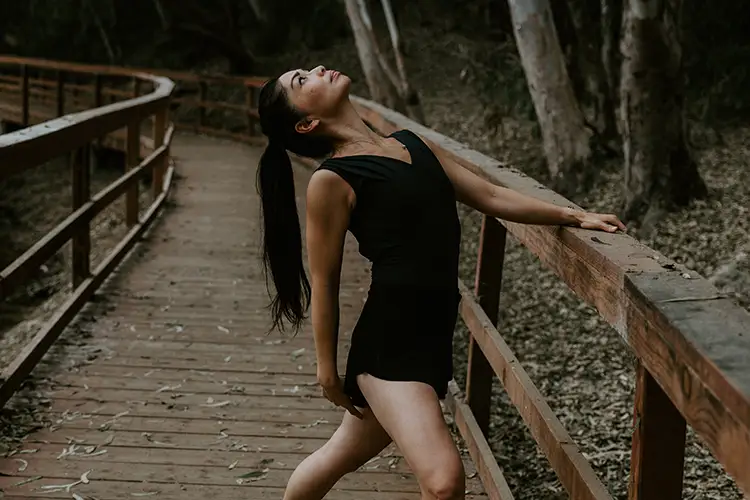
Tiffiany Kadani’s the flowers left behind explores parallels between the incarceration of Japanese Americans during World War II and contemporary immigration detention. Inspired by her Asian American heritage and first-hand accounts from Japanese Americans, Kadani uses choreography and symbolic imagery to show how the same detention centers are being used today.
“I’m relating my experience of my family during World War II and what’s going on today with ICE facilities, Kadani said. “I’ve found that detention centers are very close to internment camps. I’m looking for correlation, but mostly, I’m looking at what and how it happened.”
The work was inspired by the story of a Japanese American woman taken from her garden by US soldiers during the war. Kadani uses props to recreate her last moments before being removed from her home.
“The symbolism of being taken from home is being taken from all you know and love; that’s why I’m using props to simulate the experience,” said Kadani. “I’m using props in a literal and abstract way. It relies on intuition and what is seen and what is happening today.”

Second-year MFA student Dalia Salary’s A Conversation Peace examines the struggles of Black dancers through generations, honoring the perseverance of dance ancestors, or “dancestors,” whose perseverance created opportunities for artists today.
“It’s about the endurance of Black dancers; why we stay, what motivates us, the obstacles we face, and how we’ve overcome these challenges,” said Salary. “The dancestors paved the way for people like me to be able to do what I do.”
Salary’s piece combines five different perspectives and abstract movements to create a choreographic work representative of the barriers dancers of color face.
“The most experimental part of this piece is the collaboration I’m doing with five other dancers, all from different backgrounds. I’m asking them to bring their knowledge of racial constructs, oppression, survival, hope, and joy into my research,” said Salary.
“In sharing these stories and having these discussions, we’re really starting to see what an embodied archive looks like and why that’s so important.”
UpStart is July 30 from 7 – 9 p.m. at UWM’s Mitchel Hall, Studio 254. Tickets and more information are available on the PSOA events calendar.
Story by Payton Murphy ’27 (Film BFA)