Two artists with ties to PSOA named 2026 Fellows by the Wisconsin Academy of Sciences, Arts & Letters

Bright flowers in the foreground are in full bloom on campus with Mitchell Hall in the background.

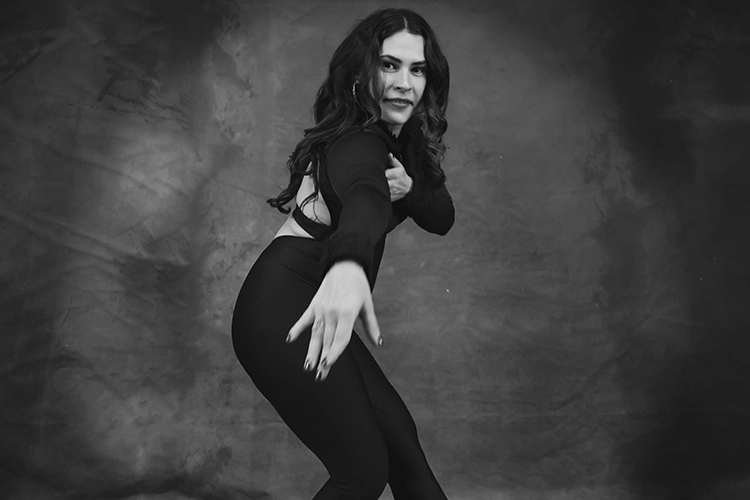
Two artists with ties to UW-Milwaukee’s Peck School of the Arts are among those named 2026 Fellows by the Wisconsin Academy of Sciences, Arts & Letters.

Simone Ferro, professor emerita of dance at UWM, and James DeVita, an alum of UWM’s Peck School of the Arts, are among 16 individuals honored this year. Rebecca Klaper, dean of UWM’s School of Freshwater Sciences, was also recognized.

The biennial award honors educators, researchers, artists and leaders across Wisconsin for significant accomplishments in their fields and contributions to the cultural life of the state.

The 2026 class will join more than 100 fellows statewide.

Simone Ferro

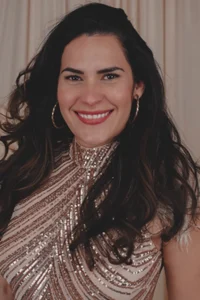
Headshot of Simone Ferro
Simon Ferro

Choreographer and dance educator Simone Ferro is a vital voice in the performing arts whose work blends traditional Brazilian influences with contemporary social issues to create deeply moving movement. Ferro is a professor emerita at the University of Wisconsin-Milwaukee, where she served as chair of the Department of Dance and director of its nationally recognized MFA program. Throughout her distinguished career, she has been a tireless advocate for the field, serving as president of the Wisconsin Dance Council and championing dance education and access across the state. Her leadership was instrumental in creating the Emerging Artist Program, a statewide initiative providing funding and mentorship to the next generation of Wisconsin choreographers.

Ferro’s artistic practice is deeply rooted in social justice and “embodied research.” Her projects, such as Milwaukee Through Embodied Research, combine dance with oral history to explore resilience in local neighborhoods, resulting in site-specific performances in public spaces and homes. She has also used her choreography to investigate complex social realities like housing insecurity, inspired by works such as Matthew Desmond’s Evicted. Internationally, Ferro is a Fulbright Fellow whose ethnographic research into traditional folk cultures in rural Brazil has led to extensive documentation and a podcast series amplifying the voices of women artists. Her legacy is one of unwavering service to both the academic and artistic communities of the Midwest.

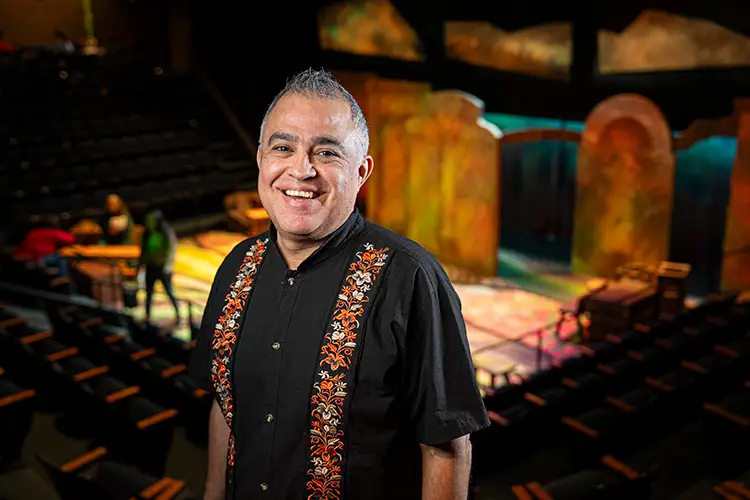
James DeVita

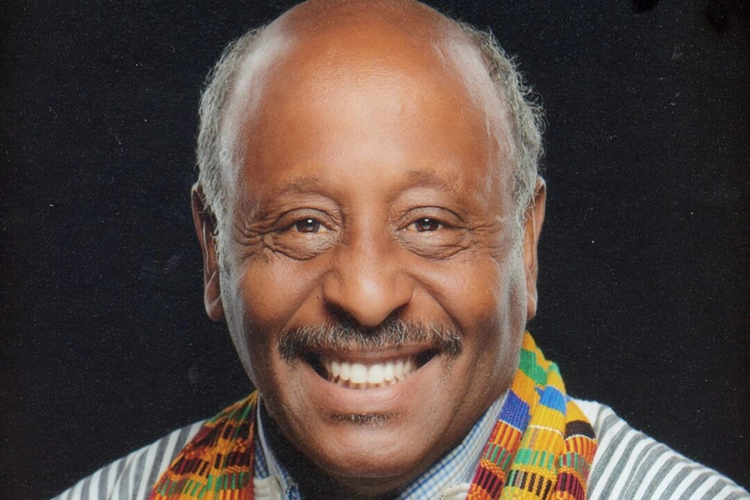
Headshot of James DeVita
James DeVita

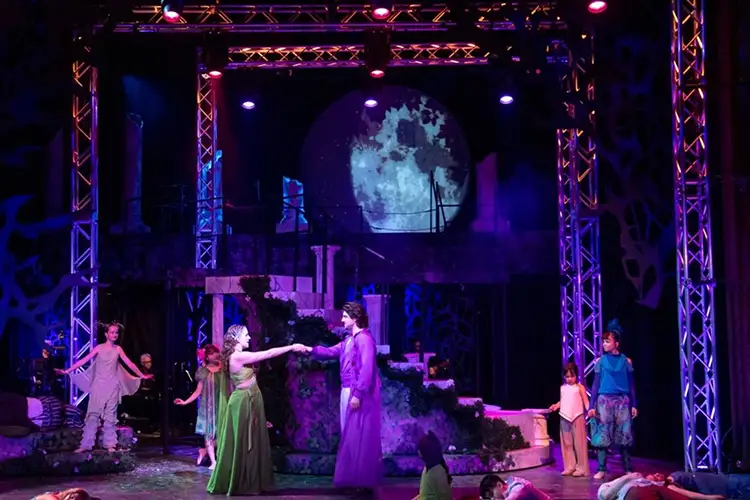
James DeVita is an author, actor and theater director. He is a core company member and literary manager at American Players Theatre, a classical repertory theater in Wisconsin. He has worked as an actor in Japan, Germany, Australia, Ireland and throughout the United States. His novel Sanctuary, written under the pen name James Cleary, is being published this year by Penguin Random House in the U.S. and Canada, and also by HarperCollins in the UK. It will be released internationally in Italy, France and Germany as well. His previous novels include A Winsome Murder (WI-University Press), The Silenced (Milkweed Editions), and Blue (HarperCollins).

DeVita has also worked extensively as a playwright for adult and young audiences. A resident playwright at Milwaukee’s First Stage Children’s Theater, his work in the field has been acknowledged twice with the Distinguished Play Award from the American Alliance of Theater and Education; the Intellectual Freedom Award by the Kentucky Council of Teachers of English/Language Arts; and the Shubert Fendrich Memorial Playwrighting Contest. The American Alliance of Theater and Education honored his body of work with the Charlotte B. Chorpenning Award. DeVita is also a recipient of the National Endowment for the Arts Literature Fellowship for Fiction.


Read more about the award and other 2026 honorees on UWM Report.

Kesslers Diamonds continues its support of Jewelry & Metalsmithing students through grants and internships

Sophie Rickert (wearing a black dress and a necklace), Sam Reimer (wearing a dark red dress and a necklace), and Sarah Jack (wearing glasses, a black maxi skirt, and a white sweater) smile while holding their scholarships. The stand before a backdrop that says "Kesslers" in a red, cursive font.

For the past eight years, Kesslers Diamonds has partnered with PSOA’s Jewelry & Metalsmithing program to provide students with opportunities to create industry-grade work.

What began as a collaboration has grown into a sustained investment in student success, offering real-world job experience, internship opportunities, and significant scholarship support.  

The partnership began through a collaboration between Jewelry & Metalsmithing alum and Kesslers employee Cory O’Brien Borkowski (BFA 2017) and the program.

Faculty members Erica A. Meier and Yevgeniya Kaganovich (Area Head, Jewelry & Metalsmithing) were instrumental in establishing the partnership and continue to lead it eight years later, with Meier overseeing the project annually and integrating it into the Jewelry & Metalsmithing community at UWM. 

Over the years, Kesslers has contributed tools and funding to support student work. Each year, the company donates ethically sourced, high-quality diamonds and three ounces of silver for every participating student.  

Each fall, Meier develops the curriculum for the project and integrates it into her course. This year’s project was completed through her course The Multiple, with a focus on casting.  

“For our students, this has become part of their curricular work,” Meier said. “This is stuff they’re already doing in classes, and now they get to compete with each other for scholarships and internships.” 

Kesslers internship participants stand around smiling for a group photo.
Kesslers participants (L-R): Sophie Rickert, Marlena Weghorn, Eli White, Sarah Jack, Grace Barden, Sam Reimer, Dierdre Rodrigues, Bridget St. John, Jada Townes. Bottom: Cat Martin, Nora Imhoff, Erica Meier, Abraham Anderson. | Photo courtesy of Erica Meier

Sam Reimer, a senior Jewelry & Metalsmithing student with a dual focus in Ceramics, earned first place and a $1,500 scholarship. Her piece explored how insects can be preserved in metal. Responding to the theme of repetition and multiples, she created a bangle that casts different bugs into metal. 

“I was like, how can I memorialize these insects forever?” Reimer explained. “I’ve been studying taxidermy, and I wanted to figure out how I could create something precious from something people didn’t see as precious.” 

For Reimer, the gala hosted by Kesslers was the most impactful part of the experience. Friends and family gathered to view the exhibition, enjoy refreshments, and take guided tours behind the scenes at the facility.  

Staff members voted on their favorite pieces, and artists were recognized at the awards ceremony that followed. 

“It’s such a great opportunity to support your peers and meet future employers,” Reimer said. “Being able to see everyone’s work in such a professional setting is really rewarding. It really motivates you to keep working hard.” 

Sophie Rickert, a junior in the program, received the second-place $1,000 scholarship. She first learned about the Kesslers partnership during her first metalsmithing class and devoted weeks to planning her project. 

“My creative flow very much starts with my planning process. I’ll sit for a few weeks working with my notebook and in my head to create my models,” Rickert explained. “I very much did this for my project.” 

Experiences like Rickert’s highlight how the partnership supports both creative exploration and the development of career readiness skills. 

“Over the last eight years, about 150 students have experienced what it’s like to make a living with their creative and technical skills through this partnership,” Meier said. “And the students give back, too, by stimulating the industry with their fresh perspectives and raw talent.” 

Through sustained faculty leadership, material support, and direct engagement with students, Kesslers continues to connect classroom learning with professional outcomes, reinforcing the impact of industry collaborations for years to come.

Sam Reimer's bracelet modeled
Sam Reimer, first place winner | Photos courtesy of Kesslers
A bracelet with a golden band with a silver dragonfly in the middle.
Sam Reimer, first place winner
Sophie Rickert, second place winner
Sophie Rickert
Sophie Rickert, second place winner
Sarah Jack's work modeled.
Sarah Jack, third place winner
A silver bracelet with tiny seashells on the chain and a big seashell with a small diamond in the middle.
Sarah Jack, third place winner
Catherine Martin's work modeled.
Catherine Martin, 2025-26 JMCD scholarship recipient, currently interning at Kesslers
Two silver earrings. Both have two rectangles connected by a small chain and a star at the bottom.
Catherine Martin, 2025-26 JMCD scholarship recipient, currently interning at Kesslers
Nora Imhoff, 2025-26 JMCD scholarship recipient, currently interning at Jost Jewelers

Story by Payton Murphy ’27 (BFA Film)

How Steve Teeple’s childhood interests shaped his career as a digital artist 

A photo of Teeps' work. A performer sings on stage in front of a crowded stadium, and a large carousel lit by many string lights spins behind her, between a drummer and a keyboardist

As a child growing up in Wisconsin, Steve Teeple (BFA 2010, Art) was drawn to fantasy worlds. Books, films, and comics filled with mysticism, science fiction, and manga sparked an early fascination that would later shape his creative career. 

Steve Teeple holds an alien-like figure over his left eye.
Steve Teeple

Today, the UWM alum, known professionally as Teeps, is a Los Angeles-based digital artist working across the realm of 3D art. His practice spans character development, digital sculpting, concept art, illustration, art direction, production modeling and texturing, and 3D printing.  

On April 1, he will reflect on his creative path during a virtual lecture for the Artists Now! Guest Lecture Series. 

Since earning his BFA in 2010, Teeps has built a career collaborating with major artists and brands. His projects have included work with Billie Eilish and The Weeknd, and large companies such as Netflix, Disney, Google, and Warner Bros. 

Growing up in a spiritual and superstitious family also shaped his artistic curiosity, drawing him toward supernatural and mystical themes. 

“I grew up around books and movies, and comics about mysticism and fantasy, and I think that really shaped who I am now,” Teeps said. “I was exposed to books like The Lord of the Rings and The Hobbit, and anime and manga when I was really young, and that really shaped what my work would become.” 

That curiosity also led him to explore a wide range of creative disciplines within the field of 3D art. 

“Being so specialized in one thing can be disruptive and cause some issues, but so many people come to me to help with so many different things,” Teeps explained. “I have an overly curious mind that wants to learn things, and outside of the work I get paid for, I get to do this all day.” 

While studying at the Peck School of the Arts, Teeps was a part of the Technical Arts program, now known as the Creative Technologies program. He credits former Senior Lecturer Tim Decker and Dr. Nathaniel Stern for helping him develop as an artist.  

“Stern was definitely a mentor to me, and he definitely helped me with some major projects during my time at UWM,” Teeps said. “He taught me so much about artistic statement and developing my artistic voice outside of what I was learning in class.” 

A bald man wearing a cloak stands up against a cityscape. The photo is black and white. There is a white triangle.
Artwork by Steve Teeple

In his Artists Now! lecture, Teeps plans to share insights from his career and reflect on the path that led him into the field.  

“I really want students to take away that the path isn’t always straight, and that’s okay,” said Teeps. “I had a crazy trajectory on how I got here, and I want students to know that it’s okay to try things out.” 

More information about Teeps’ Artists Now! lecture is available on the Peck School of the Arts events calendar. To learn more about his work, visit his website


Payton Murphy ’27 (BFA Film)

Film professor awarded Milwaukee’s BE Legacy of Excellence Award

Mays sits in a empty theatre and smiles at the camera

Marquise Mays has been awarded the BE Legacy of Excellence Award in the arts category. The award, now in its 41st year, honors Black Milwaukeeans who serve their community.

Award categories include arts, community service, business, culture, religion, health, and more. The public ceremony supports the Louvenia Johnson Scholarship Fund, which provides scholarships to Black high school seniors pursuing college or trade school.

Mays was nominated by an anonymous community member in recognition of his involvement and impact in Milwaukee’s arts community.

Although he considers himself early in his practice, he said the recognition is meaningful at this stage of his career.

“It means a lot to receive this award at this point in my career. I still feel like I’m an emerging artist and academic,” Mays said. “To have something this large to my name is extremely exciting and humbling and makes me excited for what’s going to happen in the future.”

Born and raised in Milwaukee, Mays said the recognition is especially meaningful in the city where he developed his lifelong interest in film. He never expected that the campus where he spent time in his formative years would later become his professional home.

In addition to its personal significance, Mays said the award reflects the work being done within the Department of Film, Video, Animation & New Genres.

“It is important to students, especially Black students, to see that I have chosen Milwaukee and my place to offer my work to, because I do believe that Black filmmakers and storytellers from this city are the greatest I’ve ever met,” Mays said. “FVANG has always been a place that has championed diversity of thought and opinion, and art, so this is just adding a beautiful notch to the environment that FVANG has already created.”

Receiving the BE Legacy of Excellence Award has also prompted Mays to reflect on the work he has done in recent years and how it will shape his practice going forward.

“I feel like this honor has made me see that I’ve reached a new threshold, and it makes me proud of the work I’ve done in the past five or six years. It speaks towards myself, my city, and my people,” Mays said. “The work that comes after this award is truly going to be from my perspective, my voice, and what I’m interested in. I’m excited that I get to experiment a little more with my practice as opposed to being so strict about my performance.”

To learn more about Marquise Mays and his work, visit his Faculty Directory page.


Story by Payton Murphy ’27 (BFA Film)

UWM alum one of first 10 selections announced for the 2026 Milwaukee Film Festival 

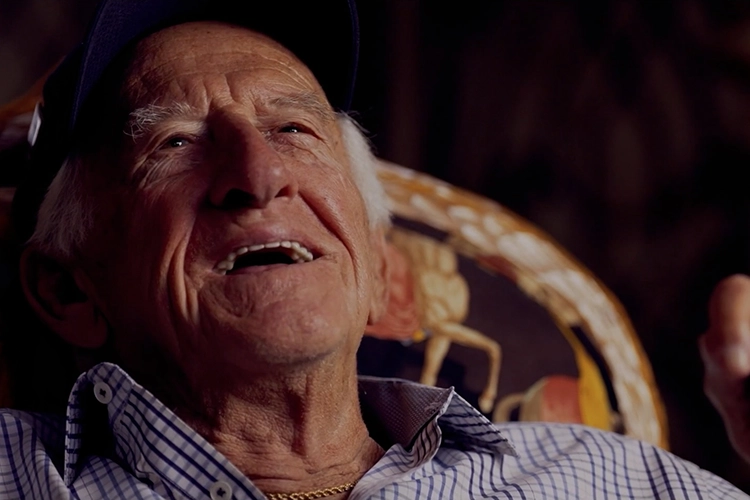
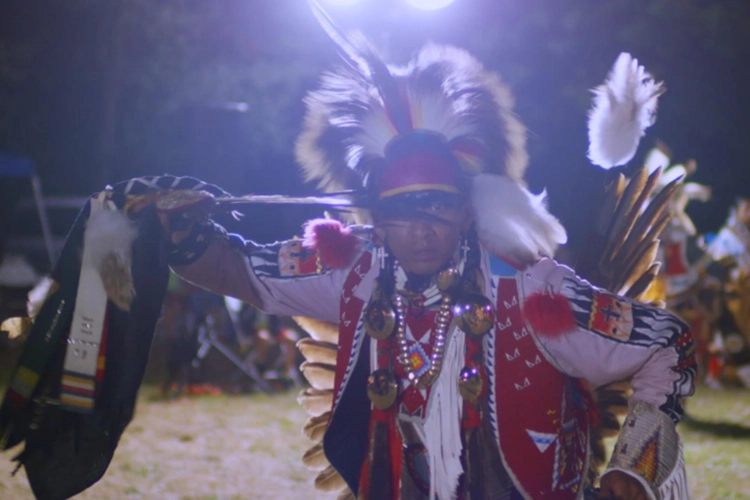
A documentary by PSOA alum Sky Hopinka (MFA 2016, Performing Arts) has been selected as one of the first 10 selections for this year’s Milwaukee Film Festival. Hopinka’s film, Powwow People, explores the traditions and culture of the powwow.  

Film professor and art alum featured in WUWM’s Black Sage series

Headshots of five women

A recent feature from WUWM 89.7 FM highlights the influence of Black women artists and leaders across Milwaukee’s cultural landscape, including figures connected to the Peck School of the Arts. The story, released as part of the Black Sage series, points to the lasting impact of artists like two-time UWM alum Evelyn Patricia Terry and award-winning interdisciplinary artist and professor Portia Cobb, a key figure in advancing visibility and opportunities for Black artists.

“I think [my process], it always comes from a place of documentary, where I want to hold on to memory,” Cobb told WUWM’s Jimmy Gutierrez. “So my way of processing what I experience in my present and how it’s informed by the past. So I’m always kind of considered a documentary artist, for that reason. I love to remember. And I love to reflect so that I can kind of mold myself in a way that honors the past.”

Read and listen on WUWM.

Culmination of multi-year dance research project and Winterdances widely covered by media

David Roussève and Richard “Buda” Brasfield preparing for the performance in a studio.

UWM faculty members Dr. Mair CulbrethIshmael Konney, and Dawn Springer presented new works at Winterdances 2026: Resilience. Among the world premiere works, the concert was also the culmination of Care: Illuminating Milwaukee’s Queer and Trans Community, a multi-year, community-based dance research project led by acclaimed choreographer and guest artist David Roussève and Maria Gillespie.  

Roussève presented Care, a dance-theatre piece that pays homage to Milwaukee’s ballroom and vouge scene. The work was developed by Roussève through workshops held in partnership with Diverse & Resilient and three local dancers.   

The research project and Winterdances concert garnered significant media attention. 

Read more about Winterdances 2026: Resilience on the News & Stories page

Alum takes home big win at Door County Film Festival 

Alum Kiersten Hoff (BFA 2024, Film) won Best Student Film at the Door County Film Festival last Thursday. Hoff presented their senior thesis film, Mindframe, competing against films from across the Midwest. This success follows a series of wins at the Milwaukee Independent Film Awards and 815HORTS film festival.  

Adam Hawk blends tradition and contemporary blacksmithing through sustained support and research

Adam Hawk wearing safety gloves and watching a glowing hot piece of metal. A student observes.

For Adam Hawk, contemporary blacksmithing is not a departure from tradition but a continuation of it. Moving back and forth between digital and analog, he strikes a balance where craft is expanded through new tools, sustained by material knowledge, and grounded in process.

 “I might start with a hand sketch, develop that into a digital model, and use processes like CNC machining, 3D printing, or CNC plasma cutting to create a starting form, then bring it back to the forge where the work is ultimately shaped and resolved through hand processes,” he explained.

Rather than seeing digital tools as competing with craft, he describes them as “an ongoing conversation or collaboration that allows contemporary tools to expand the discipline while still staying grounded in its core values.”

That perspective developed over time.

“Early on I struggled with whether certain technologies even belonged in a craft practice,” he said. “There was a moment when using digital tools honestly felt like cheating or stepping outside of tradition.”

Working through that tension, he came to see that the tools themselves are neutral, and it’s the intention behind their use that really matters. Forging remains central to that intention.

“Forging teaches patience, humility, and resilience,” he said. “Progress rarely happens in big jumps; it comes from repetition, failures, and thoughtful reflection.”

He describes the act of heating and reshaping iron as “deeply human,” a process that mirrors the gradual nature of growth in both craft and learning.

Building a Contemporary Craft Initiative

That commitment to sustaining and advancing craft found an institutional partner in the Windgate Foundation, which has awarded three grants to UWM’s Peck School of the Arts in support of the Contemporary Craft Initiative since 2019.

“Throughout my career I’ve seen the Windgate Foundation support contemporary craft through education, fellowships, and long-term investment in artists and institutions,” Hawk said. “Their focus on advancing craft practice while strengthening visual arts education has always felt closely aligned with what I have always wanted to build—spaces where blacksmithing could grow within a contemporary art and design context without losing its connection to material practice.”

When Hawk first arrived at UWM, his forging setup was limited.

“I had scaled down my personal studio to make the move to Wisconsin, and my new studio space didn’t allow for the same types of blacksmithing tools or processes that I had previously worked with,” he recalled.

“Windgate’s support allowed us to build a fully functioning blacksmithing research and teaching facility, and that changed what was possible almost immediately for both my own practice and for students.”

Each phase of funding built on the last, beginning with infrastructure upgrades, expanding into graduate research support, and now supporting program growth and a graduate fellowship.

“For the program, it transformed a very modest forging setup into a space where contemporary blacksmithing could really take root.”

Faculty Adam Hawk and undergraduate Cole Lehto work on metalsmithing research.
Faculty researcher and mentor, Adam Hawk (left), and undergraduate researcher, Cole Lehto, work on their research exploring the integration of traditional craft practices of blacksmithing and metalsmithing with new technologies, such as 3D printing, laser cutting and other computer-controlled tools. | Photo by Elora Hennessey/UWM Photo

Expanding access and interdisciplinary community

The expanded facilities have introduced forging to students across Sculpture, Jewelry & Metalsmithing, and Digital Fabrication studio disciplines.

Students now share access to processes that encourage “a different relationship to material—one that is grounded in physical transformation and problem solving.”

Soon, a new blacksmithing certificate and expanded coursework will allow students to approach blacksmithing both as a focused craft discipline and as a place for interdisciplinary experimentation.

The most recent grant supports a graduate fellowship and continued program development. Graduate-level research, Hawk says, creates the time and space needed for deeper experimentation, which is essential for pushing contemporary blacksmithing forward.

The graduate fellow works closely with him in the blacksmithing area while pursuing their own creative research.

“I try to approach the fellowship as a collaboration in which we identify areas that align with the graduate fellow’s interests and building projects that support both the studio and their artistic investigation,” he explained.

“The goal is for their contributions to directly feed into their practice while strengthening the broader community.”

Sustaining the field

Working within a research university, Hawk sees a responsibility to contribute beyond campus.

“Working within a research university gives me the opportunity to explore ideas that many practicing smiths don’t always have the time or resources to pursue, and I’m very aware of that privilege,” he said. “It allows me to experiment, take risks, and develop approaches that I can then share through teaching, demonstrations, and public engagement.”

For Hawk, sustainability is ultimately about people and environments.

“Strong facilities, thoughtful curriculum, and collaborative networks help artists develop and grow over time,” he said.

“By integrating emerging tools with traditional forging practices and sharing those experiences outward, I hope to contribute to a broader ecosystem where contemporary blacksmithing continues to evolve while staying grounded in the values that define the craft.”


Story by Oliver J. Johnson

Grammy Award-nominated music alum recognized with GOLD Award by UWM Alumni Association

Headshot of Kathryn Henry

Kathryn Henry (BFA 2016, Music) received the Graduate of the Last Decade (GOLD) Award presented by the UWM Alumni Association at the 2026 Alumni Awards Evening. The awards recognize remarkable standouts who make new waves in the lives of countless people every day.

Currently, Kathryn is preparing for her European debut playing Desdemona in Verdi’s “Otello” at Theater Bonn in Germany. She has already earned a Grammy nomination for Best Opera Recording for her portrayal of Lucy Harker in “The Lord of Cries,” and she has been a finalist in the Paris Opera Competition. She’s performed with the Metropolitan Opera in New York, the Dallas Symphony Orchestra and the Lyric Opera of Chicago. She’s also appeared as a guest soloist with the Milwaukee Symphony Orchestra and was in the Milwaukee Florentine Opera’s production of Carmen. Henry is represented by IMG Artists.

While a student in 2015, she became the youngest singer to reach the finals of the Metropolitan Opera National Council Auditions. In her senior year, Kathryn was chosen to sing the national anthem at the Democratic presidential candidate’s debate between Bernie Sanders and Hillary Clinton, which took place on the UWM campus. Her performance, which had no instrumental accompaniment, was broadcast on national television. After graduating with her BFA, Kathryn completed a Master of Music in Vocal Performance as a Toullmin Foundation Scholar at the Julliard School in New York City.

“The fact that Kathryn Henry is working broadly at a national level and beginning to make her mark at an international level in a highly competitive field is notable and reflects well on both her excellent technical training begun at UWM and her hard work and determination,” music department chair Gillian Rodger said.

“The Music Department is hugely proud of her as an alumnus. We also appreciate that Kathryn has continued to maintain a strong and active connection to Milwaukee and to the Midwest, even as she has worked more and more widely at a national and international level.


UWM’s 2026 Alumni Awards Evening was held on Friday, Feb. 20, 2026, at the Pfister Hotel. Kathryn accepted the award by video from Germany, where she is currently in rehearsals. Read more about the full list of winners on UWM Report.

PSOA alum details what it is like to be a campus photographer 

Elora holds a camera to her left while smiling on a sunny day.

The campus culture that UWM fosters leaves a lasting impression on students, so much so that many graduates may not want to leave. For alum Elora Hennessey (BFA 2017, Art), she didn’t need to. Hennessey has been a Staff Photographer for UWM’s Division of Marketing, Communications, and University Relations (MarComm) since graduating. 

What goes into campus photography 

Hennessey began working for UWM in 2016 as a student intern for MarComm. She was recommended by Joseph Mougel (Associate Professor and Area Head, Photography & Imaging), who helped her apply for the internship and eventual full-time role.  

Staying in the UWM world has been consistently fulfilling. 

“I love this community,” said Hennessey. “I was so supported, and a lot of people gave effort and time to me… Not a lot of places are you supported the way that I feel I am here… Why would I want to leave that?” 

Shooting campus photography is a varied role, as she is tasked to shoot a range of things depending on what is happening on campus. For Hennessey, this is part of what makes her role exciting.  

“As a university photographer, my role really varies,” said Hennessey. “I can be doing headshots for staff and faculty then photographing research, which is one of my favorites. I also photograph just beautiful campus, campus life, events—it’s different all the time.” 

Preparations from PSOA 

Being prepared to shoot a variety of subjects is a skill that Hennessey developed during her time as a PSOA student. Specifically, she feels that her time at the Peck School helped teach her how to be a storyteller with her photography. 

“The fact I got to do more storytelling as a photo student led me to do well in my job here because instead of just covering it, I like to dive deeper, and I think that shows in my photographs,” said Hennessey. 

According to Hennessey, storytelling in photography is all about knowing your subject.  

“I personally love to get to know our students on campus,” said Hennessey. “I’ll find out stories about them just from talking… It takes just not me just coming into the space but asking them what feels the most exciting part to them… It’s a collaboration between me and the subject.” 

While Hennessey was focused on photography as a student, she also took art classes in fibers, metalsmithing and more. 

Throughout her education, Hennessey felt supported by the PSOA faculty and staff, which created a lasting and positive influence. 

“I loved when I was a student here,” said Hennessey. “The faculty are so passionate, so supportive of their students, and it definitely led me to be ready for this job.” 


Story by Jason McCullum ’25 | Video by Cameron Wise ’26 (BFA Film)

UWM alums talk about their campus love story 

Cisneros and Peavy kiss in front of a lake. Cisneros is wearing a long, white wedding dress and is holding a bouquet of orange and red flowers. Peavy is wearing a grey suit.

A recent Milwaukee Magazine wedding guide featured UWM alums Gabriella Cisneros (BFA 2018, Film) and Caleb Peavy (BFA 2019, Film), who began their love story when the two met at PSOA’s Visual Arts & Film Equipment Room, where Peavy previously worked.  

In the Milwaukee Magazine article by Kristine Hansen, the happy couple recounts how their chance encounters in Mitchell Hall and how their time in the Film, Video, Animation, and New Genres program brought them closer together. 

“We ran into each other again a few months later at the Kenilworth building for a film class. We had a longer conversation about shoulder mounts for cameras, bands we like, and family members’ embarrassing posts on Facebook,” Cisneros recalls. “A little over six years later, I proposed to him on my birthday in the alley near the Kenilworth building.” 

To read the full article, visit Milwaukee Magazine.  

Multiple PSOA talents included in Artdose’s 10 Artists to Watch in 2026 

Michael Ware's workshop. A white brick room with large windows. Sculptures line the walls and fill the tables.

Regional art publication Artdose Magazine has released its annual 10 Artists to Watch list for 2026, featuring several artists connected to the Peck School of the Arts. Among those highlighted are ceramics faculty member Michael Ware, current MFA sculpture candidate Geornica Daniels, and alumni Kaden Van De Loo (BFA 2020, Painting & Drawing) and Melissa Scherrer Paré (BFA 1999, Photography). 

Each selected artist contributes a unique perspective and body of work, from Ware’s abstract ceramic forms to Van De Loo’s atmospheric paintings, and shares insights into their creative process and current projects. 

For full artist profiles and statements, read the complete list at Artdose Magazine.  

MOWA Wisconsin Artist Biennial features several UWM faculty, students and alumni

Peck School of the Arts is well represented at the Museum of Wisconsin Art’s (MOWA) 2026 Biennial. Artists with ties to PSOA include First Year Program lecturer and Studio Art MFA graduate Tanner MacArthur, Painting & Drawing faculty and alum Cynthia Hayes,  Art & Design graduate candidate Aaron Boyd, and Painting & Drawing associate professor and co-chair Angela Piehl. 

Alumni include Jacklyn Berta (BFA 2025, Painting & Drawing and Sculpture), Jennifer Bastion (MFA 2008, Art), Nina Ghanbarzadeh (BFA 2013, Art), Samuel Karow (BFA 2011, Film), and Robin Lauersdorf (BFA 1992, Sculpture). 

The exhibition is on view through April 19, 2026, at the Museum of Wisconsin Art in West Bend.

To view the full announcement, visit Wisconsin Virtual Artists.  

Design & Visual Communication student creates label design for 2025 edition of Panther Pale Ale 

Three cans of Panther Pale Ale sit on a table at a local restaurant.

Macy Franti, a senior in PSOA’s Design & Visual Communication BFA program, is the artist behind the design of this year’s Panther Pale Ale can. Created by Pilot Project Brewing and Craft Beverage Warehouse, Panther Pale Ale is an annual collaboration with Milwaukee Athletics and the Peck School of the Arts.

This year marks the third consecutive year of the real-world design partnership. 

Franti learned about the opportunity from Robert Grame, associate professor and co-area head of Design & Visual Communication, who invited students in his package design class to participate in the project. 

“We are excited to once again have students in Art 329, Package Design, participate in this fantastic project activity,” Grame said in the official release. “This year’s selection, completed by Macy Franti, continues to build on the outstanding design work that has been on display over the last three years we have been a part of the project.” 

The assignment was optional, but Franti wanted to tackle the challenge. 

“It’s an amazing opportunity to make that kind of beverage label design and see how my work flows on a can,” Franti stated.  

The experience was highly collaborative, with Franti receiving critiques from her classmates throughout the process. These discussions helped her develop the concept from initial sketches to the final design. 

“We had our ideas, went through some sketches, and then broke loose for a couple of weeks to work on our label,” Franti explained. “After that, we went back and shared with each other to see how the design worked around the can.” 

Franti brought her interest in pop art into the project, incorporating notable elements of UWM’s campus through paper-cut typography. 

“My design shifted throughout the process, especially with color changes and moving around different elements to land my final design,” said Franti. “Once I brought my second or third iteration to the table, I was told, ‘Yes, keep going this direction.’” 

Designing the Panther Pale Ale label has been the highlight of Franti’s college experience. As graduation approaches, she sees the project as a meaningful step toward her future as a designer.  

Her favorite part of this experience was seeing the can debut. 

“It feels really awesome to see all of this come together,” Franti stated. “I got to see the can be presented for the first time at a basketball game, and it meant a lot to see people actually with the beer.”  

Panther Pale Ale is now available at local retailers, including Discount Liquor, Consumer Beverage, Beans & Barley, Major Goolsby’s, Ian’s Pizza, and more. A portion of the proceeds from Panther Pale Ale sales will support student scholarships and other student-centered programming at UWM. 

Artwork design with yellow text on purple background with dragons and a Panther in the middle.
Design by Design & Visual Communication Student Parker Hurkman
A stylized black Panther surrounds the text Panther Pale Ale. A yellow background is dotted with starbursts.
Design by Design & Visual Communication Student Ellie Oldenburg
A mostly black design with claw marks slashed through revealing yellow behind. Panther Pale Ale text is centered.
Design by Art & Design Minor Student Alan Hintz
Collage artwork depicting Milwaukee sites, such as the Panther statue on UWM's campus, the Clocktower in Walker's Point neighborhood, and the Hoan Bridge.
Selected Design by Design & Visual Communication Student Macy Franti

Story by Payton Murphy ’27 (BFA Film) | Video by Cameron Wise ’26 (BFA Film)