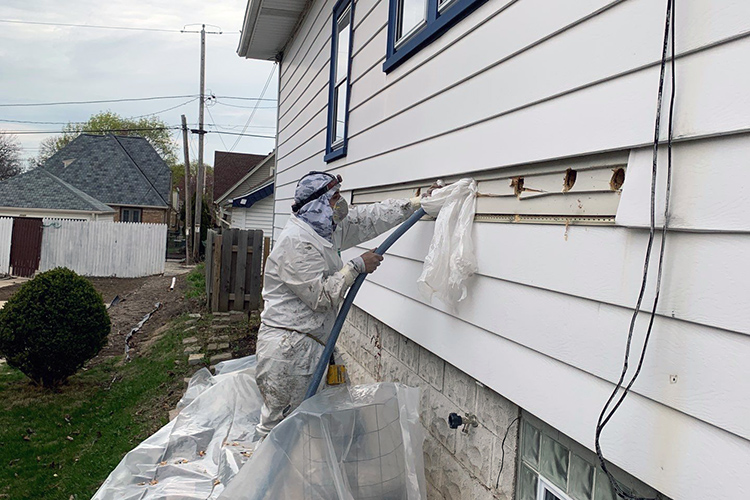
In many Milwaukee neighborhoods, families spend 10%-15% of their household income on energy – about double the 6% national average for low-income households, according to the Department of Energy. In areas with aging homes, especially during periods of extreme temperatures, those disparities grow even sharper.
Rising utility costs and complex rebate structures create barriers even when financial help exists.
“Emergency energy assistance can help some families during crises, but it doesn’t fix the underlying issues that cause high bills,” said Mia Rudolph‑Schulta, City of Milwaukee environmental sustainability program coordinator. “Energy-efficiency improvements provide lasting relief and healthier living conditions.”
Recognizing this, residents and leaders from the Sherman Park Community Association and the City of Milwaukee’s Environmental Collaboration Office (ECO) came together in July 2024 to launch the Healthy Homes & ECO Neighborhoods Project.
The initiative aimed to help homeowners in Milwaukee’s historically disinvested neighborhoods lower utility bills, improve home health and safety, and increase climate resilience through home improvements and energy‑efficiency upgrades. Before the federal funding was unexpectedly terminated, the project provided 14 home energy and health assessments and helped several homeowners complete cost-saving energy efficiency upgrades.
University partnerships reignite the work
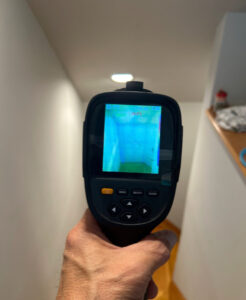
Wanting to further the work, project partners linked up with researchers from the University of Wisconsin-Milwaukee and the Medical College of Wisconsin to revive the program. In September 2025, they received support from the President’s and Chancellor’s Challenge, a collaboration among UWM, the Medical College of Wisconsin and Marquette University to identify and support projects that find solutions to local issues through 18‑month collaborations between community partners and university researchers.
The team secured an $89,000 award from the President’s and Chancellor’s Challenge to support home energy and healthy home assessments for 17 homes and fund a resilience ambassador and intern who will guide homeowners throughout the process.
Funds also will support research by UWM and the Medical College of Wisconsin to understand what keeps many homeowners from making energy upgrades.
“Our goal is to understand the barriers homeowners face and to generate evidence that can shape stronger, more accessible programs,” said Lynne Woehrle, UWM School of Nursing associate professor.
In this phase of the program, up to 10 homes will participate in real‑time indoor air‑quality monitoring by the Medical College of Wisconsin using sensors that measure particulate matter, volatile organic compound, carbon dioxide, temperature and humidity.
“This project grew out of community concerns about housing costs and health,” said Erin Lee, assistant professor in the department of Family & Community Medicine at the Medical College of Wisconsin. “The data from air quality monitoring will be compared with household utility usage to build a deeper understanding of residential energy burdens and indoor environmental health.”
Help along the way
Homeowners will receive information on weatherization, energy efficiency and other housing improvement programs and financing resources, and the resilience ambassador at the Sherman Park Community Association will guide them along the way – from intake to assessment to making decisions about next steps.
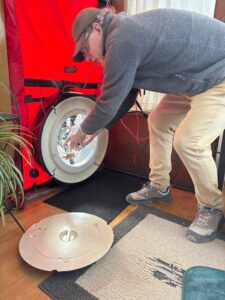
“Our neighbors want healthier, more efficient homes,” said Mabel Lamb, executive director of the Sherman Park Community Association. “This program helps us walk alongside homeowners so they don’t have to figure it out alone.”
For homeowners, the project offers a pathway to safer, healthier and more affordable homes. For the city, it stands as a model of how neighborhood organizations, government agencies and universities can come together to advance equity and resilience. And for the partners in the President’s and Chancellor’s Challenge, it demonstrates the power of community‑engaged research to create meaningful impact across Milwaukee.
The program is recruiting participants and beginning assessments in March. Single-family homeowners in the Sherman Park neighborhood who are interested in participating in the program should contact the Sherman Park Community Association.